

One of the world’s most attractive investment destinations.
UAE emerges as global benchmark for economic stability
The UAE has demonstrated a rare balance between strong expansion and prudent risk management, enabling it to safeguard both business and consumer confidence.
Wednesday 11/02/2026
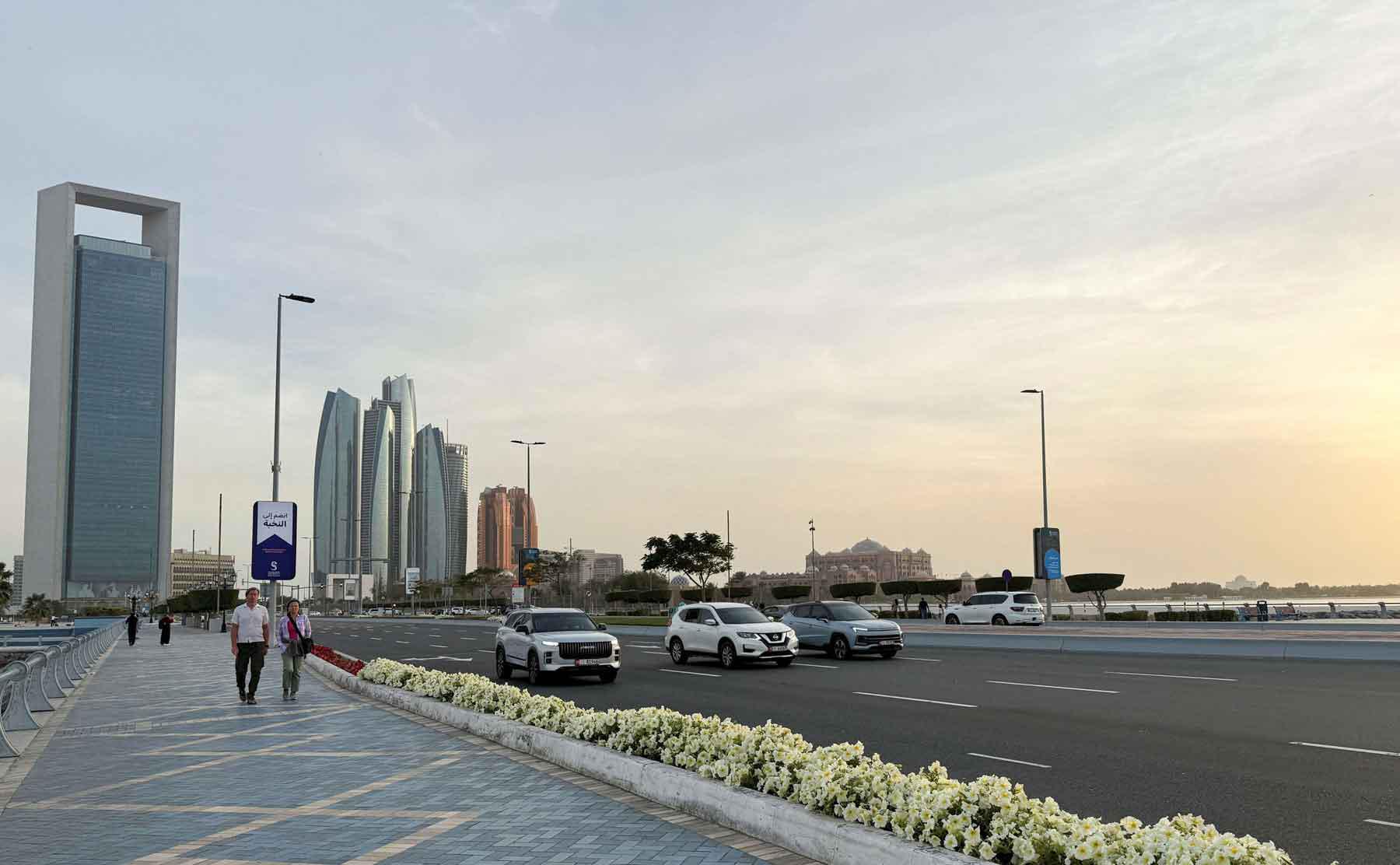
One of the world’s most attractive investment destinations.
ABU DHABI – The United Arab Emirates has been ranked the world’s most economically stable country in 2025, according to the latest Best Countries report by US News & World Report, underscoring the Gulf state’s success in navigating global economic uncertainty through disciplined fiscal policies and sustained diversification.
The top ranking marks a significant achievement at a time when economies worldwide are grappling with inflationary pressures, geopolitical tensions and volatile financial conditions. The report highlights the UAE’s ability to maintain steady growth, contain inflation and respond effectively to external shocks, key pillars of economic stability.
Economic stability is widely understood as a country’s capacity to sustain growth while preserving price stability, managing risks and maintaining investor confidence. In this regard, the UAE has demonstrated a rare balance between strong expansion and prudent risk management, enabling it to safeguard both business and consumer confidence.
The UAE ranked first among the world’s ten most economically stable countries in 2025, outperforming larger and more mature economies. Its success has been driven by financial resilience and a diversified economic model that has reduced dependence on oil revenues.
With a gross domestic product exceeding $500 billion, the UAE has built a robust economic foundation supported by advanced infrastructure, business-friendly regulations and sustained investment in key sectors. These factors have strengthened its position as one of the world’s most attractive investment destinations.
The UAE’s performance is particularly notable given that many larger economies with higher GDP levels did not achieve comparable stability rankings. Within the Middle East and North Africa region, Saudi Arabia was the only other country to enter the global top ten, ranking tenth worldwide and second regionally.
The UAE’s economic momentum is expected to continue, reflecting the success of long-term diversification strategies implemented over the past decade. Forecasts indicate GDP growth could reach around 5 percent in 2026, supported by robust expansion in non-oil sectors alongside improved performance in the oil industry.
This balanced growth model enables the UAE to benefit from favourable oil market conditions while simultaneously expanding alternative sources of revenue, reducing vulnerability to fluctuations in hydrocarbon prices.
The country has also emerged as one of the world’s leading destinations for foreign direct investment, reflecting strong international confidence in its business environment. Modern infrastructure, flexible regulatory frameworks and institutional stability have helped establish the UAE as a regional hub for trade, finance and logistics.
Key sectors such as tourism, manufacturing, technology and real estate have played an increasingly central role in driving economic expansion, reinforcing the country’s shift towards a knowledge-based economy.
Macroeconomic indicators further underscore the UAE’s stability. Inflation is expected to remain low, at approximately 1.8 percent in 2026, helping preserve purchasing power and limit cost-of-living pressures. At the same time, unemployment remains exceptionally low at around 1.9 percent, reflecting a healthy labour market with strong demand for skilled workers across multiple sectors.
The financial sector has also shown resilience, with steady growth in deposits and lending signalling continued banking sector confidence in supporting economic activity and development projects. Prudent fiscal and monetary policies have provided a stable foundation for financial institutions, strengthening the country’s ability to withstand external economic shocks.
Overall, the UAE’s economic performance illustrates that its stability is no longer solely dependent on oil wealth, but on a comprehensive policy framework that promotes diversification, encourages investment and ensures price and labour market stability.
This combination of resilience and forward-looking strategy has positioned the UAE not only as the world’s most economically stable country, but also as a model for sustainable growth in an increasingly uncertain global economic landscape.