


The AI project is a qualitative milestone that combines technical innovation with a humanistic message.
UAE launches project to counter use of artificial intelligence in extremism
CEO of "TRENDS” says the Muslim Brotherhood influence index is the first global index of its kind to measure the ideological and organizational weight of the group in various geographical regions.
Monday 09/02/2026
The AI project is a qualitative milestone that combines technical innovation with a humanistic message.
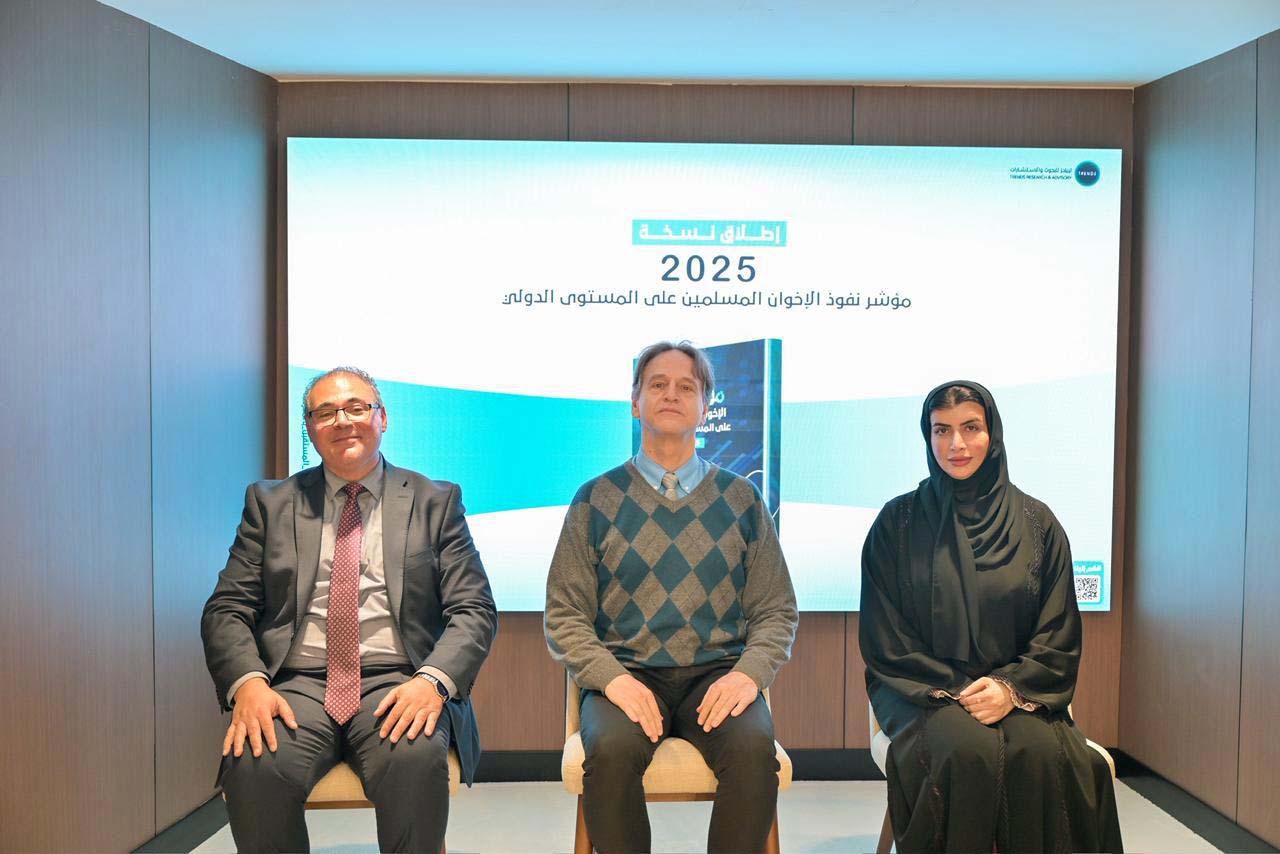
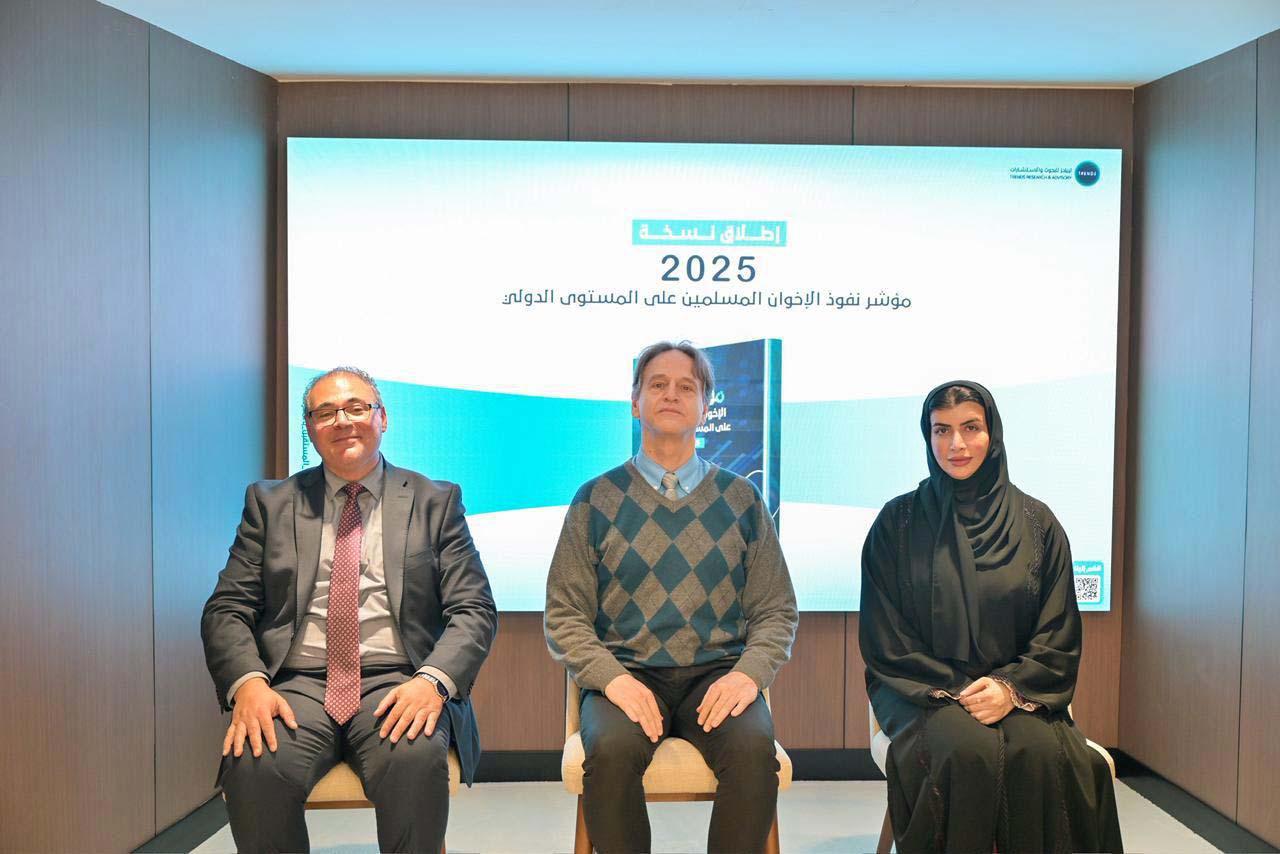
ABU DHABI - The "TRENDS Research & Advisory" center has launched the "AI-Enhanced Interfaith Dialogue" (AI4ID) alliance project. This launch coincided with the release of the 2025 Muslim Brotherhood's international influence index, in an event that combined a precise scientific diagnosis of the influence pathways of political Islam groups with the presentation of cognitive and ethical alternatives that employ artificial intelligence to promote dialogue, tolerance, and confront polarization and extremism.
The alliance and the index were launched from the "TRENDS" office in Dubai, under the supervision of its virtual offices in Canada and France.
In his opening speech, Mohammed Abdullah Al-Ali, CEO of "TRENDS," affirmed that combining the launch of the "AI4ID" alliance and the Muslim Brotherhood influence index reflects a firm conviction that confronting extremism begins with understanding, deconstructing, and analyzing their narratives and mechanisms of influence.
He pointed out that artificial intelligence has become a key player in shaping collective consciousness, which necessitates its ethical and responsible use to support dialogue and build peace, in line with digital governance principles and UNESCO recommendations.
Al-Ali explained that the Muslim Brotherhood influence index is the first global index of its kind to measure the ideological and organizational weight of the group in various geographical regions, providing an analytical tool to support decision-makers and researchers.
Maqsoud Kruse, the Foreign Minister's envoy for combating extremism and terrorism, described the launch of the AI-enhanced interfaith dialogue alliance as a qualitative milestone that combines technical innovation with a humanistic message.
Kruse emphasized that the initiative represents a proactive step to confront the misuse of artificial intelligence, promote a culture of tolerance and dialogue, and entrench moderate discourse.
He pointed to the UAE's commitment to supporting initiatives that employ artificial intelligence responsibly to serve humanity, and to enhance coexistence and peace in light of accelerating global challenges.
The presence of the Muslim Brotherhood in the Arab world has declined as a result of organizational disintegration and changing political and legal environments.
French Senator Nathalie Goulet, a member of the French Senate and the "TRENDS" Advisory Council – France, affirmed that the "AI4ID" alliance represents a qualitative leap in approaching contemporary religious and intellectual issues by combining technological innovation and ethical responsibility.
She stressed the importance of the Muslim Brotherhood influence index as a strategic research tool that helps European decision-makers understand the shifts in the group's influence and its patterns of proliferation.
The dialogue session saw the participation of a number of academics and experts from Canada, Europe, and the Arab region, who discussed the prospects of "humanizing artificial intelligence" and integrating ethical and human values in the design of algorithms, in a way that contributes to monitoring hate speech and replacing it with narratives that support tolerance.
The three-year "AI4ID" project aims to develop safe, intelligent dialogue models and platforms, and to issue peer-reviewed scientific studies and a practical guide for the ethical use of artificial intelligence in religious contexts, thereby enhancing social cohesion and supporting peace-building efforts in the era of digital transformation.
The project is expected to yield tangible results, including peer-reviewed scientific publications, a practical guide for the ethical use of artificial intelligence in religious contexts, in addition to providing an "open-source" digital platform that is adaptable in different geographical contexts. The partner institutions are also laying the foundation for a new research field that combines "digital humanities" and computer science, which enhances their position in shaping the international peace agendas adopted by organizations such as UNESCO and the United Nations, and provides innovative solutions for maintaining social cohesion in the age of comprehensive digitization.
Wael Saleh, director of TRENDS' virtual offices in Canada and France, reviewed the intellectual and scientific framework of the "Artificial Intelligence and Interfaith Dialogue" project, stressing that the world is witnessing an unprecedented intersection between technological transformations and crises of meaning and identity, and that religious discourse in the digital space has at times become a tool for polarization and symbolic conflict.
He explained that the project stems from a pivotal civilizational question: how can artificial intelligence be transformed from a factor that deepens polarization into a conscious, ethical tool that supports dialogue and peace-building?
He indicated that the project adopts an integrative approach that combines the computational analysis of religious discourse, the critical reading provided by the humanities, and the conscious integration of ethical values in algorithm design, with strict ethical supervision to ensure that technology remains a conscious human extension and not a substitute for humans.
The results of the 2025 Muslim Brotherhood influence index revealed a decline in the group's overall power to 47.3 percent compared to 67.7 percent in the first edition, with the center of its influence shifting to the Western and Asian spheres, in contrast to a decline in its presence in the Arab world, as a result of organizational disintegration and changing political and legal environments.
The research symposium, held under the title "From Quantitative Decline to Geographical Shift: A Reading of the 2025 Index," concluded that late 2025 witnessed a qualitative shift in the American and French positions towards entities associated with the Muslim Brotherhood, through escalating institutional and legislative measures that would reduce the group's international influence and readjust its financial and organizational movement.