

Mandate extended until December 31, 2026
UN extends Golan peacekeeping mission, urges support for Syria
United Nations officials warned that Syria's political transition remains at a pivotal yet fragile stage despite signs of improving stability and recovery.
Friday 26/06/2026
Mandate extended until December 31, 2026
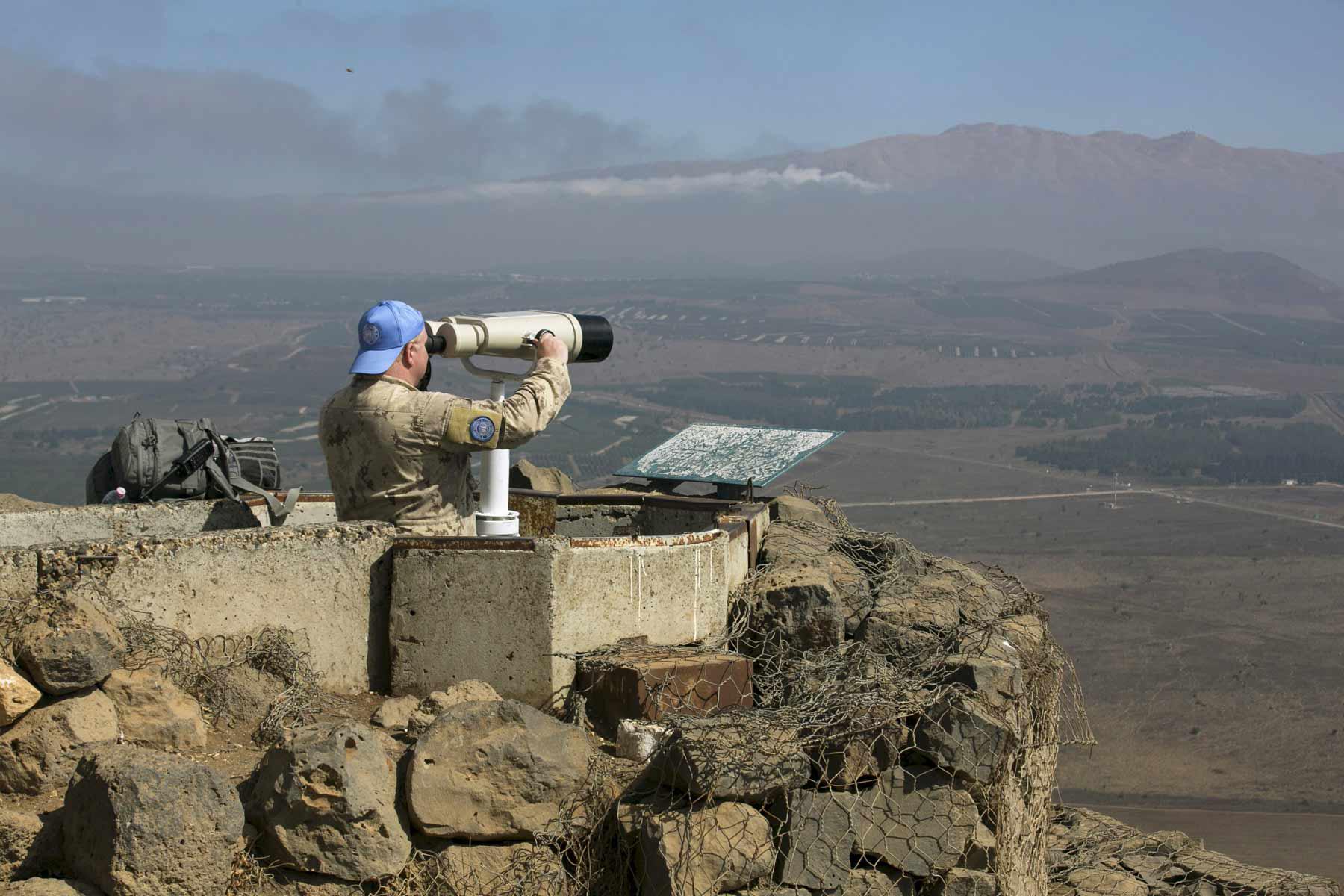
NEW YORK – The UN Security Council unanimously renewed the mandate of its long-running peacekeeping mission on the Syrian-Israeli border on Thursday, as United Nations officials warned that Syria's political transition remains at a pivotal yet fragile stage despite signs of improving stability and recovery.
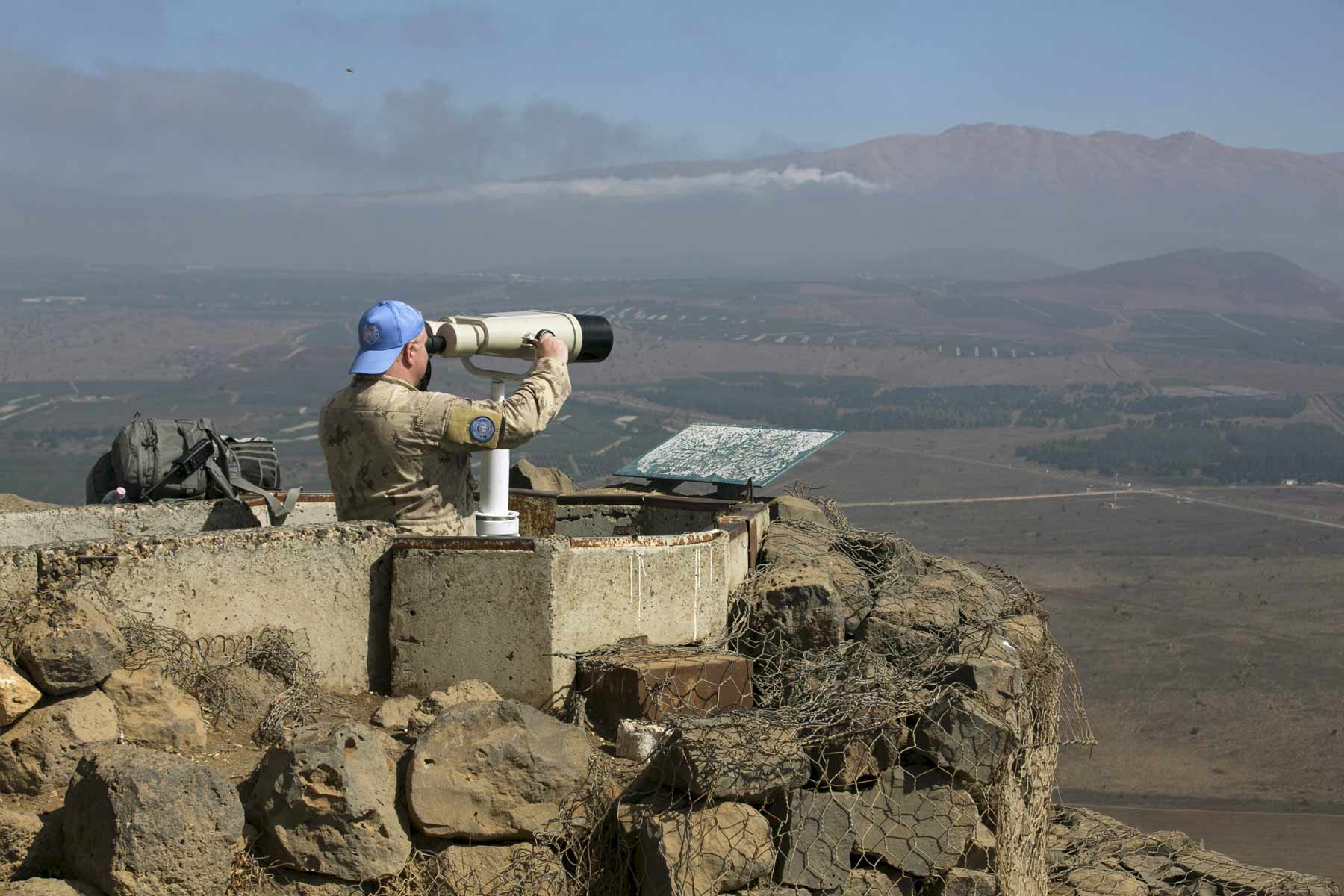
The 15-member council adopted Resolution 2824, extending the mandate of the UN Disengagement Observer Force (UNDOF) until December 31, 2026.
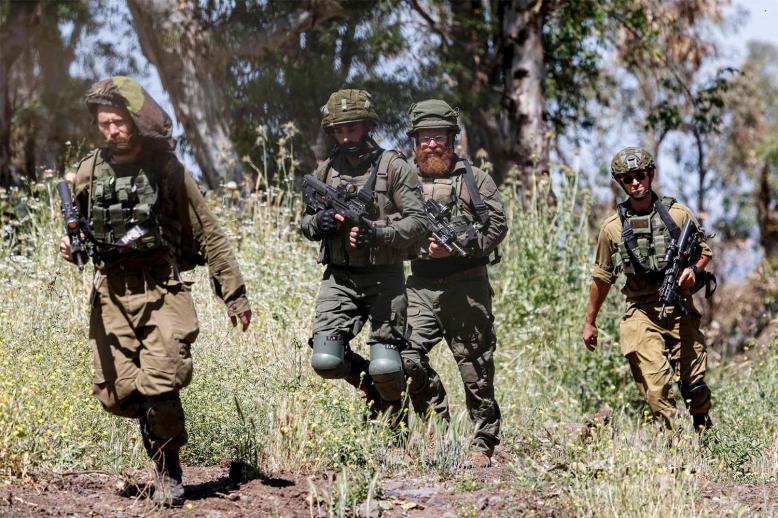
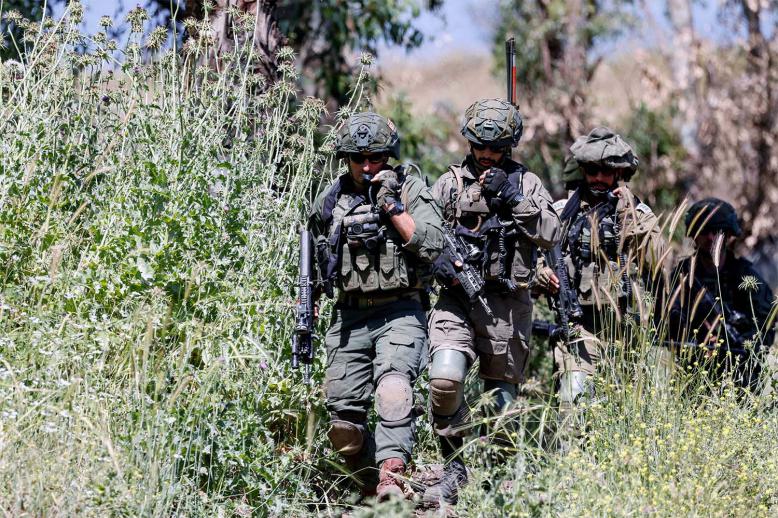
UNDOF, established after the 1974 Disengagement of Forces Agreement that ended the Arab-Israeli war, monitors the ceasefire between Syria and Israel and supervises the separation of their forces in the occupied Golan Heights.
The vote came days after senior UN officials briefed the council that Syria has emerged from more than a decade of conflict with encouraging signs of progress but still faces daunting humanitarian, political and security challenges.
Addressing the council before the vote, Syria's ambassador, Ibrahim Olabi, said the country had become "one of the most stable countries in the region" and was pursuing reconstruction while strengthening ties with international partners on issues including counterterrorism, chemical weapons and regional security.
Olabi also accused Israel of fearing the political changes that followed the collapse of Bashar al-Assad's government, saying the former regime's removal had ended a system that had "practised torture and deployed chemical weapons against its own people."
The renewal follows warnings from Claudio Cordone, the UN Secretary-General's Deputy Special Envoy for Syria, that the country's transition stands at a critical crossroads where "opportunity and fragility exist side by side."
Cordone said Syria's transitional authorities face enormous legislative and governance challenges, noting that more than eight months after elections, the country's People's Assembly has yet to be fully constituted because appointments by the president remain outstanding.
He said the parliament would be expected to debate major legislation, oversee executive decisions and advance the political transition while ensuring broader representation across Syrian society.
The envoy welcomed government efforts to curb inflation, attract investment and revive the private sector but cautioned that serious security concerns persist.
He pointed to continuing instability in the southern province of Sweida, where kidnappings, rivalries among Druze factions and lingering mistrust following deadly clashes last year continue to undermine confidence-building efforts.
Cordone also accused Israel of continuing to violate the 1974 disengagement agreement through near-daily military activity in southern Syria, including incursions, temporary checkpoints, civilian detentions and restrictions affecting local communities and agricultural land.
While noting what he described as Syria's restraint and openness to discussing future security arrangements with Israel, he urged Israel to comply with the disengagement agreement, release detained civilians and respect Syria's sovereignty and territorial integrity.
The envoy also highlighted continuing concerns over extremist activity despite intensified counterterrorism operations by Syrian authorities.
According to Syrian officials, security forces have arrested more than 230 suspected militants during the past three months, dismantled seven cells linked to Islamic State and seized weapons across several provinces.
However, Cordone warned that Islamic State was attempting to exploit governance gaps and local grievances, pointing to a June attack on a security headquarters in Raqqa that killed and wounded security personnel.
On the humanitarian front, the UN said the country faces a crucial opportunity to move beyond emergency relief towards long-term recovery, provided international support continues.
Speaking on behalf of UN humanitarian chief Tom Fletcher, Assistant Secretary-General Indrika Ratwatte said humanitarian needs remained severe despite improvements in parts of the country.
Millions of Syrians remain displaced, although since December 2024 around 1.6 million refugees and nearly two million internally-displaced people have returned to their communities.
Ratwatte said those returns would only remain sustainable if returning families had reliable access to housing, essential services, protection and livelihoods.
UN aid agencies reached around three million people across 3,000 communities during the first quarter of this year, but the humanitarian response remains critically underfunded.
The UN's $2.92 billion humanitarian appeal for Syria has received only about 20 per cent of the funding required.
Ratwatte urged Security Council members to sustain predictable humanitarian funding, support Syria's transition beyond emergency assistance and invest in recovery and reconstruction aligned with the government's national priorities.
"We must meet urgent needs today while laying the foundations for lasting stability and prosperity," he said.
The discussions came as Syria continues rebuilding after the collapse of Bashar al-Assad's rule in December 2024, which ended more than a decade of civil war that displaced millions of Syrians and devastated much of the country's infrastructure.
Although international sanctions have largely been lifted and diplomatic relations with many countries restored, Syria continues to grapple with political uncertainty, periodic sectarian violence and ongoing Israeli military operations in the south.
Cordone also welcomed Syria's stated commitment not to interfere in Lebanon and efforts by its security forces to disrupt cross-border smuggling networks, while expressing hope that the recent understanding between the United States and Iran would contribute to greater regional stability and allow more attention to be focused on Syria's economic recovery and long-term transition.