


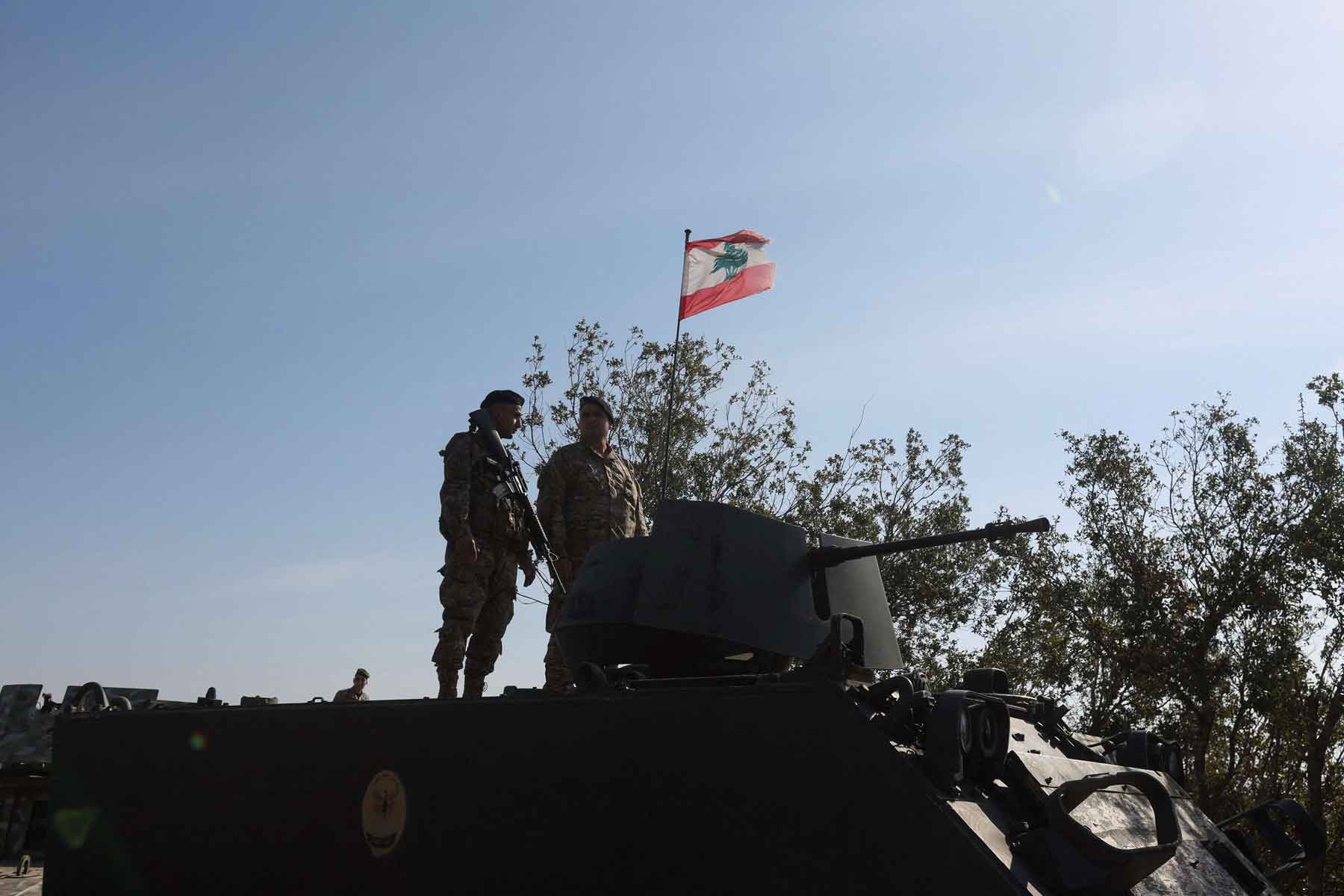
Lebanese army members stand on a military vehicle in Alma Al-Shaab, near the border with Israel, southern Lebanon, November 28, 2025.
US boosts Lebanese army mobility to contain Hezbollah influence
The sale coincides with heightened tensions along Lebanon’s southern border and intermittent clashes between Hezbollah and Israel.
Wednesday 17/12/2025
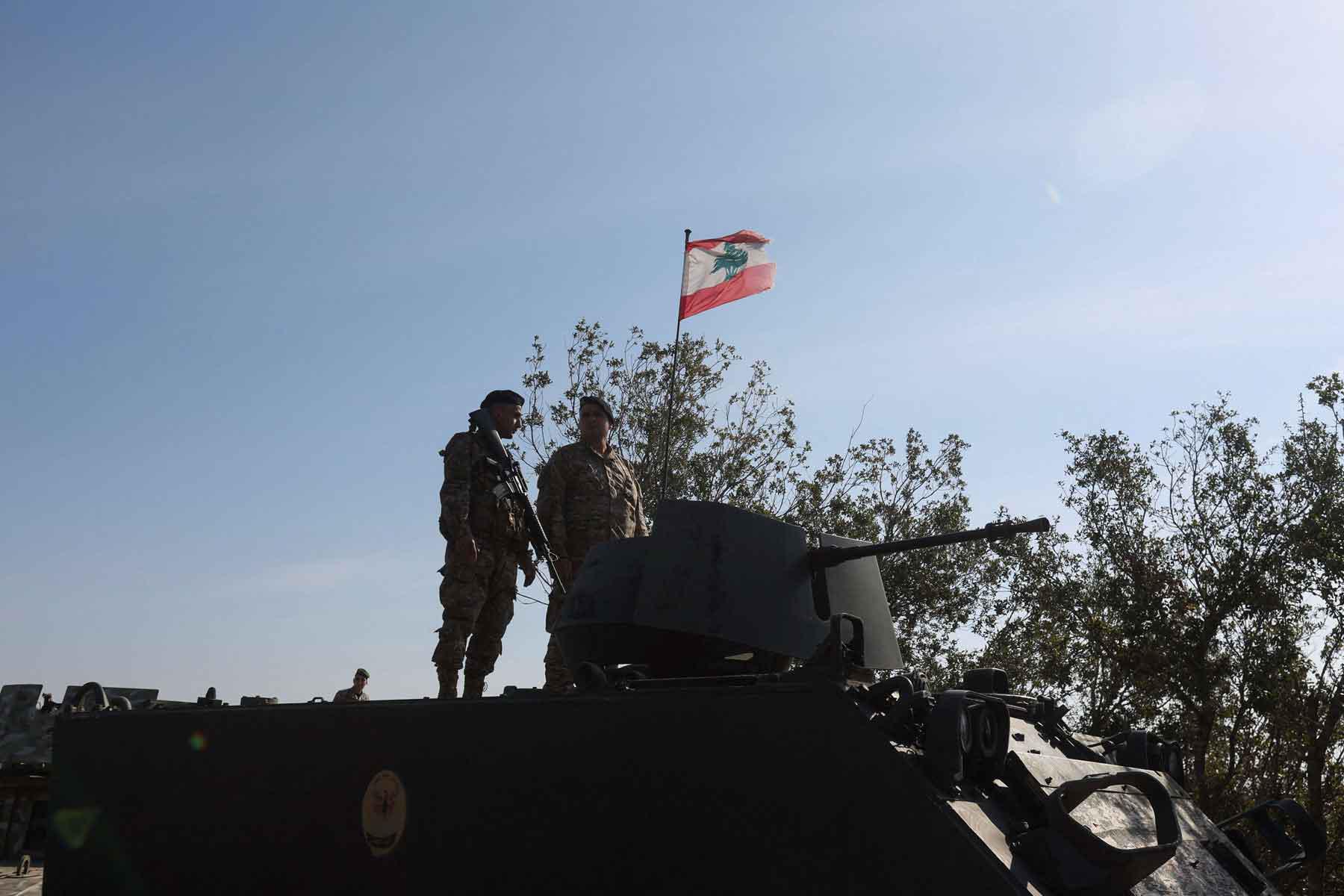
Lebanese army members stand on a military vehicle in Alma Al-Shaab, near the border with Israel, southern Lebanon, November 28, 2025.
WASHINGTON -
The United States granted preliminary approval for a major military sale to Lebanon, authorising the potential transfer of advanced M1151A1 High Mobility Multi-Purpose Wheeled Vehicles (HMMWVs) to the Lebanese Armed Forces, in a deal valued at around $34.5 million.
According to the Defence Security Cooperation Agency, the vehicles are intended to provide a "highly mobile and light combat vehicle capability," enabling Lebanese forces to respond more quickly to perimeter security threats and enhance counter-terrorism operations. The sale reflects Washington’s continued security cooperation with Lebanon amid ongoing regional instability.
US officials see the Lebanese army as a key instrument to manage potential security chaos and curb Hezbollah’s influence without engaging in direct military confrontation, a strategy that reflects Washington’s careful navigation of Lebanon’s complex political and regional dynamics.
The principal contractor will be AM General, based in South Bend, Indiana. The proposed sale is being processed through the US Foreign Military Sales (FMS) programme, a government-to-government mechanism for transferring defence equipment. Lebanon has previously acquired over 1,600 HMMWVs of various models through FMS, making this the latest addition to a long-standing military partnership.
In practical terms, the new vehicles enhance the army’s ability to deploy rapidly and manage domestic security crises, reducing the need for parallel armed actors outside the state apparatus. Analysts describe the sale as part of a broader US “containment” strategy, combining support for the army with political and economic pressures on Hezbollah, while avoiding direct confrontation.
The deal comes amid renewed domestic debate in Lebanon over Hezbollah’s armed status. While the group maintains that its weapons are part of a “resistance equation” against Israel, critics argue that consolidating armed power under the state is essential to restoring Lebanese sovereignty and reinforcing the army’s role in maintaining security. This makes external support for the Lebanese military a politically sensitive and strategically significant measure, with implications for both local and regional power balances.
Regionally, the sale coincides with heightened tensions along Lebanon’s southern border and intermittent clashes between Hezbollah and Israel. The upgraded capabilities are expected to strengthen the Lebanese army’s ability to respond swiftly to incidents, manage internal security challenges, and operate within the state framework without escalating into a full-scale confrontation with Hezbollah.
The transaction also occurs against a backdrop of shifting defence partnerships across the Middle East, including growing Turkish-Egyptian collaboration in joint defence production, highlighting Washington’s ongoing strategic calculations in maintaining influence over national armies in a volatile region.