

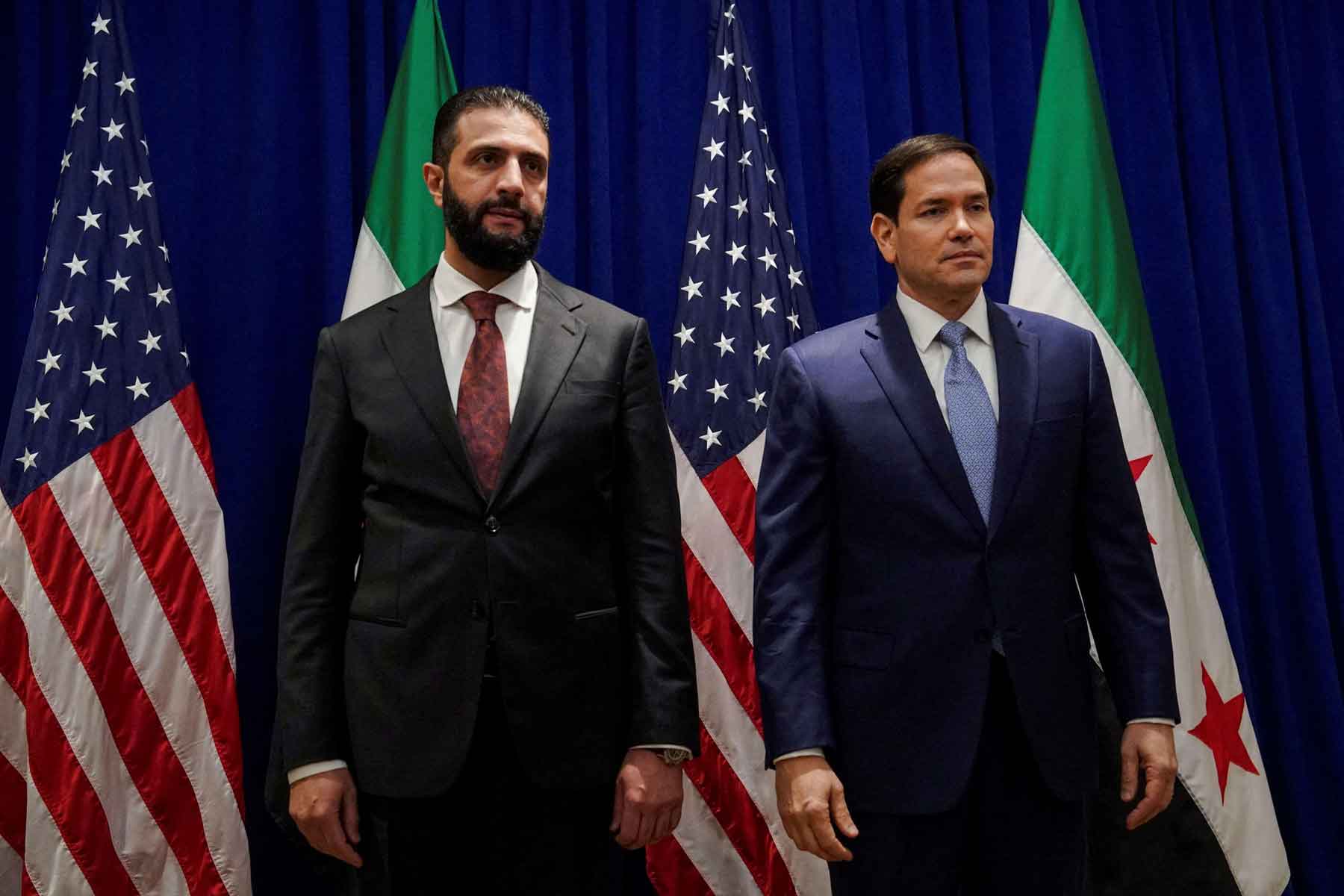
Syrian President Ahmed al-Sharaa meets US Secretary of State Marco Rubio on the sidelines of the 80th United Nations General Assembly in New York City, September 22, 2025.
US Congress repeals Caesar Act, clearing way for Syrian reconstruction
The Caesar Act, named after an anonymous Syrian photographer who documented atrocities in Assad’s prisons, had been a severe obstacle to reconstruction.
Thursday 18/12/2025

Syrian President Ahmed al-Sharaa meets US Secretary of State Marco Rubio on the sidelines of the 80th United Nations General Assembly in New York City, September 22, 2025.
WASHINGTON –
The US Congress on Wednesday formally ended long-standing sanctions on Syria, a move that could mark a turning point for the war-ravaged country and open the door for international investment in reconstruction.
The repeal of the 2019 Caesar Act, passed overwhelmingly by the Senate in a 77-20 vote as part of the annual defence bill, comes after President Donald Trump twice temporarily suspended the sanctions at the urging of Saudi Arabia and Turkey, allies of Syria’s new government under President Ahmed al-Sharaa.
Sharaa, who seized Damascus in a lightning offensive last year, had lobbied for a permanent removal of the sanctions, warning that their continued presence would deter investors wary of potential legal risks in the world’s largest economy.
“This is a decisive step toward giving the Syrian people a real chance to rebuild after decades of unimaginable suffering,” said Senator Jeanne Shaheen, New Hampshire Democrat and top member of the Senate Foreign Relations Committee.
She added that providing Syrians with an opportunity to rebuild their economy would also pre-empt Iran’s “ability to exploit a failed state” and reduce the space for Islamic State operations.
Damascus welcomed the US decision as a historic shift. “We express our gratitude and appreciation to the US Senate for its support of the Syrian people and its vote to repeal the Caesar Act,” said Syrian Foreign Minister Asaad al-Shaibani.
He called the move “a positive development that opens new horizons for cooperation and partnership between our country and the world.”
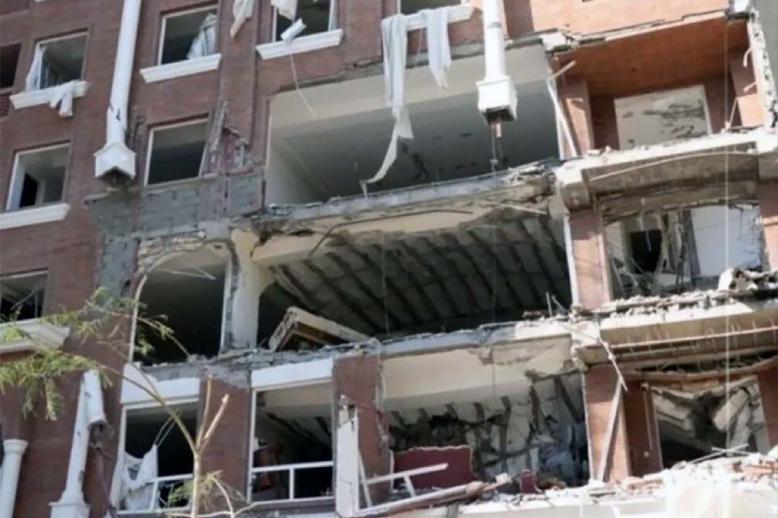
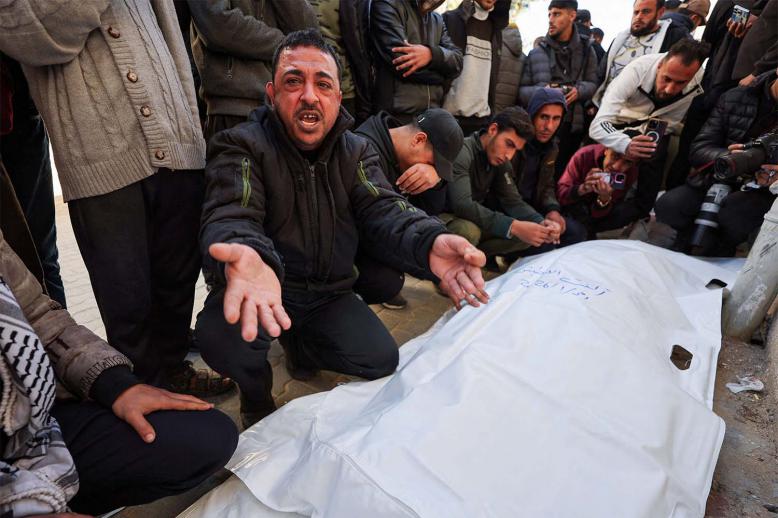
The Caesar Act, named after an anonymous Syrian photographer who documented atrocities in Assad’s prisons, had been a severe obstacle to reconstruction. It restricted foreign investment and cut Syria off from the international banking system, at a time when the country appeared to have emerged victorious after more than a decade of civil war that left millions displaced, spawned the rise of the Islamic State extremist group, and devastated infrastructure.
With UN estimates suggesting Syria will require over $200 billion to repair roads, bridges, utilities and housing, while also clearing unexploded ordnance and delivering humanitarian aid, the sanctions had long been seen as a barrier to serious investment.
“Serious investors and partners will not commit billions under continued uncertainty, which is why Congress moved forward with full repeal,” Shaheen told the Financial Times.
The repeal, which does not include “snapback” mechanisms sought by some Republicans to automatically reinstate sanctions under certain conditions, does require the US president to report to Congress every six months on Syrian progress in security and governance. These reports will cover efforts to counter Islamic State activity and protect the rights of ethnic and religious minorities.
Opposition to the measure came from the Israeli government and several Republican lawmakers, who argued that removing sanctions entirely would diminish Washington’s leverage over Sharaa. Nevertheless, the repeal has drawn bipartisan support, reflecting recognition that permanent sanctions could hinder reconstruction, exacerbate humanitarian suffering and allow regional powers to expand influence in Syria.
Sharaa’s government, now presenting itself as a business-friendly administration, is expected to seek partnerships with international firms, particularly from the Gulf and the West, to begin rebuilding a country whose cities, energy systems and health infrastructure remain in ruins.
Analysts note that lifting sanctions could accelerate reconstruction but also poses challenges in ensuring transparency, governance and human rights compliance in a fragile post-conflict environment.
With the Caesar sanctions repealed, Syria faces a new chapter, one in which international engagement, investment, and oversight will determine whether decades of conflict can finally give way to recovery and stability.