

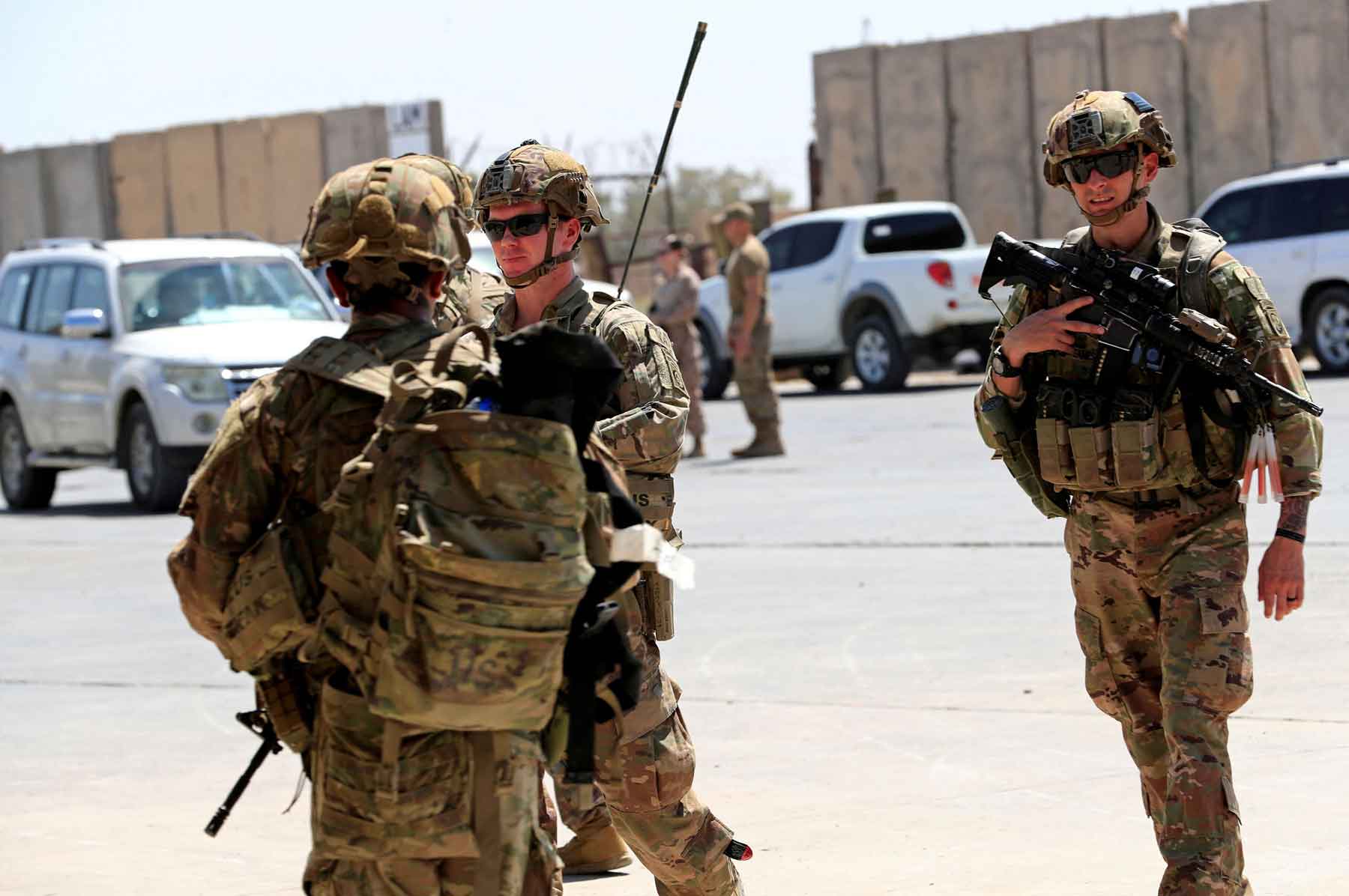
US soldiers are seen during a handover ceremony of Taji military base from US-led coalition troops to Iraqi security forces, in the base north of Baghdad, August 23, 2020.
US defence bill 2026 signals strategic reset in Iraq and Syria
Washington is balancing the winding down of old commitments with management of current regional risks.
Thursday 11/12/2025

US soldiers are seen during a handover ceremony of Taji military base from US-led coalition troops to Iraqi security forces, in the base north of Baghdad, August 23, 2020.
WASHINGTON
The US House of Representatives approved on Thursday the revised National Defence Authorisation Act (NDAA) for fiscal year 2026 by a wide margin of 312 to 112 votes, sending the bill to the Senate for final ratification.
The legislation lays out a series of strategic measures that redefine the American military presence in the Middle East and recalibrate security relations with Baghdad, while maintaining a framework for operations against the Islamic State group (ISIS).
Early analysis of the bill suggests a transitional phase in which Washington seeks to close the legal chapter on decades of Iraq wars, while tightening oversight of security assistance to the Iraqi government and imposing conditions linked to regional and domestic balances.
Ending long-standing war authorisations
The most significant changes in the new legislation include the formal repeal of two longstanding war authorisations that enabled successive US administrations to carry out military operations in Iraq over the past three decades.
Congress officially revoked the 1991 authorisation related to the first Gulf War to liberate Kuwait, as well as the 2002 authorisation that paved the way for the invasion of Iraq and the overthrow of Saddam Hussein.
The repeal effectively ends the legal basis previously used to conduct strikes or military operations in Iraq without congressional approval, closing a chapter of “open-ended wars” that has been central to US Middle East policy since the early 1990s.
At the same time, it does not signal a full withdrawal or radical change in Washington’s security role in Iraq, reflecting a dual approach: retiring outdated authorisations while subjecting security aid to stricter conditions.
Tightening oversight of security assistance
Even as the war authorisations are repealed, Congress reinforced oversight of US security support to Iraq.
The bill freezes half of the 2026 budget for the Office of Security Cooperation-Iraq (OSC-I) to compel Baghdad to implement a series of measures on militias.
Release of these funds requires the US Secretary of Defense to certify that the Iraqi government has taken credible and public steps to limit the influence of Iran-aligned militias, as part of a clear disarmament, demobilisation and reintegration (DDR) process, while strengthening the authority of the prime minister as commander-in-chief.
The provision reflects ongoing US policy linking security support to Iraq’s ability to enforce state sovereignty, a priority that has intensified as armed factions have grown more influential.
The bill also gives the Secretary of Defence the authority to lift the freeze for up to 180 days if national security needs require it, providing Washington flexibility to use the measure as leverage without permanently hindering cooperation.
Congress further emphasised the need to investigate and hold accountable security personnel or militias operating outside formal chains of command and involved in attacks on US or Iraqi forces, signalling that militia control remains a central issue in US-Iraq relations.
Defensive measures in Syria
In Syria, the legislation takes a cautious approach, reflecting concerns that any rushed withdrawal could create a security vacuum.
The bill bars the Department of Defence from using funds to reduce or consolidate US bases in Syria without official certification from the Secretary of Defence and CENTCOM, confirming that such steps will not impair counterterrorism capabilities, along with a plan to address any potential security gaps.
It also mandates urgent measures to enhance security at detention camps holding ISIS fighters and their families, particularly Al-Hol and Roj camps, and to support the Syrian Democratic Forces (SDF) in preventing escapes or militant regrouping. An annual report detailing plans to repatriate detainees to their home countries is also required, reflecting a US effort to reduce risks posed by thousands of fighters and family members living in fragile conditions.
Maintaining counterterrorism operations
While the Iraq war authorisations have been symbolically repealed, the bill extends US counterterrorism authorities against ISIS through December 31, 2026, continuing support for vetted Syrian groups and providing logistical and military assistance to coalition partners. The legislation underscores the US view of ISIS as an ongoing threat and the need for a limited military presence in Syria and Iraq to prevent the group’s resurgence.
Overall, the 2026 Defence Bill demonstrates that the United States is not withdrawing from the Middle East but is reshaping the tools of its engagement.
By repealing outdated Iraq authorisations, tightening oversight of Baghdad, preventing premature Syrian withdrawals and enhancing detention security, Washington is balancing the winding down of old commitments with management of current regional risks.