

Burhan's room for manoeuvre narrows
US shifts Sudan strategy by targeting economics of war
Taken together, the package suggests Washington increasingly views Sudan's conflict as one sustained not simply by battlefield dynamics but by a deeply-entrenched war economy.
Monday 29/06/2026
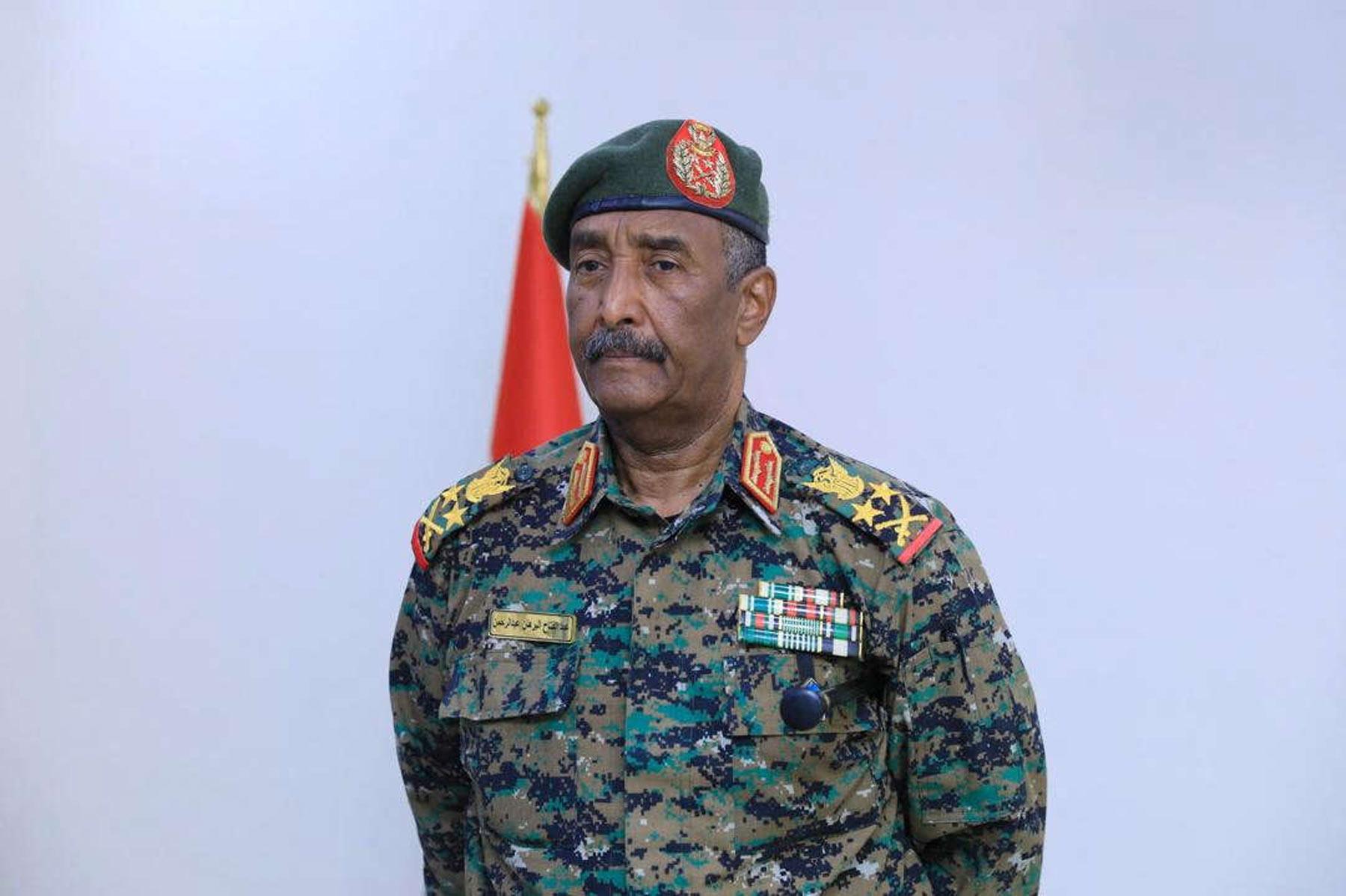
Burhan's room for manoeuvre narrows
WASHINGTON/KHARTOUM – The latest US sanctions on Sudan represent more than another round of punitive measures against a country devastated by more than three years of civil war. They signal a broader shift in Washington's approach, from trying to influence military behaviour through diplomacy and targeted sanctions to attacking the economic structures that have enabled the conflict to endure.
The measures announced by Washington target procurement networks supplying both the Sudanese Armed Forces (SAF) and the paramilitary Rapid Support Forces (RSF), while also restricting Sudan's access to international finance and transport under the Chemical and Biological Weapons Control and Warfare Elimination Act.
Beyond sanctioning eight individuals and entities accused of facilitating arms procurement and recruitment, the United States has barred Sudan's state-owned airlines from operating in the United States, instructed its representatives at international financial institutions to oppose loans and technical assistance for Sudan and imposed additional export restrictions.
Taken together, the package suggests Washington increasingly views Sudan's conflict as one sustained not simply by battlefield dynamics but by a deeply-entrenched war economy.
For much of the conflict, US diplomacy has focused on persuading both sides to accept ceasefires and return to negotiations. Those efforts have repeatedly collapsed as both the army and the RSF continued to believe military gains remained achievable.
The latest sanctions indicate US policymakers may have concluded that negotiations alone cannot succeed while both sides retain access to financial resources, weapons procurement networks and commercial structures capable of sustaining prolonged warfare.
"The networks profiting from the conflict in Sudan jeopardise the prospects for the humanitarian truce that the Sudanese people desperately need," US Treasury Secretary Scott Bessent said when announcing the sanctions.
The conflict, which erupted in April 2023 after a power struggle between the SAF and the RSF, has evolved into one of the world's worst humanitarian crises, displacing nearly 13 million people, according to international estimates.
But behind the military confrontation lies an economic system that predates the war by decades.
Sudan's armed forces and security services gradually built extensive commercial empires spanning mining, gold exports, oil, transport, telecommunications, banking and manufacturing. Those business interests became increasingly insulated from civilian oversight and transformed the military establishment into one of the country's largest economic actors.
The outbreak of war accelerated that process.
As state institutions weakened, competing authorities increasingly relied on control of natural resources, informal taxation, smuggling networks and commercial monopolies to finance military operations.
Analysts say this "war economy" has created powerful incentives for the conflict to continue.
On both sides of the front lines, armed actors have generated revenues from checkpoints, mineral production, illicit trade, fuel distribution and local taxation, while commercial companies linked to military structures have continued operating despite the fighting.
International organisations have repeatedly warned that corruption and opaque military-controlled businesses have become structural drivers of Sudan's instability rather than simply consequences of it.
The latest US sanctions appear designed to weaken those financial ecosystems.
Restricting state-owned airlines could complicate international logistics and increase operating costs for government-linked commercial networks.
Opposition to loans from institutions such as the World Bank and International Monetary Fund further narrows Khartoum's options at a time when Sudan's economy faces severe shortages of foreign currency and mounting fiscal pressures.
Washington is also targeting procurement networks supplying both sides of the conflict.
The Treasury Department sanctioned entities allegedly involved in supplying military equipment to the SAF as well as individuals accused of recruiting Colombian fighters for the RSF, underscoring what US officials say is an effort to pressure all actors prolonging the war rather than one side alone.
State Department spokesperson Tommy Pigott said the networks had supplied "weapons, explosives, and foreign fighters" to both combatants.
The sanctions also coincide with legislation advancing in the US Senate that would require American representatives at international financial institutions to oppose loans or debt relief for Sudan except for emergency humanitarian projects.
For Washington, the strategy increasingly appears to rest on a calculation that reducing the economic capacity of the combatants may prove more effective than repeated diplomatic appeals that have failed to halt the fighting.
Whether the measures achieve that objective remains uncertain.
Military-linked business networks have survived previous sanctions by relying on regional trading partners, informal financial channels and cross-border commercial activity. The RSF has similarly developed alternative sources of financing through gold production and local revenue collection in areas under its control.
Even so, Western officials increasingly argue that any lasting peace will require dismantling the financial systems underpinning the conflict as much as securing agreements between military commanders.
That reflects a broader shift in international thinking: that Sudan's crisis is no longer viewed solely as a military confrontation, but as one sustained by parallel economic structures whose influence expanded as the state's institutions collapsed.
Until those revenue streams are curtailed, diplomats say, ceasefire agreements may remain vulnerable to collapse because the financial incentives to continue fighting remain firmly in place.