

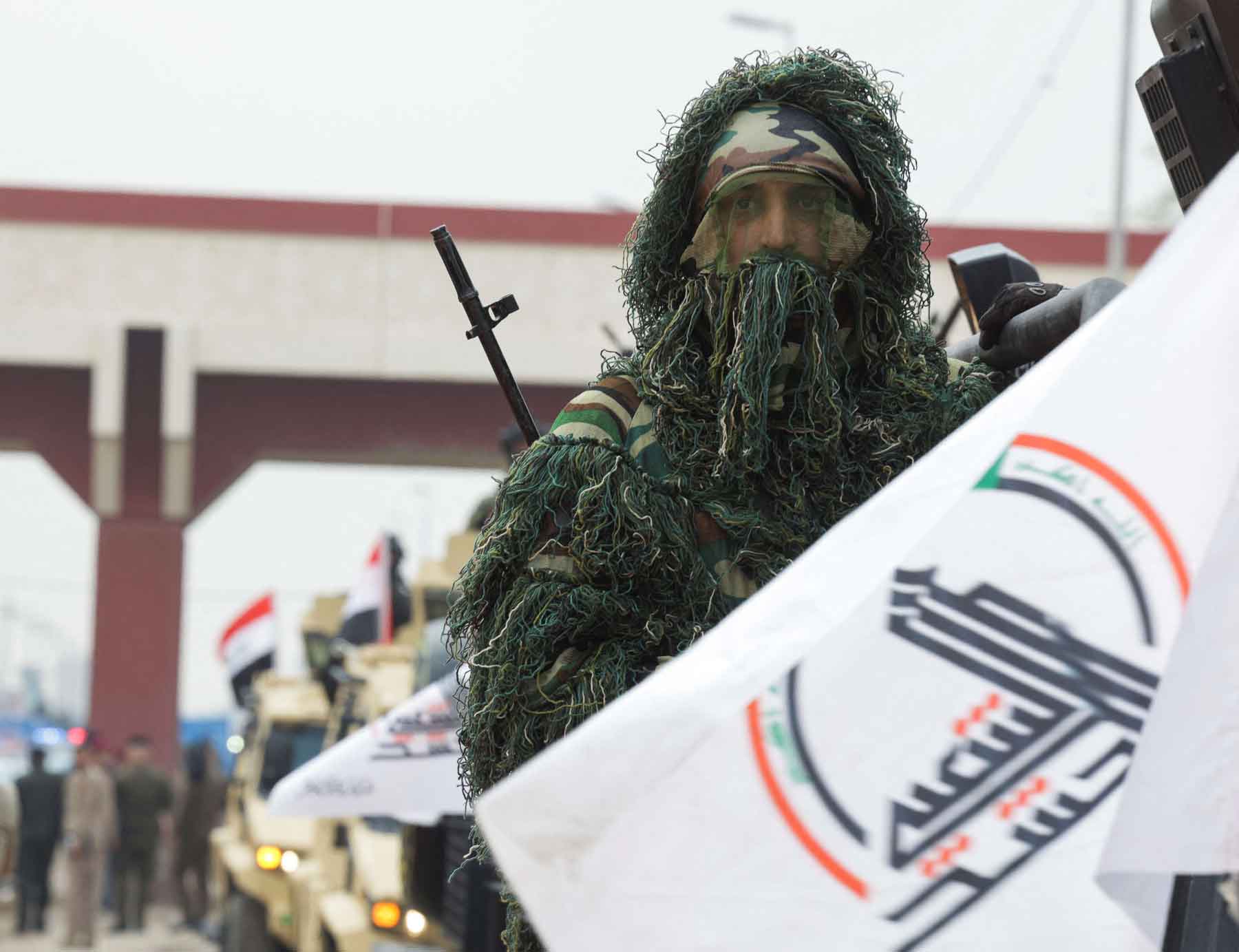
A member of Iraq’s Popular Mobilisation Forces (PMF) rides in a military vehicle next to a flag during a parade in Baghdad, December 10, 2025.
US strategy intensifies to cut Iranian influence in Baghdad
Central to the US strategy is a focus on the economic lifeline sustaining Iran-backed militias.
Wednesday 10/12/2025
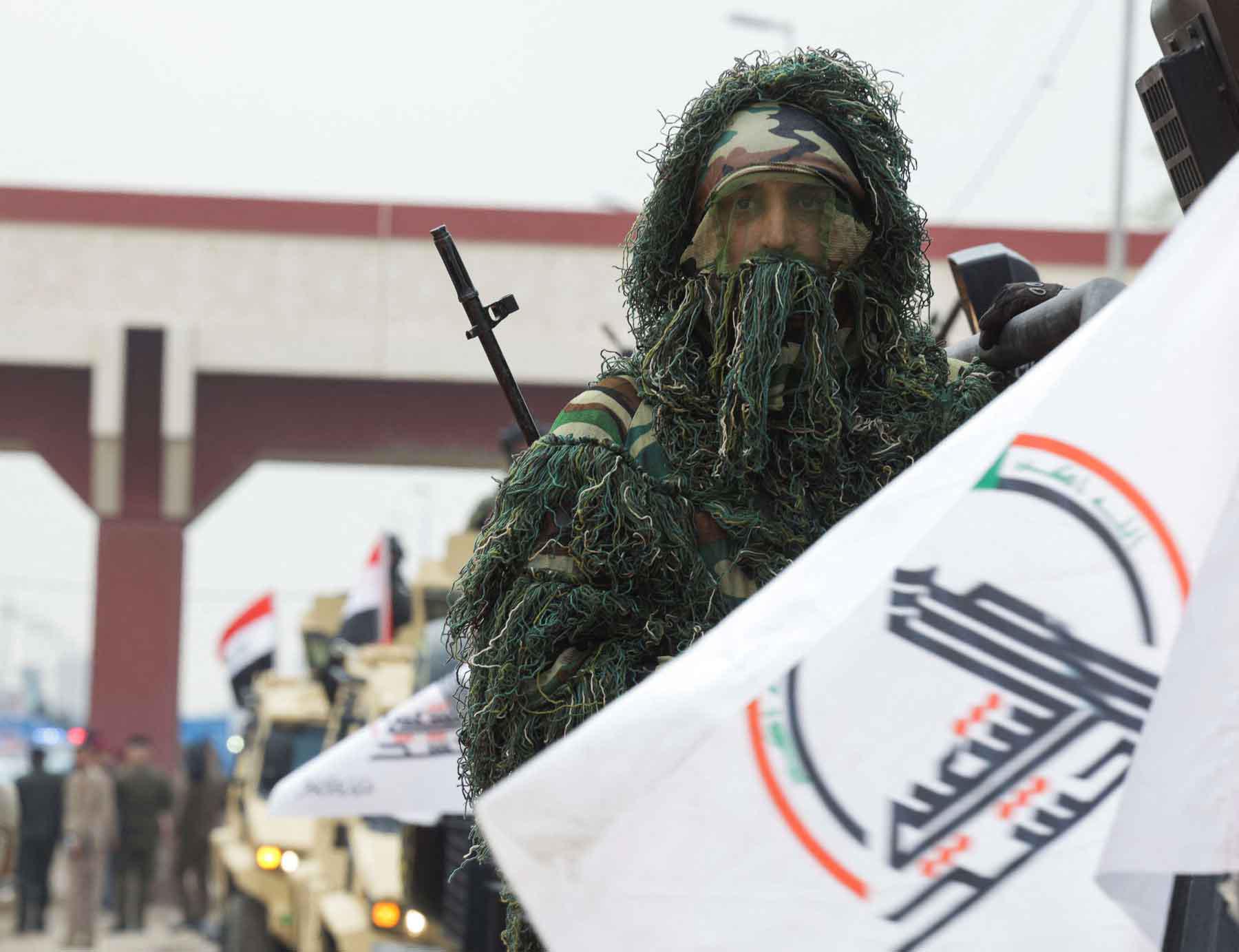
A member of Iraq’s Popular Mobilisation Forces (PMF) rides in a military vehicle next to a flag during a parade in Baghdad, December 10, 2025.
WASHINGTON
The influential American think tank, the Foundation for Defense of Democracies (FDD), called for all politicians linked to Iran-backed militias to be excluded from Iraq’s next government, underscoring a broader US strategy of maximum pressure on Tehran and its regional proxies. The move reflects Washington’s growing concern over the deeply entrenched influence of Iranian-aligned actors, which it now views as an institutionalised network embedded within Iraq’s state structures.
The FDD report noted that the strong performance of Iran’s allies in the 11 November elections posed a significant challenge, potentially triggering the intensification of US efforts. From Washington’s perspective, any political gains by Tehran’s partners immediately enhance their ability to exploit Iraq politically, financially and militarily.
The transitional period ahead of the appointment of a new Iraqi prime minister is being leveraged as a strategic window to push Baghdad toward sovereign decisions that would limit militia influence at the highest levels of government. US policymakers see this phase as an opportunity to ensure that militia-linked politicians are systematically excluded from ministerial and leadership posts.
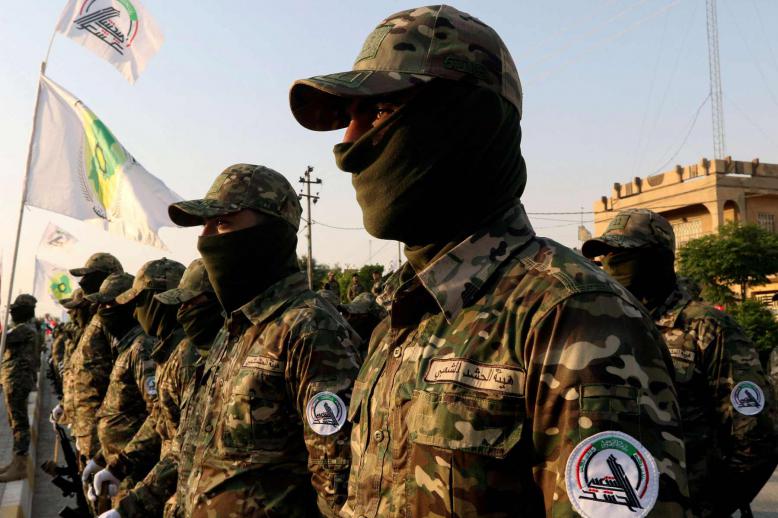
The roots of this network, centred on the Popular MobiliSation Forces (PMF), stretch back to the mid-2000s. Lebanon’s Hezbollah, the report highlights, played a central role in establishing, training and supporting these Iraqi proxies, reinforcing Washington’s assessment that they operate as coordinated arms of Iran’s so-called “resistance axis,” with agendas that often run counter to both Western and regional interests.
Central to the US strategy is a focus on the economic lifeline sustaining these militias. Iran-aligned factions in Iraq wield enormous political and financial power, generating over $1 billion annually through oil smuggling and sanctions evasion.
The PMF’s official budget, estimated at $3.5 billion, is partially diverted to activities outside state oversight. Over the past decade, these actors have exploited Iraq’s cash economy to channel US dollars to Iran and its allies, drawing intense scrutiny from Washington over the central bank and domestic financial institutions. Controlling the flow of currency has emerged as a key instrument in the US maximum pressure strategy.
Iraq’s role as a regional bridge amplifies the stakes. Iranian influence over Baghdad ensures the uninterrupted movement of personnel and arms to Syria and Lebanon, strengthening Tehran’s ability to project power across the Levant.
The rapid reversal by the Iraqi government on freezing Hezbollah and Houthis’ assets, alongside removing them from terrorism lists, illustrates the extraordinary leverage armed factions wield over Iraq’s sovereign decisions, signalling that their pressure extends far beyond ordinary politics.
Washington’s insistence on protecting officials compiling terrorism lists highlights the ongoing internal struggle, with militia groups relying not only on political influence but also intimidation to safeguard their networks from legal dismantling.
For US policymakers, the status quo is unsustainable. Continued militia dominance over decision-making and financial channels threatens Iraq’s stability and undermines broader regional security.
The current strategy seeks to transform Iraq from a theatre of Iranian influence into a stable, sovereign, and neutral state. This entails decoupling politics from militia control, dismantling financial networks that serve Tehran, and supporting Baghdad in asserting full state authority, monopolising weaponry, and ending Iraq’s function as a conduit for Iran’s regional proxies.