



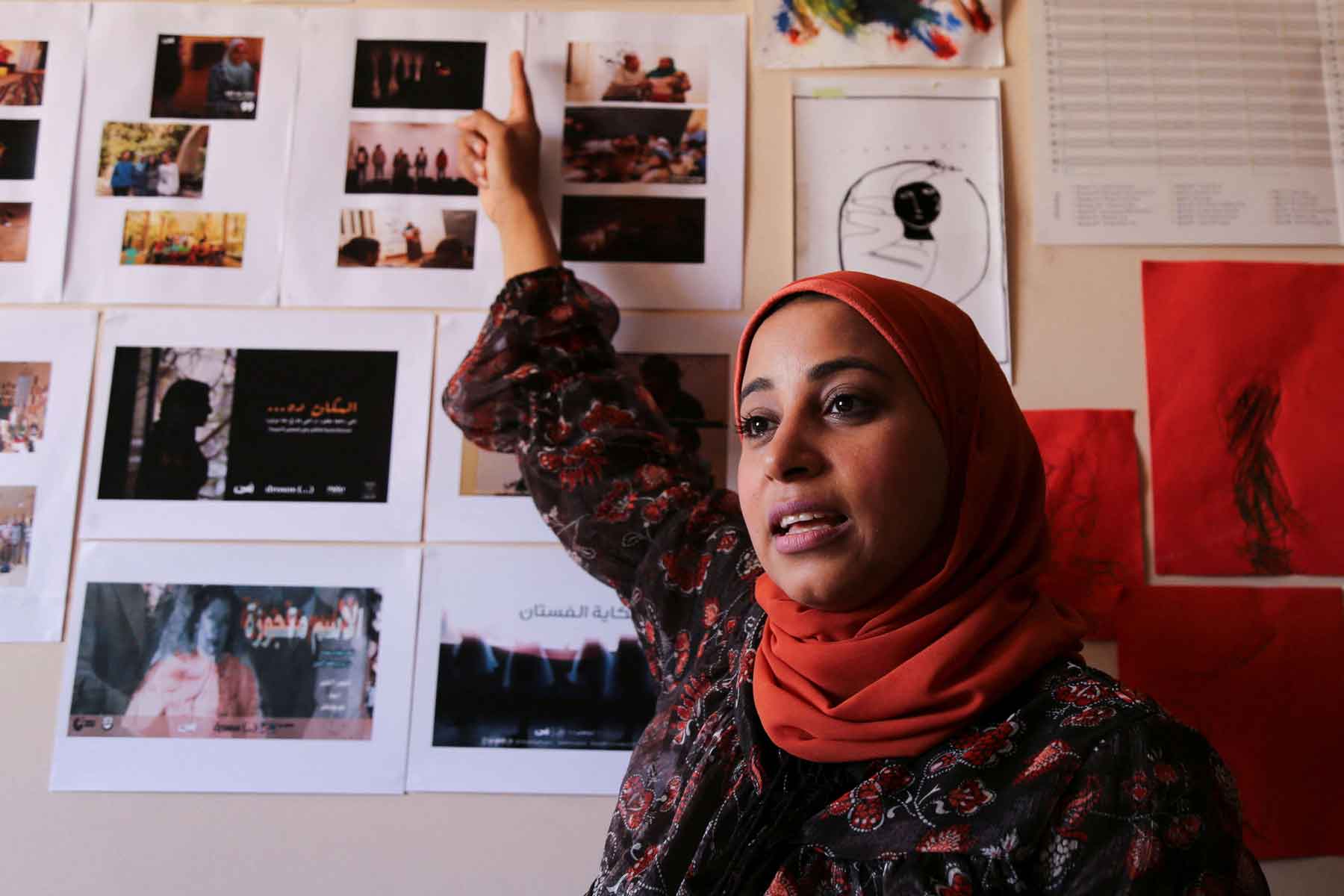
Egyptian founder of ‘Wanas El-Hekayat’, a platform to support women to heal and voice their opinions through storytelling workshops, Zahra Abdellah talks during an interview in Cairo, March 7, 2022.
Viral metro incident highlights rising gender-based violence in Egypt
The footage, which spread rapidly across social media, shows a man from Upper Egypt confronting a seated girl whose legs were crossed in front of him.
Thursday 18/12/2025
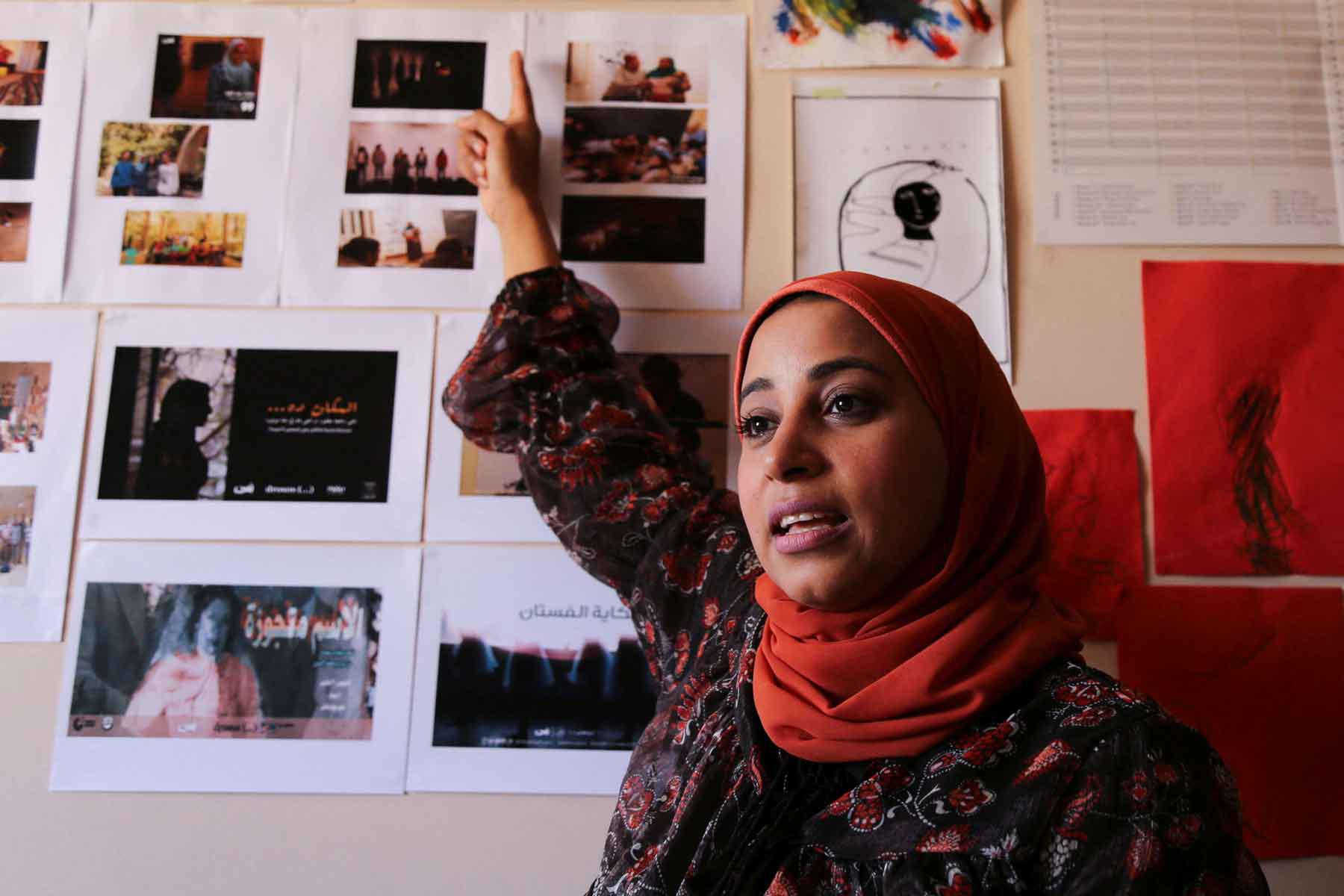
Egyptian founder of ‘Wanas El-Hekayat’, a platform to support women to heal and voice their opinions through storytelling workshops, Zahra Abdellah talks during an interview in Cairo, March 7, 2022.
CAIRO –
A viral video showing an elderly man assaulting a young woman on a Cairo metro train has reignited heated debates over gender, social norms and individual freedoms in Egypt.
The footage, which spread rapidly across social media, shows a man from Upper Egypt confronting a seated girl whose legs were crossed in front of him. Some social media users expressed support for the man, arguing that the girl’s posture was disrespectful given his age, reflecting traditional societal expectations. Others, however, condemned his behaviour as symptomatic of a broader social problem, where some individuals feel entitled to police the actions of others in public spaces without regard for privacy or autonomy.
The incident has also been interpreted as a stark reflection of the persistent issue of violence against women. Commentators noted that the assault appeared motivated not by age but by the girl’s gender, highlighting a pattern in which women and girls are disproportionately subjected to public and domestic aggression. Critics pointed out that similar behaviour from a younger male passenger might not have provoked the same response.
Egypt has recently witnessed a series of shocking gender-based violence cases, particularly against young women, provoking widespread public outrage. Among the most notorious was the “Menoufia bride” case, in which a newlywed woman died after repeated beatings from her husband, who also caused a miscarriage. In Upper Egypt’s Assiut province, a newlywed woman was murdered on her wedding night by her husband, who decapitated her after suspecting she was not a virgin, a claim later disproven by forensic evidence.
Experts link many of these incidents to entrenched social norms and the influence of conservative religious discourse.
A 2024 report documented 1,195 cases of gender-based violence during the year, including 363 murders. Most killings, 261 cases, occurred within families, perpetrated by husbands, partners or other relatives, while 67 were committed by non-family members. Stabbing was the most common method (23.1 percent), followed by strangulation (19 percent) and blunt-force attacks (15.4 percent). Other recorded crimes included 153 rapes, 100 attempted murders, 182 sexual harassment cases, and numerous assaults causing permanent injury.
The report highlighted geographic disparities in violence, with Cairo accounting for 32.7 percent of incidents, Giza 23.3 percent and Qalyubia 6 percent of cases in the Nile Delta. In Upper Egypt, Minya and Sohag recorded the highest rates at 3.9 percent each.
The metro assault, while minor in legal terms, is emblematic of a broader societal challenge: a culture in which gender-based aggression, both in private and public spheres, remains prevalent. Observers say viral incidents like this expose underlying tensions between evolving social norms and deeply rooted patriarchal attitudes, illustrating the continuing struggle for women’s autonomy and safety in Egypt.