

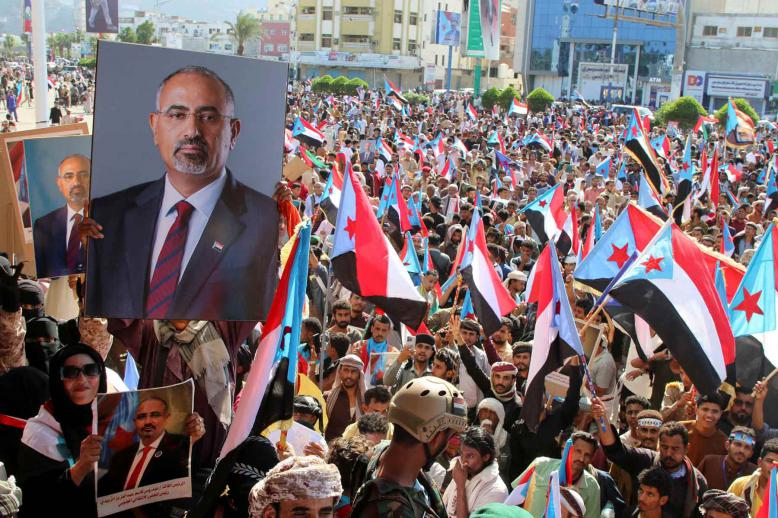
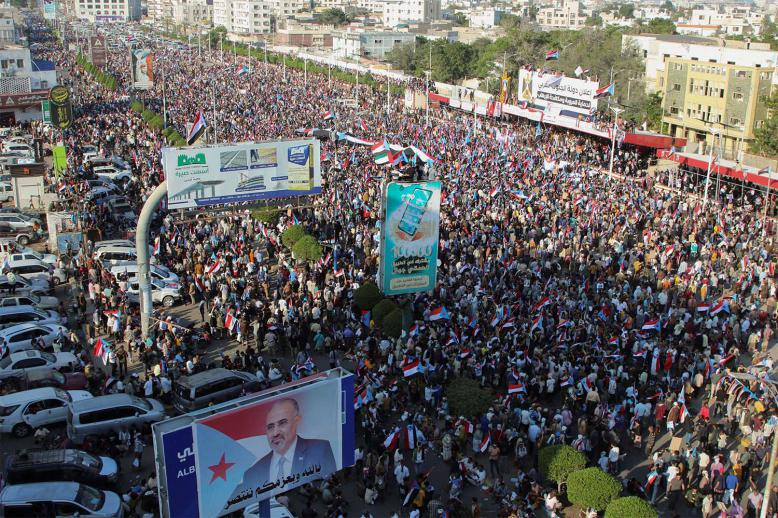
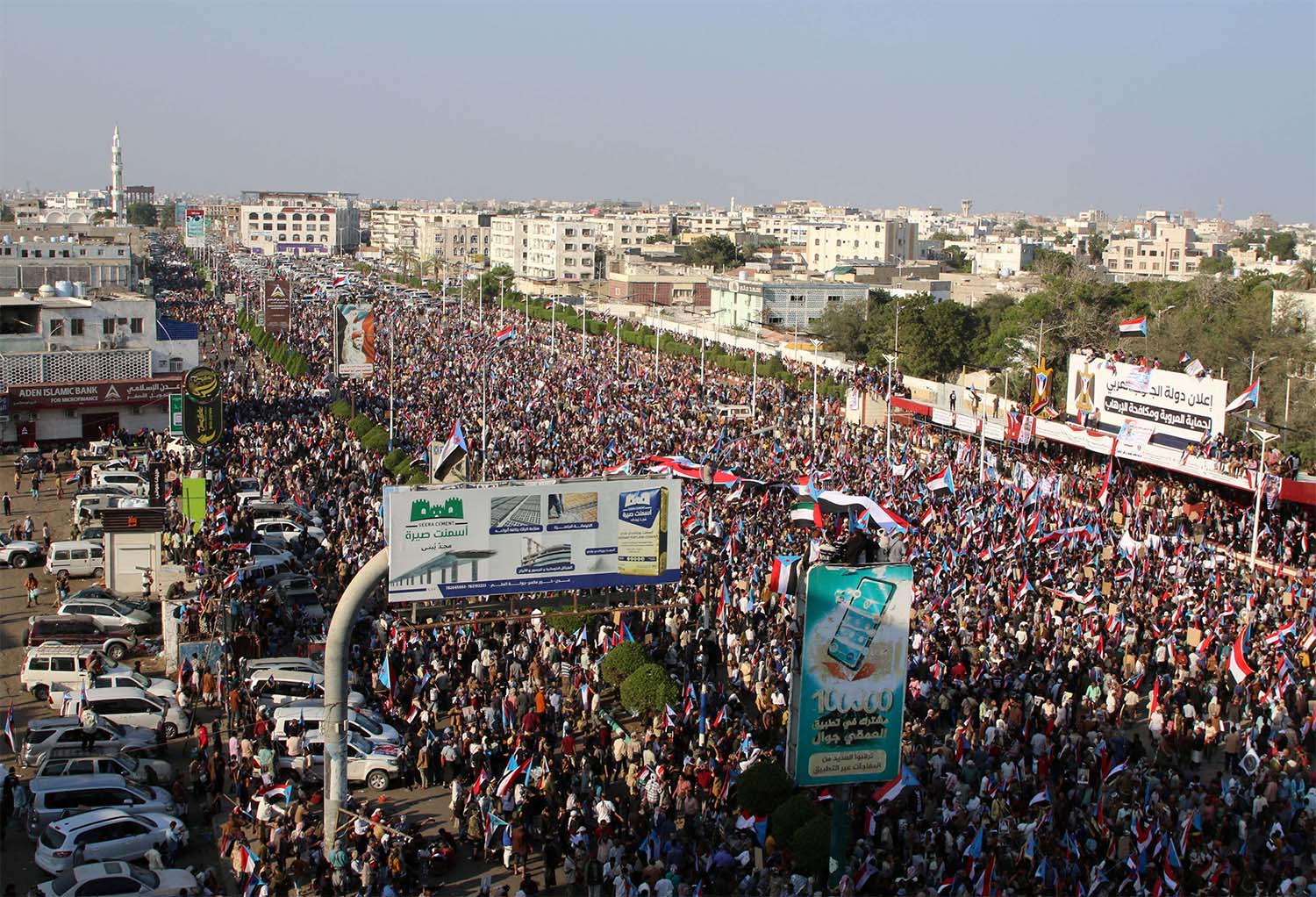
The Saturday rally in Aden showed a huge support for the Southern Transitional Council
Yemen’s southern forces ‘refuse’ to unite under Saudi coalition
Vice president of the Southern Transitional Council says its forces will not integrate under the command of the Saudi-led coalition, highlighting deepening divisions between Saudi Arabia and the UAE in the Yemeni conflict.
Sunday 11/01/2026
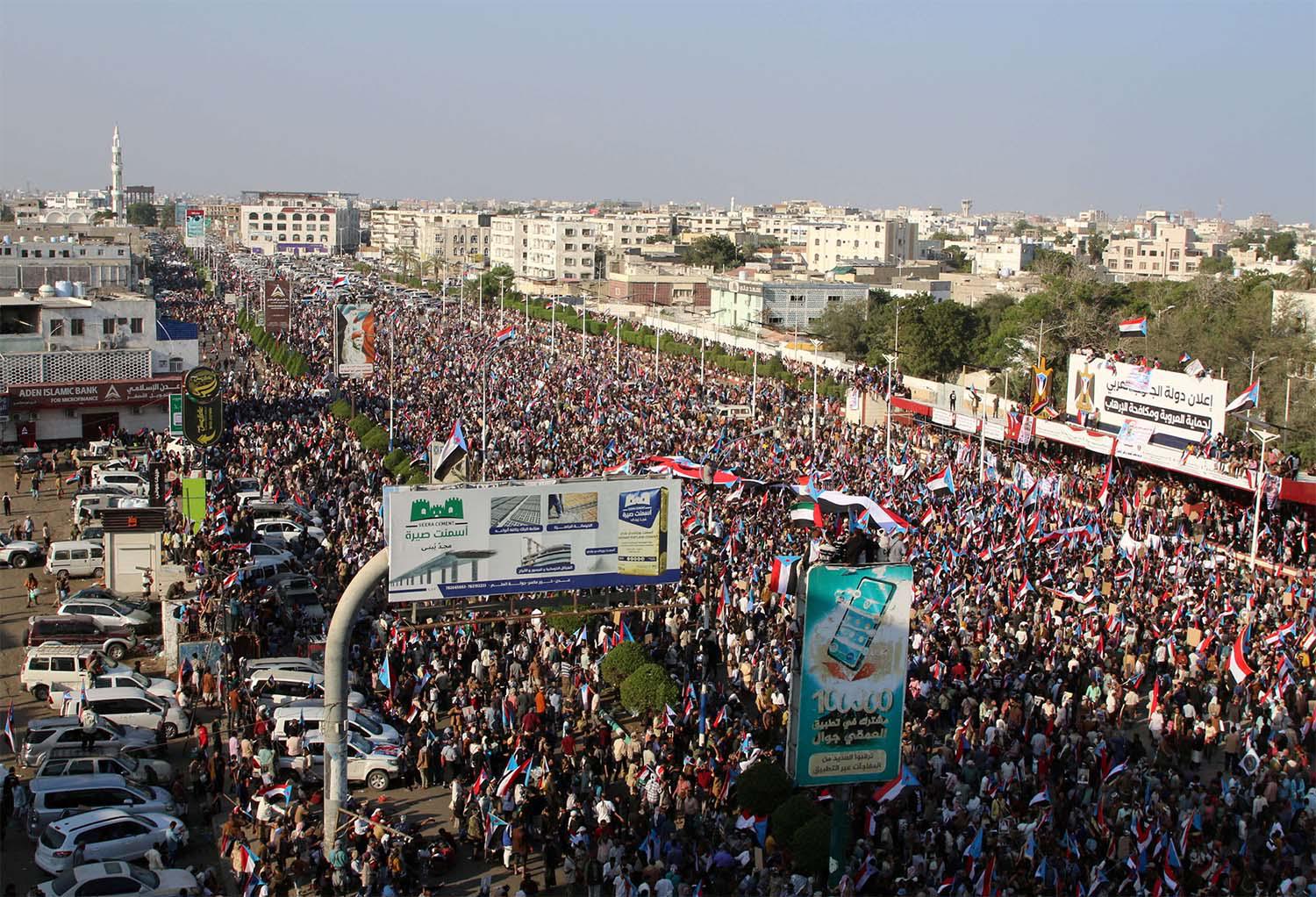
The Saturday rally in Aden showed a huge support for the Southern Transitional Council
ADEN – A prominent pro-UAE official has firmly stated that southern forces will not integrate under the command of the Saudi-led coalition, highlighting deepening divisions between the Kingdom of Saudi Arabia and the United Arab Emirates in the long-running Yemeni conflict.
Rashad Al-Alimi, the head of Yemen's Presidential Council, said on Saturday that all military forces in southern Yemen would operate under the command of the Saudi-led coalition.
But Faraj Al-Bahsani, a vice president of the separatist Southern Transitional Council (STC), said in an interview Sunday with AFP that it would be "difficult to unify forces" under the coalition banner.
"The southern forces, whether affiliated with the Southern Transitional Council (STC), the forces in Hadramawt, or any other force, will not accept this," said the UAE-based Bahsani.
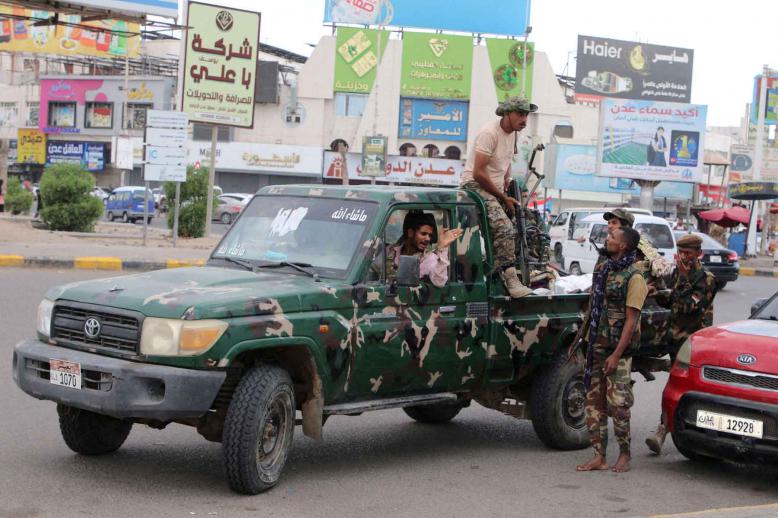
The statement comes amid the collapse of the Southern Transitional Council (STC)'s recent offensive, which saw UAE-backed separatists briefly seize control of much of the former South Yemen territory — including oil-rich Hadramaut and Al-Mahra governorates — only to face a swift Saudi-supported counteroffensive that reclaimed key areas, including Aden.
The crisis erupted in early December 2025 when the STC launched "Operation Promising Future." This swift campaign allowed southern separatist forces to overrun Saudi-aligned positions, pushing toward the Saudi border and prompting Riyadh to declare the moves a direct threat to its national security.
Saudi Arabia responded with airstrikes — including on a suspected UAE weapons shipment at Mukalla port on December 30 — and backed the internationally recognized Presidential Leadership Council (PLC) in demanding the withdrawal of remaining UAE forces.
The UAE complied, announcing a full withdrawal of its remaining troops, which significantly weakened the STC's operational capabilities.
By early January 2026, Saudi-backed Yemeni government forces, supported by coalition airstrikes, recaptured Hadramaut, Al-Mahra, and Aden.
STC leader Aidarous al-Zubaidi was expelled from the PLC, charged with treason, and reportedly fled to the UAE. The STC announced its dissolution on January 9, though some members denied the move, citing coercion.
The Official's Defiant Stance
A pro-UAE Yemeni official, speaking on condition of anonymity but closely aligned with southern separatist elements, declared that southern forces — including elite brigades previously trained and equipped by the UAE — refuse to subordinate themselves to Saudi coalition command.
"Southern forces have proven themselves as the true defenders of the south against terrorism, separatism threats, and Houthi expansion. They will not dissolve into a Saudi-dominated structure that has repeatedly failed to deliver security or respect southern aspirations," said the official.
This position directly challenges recent announcements from the PLC, led by Rashad al-Alimi, which declared the formation of a Supreme Military Committee under Saudi-led coalition oversight to integrate and direct all southern military formations. The move aims to centralize control and prevent future unilateral actions like the STC's December offensive.
Underlying Tensions Between Gulf Allies
The rift exposes long-simmering differences between Saudi Arabia and the UAE. Saudi Arabia prioritizes Yemeni unity to secure its border and focus on the Houthis, while the UAE has invested heavily in southern separatists since 2015, viewing them as reliable partners against al-Qaeda in the Arabian Peninsula (AQAP) and the Muslim Brotherhood-linked Islah party, while pursuing influence in strategic southern ports and maritime routes.
The official's refusal to unite under Saudi command raises the risk of prolonged instability in the south, even as the Houthis remain the primary threat in the north. Thousands rallied in Aden in support of southern separatism over the weekend, waving South Yemen flags and portraits of al-Zubaidi, despite bans on protests.
While some STC elements have engaged in Saudi-hosted dialogue in Riyadh, hardline voices insist that true security in the south requires recognition of southern autonomy or independence — a demand Riyadh has consistently rejected.
As Yemen's civil war enters its second decade, the Gulf powers' fractured alliance continues to complicate efforts toward peace, with southern forces now a flashpoint in the broader regional rivalry.