


A progressive, socially aware programming
Berlin film festival opens with call to challenge the world
Arab filmmakers are poised to make a substantial impact at the 76th Berlinale, with films from the Middle East and North Africa featured across multiple sections of the festival.
Thursday 12/02/2026

A progressive, socially aware programming
BERLIN – The 76th Berlin International Film Festival opened on Thursday with a rallying cry for the power of cinema to influence society, even in turbulent times. Jury president Wim Wenders, one of Germany’s most acclaimed directors, said films have the ability to “change the world,” offering audiences new perspectives on how people live and interact. Yet he acknowledged the limits of cinema’s influence on politics: “No movie has ever truly altered a politician’s thinking,” Wenders said.
Speaking at a news conference alongside fellow jurors, Wenders emphasised that the festival is not a political arena. “We are the opposite of politics. Our role is to serve the public, not the politicians,” he said, even when pressed about Germany’s support for Israel amid accusations of atrocities in Gaza.
The Berlinale, the first major international festival of the year, has long been celebrated for its progressive, socially aware programming. This year, it unfolds amid global unrest, including the violent suppression of protests in Iran and heightened concern over human rights worldwide.
Diverse highlights
The festival opened with “No Good Men,” the latest work by Afghan director Shahrbanoo Sadat. The film follows Naru, a reporter in Kabul, grappling with personal and professional upheaval as Afghanistan teeters on the brink of Taliban rule in 2021. Sadat, who also stars in the lead role, described the selection as a “huge honour” and a milestone for Afghan cinema, giving young filmmakers from the country a platform to tell their own stories on the world stage.
Over ten days, the Berlinale will showcase more than 200 films, including 22 in competition for the coveted Golden Bear, last year awarded to Norwegian director Dag Johan Haugerud’s Dreams. Around 40 percent of this year’s films are directed by women, signalling the festival’s ongoing commitment to gender diversity.
Among the anticipated entries is “Rosebush Pruning” by Brazilian-Brazilian filmmaker Karim Ainouz, described as a satirical critique of patriarchal family structures, featuring Elle Fanning, Jamie Bell and Pamela Anderson. US productions are also prominent, such as “The Weight,” starring Russell Crowe and Ethan Hawke, filmed in southern Germany as a stand-in for the Depression-era US Northwest.
Arab cinema’s rising presence
Arab filmmakers are poised to make a substantial impact at the 76th Berlinale, with films from the Middle East and North Africa featured across multiple sections of the festival.
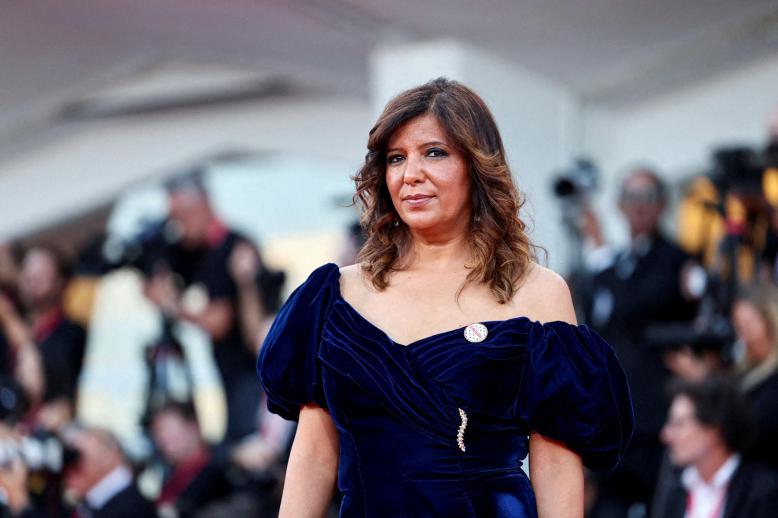
In the main Competition, Tunisian director Leyla Bouzid returns with “In a Whisper,” a family drama tracing Lilia, played by Eya Bouteraa, as she confronts long-buried family secrets during a visit to Tunisia for her uncle’s funeral. The film examines personal identity and the legacy of family ties, resonating with universal themes of memory and reconciliation.
Palestinian director Abdallah Al-Khatib presents “Chronicles from the Siege” in the Perspectives section. The ensemble drama captures life under a citywide blockade, portraying ordinary citizens navigating moral and emotional extremes, offering a raw and unflinching look at survival amid conflict.
The Panorama strand opens with French-Lebanese director Danielle Arbid’s “Only Rebels Win,” a romance unfolding in crisis-hit Beirut. Featuring Hiam Abbass and Amine Benrachid, the story interweaves personal intimacy with political reality, reflecting the city’s layered social fabric. Egyptian filmmaker Mohammed Hammad contributes “Safe Exit,” a psychological thriller exploring the lingering trauma of religious and ethnic violence, while Belgian-Syrian director Tawfik Sabouni’s debut documentary, “The Other Side of the Sun,” revisits Saidnaya prison after the fall of Bashar Al Assad’s government, giving voice to survivors of detention and torture.
Arab cinema also receives recognition in the Berlinale Classics section with a restored Moroccan classic, “Mirage” by Ahmed Bouanani, which tells the story of a villager seeking opportunity in the city after discovering a bundle of cash, highlighting the festival’s commitment to preserving regional cinematic heritage. In Forum Special, “When You Listen to This Song” by Mona Achache and Lola Lafon reimagines Anne Frank’s story, blending historical memory with inventive narrative techniques. In Berlinale Shorts, Lebanese filmmaker Marie-Rose Osta’s “Someday a Child” examines the impact of war on childhood through a blend of fantasy and realism.
Together, these selections demonstrate the vibrancy and diversity of contemporary Arab cinema, offering perspectives that span personal, social, and political spheres while cementing the region’s influence on the international stage.