



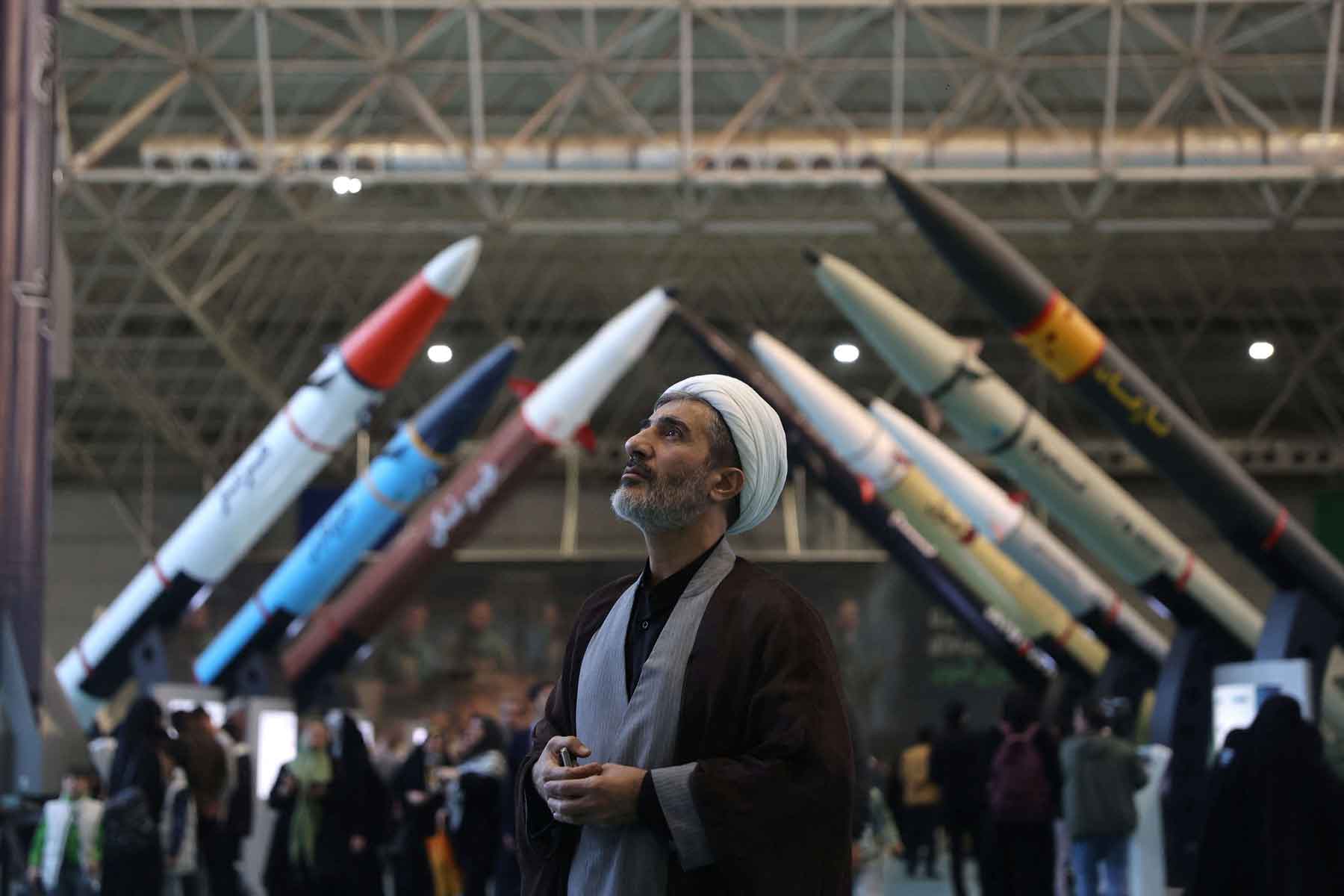
An Iranian cleric visits the Islamic Revolutionary Guard Corps (IRGC) Aerospace Force Museum in Tehran, November 12, 2025.
China at centre of US-Israeli concerns over Iran’s missile programme
Intelligence reports are reportedly shared almost daily with Israel, reflecting tight security coordination between the two allies.
Wednesday 17/12/2025
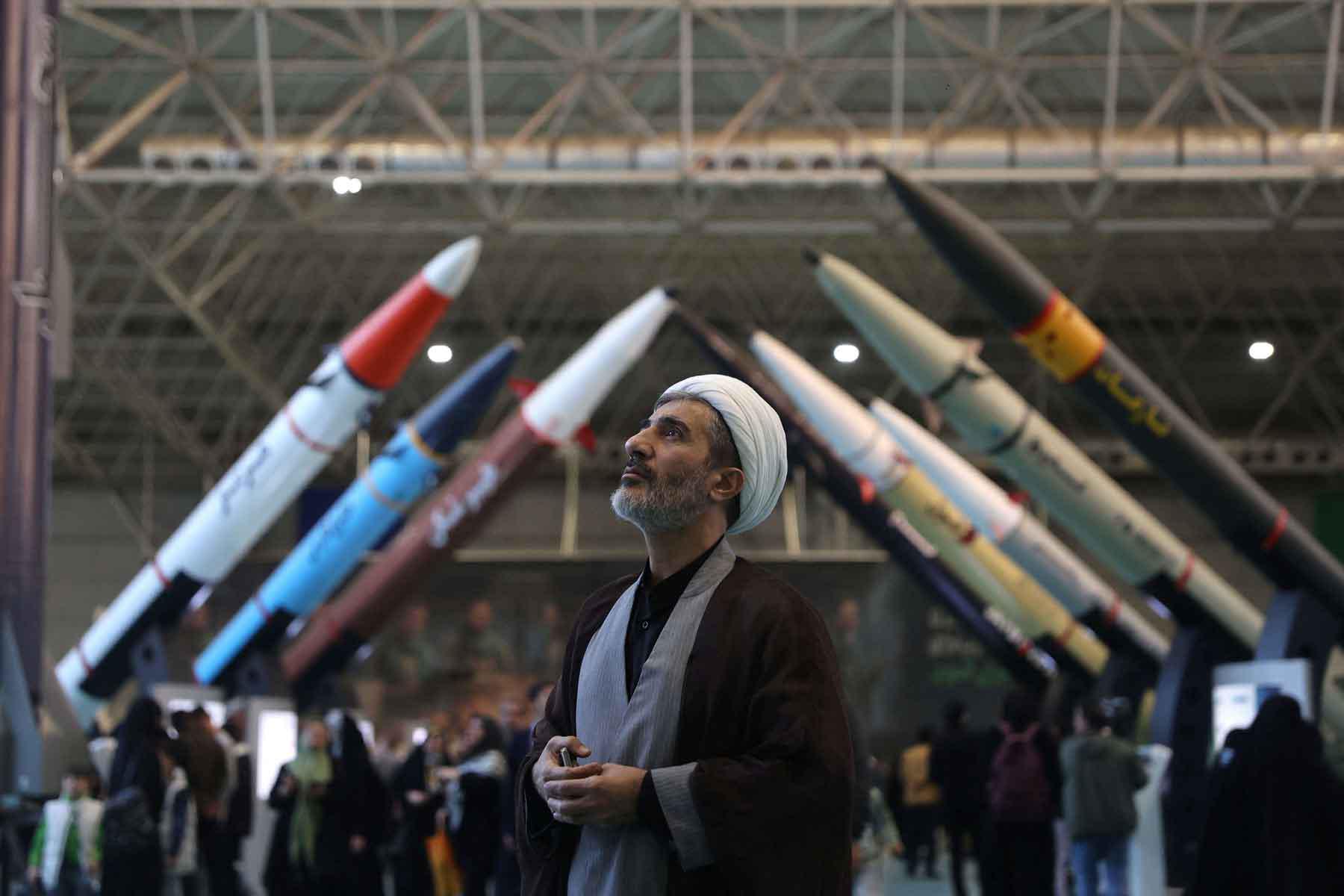
An Iranian cleric visits the Islamic Revolutionary Guard Corps (IRGC) Aerospace Force Museum in Tehran, November 12, 2025.
WASHINGTON/TEHRAN –
Concern is mounting in Washington and Tel Aviv over foreign involvement in indirectly restoring Iran’s military capabilities, with particular focus on its missile programme, and China at the centre of these worries.
According to the defence-focused outlet Defense News, US intelligence agencies are closely monitoring Chinese activities linked to Iran, especially those connected to the reconstruction of ballistic missile systems. Intelligence reports are reportedly shared almost daily with Israel, reflecting tight security coordination between the two allies.
While Beijing appears to be avoiding the direct delivery of ready-to-launch missiles to prevent political embarrassment or direct confrontation with the West, it seems to be pursuing a more indirect approach. This involves supplying Iran with limited shipments of industrial equipment, raw materials and so-called “dual-use” goods, which can serve both civilian and military purposes.
Defense News highlights that Iran has imported large quantities of ammonium perchlorate and other chemical compounds used in solid-fuel rockets, quantities theoretically sufficient to produce hundreds of ballistic missiles.
In addition, precision manufacturing tools, electronic parts and sub-systems used in missile assembly, testing and launch infrastructure have been delivered. Some of these shipments, however, have been intercepted at sea by US special forces in sensitive operations.
Last week, the Wall Street Journal reported a US special forces operation in the Indian Ocean that seized and destroyed a dual-use shipment en route from China to Iran, hundreds of miles off the coast of Sri Lanka. US officials confirmed that the cargo had been under intelligence surveillance for some time and was destined for Iranian companies linked to the missile programme. The operation formed part of a broader Pentagon strategy to dismantle covert supply networks relied upon by Tehran.
In parallel, Chinese and Russian cargo flights to Iran in 2025 reportedly delivered air defence systems, missile components and other military supplies. Analysts argue that this indirect support allows China to strengthen Iran’s missile and defence capabilities while maintaining plausible deniability and claiming compliance with international export regulations.
Israeli warnings are simultaneously intensifying. International media report that following a 12-day confrontation with Israel, Iran is racing to rebuild its missile arsenal, with plans to potentially launch thousands of rockets simultaneously in any future conflict. A former Israeli general has vowed that Israel will not allow Iran to revive its missile, defence or nuclear capabilities, signalling the possibility of new strikes if necessary.
Brigadier-General (res.) Amir Ohavi, chairman of the Israel Defence and Security Forum, warned that any Iranian attempt to reconstruct its damaged military or nuclear infrastructure would cross a red line, potentially plunging the region back into open conflict.