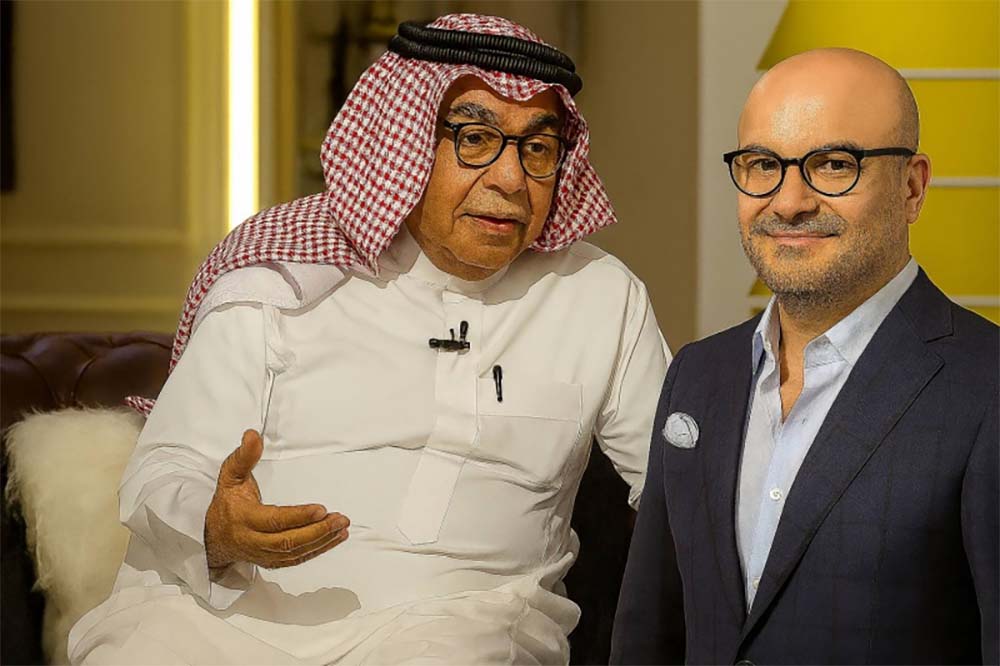
The media market in the Arab world is indeed a sick market
The deferred truth at Al-Shirian and Koteich
The media market in the Arab world is indeed a sick market, but what is even sicker is the political system that insists on keeping this market incapable of healing.
Monday 03/11/2025
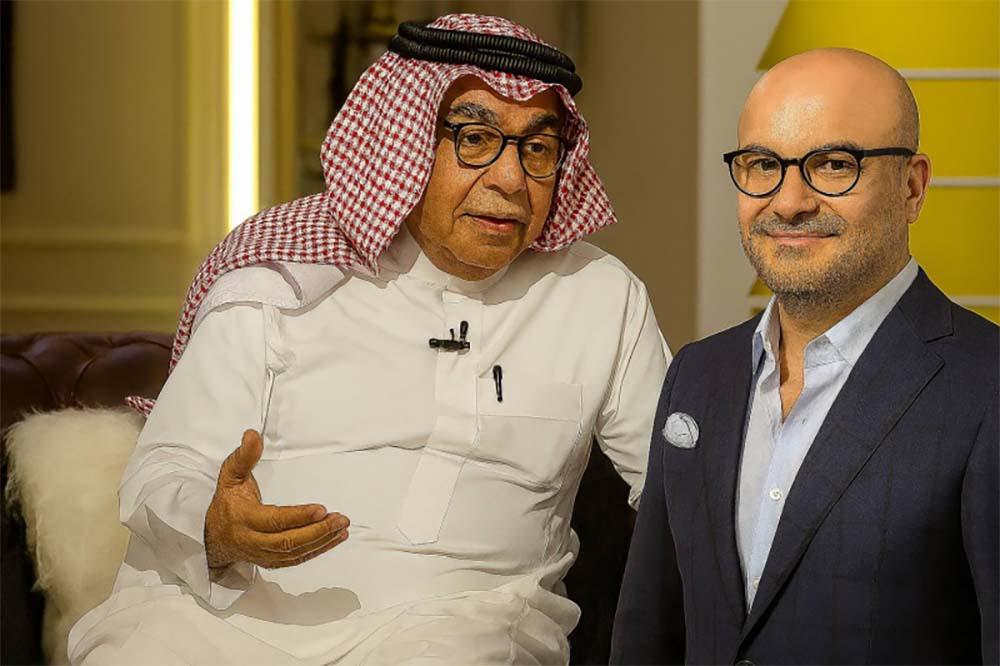
The media market in the Arab world is indeed a sick market
Because we cannot be satisfied with the mere pretext of personal animosity and rivalry between the two colleagues, Dawood Al-Shirian and Nadim Koteich, the dilemma lies in the entire industry of Arab media discourse and the ability of political money to control it.
Consequently, the toxic cultural debate between Al-Shirian and Koteich extended to the public and touched upon the concepts of media freedom, free press, and paid pens in Arab media. It raised the question: what does it mean to be an employee who merely keeps their job, with the core essence of journalism being the last thing on their mind?
Today, it is easy to bestow upon the press the title of the "Fourth Authority," but it is difficult to believe it still holds that power, especially in the Arab world, where media often appears as an elegant propaganda leaflet, skilled at justification and adept at glossing over failure. T
The existential crisis plaguing journalism today is not merely its economic struggles or declining audience, but its submission to two dominant forces: a sick market and political authority, neither of which has any interest in a free press. This is what the personal debate between the Saudi and Lebanese colleagues revealed, transforming in the public eye into a discussion about Arab media and its freedom when it rests solely in the hands of political power.
In the West, journalism is not without its dilemmas, but at least remains capable of holding power accountable. When the Financial Times published an investigation into political influence networks in Brussels, John Thornhill, one of the newspaper's most important writers, commented, "A functioning democracy needs journalism that challenges power, not content designed to appease it." Thus, if journalism fears its own impact, it must redefine its mission.
Ever since journalism turned into an industry, it lost part of its mission. It is no longer produced for the sake of truth, but for the market.
In the Arab world, the mission is not being redefined; it is being reduced. The media is not for monitoring power, but for normalizing it.
This transformation has turned the journalist into a cog in a public relations machine, not an editor in a newsroom. The debate between Al-Shirian and Koteich revealed that Arab media is not run from newsrooms, but from finance offices. Meanwhile, the historical lesson from the powerful men who wrote the US Constitution was that they would prefer a country without a government to a country without a press. Such idealism is not even found in American journalism today, let alone in the Arab world.
In a free press, the editor decides what is published. In the Arab press, the editor is merely a facade. The decision comes from above, from the financier or the authority. Therefore, the content cannot be held accountable because it is not produced within the press, but dictated to it. This is what turns a debate between media figures into mere acting on a stage where none of them control the lighting.
A free press presupposes a free public. But the Arab public has been marginalized—not consulted, not engaged, but indoctrinated. Consequently, it does not demand the truth because it has not been taught to need it. Journalism that does not speak to the public's mind turns into an internal bulletin for the regime, not a mirror of society.
The Arab journalist today does not have the luxury of neutrality. They either write what is demanded of them or remain silent. This harsh choice does not produce journalism; it produces content. And content does not expose power; it beautifies it. Therefore, we cannot believe the debate between Al-Shirian and Koteich is merely a personal or professional disagreement between two colleagues; it is a reflection of the media's own predicament.
The problem of Arab media does not start with the editor, but with the financier, as Al-Sharian indicated when speaking about the Gulf Arab states, or as is the case in Iraq, for example. Ever since media funding became a political tool in the hands of governments, parties, businessmen, and sects, the press can no longer write about corruption without permission, or address failure without directives. It is a press living on the margins of power, writing in its grey areas, where the truth is deferred until further notice.
The media market in the Arab world is indeed a sick market, but what is even sicker is the political system that insists on keeping this market incapable of healing. A free press threatens failed systems because it calls things by their names. And for this reason, most Arab governments, instead of supporting the press, try to break it, because it makes them feel exposed.
I wrote in this space years ago: It is clear that Arab governments are not developing strategies to save newspapers from their crisis in order to keep them struggling and then subjugate them, as they have done throughout their modern history. But by abandoning media outlets to struggle through their crisis without any support, they commit a grave mistake by ending the existence of a free press, opening the door to corruption, sluggish institutional performance, and the suffocation of ideas and talents. Journalism, as a historical force, is not a monologue for government news alone. And today, it is paying the price for its success by being financially strangled to death.
The latest Reporters Without Borders report ranked most Arab countries in the lowest tiers for press freedom, pointing to a "hostile environment where media are managed with a security grip and where invisible censorship is imposed." Ironically, this is sometimes done in the name of "combating fake news," the pretext most lethal to truth in the new century.
It is not strange to find in major newspapers published from Arab capitals, spaces for pre-packaged opinions, reports without sources, and news citing "informed sources" who live in the realm of imagination. The catastrophe is not only the lack of independence, but the transformation of the press into an obedient servant to the narrative of the government, parties, sectarian leaders, and the wealthy, instead of being a mirror of society.
Nevertheless, the path to salvation does not lie through lamentation and toxic cultural and personal debates like the one between Al-Shirian and Koteich. What independent Arab media needs is not just funding, but principled protection for its right to err and correct, to question rather than justify, to uncover rather than promote. If political will is not invested in guaranteeing an independent media space, the press will remain a tool in the hands of political failure, exactly as those who undermined politics intended.
The existential dilemma we face today is not only the dilemma of the press, but the dilemma of a society that has been kept ignorant and divided until it abandoned its need for truth. As for the Arab journalist, they are faced with two choices: to write according to what is demanded of them "as Al-Shirian mentioned," or to be silenced according to what is imposed upon them "as with Koteich."
Karam Nama is a British-Iraqi writer, he has published several books, including "An Unlicensed Weapon: Donald Trump, a Media Power Without Responsibility" and "Sick Market: Journalism in the Digital Age."
Twitter: @karamnama2
Views expressed in this article and may or may not reflect those of Middle East Online.