


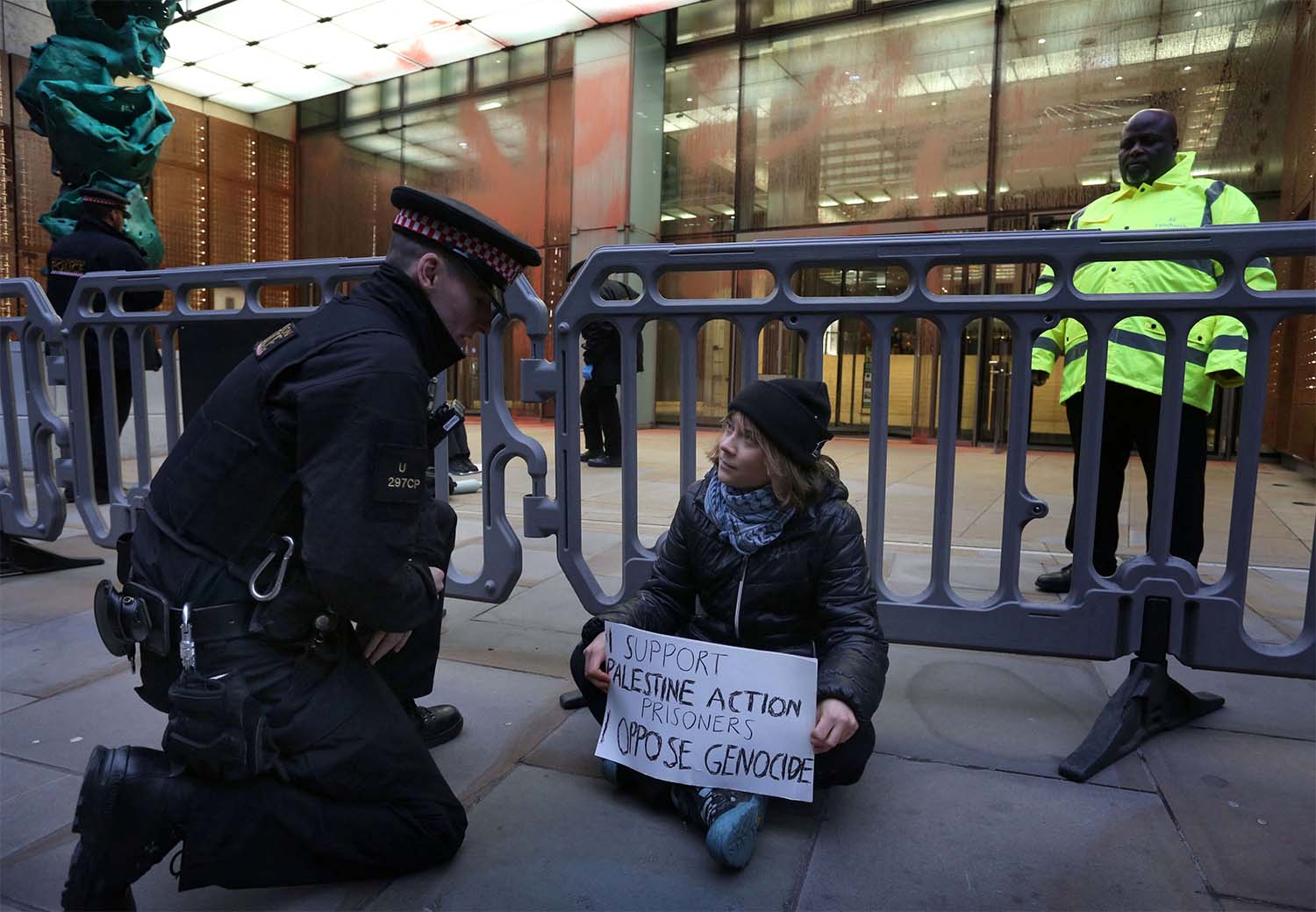
Swedish activist Greta Thunberg was detained by police for supporting Palestine Action group before being rleased
HRW accuses UK of severely restricting right to peaceful protest
Human Rights Watch condemns the "unprecedented misuse" of counterterrorism legislation against peaceful activists, particularly in pro-Palestine actions.
Friday 09/01/2026
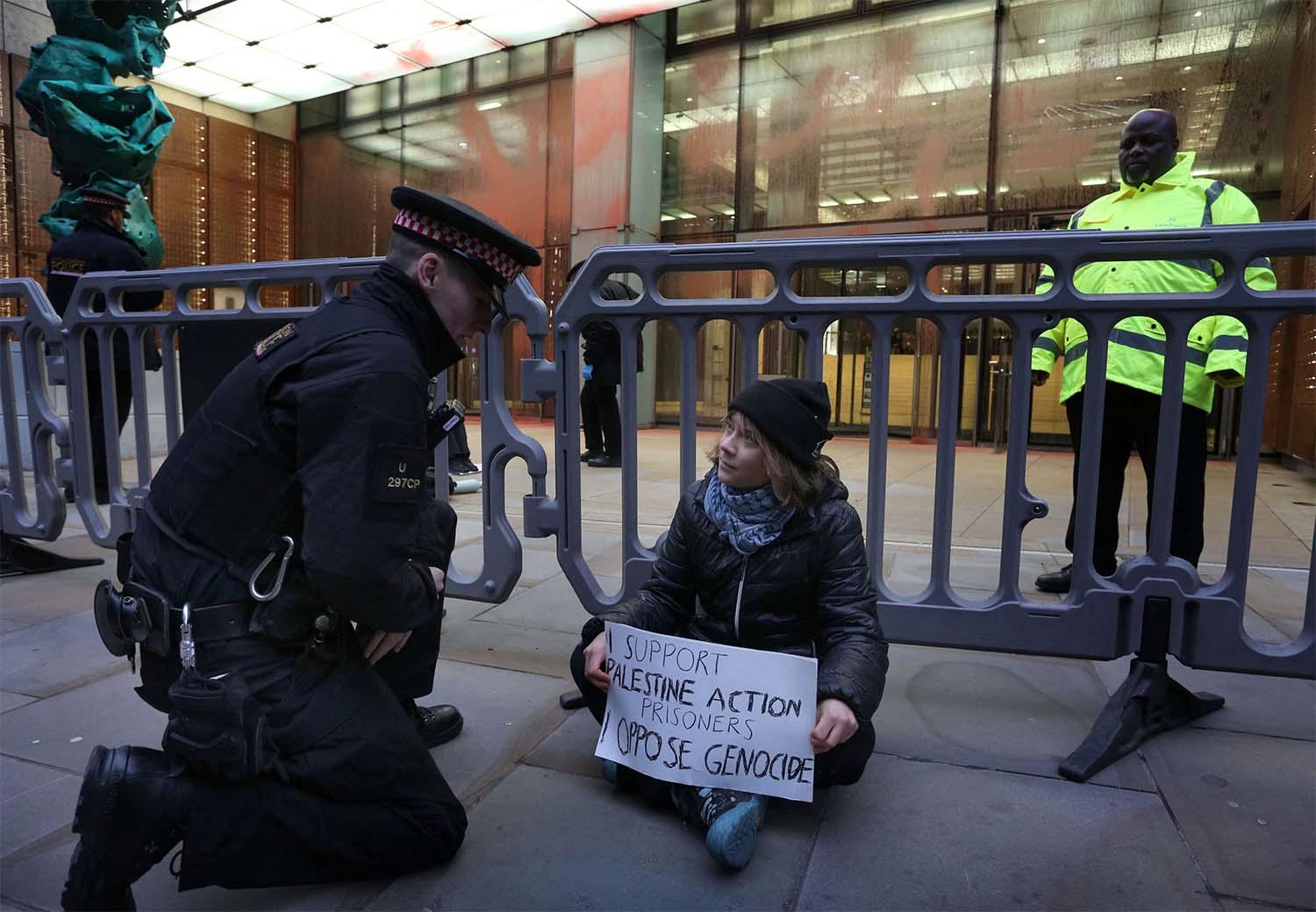
Swedish activist Greta Thunberg was detained by police for supporting Palestine Action group before being rleased
LONDON – Human Rights Watch (HRW) has accused UK authorities of severely restricting the right to peaceful protest in a scathing new report released on Thursday, placing the country in potential violation of its international human rights commitments.
The 47-page document, titled “Silencing the Streets: The Right to Protest Under Attack in the UK,” criticizes the current Labour government for failing to repeal repressive measures introduced by the previous Conservative administration and for pursuing further restrictions.
The report highlights the Police, Crime, Sentencing and Courts Act 2022 (PCSCA) and the Public Order Act 2023 (POA) as key culprits, arguing that their vague and broad provisions grant police excessive discretion, criminalize non-violent tactics, and create a "chilling effect" on civic participation.
HRW warned that these laws risk "silencing dissenting voices, discouraging civic participation, eroding democratic accountability, and ultimately fraying the fabric of democracy itself."
Core criticisms and legal concerns
HRW documented how the laws allow police to impose conditions on protests based on subjective criteria, such as causing "serious unease" or excessive noise, and introduce offenses like "locking on" (attaching oneself to objects or others) or tunneling. Penalties include imprisonment, and new powers enable suspicionless stop-and-search in protest contexts.
Previous UN bodies, including the High Commissioner for Human Rights and the Human Rights Committee, have echoed these concerns, stating that the laws impose "serious and undue restrictions" on peaceful assembly and fail tests of necessity and proportionality.
Adding to the alarm, the Labour government is advancing the Crime and Policing Bill 2025, which proposes banning face coverings at protests and further limiting repeat demonstrators. HRW also condemned the "unprecedented misuse" of counterterrorism legislation against peaceful activists, particularly in pro-Palestine actions.
Broader echoes from rights groups
The HRW findings align with a simultaneous report from the cross-party organization Justice, which describes the situation as an "unprecedented crisis" for protest rights in England and Wales. Both call for repealing restrictive provisions, halting new curbs, and launching a public inquiry into protest policing.
Domestic critics, including Amnesty International UK and Liberty, have long argued that the laws disproportionately affect marginalized groups and environmental or pro-Palestine protesters. Examples cited include mass arrests during climate actions and Gaza solidarity marches, often leading to lengthy sentences for non-violent dissent.
The UK government maintains that the laws balance protesters' rights with public safety and prevent "guerrilla tactics" disrupting daily life. Officials argue existing safeguards ensure compatibility with human rights standards.
However, HRW urges immediate action: repeal or amend the PCSCA and POA, scrap the new bill, strengthen the Human Rights Act, and review unlawful arrests. Without reform, the report warns, the UK risks further eroding its democratic credentials and aligning with authoritarian trends globally.
This controversy underscores growing tensions over civil liberties in the UK, with campaigners vowing continued challenges in courts and Parliament. As protests on issues like climate change and international conflicts persist, the debate over the right to dissent shows no signs of abating.