

A growing arsenal of ballistic missiles and long-range drones
Israel braces for Houthi retaliation amid rising US-Iran tensions
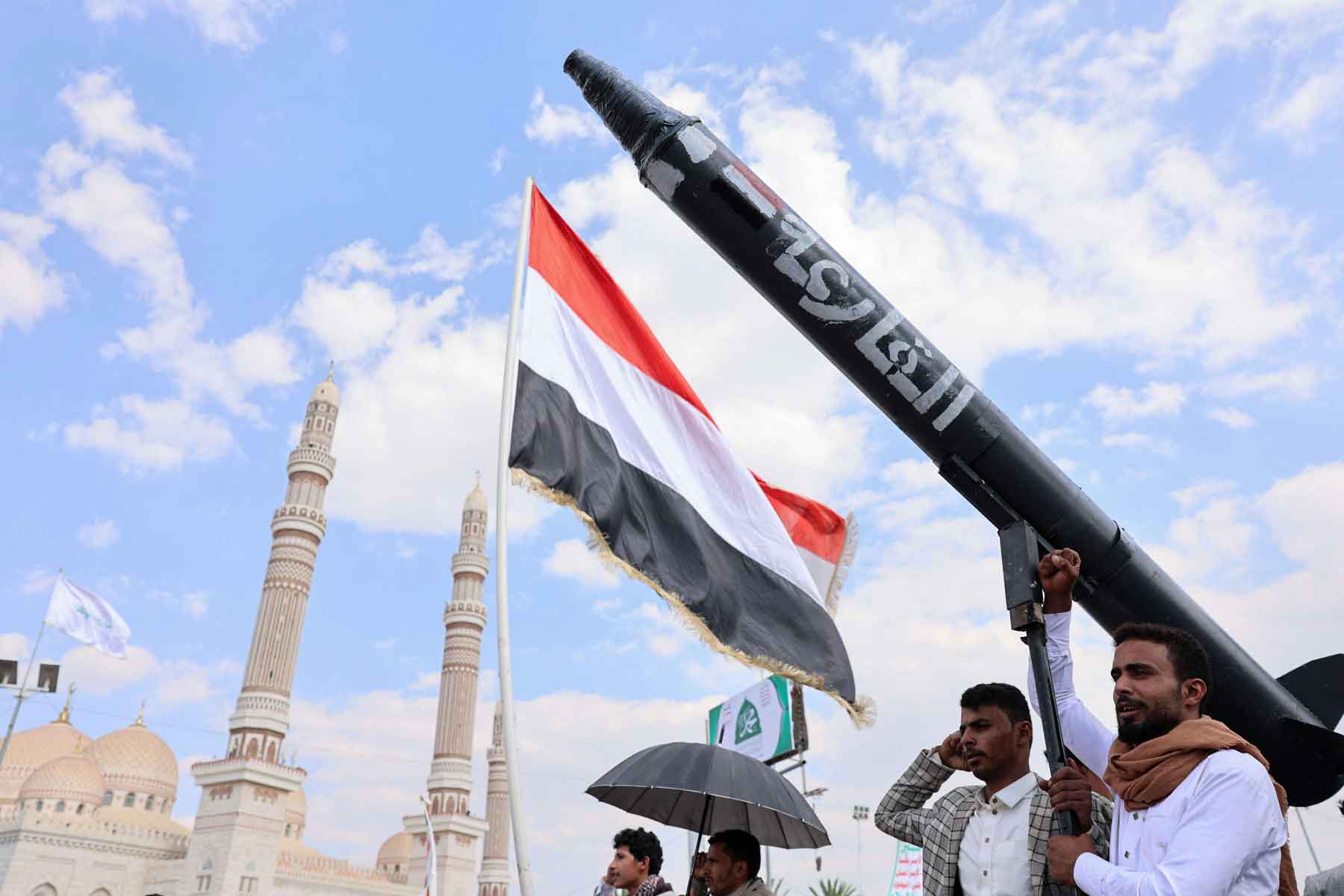
The Houthis possess a growing arsenal of ballistic missiles and long-range drones capable of striking strategic sites deep inside Israel.
Thursday 05/02/2026
A growing arsenal of ballistic missiles and long-range drones
JERUSALEM – The Israeli military declared a state of maximum alert amid fears that Yemen’s Houthi movement could launch missile and drone attacks against Israel in retaliation for any potential US military strike on Iran, according to Israeli defence assessments reported by the country’s public broadcaster.
The Israeli Broadcasting Authority said defence officials believe the Iran-aligned Houthis would respond directly against Israel if Washington initiates military action against Tehran, underscoring growing concerns that escalating US-Iran tensions could trigger a wider regional confrontation.
Political analyst Itay Blumental said Israeli military planners are operating on the assumption that the Houthis would “immediately respond against Israel” in the event of a US attack on Iran. He added that Israel’s air defence systems have been placed on heightened readiness amid fears of renewed aerial bombardment from Yemen.
The alert comes against a backdrop of mounting pressure by the United States and its ally Israel on Iran, particularly following protests that erupted across the country in late December over deteriorating economic and living conditions. The unrest has intensified geopolitical tensions and fuelled speculation about possible external intervention.
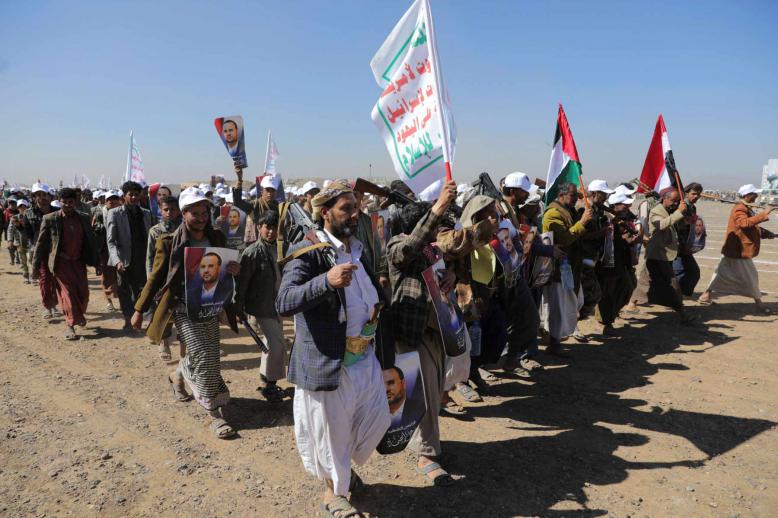
Iran’s regional allies have issued explicit warnings against any US military action. Armed factions in Iraq, Lebanon’s Hezbollah and Yemen’s Houthis have all pledged to defend Tehran in the event of an attack. Iraqi militias have reportedly opened recruitment channels to mobilise fighters in support of Iran, while Houthi leaders have threatened to target US and Israeli interests across the region.
These threats have heightened fears among regional powers that any escalation involving Iran could spark a broader and potentially uncontrollable conflict stretching across multiple fronts.
The Houthis possess a growing arsenal of ballistic missiles and long-range drones capable of striking strategic sites deep inside Israel. The group has already demonstrated its reach by launching missiles and drones towards Israeli territory in recent years, in what it described as support for Palestinians in Gaza.
Those attacks significantly disrupted activity at Israel’s southern port of Eilat, causing near-complete paralysis of operations and dealing a blow to the country’s economy by affecting maritime trade routes and commercial shipping.
Iran, for its part, accuses the United States of using sanctions, political pressure and internal unrest as a pretext to justify foreign intervention aimed at regime change. Iranian officials have warned that any attack on the country, even a limited one, would trigger a “comprehensive and unprecedented” response.
Israel and the United States, meanwhile, accuse Iran of pursuing nuclear weapons capabilities, a claim Tehran denies, insisting that its nuclear programme is intended solely for peaceful purposes, including electricity generation.
The current tensions follow a major escalation in June 2025, when Israel, with US backing, launched a 12-day military campaign against Iran targeting military bases, nuclear facilities and infrastructure, as well as assassinating senior commanders and nuclear scientists. Iran retaliated by firing missiles and drones at Israeli military and intelligence targets.
The confrontation widened on June 22, when the United States struck Iranian nuclear facilities, claiming to have neutralised them. Tehran responded by launching missiles at the US Al-Udeid airbase in Qatar, marking a dangerous expansion of the conflict. A ceasefire between Israel and Iran was announced on 24 June, temporarily halting hostilities.
Despite the ceasefire, tensions have remained high, with Iran’s regional allies, particularly the Houthis, continuing to pose a credible threat to Israeli security. Israeli defence officials now fear that any renewed US military action against Iran could rapidly ignite multiple fronts, with Yemen emerging as a key launch point for retaliatory strikes against Israel.
The latest alert underscores Israel’s growing concern that it could once again find itself on the frontline of a broader regional confrontation driven by escalating rivalry between Washington and Tehran and the expanding reach of Iran-aligned armed groups.