

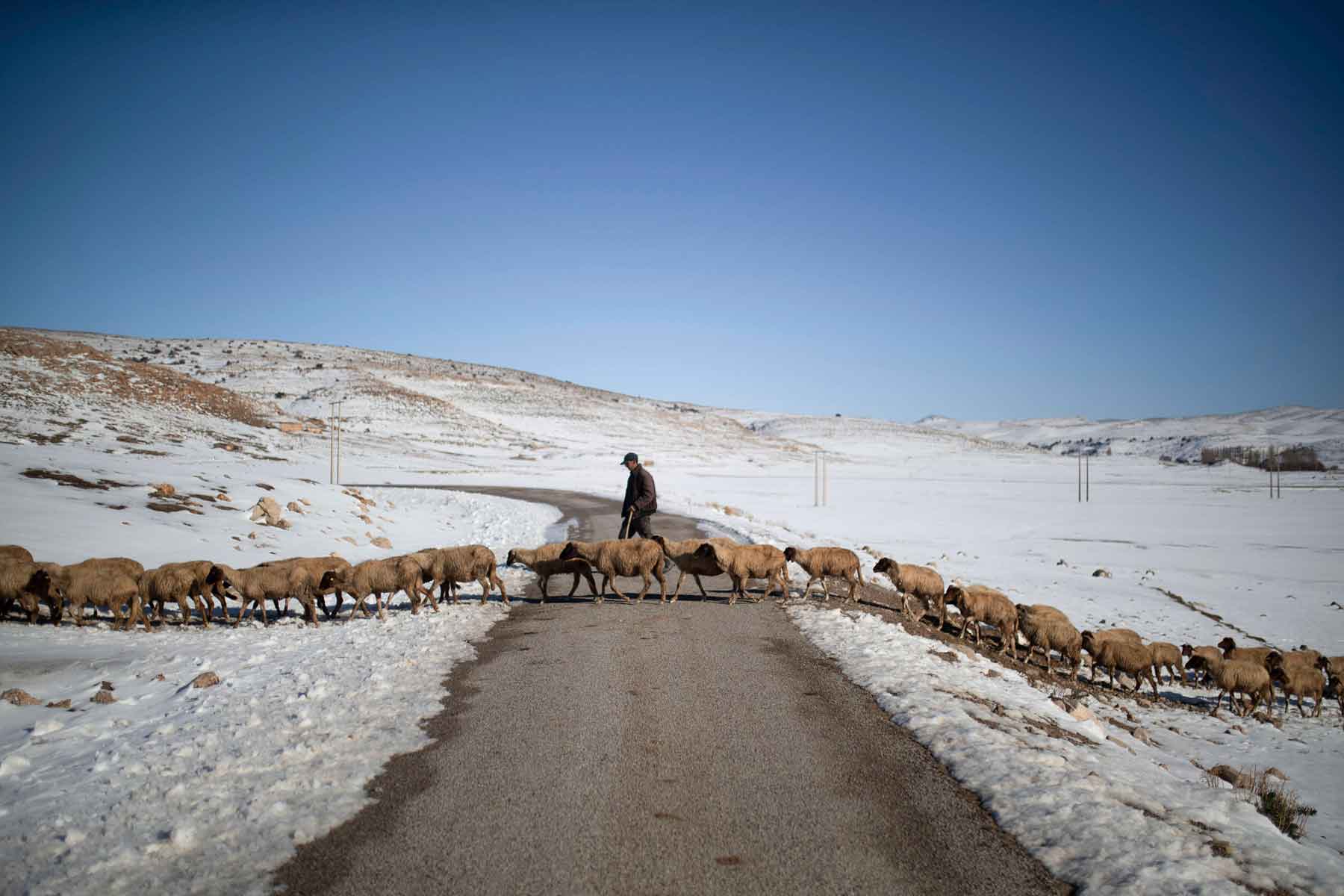
A shepherd crosses a road with his sheep as they graze in amongst the snow in the Middle Atlas, near Azrou, Morocco.
Morocco steps up nationwide response to extreme winter weather
The intensity of the weather has underscored the growing challenges of managing natural risks linked to climate change.
Wednesday 17/12/2025

A shepherd crosses a road with his sheep as they graze in amongst the snow in the Middle Atlas, near Azrou, Morocco.
RABAT –
Morocco has moved swiftly to contain the fallout from severe winter weather that has brought deadly floods, heavy snowfall and plunging temperatures across large parts of the country, prompting an emergency response led by the government and backed by royal directives.
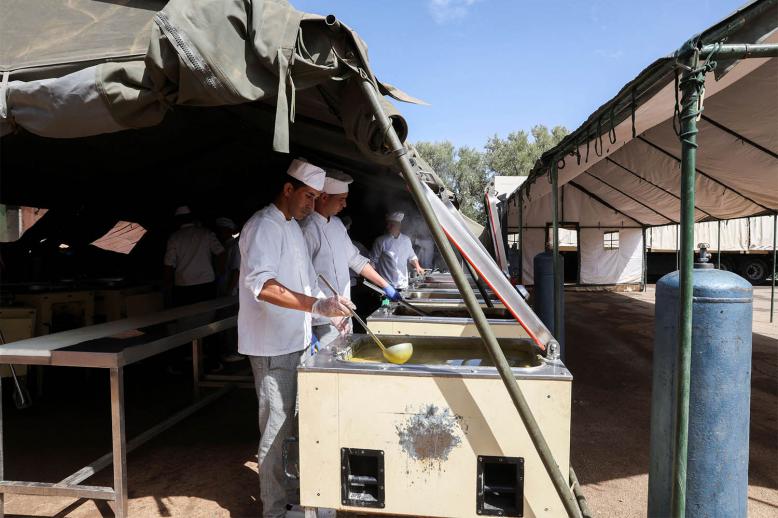
Authorities on Tuesday began distributing urgent aid to tens of thousands of families affected by extreme cold, torrential rain and snowfall, as the country grapples with one of its harshest winters in years. The assistance includes basic food supplies, blankets and heating equipment, aimed at safeguarding minimum living conditions in the hardest-hit areas.
The response follows a major humanitarian tragedy in the coastal city of Safi, where flash floods triggered by heavy rainfall killed at least 37 people in a preliminary toll. Floodwaters swept through parts of the city’s old quarter, damaging around 70 homes and shops, washing away vehicles and cutting off roads, complicating rescue operations and exposing long-standing weaknesses in infrastructure in older neighbourhoods.
Officials said emergency relief efforts would cover 28 regions affected by cold waves, snow and flooding, reaching an estimated 73,000 households nationwide. The operation is being coordinated among government departments, local authorities and civil protection services to ensure aid reaches vulnerable communities as quickly as possible.
Morocco’s Interior Ministry said it had raised alert levels nationwide under direct instructions from King Mohammed VI, ordering heightened preparedness to deal with the potential consequences of volatile weather conditions throughout the 2025–2026 winter season. Governors and regional officials were instructed to strengthen on-the-ground monitoring, improve coordination among emergency services and adopt preventive measures to protect lives and limit material damage.
As part of the response, a central command and vigilance centre has been activated within the Interior Ministry, alongside regional monitoring committees operating under a national cold-weather contingency plan. The ministry said the plan had been updated to reflect evolving field data, expand the scope of intervention and diversify targeting mechanisms to improve the effectiveness of aid delivery.
The extreme weather has affected several Moroccan cities in recent days, with intense rainfall and heavy snowfall reported across mountainous and inland regions. The national meteorological service issued a red alert for snowfall in the High Atlas Mountains, where snow accumulation reached up to 80 centimetres, and an orange alert for heavy rainfall of up to 50 millimetres in much of the country’s central and northern areas.
These warnings prompted authorities to increase vigilance and take precautionary measures, particularly in isolated and mountainous communities. In Ouarzazate province, some 500 kilometres southeast of Rabat, snowfall reached around 50 centimetres, while temperatures dropped below freezing overnight, exacerbating hardship in remote villages already suffering from limited access to basic services.
The scale of the official response reflects the broader climatic context facing Morocco. After seven consecutive years of drought that depleted water reserves and strained major dams, the recent rainfall and snowfall have raised hopes of replenishing water resources. At the same time, the intensity of the weather has underscored the growing challenges of managing natural risks linked to climate change.
Officials say the rapid mobilisation of aid highlights the state’s commitment to national solidarity and swift intervention during emergencies, while also reinforcing calls for long-term investment in infrastructure, particularly in vulnerable and marginalised areas, to better withstand the increasingly frequent shocks of extreme weather.