
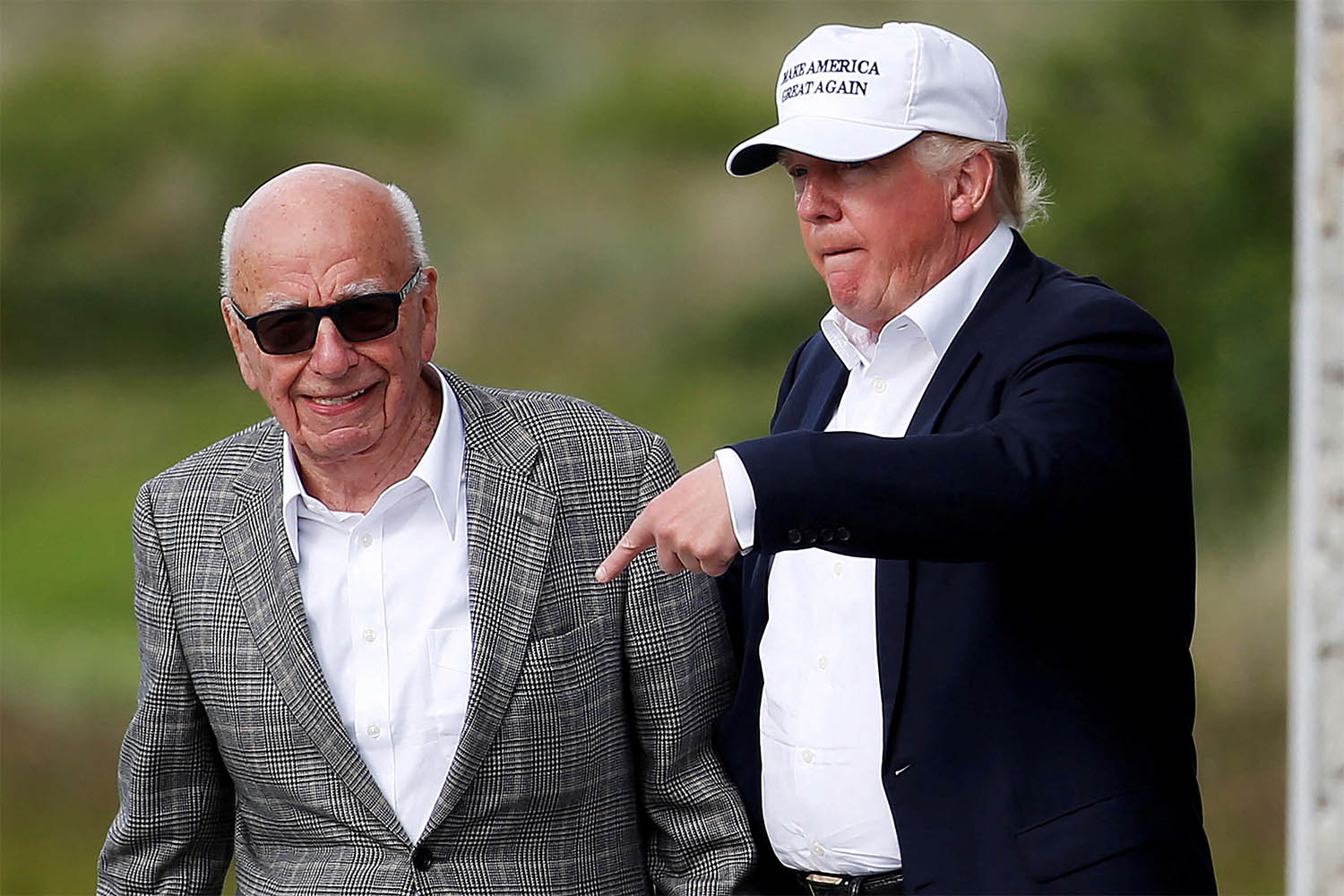
"Two men at opposite ends of the spectrum, both sharing in the destruction of the press"
Murdoch commodified journalism, and Trump demonized it
So when the dispute between Murdoch and Trump turns into a headline defending press freedom, the scene seems caricatural.
Monday 04/08/2025
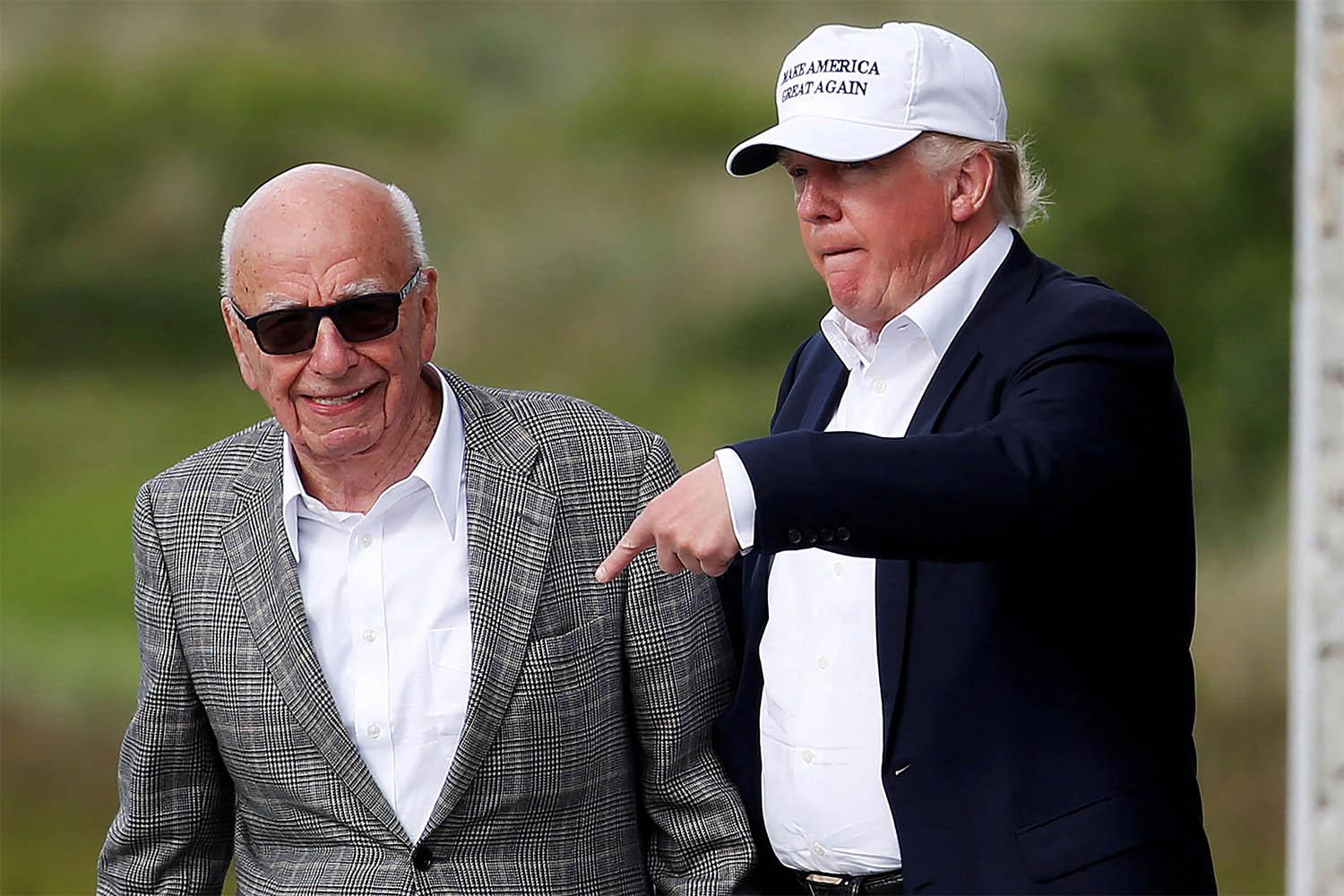
"Two men at opposite ends of the spectrum, both sharing in the destruction of the press"
Because US President Donald Trump will not stop humiliating the press, he sees it as nothing more than a seed of evil and a platform for promoting lies, but even in his current battle with Trump, media mogul Robert Murdoch cannot be the protector of the essence of journalism.
Trump is suing Murdoch, owner of The Wall Street Journal, demanding $10 million in damages over a report about his ties to Jeffrey Epstein, a notorious sex offender. At the same time, the US president continues his arrogant campaign against the media, withdrawing federal funding, barring reporters, and launching billion-dollar lawsuits that threaten to bring down major media outlets, force them to change their editorial policies, or accept humiliating settlements.
But Murdoch is not a Trojan knight defending the press for us to applaud him. When he took over The Wall Street Journal, it seemed that his primary motive was more than ideology or even money; it was a love of crises, of moments when everything seems about to be lost.
He said the same thing to us, as Arabs interested in journalism, at the first Abu Dhabi Media Summit in 2010: “You must raise your sails, because what is coming in the media industry is faster than anyone can wait for.” It was a prophecy from a man who knows well how to turn a profession into a market and words into a commodity.
This is what Alan Rusbridger, former editor-in-chief of The Guardian, breaks down in his book Breaking News when he points out that Murdoch previously priced his newspapers at very low prices, below cost, in order to capture the audience, and that he himself later demanded that readers pay to access his newspaper's website. Market logic is ruthless: open up the market with dirt cheap prices, then close it with subscriptions.
This is how the scene looks: Murdoch “commodified” the press and Trump “demonized” it. Two men at opposite ends of the spectrum, both sharing in the destruction of the press in a time that is truly unfair to it, each in his own way. Between the moral earthquake and market interests, the media mogul who turned journalism into a commodity now seems to be its last defender.
Years after it was written, Rosperdigger's statement still stings: “Robert Murdoch did not come to journalism to protect it, but to buy it.” And since he bought it, he has stripped it of its moral function. He turned it into a platform for shouting. He made it a commodity to be sold and a voice to be rented. He was not a publisher who feared for the profession, but a market man who wanted to double profits, whatever the cost to the truth. In his media network, especially Fox News, journalism was a tool for mobilization, not a space for questioning. It was the platform that glorified Trump for years, before turning against him. This was not because of a professional awakening, but because the cameras stopped bringing in viewers and the ads stopped flowing.
So when the dispute between Murdoch and Trump turns into a headline defending press freedom, the scene seems caricatural. The former spent decades emptying the press of its meaning, and the latter made the media itself his “number one enemy” in his rhetoric. Under the market logic imposed by Murdoch, news became something that could be sold. And something that can be sold can also be killed if it is no longer profitable.
With this logic, journalism is transformed from a social function into a speculative investment. From a project of knowledge and free democracy for the exchange of information, it becomes a money-making venture. Murdoch has never pretended otherwise.
Today, when he wages a media war against Trump, he does so not in the name of the profession, but in the name of corporations, stocks, and advertisers. It is a battle for the future of his empire, not for the fate of truth. Murdoch is not the protector of the press. Just as an executioner cannot play the role of victim, Murdoch cannot suddenly appear as the guardian of the press. He broke it with his own hands, and he continues to profit from its ruins.
Karam Nama is a London-based British-Iraqi writer and journalist
Views expressed in this article may or may not reflect those of Middle East Online.