

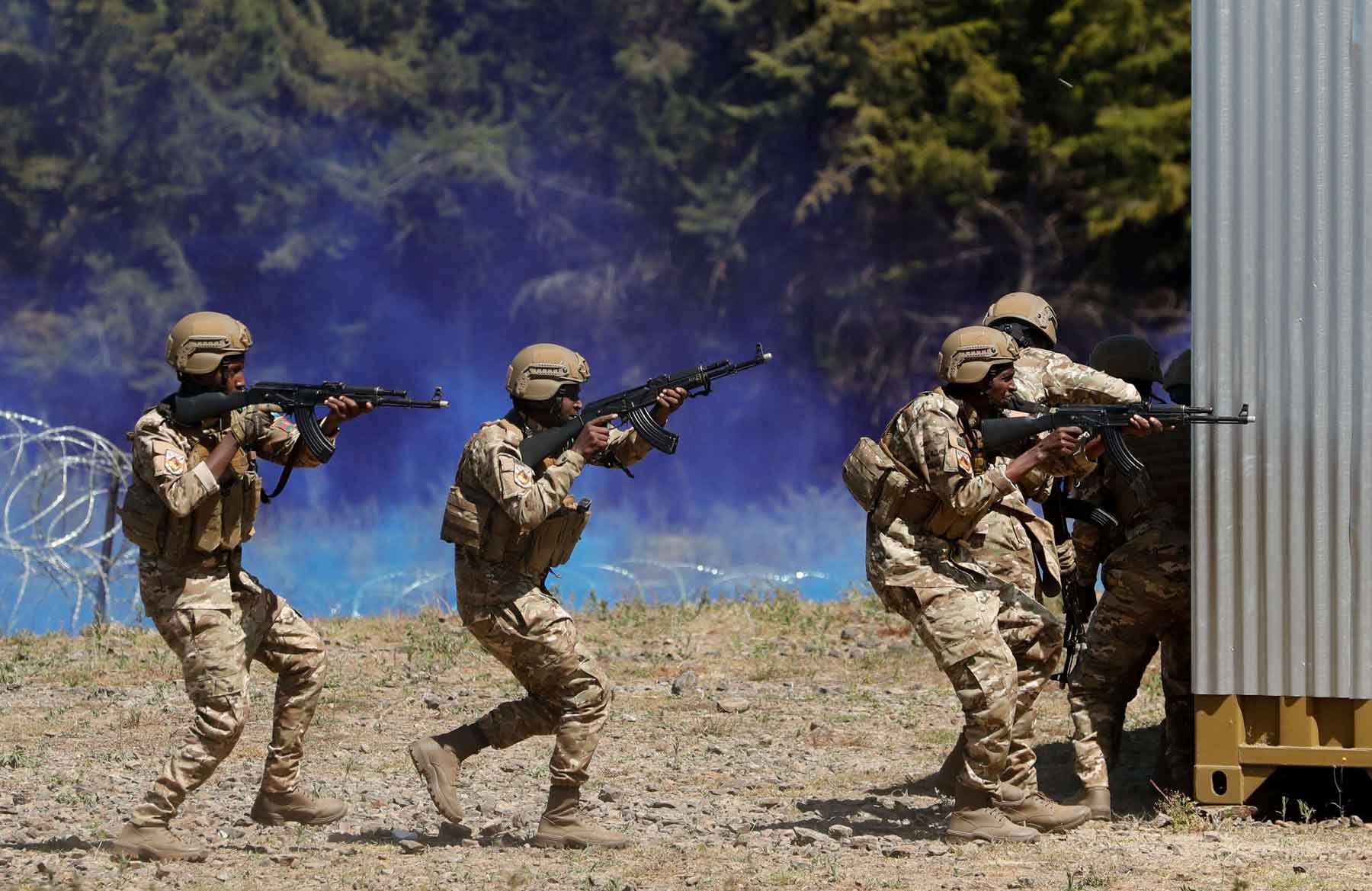
Multinational soldiers participate in a training during an exercise, aimed at enhancing combat readiness and crisis response, at the Umoja village within the Counter Insurgency Terrorism and Stability Operations centre in Nanyuki, Laikipia County, Kenya.
Morocco, EU partners sound alarm over Africa’s expanding jihadist networks
Morocco is regarded as a key pillar in counterterrorism efforts in the region and, drawing on its expertise, has succeeded in dismantling numerous terrorist cells.
Friday 12/12/2025
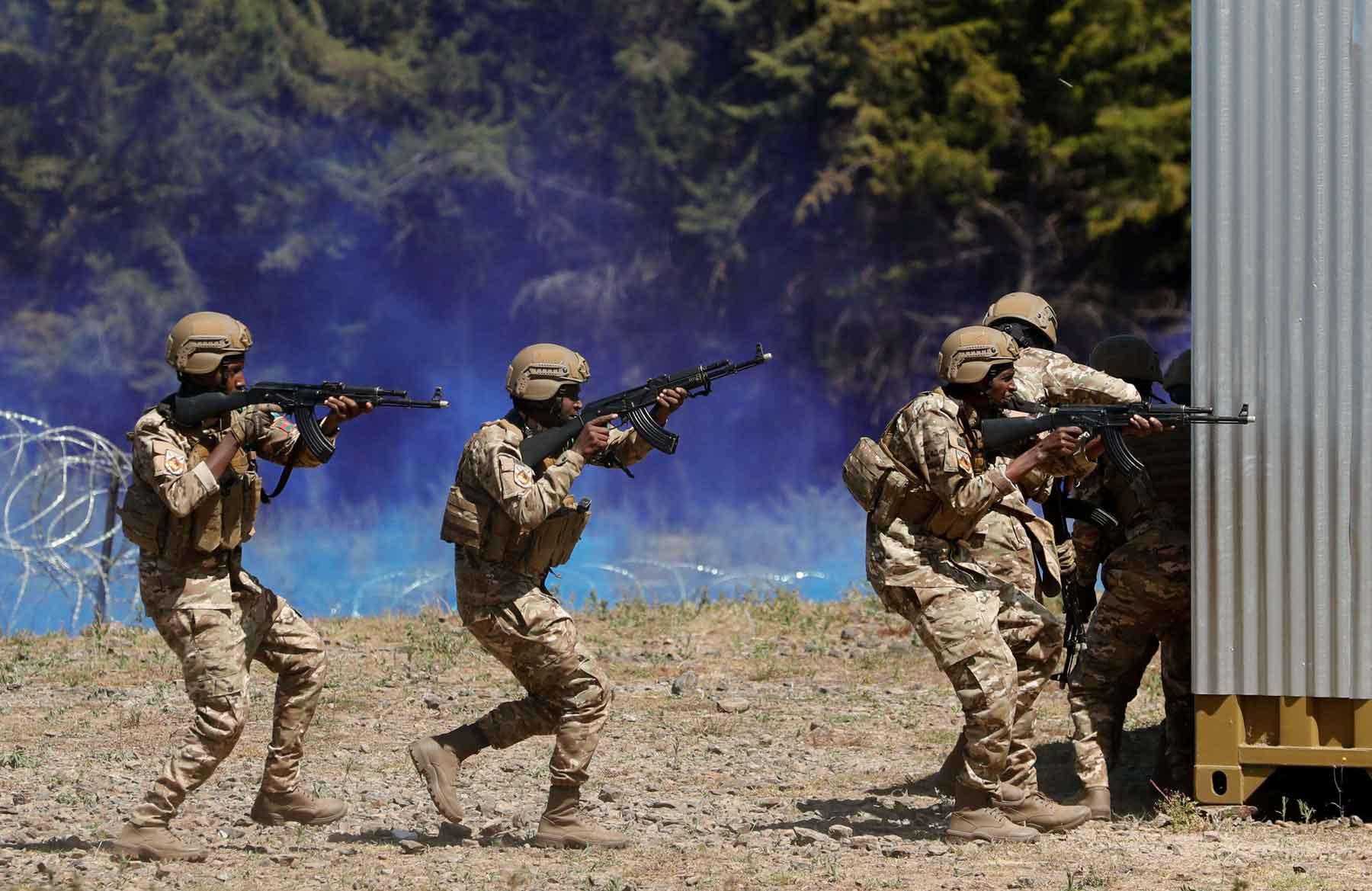
Multinational soldiers participate in a training during an exercise, aimed at enhancing combat readiness and crisis response, at the Umoja village within the Counter Insurgency Terrorism and Stability Operations centre in Nanyuki, Laikipia County, Kenya.
RABAT
Morocco and three European countries warned of the growing threat of terrorism in West Africa and the Horn of Africa, driven by political, economic and security instability in those regions.
Moroccan authorities have been sounding the alarm over the rise of extremist groups linked to al-Qaeda and Islamic State across the African continent, in a trend that threatens regional security and Europe’s safety.
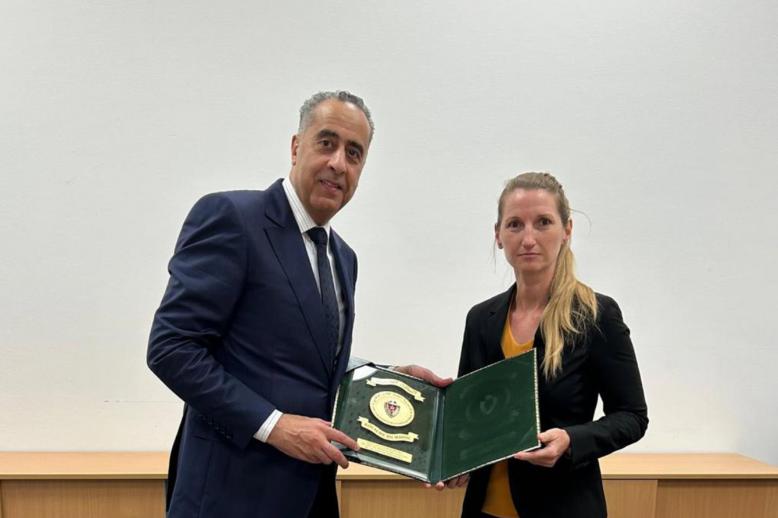
The warning came in the final communiqué of a two-day meeting in Rabat that brought together the prosecutors-general of the four countries party to the Quadripartite Agreement on Judicial Cooperation in Counterterrorism, Morocco, France, Belgium and Spain, according to a statement from Morocco’s Public Prosecution Office.
The communiqué said that the Middle East and the African Sahel had become, over the past three years, fertile ground for the spread of terrorism as a result of political, economic and security instability in a number of West African and Horn of Africa countries.
It described the Sahel as a “global epicentre of terrorism,” noting that it alone accounted for 60 percent of all terrorism-related deaths worldwide in 2024.
Groups affiliated with al-Qaeda and Islamic State control large areas in countries such as Mali and Niger, where they have carried out extensive recruitment amid state weakness and the suspension of security and military cooperation with European and Western powers.
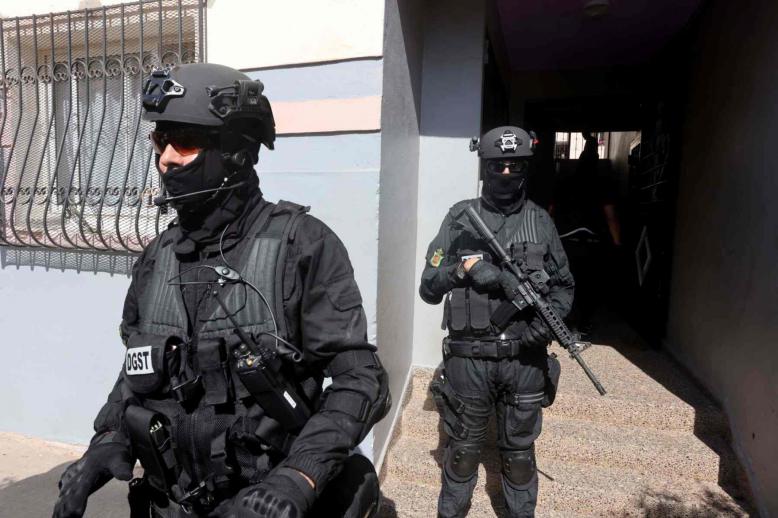
Morocco is regarded as a key pillar in counterterrorism efforts in the region and, drawing on its expertise, has succeeded in dismantling numerous terrorist cells and thwarting planned attacks inside the country and beyond, efforts that have been welcomed by European partners.
Despite the significant work undertaken, the communiqué said that the security situation in the four countries (Morocco, France, Belgium and Spain) “still faces terrorist threats,” including the use of digital spaces for recruitment and spreading extremist ideas, as well as attempts to exploit regional flashpoints to undermine national security, and continued recruitment targeting vulnerable individuals with financial incentives.
It also warned of other risks, chiefly the rise of violent extremist political rhetoric in some Western countries.
The four nations noted that the use of technological advances and encryption by terrorist groups further complicates monitoring and tracking, “significantly hindering investigations and judicial inquiries.”
They affirmed the need to adopt a holistic approach to combating terrorism, establish mechanisms to prevent violent extremism, and develop strategies to dismantle extremist narratives, according to the communiqué.
Morocco, France, Belgium and Spain signed a judicial cooperation agreement on counterterrorism in 2009, which serves as a reference framework for coordination among them.
The Sahel region hosts numerous extremist movements, including Jama’at Nusrat al-Islam wal-Muslimin, al-Qaeda’s Sahel affiliate, which was formed in 2017 and has continued to consolidate its presence by exploiting instability, weak state institutions and military coups in Niger, Mali and Burkina Faso.