


Saudi backing, particularly when aligned with Washington, could be decisive.
Saudi strategic influence grows in bid to stabilise Sudan
Beyond formal diplomacy, Saudi efforts appear aimed at rebuilding minimal trust between the warring parties.
Tuesday 16/12/2025
Saudi backing, particularly when aligned with Washington, could be decisive.
RIYADH -
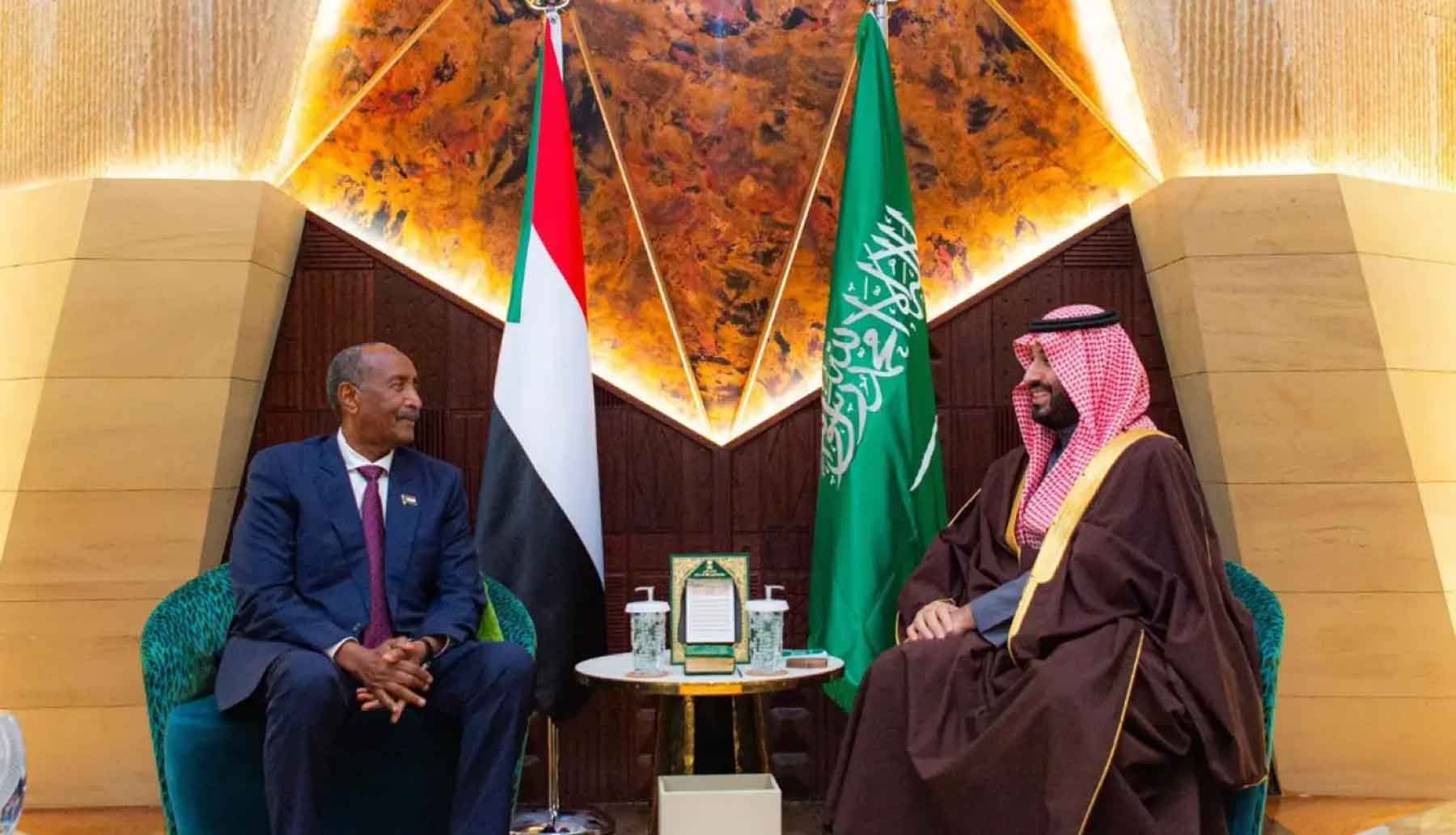
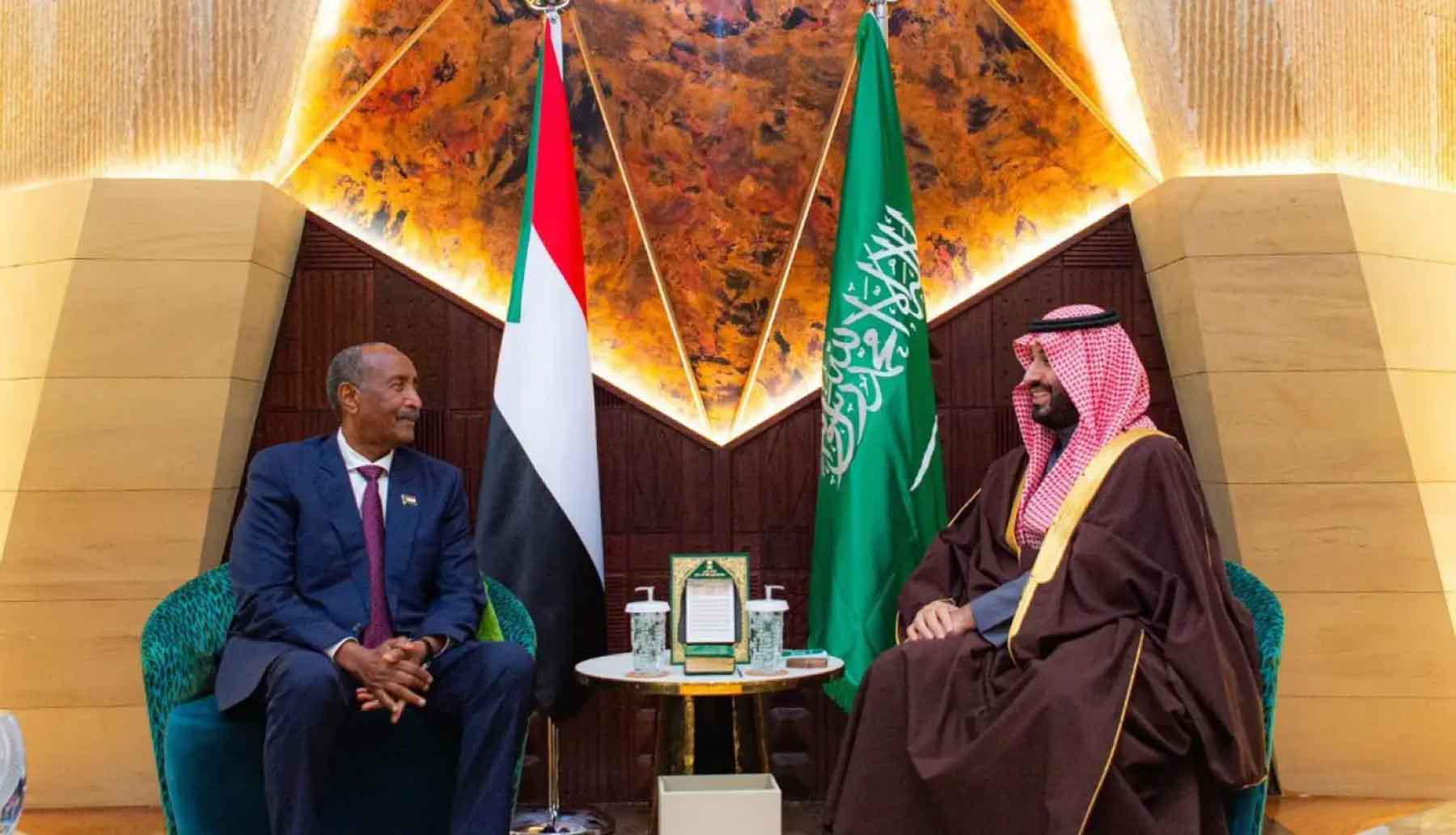
When Saudi Crown Prince Mohammed bin Salman received Sudan’s Transitional Sovereignty Council chairman Abdel Fattah al-Burhan in Riyadh on Monday, the meeting went beyond diplomatic protocol. It underscored Saudi Arabia’s growing role as a central power broker in efforts to arrest Sudan’s devastating war and steer the country towards a negotiated settlement.
Official readouts were deliberately sparse. Saudi state news agency SPA said the talks focused on developments in Sudan and efforts to establish peace and security, offering few details. Yet the timing, setting and political choreography surrounding Burhan’s visit point to a far more consequential engagement, one that reflects Riyadh’s intent to move from mediation to meaningful influence.
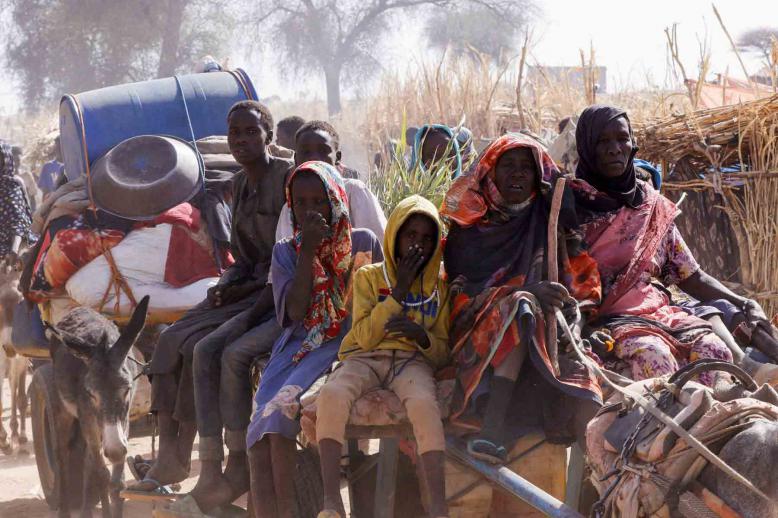
The talks took place as fighting between the Sudanese army and the paramilitary Rapid Support Forces (RSF) continued across multiple fronts, particularly in the three Kordofan states and Darfur. The conflict, which erupted in April 2023, has killed thousands and displaced millions, fragmenting the country and fuelling what aid agencies describe as one of the world’s worst humanitarian crises.
Against this backdrop, Burhan’s arrival in Riyadh early on Monday carried significant weight. According to Sudan’s Deputy Foreign Minister Muawiya Osman, the visit concluded as a “successful friendly” engagement that addressed both the course of bilateral relations and ways to elevate them “to broader horizons through a sustainable strategic partnership.” Central to this vision, he said, was the Strategic Cooperation Council between Sudan and Saudi Arabia, overseen directly by the two countries’ leaderships.
For Saudi Arabia, the Sudan file has steadily shifted from a peripheral concern to a strategic priority. The conflict threatens Red Sea security, regional trade routes and broader stability across the Horn of Africa, areas where Riyadh has invested heavily in recent years, both politically and economically. As a result, the kingdom increasingly views Sudan’s war not as a contained internal crisis, but as a destabilising regional fault line.
That perspective was evident in the meeting at Al Yamamah Palace, attended by senior Saudi figures spanning defence, foreign affairs, national security and finance. Such broad representation signalled that Riyadh is treating Sudan as a multidimensional challenge, where military, political, economic and humanitarian considerations are inseparable.
Saudi officials appear intent on transforming traditional mediation into a more assertive form of diplomacy, one that can exert direct leverage over the conflict’s principal actors. In practice, this means focusing on Sudan’s army leadership, which remains a key gatekeeper to any viable political settlement.
Sudan today is effectively divided. The armed forces control most of the country’s 13 states, including the capital Khartoum, while the RSF dominates Darfur’s five states, with the exception of parts of North Darfur still under army control. This fragile territorial balance makes any political agreement inherently vulnerable, particularly in the absence of credible external guarantees to enforce commitments and prevent renewed escalation.
Within this context, Saudi Arabia’s potential influence over the army has become a central variable. Riyadh is seen as one of the few actors capable of offering political legitimacy, diplomatic cover and security assurances that could make compromise more palatable for military leaders under mounting internal pressure and international scrutiny.
Burhan himself sought to emphasise this dynamic. According to Sudanese officials, he expressed “Sudan’s thanks and appreciation for the great and valuable efforts” undertaken by the crown prince and his government to achieve peace and stability. He also praised Mohammed bin Salman’s “wise vision and comprehensive outlook” towards spreading regional peace, strengthening economic cooperation and building strategic partnerships.
Such language reflects Khartoum’s recognition that Saudi backing, particularly when aligned with Washington, could be decisive. Burhan explicitly welcomed the determination of US President Donald Trump to engage personally in efforts to end the war, in cooperation with Saudi Arabia. This convergence lends added weight to Riyadh’s diplomacy, embedding it within a broader international framework.
Saudi Arabia is a key member of the international Quad mechanism, alongside the United States, Egypt and the United Arab Emirates. In September, the group proposed a three-month humanitarian truce as a first step towards a permanent ceasefire, followed by a nine-month transition leading to an independent civilian government. While the initiative has yet to gain traction on the ground, it remains one of the few structured roadmaps on offer.
Beyond formal diplomacy, Saudi efforts appear aimed at rebuilding minimal trust between the warring parties. Through direct engagement, ongoing consultations and political and technical advice, Riyadh is seeking to remove obstacles to future negotiations and keep channels open at a time when battlefield dynamics risk foreclosing political options.
At the core of this strategy is an attempt to ensure that Sudan’s army is not merely a signatory to any agreement, but an invested stakeholder. Saudi Arabia’s diplomatic weight, combined with its capacity to offer incentives and assurances, could help reduce internal resistance within military ranks to compromise, a critical factor given the army’s fears of political marginalisation in any post-war transition.
Nevertheless, the challenges remain formidable. Fighting in Kordofan and Darfur continues unabated, civilian displacement is rising and humanitarian needs are spiralling. These realities complicate diplomacy and increase the risk that political efforts will be overtaken by events on the ground.
Saudi Arabia’s approach, however, appears deliberately gradual. The immediate objective is to curb escalation and prevent further humanitarian collapse. The next is to construct a viable political framework for negotiations. The final, and most difficult, step is to anchor the Sudanese army firmly within a peace process capable of delivering longer-term stability.
Whether Riyadh can translate its diplomatic influence into tangible outcomes remains uncertain. Success will depend not only on Saudi leverage, but on the willingness of Sudanese actors to compromise and on sustained international backing, particularly from the United States. If those elements align, Saudi Arabia may yet play a decisive role in pulling Sudan back from the brink.