



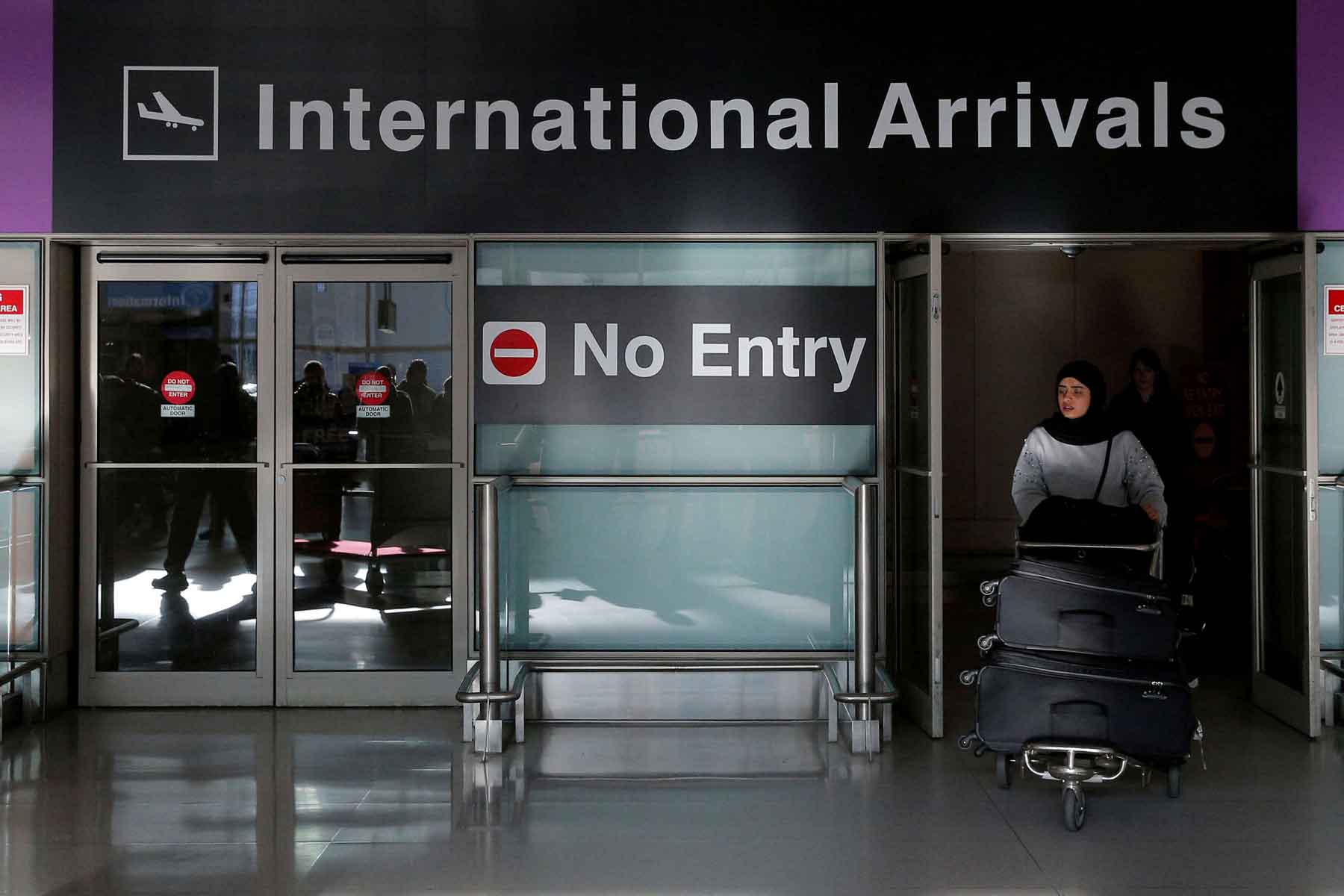
An international traveller arrives at Logan Airport in Boston, Massachusetts, US.
Trump travel ban tightens grip on Palestinians, Syrians
While the US administration presented the move as a security measure, its political and symbolic implications extend far beyond border control.
Wednesday 17/12/2025
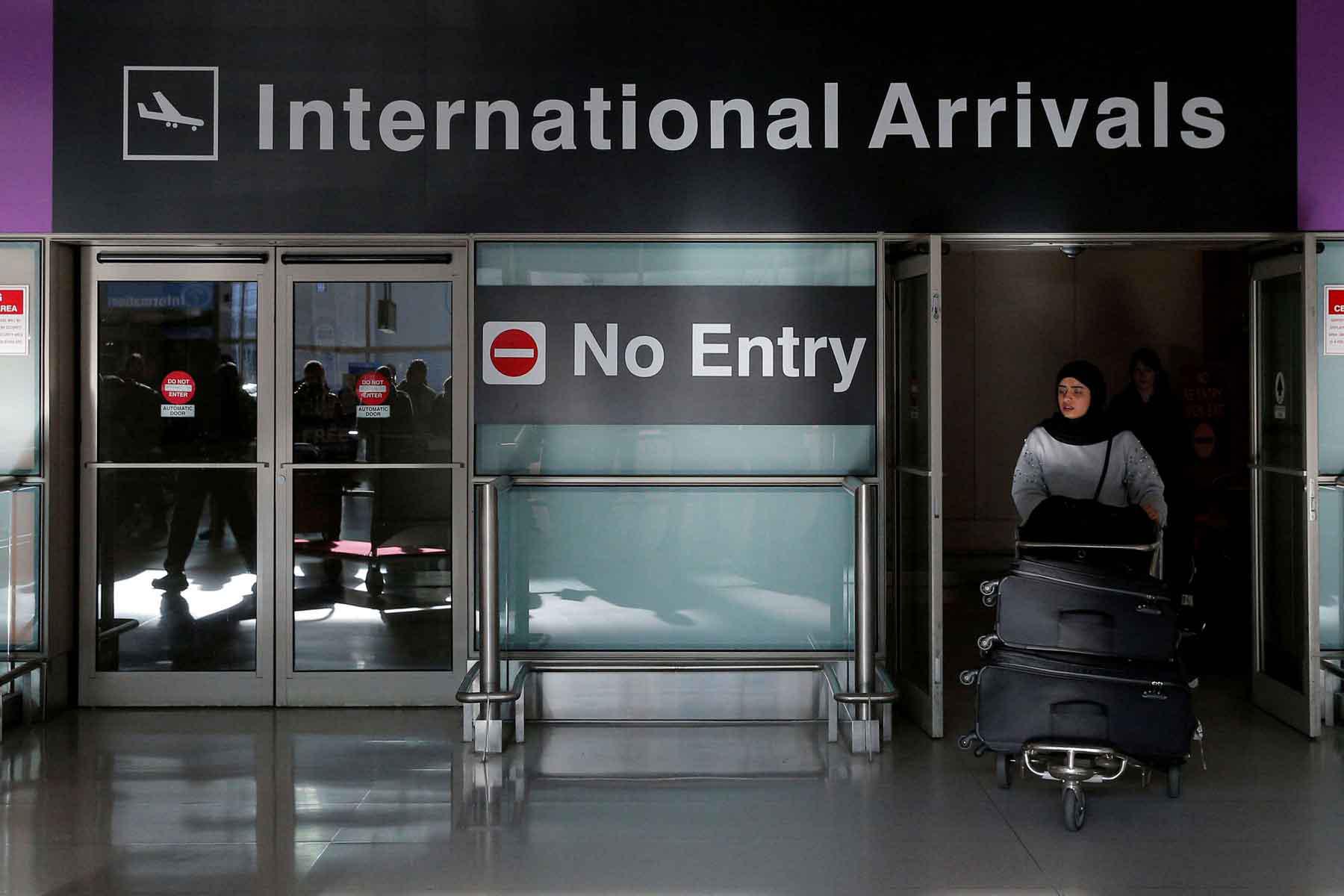
An international traveller arrives at Logan Airport in Boston, Massachusetts, US.
WASHINGTON -
US President Donald Trump has broadened a sweeping US travel ban, adding nationals from seven more countries and formally blocking Syrian citizens and Palestinian Authority passport holders from entering the United States, a move that places Palestinians and Syrians at the centre of Washington’s latest immigration crackdown.
The decision, announced on Tuesday, reflects a hardening White House posture that frames immigration increasingly through the lens of national security and cultural protection. Trump justified the expansion by asserting that the United States must bar foreigners who might “threaten” Americans or undermine the country’s institutions and values, according to a presidential proclamation.
While the administration presented the move as a security measure, its political and symbolic implications extend far beyond border control. For Palestinians and Syrians, the ban reinforces a pattern of collective exclusion that critics say conflates entire populations with instability, militancy or geopolitical disputes.
The timing is particularly striking for Syria. The announcement comes just days after two US soldiers and a civilian were killed inside Syrian territory, an incident Trump blamed on extremist elements while explicitly distancing Syria’s new leadership from responsibility. Syrian authorities said the attacker was a member of the security services who was already facing dismissal over extremist views.
Yet the renewed travel restrictions sit uneasily alongside Trump’s recent efforts to rehabilitate Syria diplomatically following the fall of longtime ruler Bashar al-Assad. While Washington signals tentative engagement with Damascus at the political level, ordinary Syrians are once again barred from legal entry to the United States, highlighting the gap between diplomatic recalibration and immigration policy.
Palestinians, meanwhile, remain subject to restrictions that had already been applied informally. The Trump administration has steadily aligned itself with Israel in opposing international moves towards recognising a Palestinian state, including by France and Britain. Blocking Palestinian Authority passport holders from entry to the US adds another layer of pressure on a population already constrained by occupation, displacement and limited mobility.
Beyond Syria and Palestine, the expanded ban targets some of the world’s poorest and most fragile states, including Burkina Faso, Mali, Niger, Sierra Leone and South Sudan, as well as Laos in southeast Asia. Partial restrictions were also imposed on citizens of several African countries, including Nigeria, along with Black-majority Caribbean nations.
The policy shift comes amid an increasingly abrasive tone from Trump on immigration, particularly towards migrants from Africa. In recent weeks, he has revived racially charged language, disparaging African-origin countries and migrants, and portraying immigration from the global south as a threat to American society.
Trump has already barred entry from countries including Afghanistan, Iran, Libya, Sudan and Yemen. Last month, he further tightened restrictions on Afghans, dismantling a programme that had allowed entry for those who fought alongside US forces against the Taliban. The move followed a shooting by an Afghan veteran suffering from apparent post-traumatic stress disorder, an episode the White House used to justify broader exclusions.
In its proclamation, the administration cited alleged high crime rates and weak passport controls in some of the targeted countries, while acknowledging that Turkmenistan had made “significant progress,” allowing limited non-immigrant visas to resume.
For Palestinians and Syrians, however, the message is unambiguous. Despite differing political realities, both are once again grouped into a security narrative that prioritises exclusion over individual assessment. As Trump doubles down on a worldview that equates nationality with risk, entire populations remain locked out, paying the price for conflicts and calculations far beyond their control.