

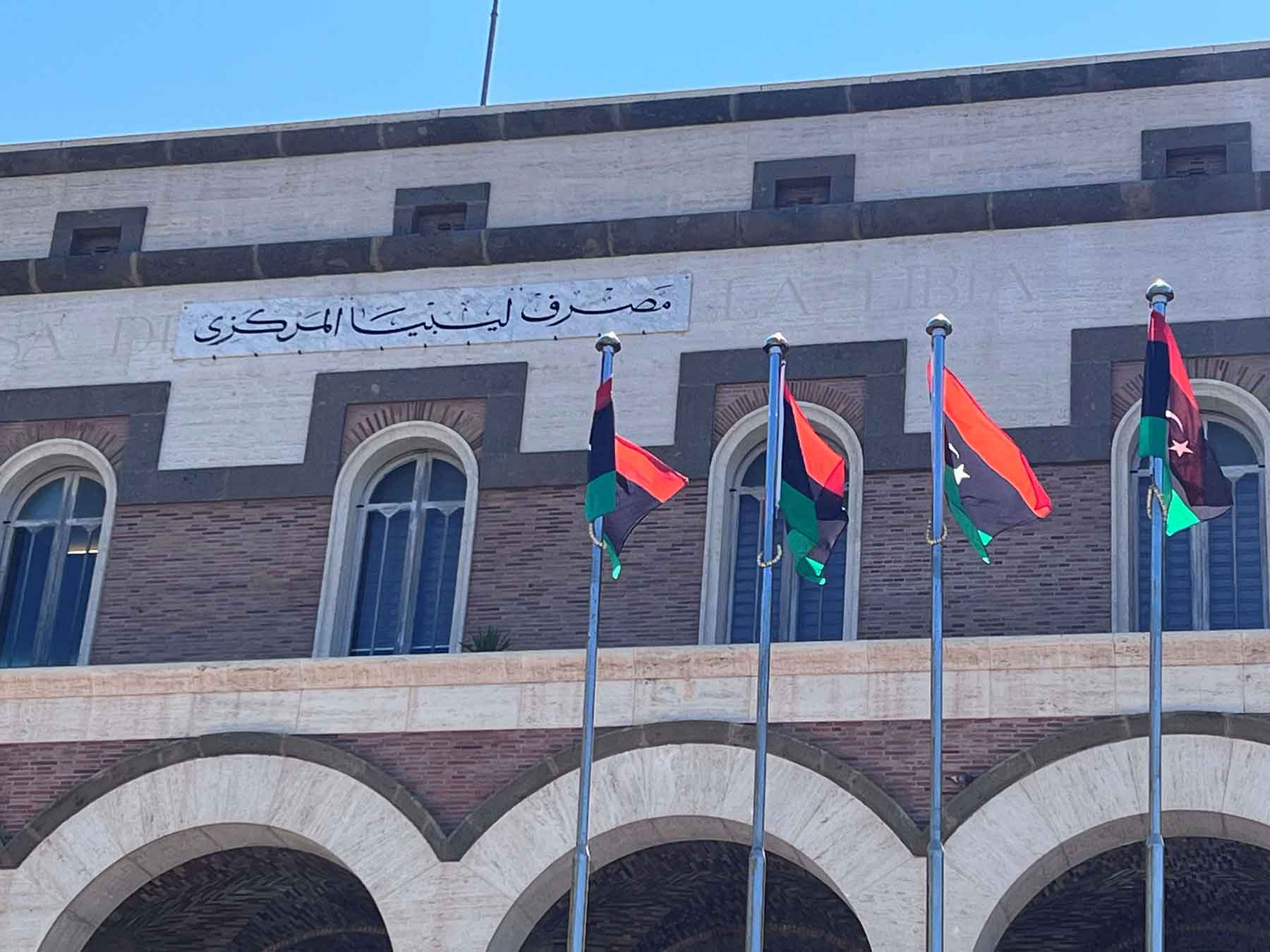
A view of the Central Bank of Libya in Tripoli.
Libya risks financial isolation without urgent import reforms
Sharp disputes over the management of the central bank in 2024 and 2025 further undermined confidence in the banking system.
Saturday 20/12/2025
A view of the Central Bank of Libya in Tripoli.
TRIPOLI –
Libya’s central bank governor has urged the head of the Tripoli-based Government of National Unity Abdulhamid Dbeibah to intervene immediately to regulate imports, warning that continued loopholes allowing foreign trade to be financed outside the formal banking system could expose the country to international financial isolation.
In a series of letters, widely leaked to Libyan media, Central Bank of Libya (CBL) Governor Naji Issa said the bank was unable to conduct effective monetary policy while a large share of the money supply, in both dinars and foreign currency, continued to circulate beyond official channels.
Issa linked his call to mounting risks to financial and security stability, chief among them what he described as “non-bank-financed imports.” Such trade relies entirely on purchasing foreign currency from the parallel market, driving up demand for hard currency and pushing down the value of the dinar.
He also warned of what he called “diversion” in the use of foreign currency allocated for personal purposes, or leakages from opened letters of credit, with funds recycled to finance a parallel trade that undermines the wider economy.
“The situation is catastrophic,” Issa said in the letters, cautioning that Libya would lose control over its foreign currency resources and be unable to protect citizens’ purchasing power unless all import channels were unified under the banking sector.
Most serious, he warned, was the risk of an international financial clampdown. Global watchdogs, including the Financial Action Task Force (FATF), closely monitor cross-border financial flows, he said.
If the current disorder persists, Issa warned, correspondent banks abroad could sever ties with Libyan banks, plunging the country into financial isolation and leaving it unable to import even basic foodstuffs and medicines.
Libya, he said, now stands at a crossroads: either entrench financial chaos and collide with international sanctions and economic collapse, or comply with the central bank’s rules enforcing transparency and good governance.
The governor described Libya’s financial system as suffering from a destructive duality, with the shadow economy expanding at the expense of the formal sector. Misuse of personal foreign currency allocations, such as the annual $4,000 allowance or welfare-linked cards, has, he said, turned from a means of helping citizens into an illicit supply channel, with currencies pooled and sold to traders to finance goods entering the country without oversight.
Leakages from letters of credit mean funds officially released to import specific goods are instead diverted to parallel deals or retained abroad as private balances, draining the public purse of foreign currency with little economic return.
Libya’s financial crisis, Issa argued, is structural rather than purely resource-driven, rooted in a complex overlap of politics, economics and security. Rival governments have fragmented monetary policy and prevented the adoption of a unified state budget, creating what he described as “fiscal dominance,” with institutions facing competing spending pressures.
Sharp disputes over the management of the central bank in 2024 and 2025 further undermined confidence in the banking system and its ability to implement effective monetary policy, he said.
As a result, many Libyans and businesses prefer to hold cash outside banks, fearing they will be unable to withdraw funds later, deepening liquidity shortages within the formal banking system.
In the leaked correspondence, Issa instructed the prime minister, the Internal Security Agency, the interior ministry and the Municipal Guards Authority to shut down unlicensed foreign exchange offices operating without permits. He also urged the prime minister to direct the economy ministry to issue a decree banning imports and exports except through banking transactions.
The central bank reiterated calls for “genuine economic reforms” aimed at improving living standards, including measures to strengthen the dinar, ensure cash availability, curb inflation and lower prices.
It warned of a sharp rise in the activities of unlicensed black-market operators, citing uncontrolled domestic and cross-border fund transfers and the financing of illegal activities in violation of commercial regulations and anti-money laundering and counter-terrorism financing laws.
The warnings come against a fragile backdrop. Global oil prices have fallen to around $55 a barrel, hitting Libya’s main source of revenue. Last week, the dinar briefly slid to 8.40 to the dollar on the parallel market, intensifying price pressures, while cash shortages persist at banks.
Issa had pledged in August that the dinar would strengthen to below seven to the dollar on the black market and that the cash crisis would end by October. Neither target has been met.
His latest moves form part of a broader push by the central bank to reform Libya’s economic, monetary and financial system, curb money laundering and tax evasion, reduce reliance on the dollar in the parallel market, stabilise prices and shore up the dinar.