


Tiptoeing on the edge of authoritarianism
Israel pushes death penalty for suspects of Hamas October 7 attack
The proposed legislation is likely to face intense scrutiny both domestically and internationally, amid mounting legal challenges over Israel’s conduct during the Gaza war.
Tuesday 13/01/2026

Tiptoeing on the edge of authoritarianism
JERUSALEM –
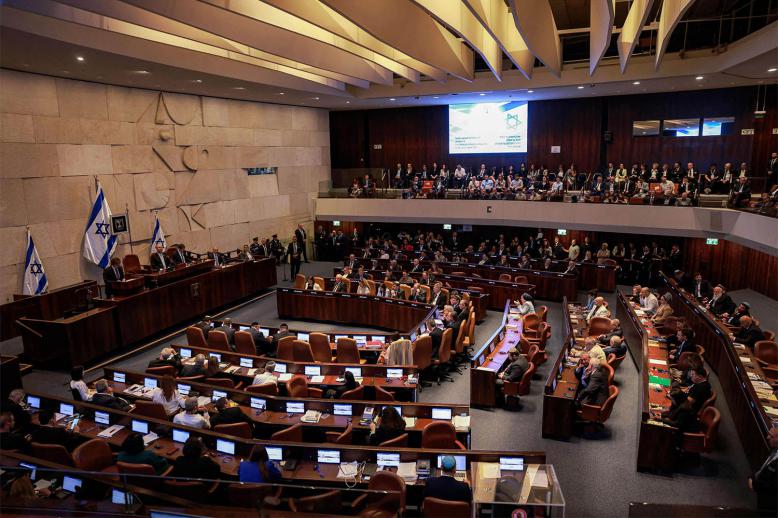
Israel’s parliament has approved in a first reading a controversial bill that would establish a special judicial framework to prosecute Palestinians accused of involvement in the October 7 2023 attack, including provisions allowing for the death penalty.
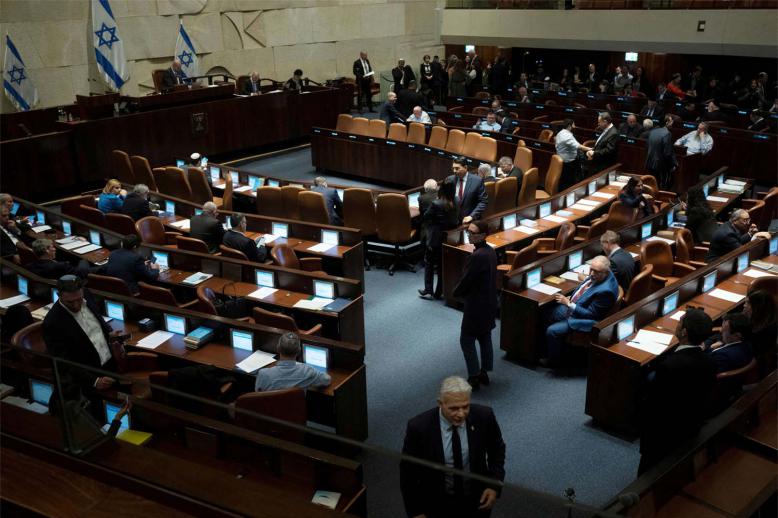
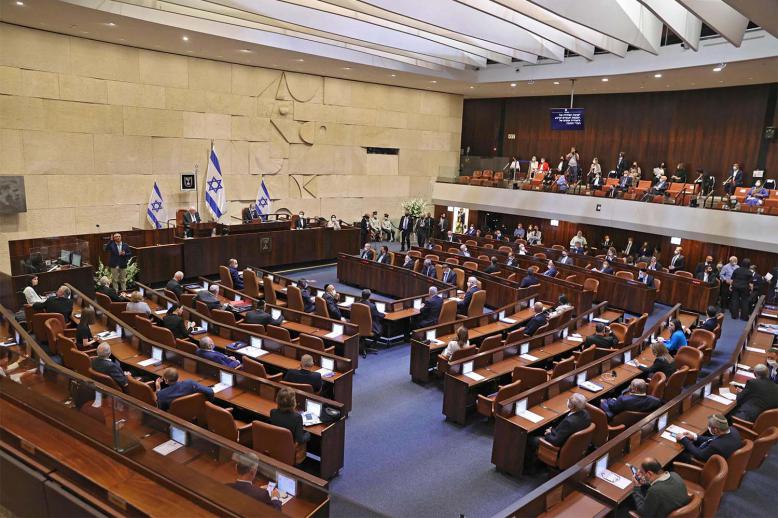
The draft law, backed by religious and far-right factions, was approved late on Monday night by the Knesset plenum without opposition, according to Israel’s public broadcaster. Nineteen members of the 120-seat parliament voted in favour, with no lawmakers voting against the measure.
The bill was jointly advanced by Justice Minister Yariv Levin of the ruling Likud party, Simcha Rothman, chair of the Knesset’s Constitution Committee from the Religious Zionism party, and Yulia Malinovsky of the nationalist Yisrael Beiteinu party, underscoring broad support across Israel’s right-wing spectrum.
Under the proposed legislation, a special judicial body would be created, headed by a retired district court judge and granted sweeping authority to try hundreds of suspects accused of taking part in the October 7 assault. The court would be empowered to hear cases involving charges such as genocide, undermining state sovereignty, aiding the enemy during wartime and terrorism offences.
Crucially, the bill explicitly allows for the imposition of the death penalty on those convicted, a punishment that is rarely applied in Israel and has historically been used only in exceptional cases. The draft law also stipulates that defendants prosecuted under this framework would be excluded from any future political negotiations or prisoner exchange deals.
According to Israel’s public broadcaster, court proceedings would be broadcast live on a dedicated website and preserved in the state archives, a move that supporters say is intended to ensure transparency, but which critics warn could politicise judicial proceedings.
The legislation will now be referred to the Knesset’s Constitution, Law and Justice Committee for further deliberation ahead of its second and third readings. Under Israeli law, a bill must pass three readings before becoming legally binding. No timetable has yet been announced for the remaining votes.
Israel does not officially disclose how many Palestinians it is holding on suspicion of involvement in the October 7 attack, though Israeli media estimates place the figure in the hundreds. The parliamentary process to create a special legal framework began in mid-September last year, when the Constitution Committee announced it was drafting legislation to detain and prosecute those accused of participating in the assault.
On October 7 2023, Hamas fighters launched a coordinated attack on Israeli military bases and settlements near the Gaza Strip, killing and capturing Israelis. Hamas said at the time that the operation was carried out in response to what it described as daily occupation-related crimes against Palestinians and violations at the Al-Aqsa Mosque compound.
Israeli officials have since described the attack as the “greatest security and military failure” in the country’s history, dealing a severe blow to Israel’s global image and exposing deep vulnerabilities within its security apparatus.
In the aftermath of the attack, Israel launched a large-scale military campaign in Gaza that lasted for two years, resulting in the deaths of more than 71,000 Palestinians and injuries to over 171,000 others, according to Palestinian figures. The offensive devastated Gaza’s infrastructure and imposed a suffocating siege that triggered what international organisations have described as an unprecedented humanitarian catastrophe.
Although a ceasefire agreement came into effect on October 10 last year and was expected to bring the war to an end, Israeli forces have continued daily violations, resulting in hundreds of additional Palestinian civilian casualties.
The proposed legislation is likely to face intense scrutiny both domestically and internationally, amid longstanding opposition to capital punishment and mounting legal challenges over Israel’s conduct during the Gaza war.