

Strong international turnout
World Defense Show highlights Saudi push to localise military industry
Saudi Arabia’s expanding defence partnerships and localisation drive signal its ambition to emerge as a regional and global hub for military manufacturing and advanced defence technologies.
Friday 13/02/2026
Strong international turnout
RIYADH – Saudi Arabia concluded the third edition of the World Defense Show with the signing of 60 military and defence contracts worth more than 33 billion riyals (approximately $8.8 billion), underlining the kingdom’s determination to diversify its arms suppliers and accelerate the development of a domestic defence industry at a time of heightened regional instability.
The five-day biennial exhibition, organised by the General Authority for Military Industries (GAMI), drew record international participation and was held under the patronage of King Salman bin Abdulaziz Al Saud, with oversight from Crown Prince and Prime Minister Mohammed bin Salman and inauguration by Defence Minister Khalid bin Salman.
Speaking at a press briefing in Malham, north of Riyadh, GAMI Governor Ahmad al-Ohali described the 2026 edition as the result of two years of coordinated work between government bodies and private sector partners, calling it a landmark moment for the Kingdom’s defence sector.
“The results of World Defense Show 2026 reflect the continuous progress Saudi Arabia is making in building a nationally competitive military industries sector,” Ohali said, pointing to the agreements and partnerships signed during the exhibition.
Record participation and major contracts
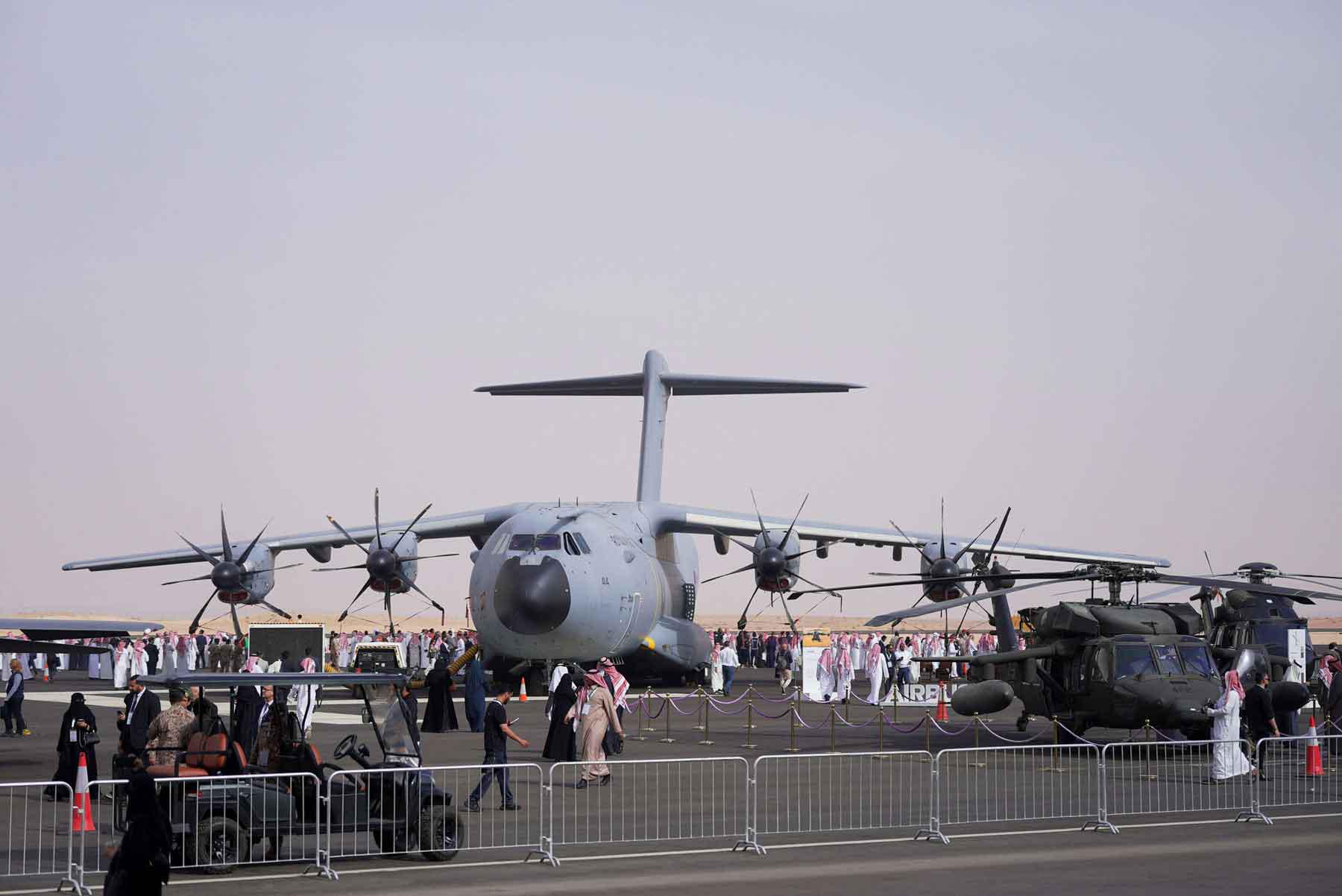
This year’s show featured 1,486 exhibitors from 89 countries, alongside 513 official delegations representing 121 governments. Attendance reached 137,000 visitors, while exhibition space expanded by 58 per cent compared with the previous edition to more than 272,000 square metres across four halls.
In addition, 73 memorandums of understanding and 220 agreements were concluded, including 93 intergovernmental deals and 127 company-to-company agreements.
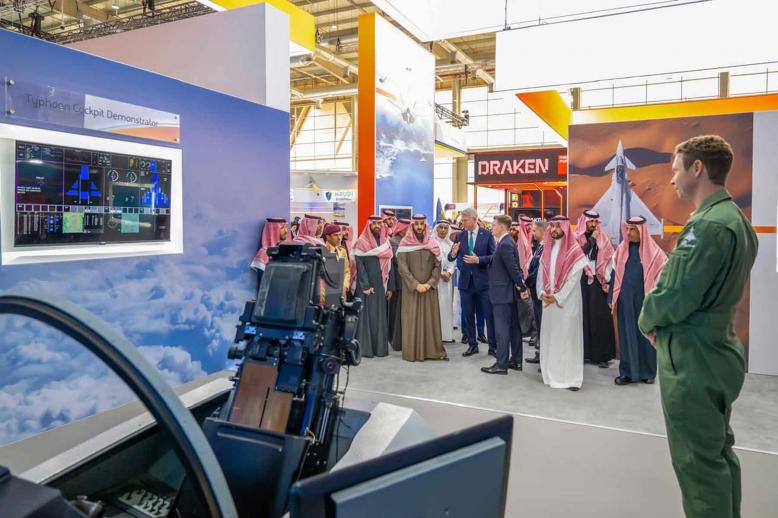
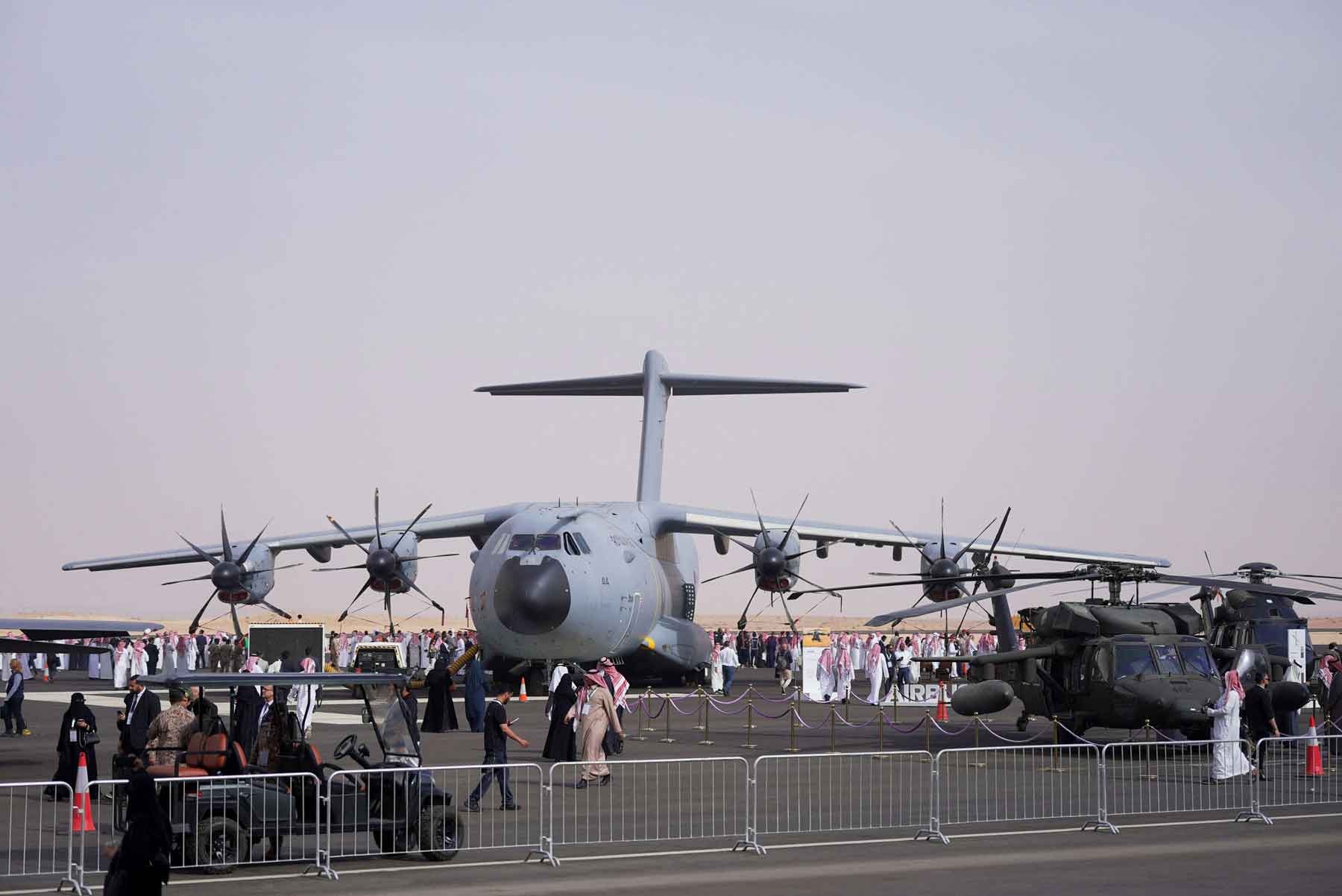
The exhibition also included one of the region’s largest specialised aerial and static displays, featuring 63 static aircraft and 25 aircraft in live air shows, including F-15 Eagle, F-16 Fighting Falcon, F-35 Lightning II and Eurofighter Typhoon jets. Around 700 military assets were displayed overall, alongside naval platforms, unmanned systems and live land demonstrations.
World Defense Show CEO Andrew Pearcey said the event demonstrated Saudi Arabia’s capacity to convene the global defence community and facilitate technology transfer and industrial partnerships. The programme featured 355 live demonstrations and 70 thought leadership sessions across three theatres, with 151 speakers addressing developments in air, land, sea, space and multi-domain defence integration.
Diversification and localisation drive
The exhibition comes amid what Saudi officials describe as an unprecedented period of tension across the Middle East, with ongoing conflicts and intensifying regional rivalries prompting Gulf states to accelerate defence modernisation programmes.
Riyadh insists its defence policy is deterrent rather than offensive in nature. However, the scale of procurement and partnership activity reflects growing emphasis on military readiness and the protection of national interests, particularly against evolving threats such as ballistic missiles, drone warfare and unconventional attacks.
Central to this strategy is the localisation of defence spending under Saudi Vision 2030. Al-Ohali said the Kingdom has made what he described as a “historic leap” in domestic military production, increasing localisation from just 4 percent in 2018 to 25 percent by the end of 2024, a fourfold rise in eight years.
Employment in the sector has grown from 25,000 in 2020 to 34,000, with Saudi nationals now accounting for 63 per cent of the workforce. The long-term objective is to localise more than 50 per cent of defence expenditure by 2030, reducing reliance on imports and building an integrated national industrial base.
Al-Ohali said the sector has shifted from complete dependence on foreign suppliers to laying the foundations of a sustainable, technologically advanced ecosystem rooted in partnerships, supply chain resilience and national talent development.
Strategic positioning
The strong international turnout, including participation from the world’s top 10 defence companies, was presented by officials as evidence of growing confidence in Saudi Arabia as a strategic partner and defence investment destination.
Planning has already begun for the 2028 edition of the exhibition, with organisers positioning the show not merely as a trade fair but as a strategic platform shaping the future of integrated defence systems.
As regional uncertainties persist, Saudi Arabia’s expanding defence partnerships and localisation drive signal its ambition to emerge not only as a major arms purchaser, but as a regional and global hub for military manufacturing and advanced defence technologies.