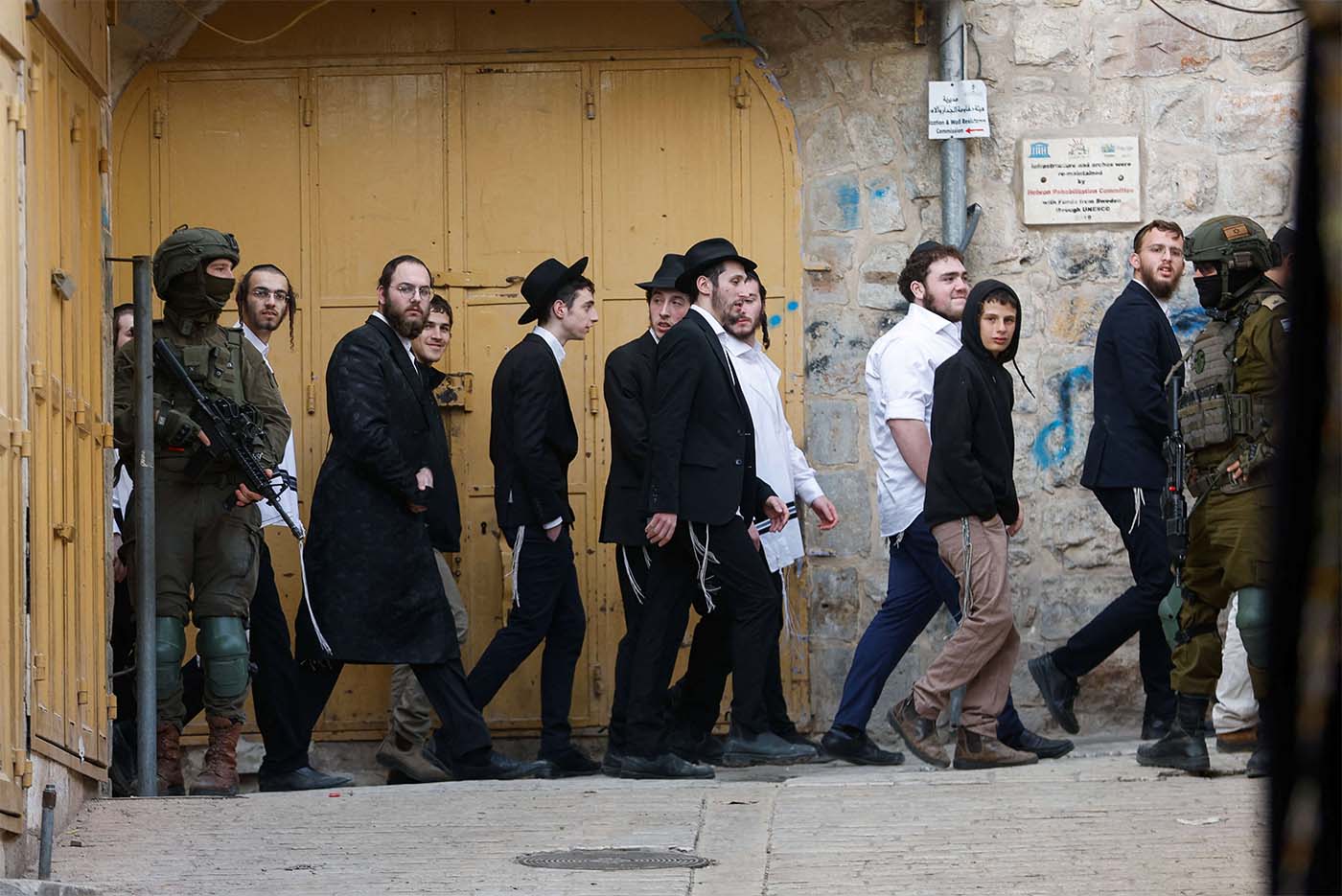
The settler population now numbers more than 700,000 and is growing rapidly
West Bank settlers: Who are these people?
The settler communities have devoured forty percent of the West Bank and carved it up into a sort of demented jigsaw puzzle in which checkpoints, special roads for Jewish use only, walls, and fences make normal navigation impossible.
Wednesday 01/04/2026
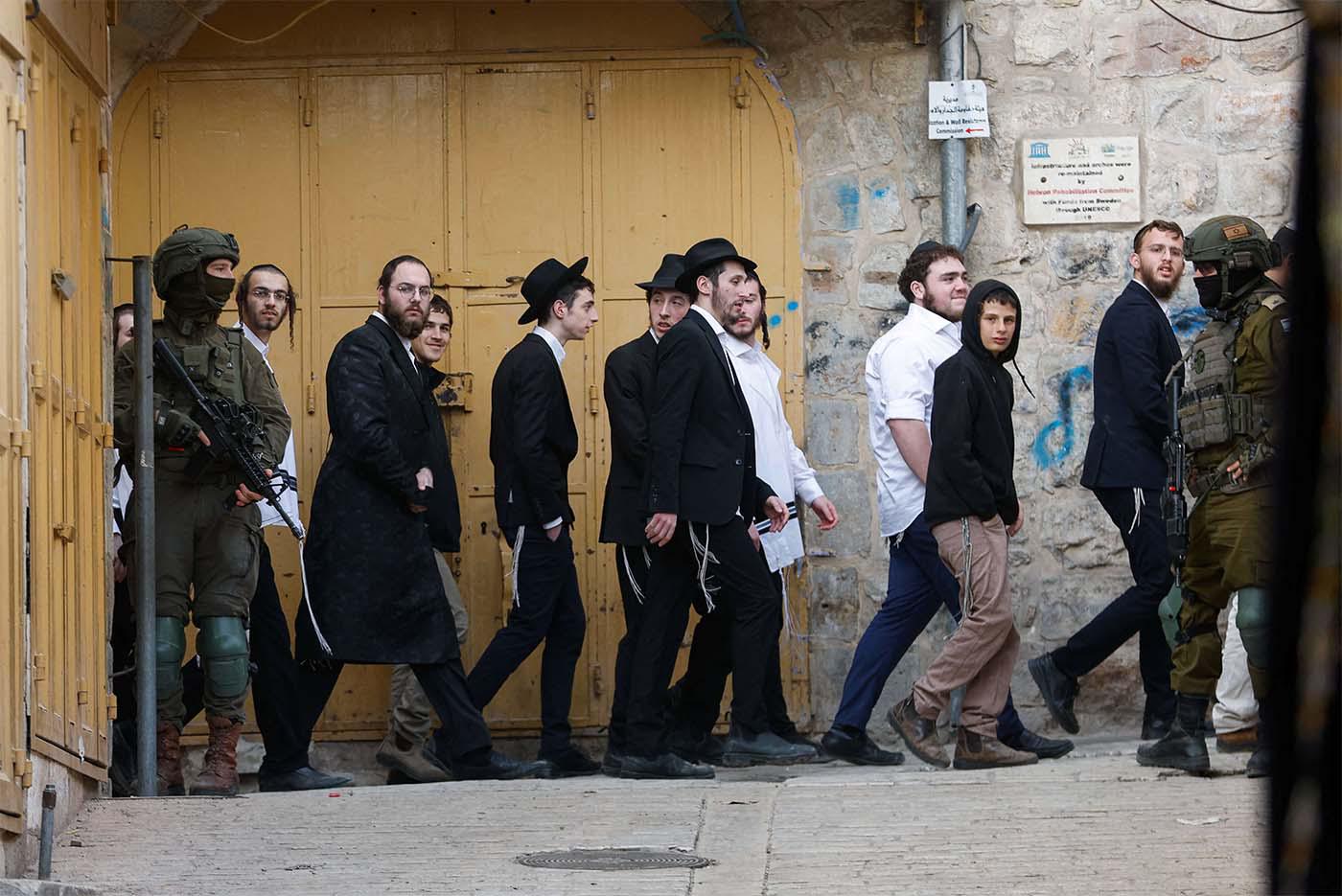
The settler population now numbers more than 700,000 and is growing rapidly
The Jerusalem Governate, a Palestinian Authority administrative district whose name is self-explanatory, issued a warning on March 29 that illegal Israeli settlers were planning to carry out animal sacrifices in the Al-Aqsa Mosque compound as what the Palestinian news agency WAFA called a “symbolic prelude” to the eventual construction of a new Jewish Temple on the premises of the mosque.
Three attempts at animal sacrifice occurred last year, but there can be little doubt that the latest effort is a particularly aggressive one intended to take advantage of Israel’s closure of Muslim (and Christian) holy sites during the Iran war and to derive momentum from the shocking intensification of West Bank settler violence in the last few weeks.
The only good thing to be said about recent events is that West Bank settlers are now getting the sort of widespread adverse attention that they have always deserved. For the first time, real news is making inroads on public relations.
“Settler” is a quaint word that plays especially well in the United States, where the frontier heritage and its folklore associate the term with intrepid folk, many of whom had been persecuted in Europe (as were the Jews), fanning out across a mostly empty expanse of land and, where necessary, bringing civilization to the aborigines.
The West Bank wasn’t empty, Palestinians are not aborigines, and it’s not civilization that the settlers are bringing with their beatings, burnings, shootings, confiscations, sexual assaults, humiliations, and constant disruptions of what little remains of normal life in the West Bank.
The settler population now numbers more than 700,000 and is growing rapidly. There are nearly 400 settlements overall, including those not officially recognized by the Israeli government and therefore often unmentioned in media reports. The Israeli NGO Peace Now, which promotes a two-state solution, reports that 121 new outposts have been established since 2023 and 298 since 1996.
These communities have devoured forty percent of the West Bank and carved it up into a sort of demented jigsaw puzzle in which checkpoints, special roads for Jewish use only, walls, and fences make normal navigation impossible. Arab communities are split into fragments, family members are separated, farms and fields dismembered and made nearly inaccessible to their owners. Life would be harsh and irritating enough for the Palestinian natives even if the settlers were not fond of swooping down on their neighbors and fomenting mayhem and bodily harm. I recall waiting at a checkpoint, in a line of cars a quarter of a mile long, while the soldiers on duty chatted in a leisurely manner with two teenage settler boys who looked like surfer dudes would look if surfer dudes wore yarmulkes. The arrogance and contempt could not have been more overt.
The U.S. has gone so far as to provide consular services in the settlement at Efrat, near Jerusalem, although even those settlements officially recognized by the Israeli government are illegal under the Geneva Convention and according to the International Court of Justice, a fact affirmed by the Israeli Supreme Court. Such action by the U.S. amounts to de facto normalization and displays the State Department as strangely solicitous of the convenience of American citizens engaged in crimes against international law.
Approximately 26 percent of settlements describe themselves as religious, with about 15 percent being ultra-Orthodox. This is more or less in line with Israel’s overwhelmingly secular orientation, which I have noted elsewhere. Whatever pious rhetoric one might hear about “Judea and Samaria” and the Bible, the settlement movement is a naked land-grab, pure and simple, and not for nothing do many Palestinian publications prefer “colonist” to “settler.”
Settlers (we’ll stick with that word for convenience) began infiltrating the West Bank immediately after the 1967 war. The first settlement, Etzion, now has a population of 40,000. The largest, Modi’in, has a population of 91,000. The smallest are hilltop outposts not officially approved by the Israeli government but sometimes assisted by it nonetheless. Sixteen industrial zones with nearly a thousand industrial enterprises have encompassed almost half the territory supposedly intended for a future Palestinian state. Amnesty International reports that Airbnb, Booking.com, Expedia, and TripAdvisor list hundreds of accommodations and activities in the settlements, and in all about 150 international corporations do business there.
Despite such substantive economic development, a majority of settlers commute to Israel to work, and government spending per settler is double that for persons living in Jerusalem or Tel Aviv. With much of the disbursement being devoted to the protection of settlers by the Israeli military, it is not surprising that the settlers are regarded by many Israelis as freeloaders who create a drain on valuable security resources.
For the Netanyahu government and other Israeli rightists, what matters is not whether the settlements work well. What matters is that the settlements establish facts on the ground, as it were. If Israel can get and keep 40 percent of the West Bank–so far–where does that leave Palestinian statehood? Discussions of some sort of land exchange are cavalier about the fact that this would still mean an awful lot of Palestinians being uprooted from lands that have been in their possession for centuries and that are recognized as theirs under international law.
Once in a great while, American presidents will object to the settlements and make mild threats about negative consequences for further expansion, but Israel is a spoiled, incorrigible child who knows that Daddy doesn’t really mean it.
A large-scale uprising in the West Bank would give Benjamin Netanyahu an excuse to crush the Palestinians utterly and take over the West Bank in its entirety for all time to come. One need not be a paranoid conspiracy theorist to suspect that the current Israeli government wouldn’t mind seeing Arab resentment boil over and provide the casus belli for an Israeli killing spree followed by annexation. At the same time, senior military officials say the army is already dangerously overextended by a multi-front war that expands almost daily. Someone, somewhere, sometime, is likely to go too far in some way.
The potentially explosive situation at Al-Aqsa, the settler rampages, and the ballooning Lebanon incursion indicate that the Israelis believe they can do literally anything they please. They might, instead, find out that getting the United States tangled up with Iran wasn’t such a good idea after all. The time might come when Daddy is just too busy–or in the hospital. I would not want to be a West Bank settler when that happens.
Lot Hildegard is a Christian theologian and freelance writer who spent two years at the Oxford Centre for Islamic Studies and has taught in a Palestinian university and in an American Muslim school. His social commentary and short fiction have appeared in an assortment of print and online publications.