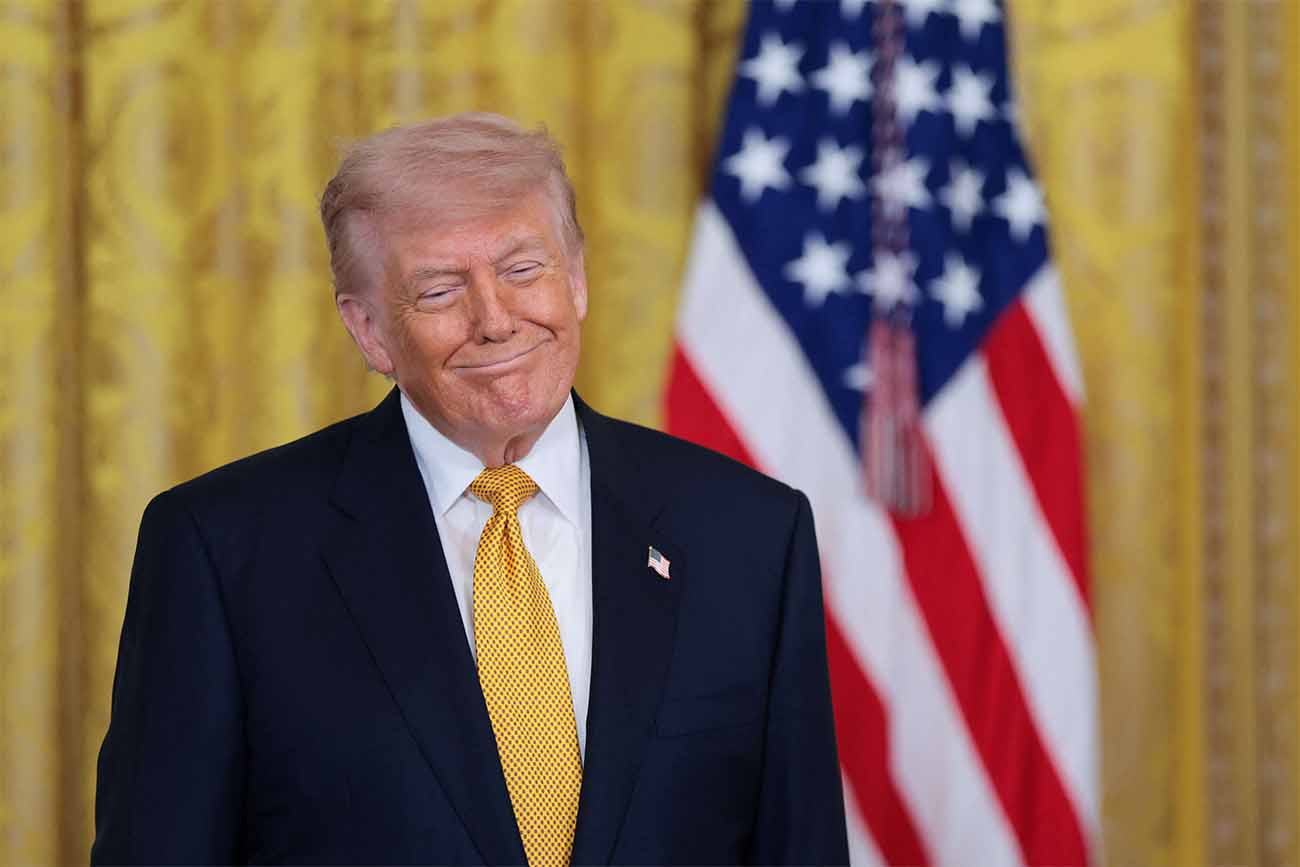
US President Donald Trump
Why people vote for Donald Trump
The overseas media marvel that such an outlandish character could win two presidential elections by comfortable margins, with a narrow loss in between. Are Americans insane?
Saturday 09/05/2026
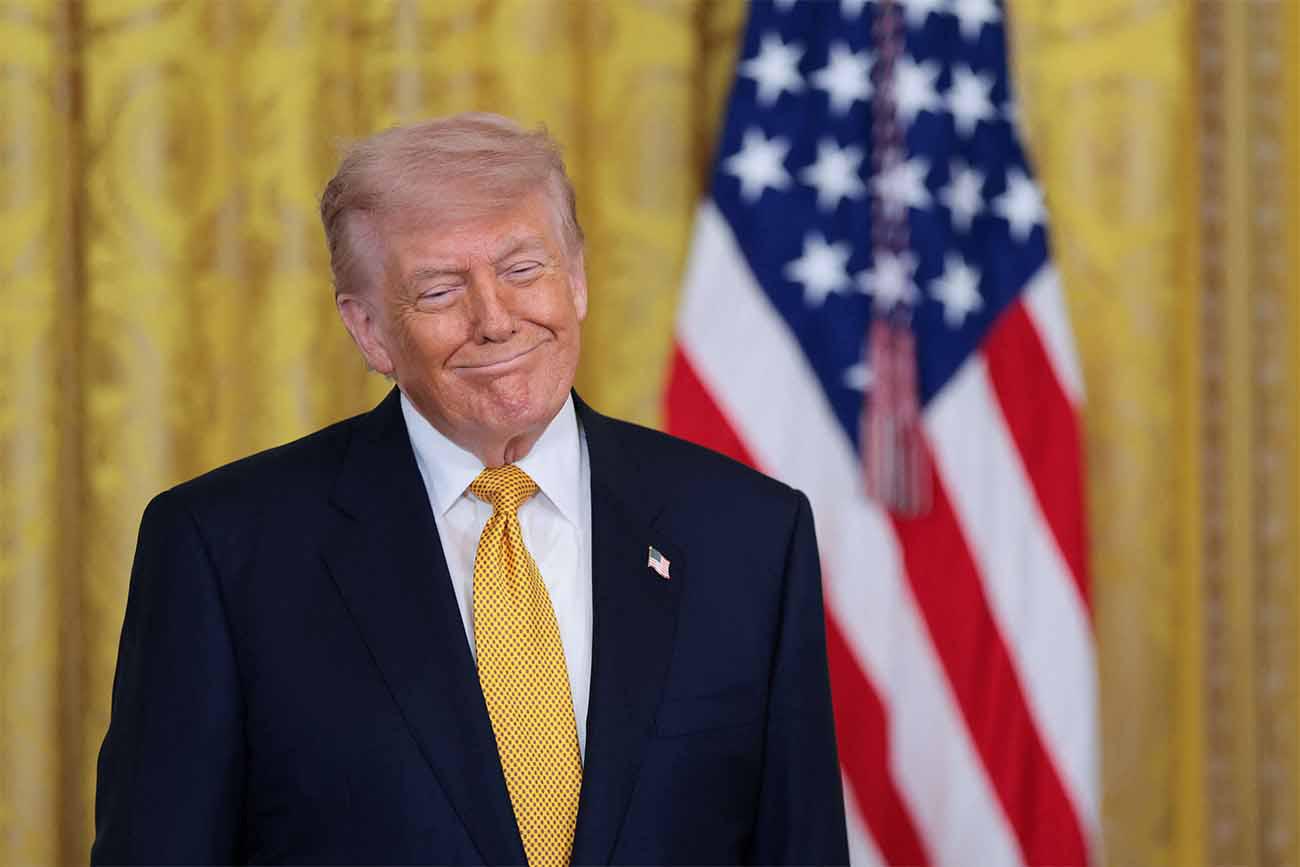
US President Donald Trump
The outsized influence of the United States on global affairs often leaves people in other countries feeling like passengers in a vehicle over which they have little or no control, and the presidency of Donald Trump has brought new intensity to that sensation. That Trump is not without ability in foreign relations is attested by the Abraham Accords, but his customary behavior in international relations has generally been bombastic, erratic, seemingly impulsive, and largely devoid of conventional statesmanship.
The overseas media marvel that such an outlandish character could win two presidential elections by comfortable margins, with a narrow loss in between. Are Americans insane?
The answer lies in American domestic politics, a topic not well understood abroad. The very ubiquity of American influence on global politics and popular culture tends to breed an erroneous sense of familiarity, and people in other countries often overestimate their own comprehension of the United States.
Meanwhile Americans have become more insular, not less so, during the internet age, probably because self-absorption has increased and the educational level has plummeted. Foreign policy is seldom relevant to how Americans vote. They vote on domestic policy and take whatever foreign policy the winner espouses, which means that division and rancor over domestic affairs ultimately determine American conduct abroad.
The founders of the United States hated and feared political parties, but such aggregations occur naturally, and within a few years the country was more or less locked into a rigid two-party system. Since the cultural upheavals of the 1960s, the two modern parties have become increasingly polarized, and Donald Trump’s ascendency is the result, not the cause, of the total breakdown in consensus.
Time for a bit of Q’n’A:
Do you believe that elections should be conducted without any means of requiring people to prove their identities and their eligibility to vote? Do you think that a ballot that has not been filled in according to instructions should be “cured” by an election worker (toiling at taxpayer expense) to make it count? Do you believe that voter rolls should not be purged of the names of deceased persons whose names might be used to commit fraud? For the Democratic Party, these are articles of faith. If you disagree, the Republicans (and Trump) are your only choice.
Do you believe that biological males should be allowed to shower and dress and compete in sports with your daughters and wives, claiming to be women? Joe Biden’s only appointee to the Supreme Court, Ketanji Brown Jackson, told the Senate during her confirmation hearings that she didn’t even know the difference between a woman and a man. On board with all that? No? Only the Republicans are standing in the way.
Do you want the central government to be even bigger and have more authority over your life? Because the Democrats are the party of large, activist government and the Republicans are the party of limited government and local autonomy, most of the permanent bureaucracy and major news media personnel are Democrats. No one but the Republicans is there to exercise some restraint.
Owner of a small business? The Democrats don’t like you, because they’re now in bed with the big corporations. They used to rail against “country club Republicans,” but no longer. The country club set are now mostly Democrats, living the high life while redistributing other people’s money to assuage their own sense of guilt. My favorite example was in a prestigious left-leaning news magazine where the biography of a self-sacrificing social worker was on the page facing an advert for a luxury car that was guaranteed to make its owner a special person. Readers had been prepared for this spectacle by another advert featuring prominent left-wing activists wearing Rolexes.
And how about Hunter Biden’s laptop? Polls indicated that a fifth of the people who voted for Biden against Trump would not have done so if the mainstream media had not mostly agreed simply not to report on Hunter’s alleged use of his father’s connections to enrich himself–and possibly his father–in a politically sensitive region. The media also were strangely quiet about those White House visitor logs apparently contradicting the Big Guy’s claims that he knew nothing of Hunter’s business activities. As one popular liberal television host admitted, if the miscreant had been Donald Trump Jr. rather than Hunter Biden, his activities would have been the top story on every news program every night.
The media rightly point out that Trump lies frequently. So did the serial plagiarist Biden, but his lies, if they were acknowledged at all, were dismissed as “gaffes,” and The New York Times went so far as to characterize them as “folklore with the factual edges shaved off.”
Oh, and Biden’s press secretary was literally in bed with a prominent correspondent for one of the major news outlets. The media uttered not a peep of criticism.
Of course, Biden wouldn’t have been in the White House if the media had not essentially campaigned for him while he rested up in his basement, trying in vain to hide a deteriorating physical and mental condition that the media angrily denied until he fell apart during his debate with Trump four years later.
Nothing about this deranged political-media culture was new when Donald Trump began pursuing the Republican nomination in 2016. What was new was that when Trump promised strict enforcement of existing immigration law and was condemned by the media as racist, he didn’t cower before the critics and “clarify” his way into innocuousness. He counterattacked in force and reiterated himself more vehemently. Most people had never seen a Republican candidate do such a thing.
At the time, Trump’s chief rivals for the Republican nomination were Sens. Ted Cruz and Marco Rubio, mainstream politicians both. When I last heard of Ted Cruz, he was accusing a liberal Jewish group of being “rabidly anti-Israel,” and whining about some streaming service censoring Queen’s anthem “Fat Bottom Girls.” Rubio is of course Secretary of State nowadays and seems to have faded largely into the background during Pete Hegseth’s war, much as Dean Rusk was eclipsed by Secretary of Defense Robert McNamara during the Vietnam War.
It wasn’t very likely that Ted Cruz or Marco Rubio would hold up well in a race against Hillary Clinton, anointed by a media cartel that proclaimed 2016 “her turn” to be president. If you didn’t like the Democrats and what they were offering, you had to go with the loudmouth who had the strength of personality to huff and puff and blow the other side’s house down in a system where everything seemed rigged in advance.
The Democrats did not respond to their shocking defeat by attempting to appeal to those who had voted against them. After about three days of asking themselves how they could have so misjudged the mood of the country, they gave that up as a bad job and set about condemning all Republicans as bigots and idiots, as if demonizing people would win them over. In terms of both style and policy, the Democrats set about becoming a more extreme version of what the voters had already rejected, and in the process drove into Trump’s camp most of those Republicans who had voted for him only reluctantly or not at all.
In other words, the Democrats and the media made Donald Trump the de facto head of the rival party, not just a one-time fluke, and if you want his domestic policy, you get his foreign policy too.
The Iran war might prove to be the wedge the Democrats have been seeking. Though party discipline among both Democrats and Republicans has been tighter in recent years than at any point in history, the Iran war drew opposition from many Republicans from the very outset. Most of the discontent stems from a sense that Trump has broken a promise to minimize foreign entanglements and keep American military personnel out of unnecessary wars, but some of it also originates in an unprecedented skepticism regarding Israeli influence on American affairs.
The Democrats meanwhile remain absolutely united against the war, and they hope to exploit its ill effects on the domestic economy into a sweeping victory in this year’s state and Congressional elections.
One way or another, the Republican Party will be seeking a new leader after Trump’s departure from the White House, and the jockeying for position could get ugly. It also could lead to even more uncertainty among allies and foes abroad. Leading Republicans will offer different visions of America’s relationship to the Middle East and the world generally, while the Democrats likely will display new patterns of behavior in a contrived effort to be as much unlike Trump as possible, no matter what that means.
In other words, “normal” might already be forever a thing of the past, and America truly will be the Land of Surprises from this point onward. Domestic politics in the United States likely will not become more placid and wholesome in the future, and the rest of the world will, as always, experience the consequences.
Not many people outside the United States are going to miss Donald Trump after he leaves office, but that doesn’t mean that things are automatically going to improve. The Bible admonishes us to “put not your trust in princes, in sons of men, in whom there is no salvation,” and I take that to mean that we had best not depend on their absence any more than we depend on their presence. He who hath ears, let him hear.
Lot Hildegard is a freelance policy analyst and Christian theologian who spent two years at the Oxford Centre for Islamic Studies and has taught in a Palestinian university and in an American Muslim school. His social commentary and short fiction have appeared in an assortment of print and online publications.