
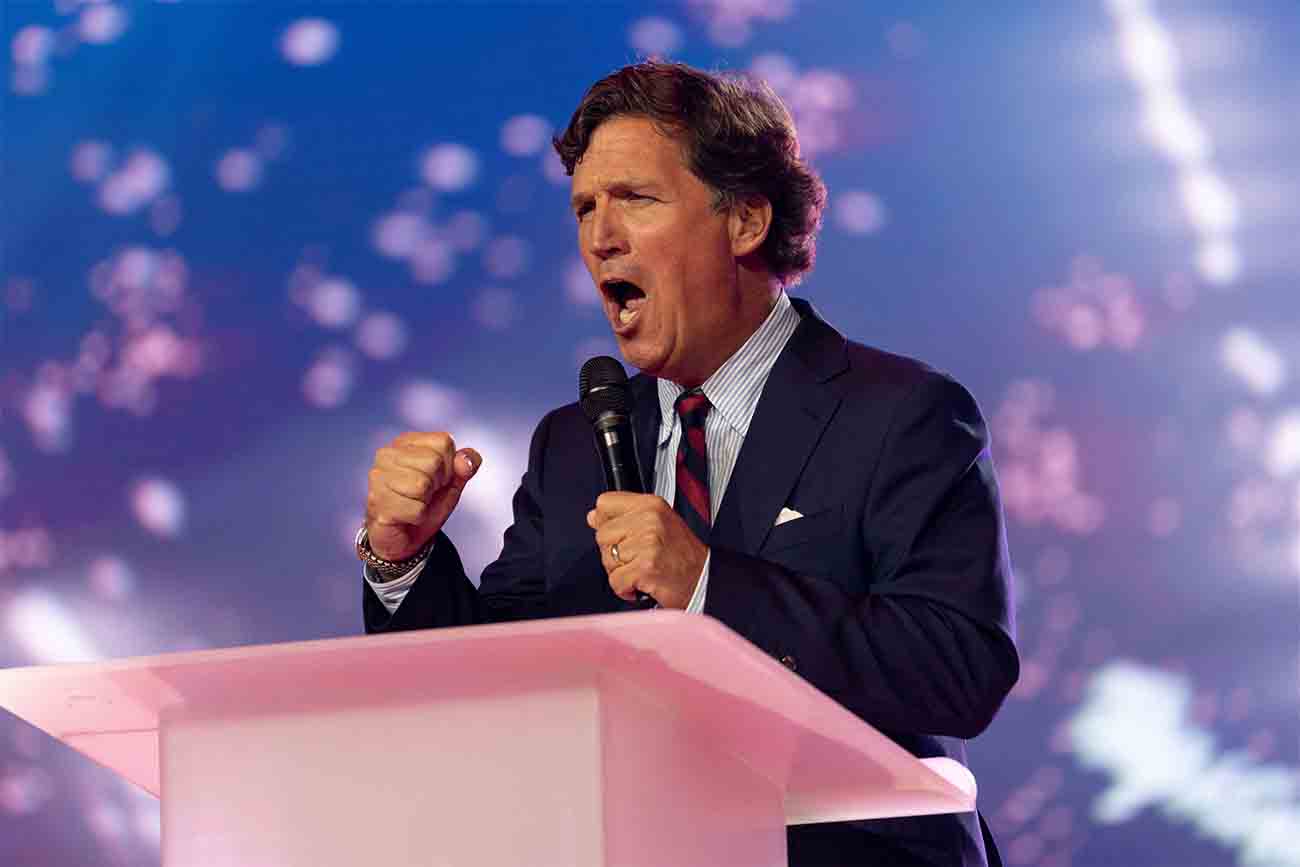
Carlson has asserted in recent days that the actual religion of the United States is Israelism
The actual religion of the United States
The actual religion of the United States is rebellion, and Israel has become both a mascot and an exemplar in that cult.
Tuesday 21/04/2026
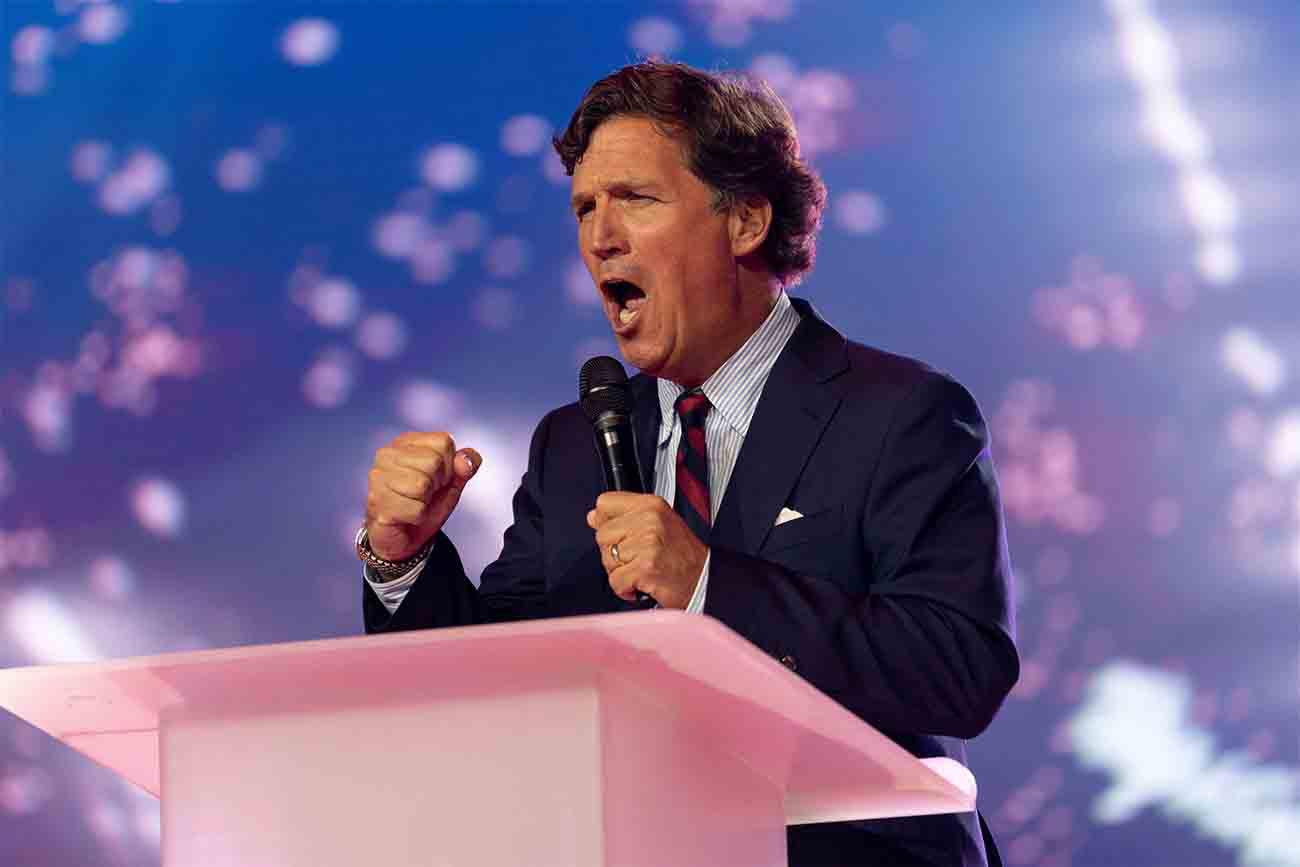
Carlson has asserted in recent days that the actual religion of the United States is Israelism
Tucker Carlson has long been one the most prominent and erudite conservative political commentators in my native United States, and he has become by far the most controversial because of his ardent anti-Zionism. Carlson has asserted in recent days that the actual religion of the United States is Israelism. I disagree only because I believe Israelism is but the tip of the iceberg, an overt manifestation of a much deeper problem:
The actual religion of the United States is rebellion, and Israel has become both a mascot and an exemplar in that cult. As I have argued elsewhere (“Christian Zionism Isn’t Christian,” March 25), modern secularist Israel has never taken even the first baby steps toward meeting Biblical criteria for Jewish possession of the Holy Land, which must be contingent on a pious covenant relationship with God. So often is this message repeated in scripture, along with dire warnings about the fate of an irreligious or sacrilegious Jewish nation inhabiting that patch of terrain, that modern Israel might well be described as a great big middle finger raised in the direction of the Almighty.
Enter the United States of America.
Americans have always been a restless, obstreperous people who suspect that there is something weak, effeminate, and bogus about dignity, refinement, and self-control. This tendency was not always unhelpful in the process of rejecting outmoded foreign social systems and creating a new nation in rugged conditions. It has not aged well since the nation became populous and urbanized, and it ironically has become an instrument of oppression during the post-1960s erosion of mitigating traditions and belief systems.
The entertainment industry, and especially the music industry with whose produce Americans unceasingly bombard themselves and one another, has made rebellion the unchallenged norm. Americans would cheerfully dig their own graves and line up to be shot if a sufficiently compelling television or internet advertisement told them that doing so was an act of rebellion.
The US has become a society in which people simply do not know how to behave and do not care. Authority figures at all levels appear to believe that their task is to avoid imposing on the unruly. I have never lived anywhere in the US where public officials disliked disturbances of the peace as much as they disliked people who reported disturbances of the peace.
In any field of endeavor, to attempt to maintain standards is to incur the displeasure of one’s colleagues–and of one’s superiors who enunciate those very standards. Americans believe there is no right or wrong way of doing anything, and their society is rapidly becoming one in which nobody does anything well and anyone who tries to insist on such a thing is The Enemy.
In the New Testament Epistle to the Philippians, St. Paul says to his readers,” Whatsoever things are true, whatsoever things are honest, whatsoever things are just, whatsoever things are pure, whatsoever things are lovely, whatsoever things are of good report; if there be any virtue, and if there be any praise, think on these things.” Alas, Americans mock these things as old-fashioned, maudlin, corny, and nerdy, for these things are not badass, and badass we must be.
Yet the expectation is that everything will somehow turn out OK. Not for nothing does the Bible say that rebellion is like witchcraft. Americans are indeed a people bewitched.
I wish I could say that the churches provide resistance and an antidote, but if anything pop Christianity has exercised a corrupting influence on the larger society during the last half-century. The emphasis on accountability and obedience to God has been lost to a preoccupation with the individual and how the sinful human can obtain his or her “fire insurance” and stop worrying about the consequences of sin.
In short, Christianity has been twisted into a feel-good scheme for miscreants, a belief in the supposed rights of flawed humans instead of the claims of a sovereign God. Incarnationism does not lead necessarily to humanism, but that is where it has gone in a post-modern society with no culture except the popular sort.
The organized religion with the most clout in American society, evangelical Protestantism, has become, frankly, a religion of people getting away with things. Is it any wonder, then, that a majority of its devotees are ready to fight anyone, anytime, over the nation-state of Israel, which, according to Zionism, God will support and bless and preserve even if it goes about its business with utter disregard for him? What fun! Christian Zionism is the religious equivalent of an adolescent fantasy of life in the Playboy Mansion.
Zionism is not an add-on in contemporary American popular Christianity. It is integral to it. Zionism is American popular Christianity writ large: You can be on good terms with God and be blessed no matter what you do. I am thinking here of Plato’s Republic, in which the discussion of political systems serves as a means of examining the conduct of the individual as if writing with very large, easily readable letters. In the present case the republic is of the banana variety, and it tells us a great deal about the souls of those who militantly support it.
All of the above has contributed heavily to American foreign policy, and it has pervaded the popular culture that is the most influential American export. Small wonder that it finally constellated indefatigable opposition in Iran, where, whatever else one may say about the regime, absolutes are taken seriously. The sickness is grotesque, so the grotesquerie of the attempted remedy is no surprise.
Meanwhile, longtime allies of the United States no longer offer their support. Being mostly indifferent to religion, they are not motivated by it, and they do not care for American misrule cloaking itself in ethical monotheism, especially for the sake of an Israel that is more heathen than anything else.
We can believe that the actual religion of the United States has a long-term future, or we can believe what holy writ tells us about the mind of God. We cannot believe both. I recall being shocked, a few years ago, when I heard a Christian pastor, in his Sunday sermon, proclaim that God is badass. That’s not a word I consider appropriate, but I must agree with the sentiment–and I must expect that one day God will run out of patience with the competition.
Lot Hildegard is a Christian theologian and freelance writer who spent two years at the Oxford Centre for Islamic Studies and has taught in a Palestinian university and in an American Muslim school. His social commentary and short fiction have appeared in an assortment of print and online publications.