

Navigating global shifts, seizing new opportunities
UAE positioned to benefit from new global trade dynamics
The UAE is emerging as one of the world's most important “connector economies” at a time when geopolitical tensions are reshaping international commerce.
Friday 19/06/2026
Navigating global shifts, seizing new opportunities
DUBAI – The United Arab Emirates is poised to play a role in global trade that far exceeds the size of its economy, capitalising on its position as a strategic bridge between major markets, world-class infrastructure and growing ability to help businesses navigate an increasingly fragmented global trading environment.
The assessment comes in the latest edition of the “Future of Trade 2026” report published on Thursday by the Dubai Multi Commodities Centre (DMCC), which argues that the UAE is emerging as one of the world's most important “connector economies” at a time when geopolitical tensions, technological disruption and changing supply chains are reshaping international commerce.
The report, titled “Rebuilding Through Rupture,” concludes that global trade is likely to remain resilient over the next two years, but under a fundamentally different operating model driven by the large-scale adoption of artificial intelligence, volatile tariff structures, supply chains designed around resilience rather than cost efficiency, and an energy transition increasingly defined by industrial competition.
Based on 12 roundtable discussions involving more than 200 policymakers, business leaders and trade specialists, alongside a survey of more than 130 companies and trade practitioners, the report paints a cautious picture of global growth prospects. More than 80 per cent of respondents expect trade growth to remain slow and uneven over the next one to three years, while only 4 per cent foresee a best-case scenario of strong expansion.
Yet amid that uncertainty, the UAE is emerging as one of the principal beneficiaries of a changing global trade landscape.
One of the report's most notable findings is the continued shift in economic activity towards the developing world. Trade between countries in the Global South now accounts for around 35 percent of global trade flows, surpassing North-North trade, which stands at roughly 25 percent. The trend is reinforcing the importance of trade corridors linking Asia, the Middle East, Africa and Latin America.
According to the report, these changes are creating opportunities for economies capable of operating across different political and economic blocs. The UAE has positioned itself at the centre of this transformation through a combination of strategic geography, advanced logistics infrastructure, access to capital, commodities expertise and diversified international partnerships.
The country was also ranked among the world's top five destinations for new greenfield foreign direct investment in 2024, reflecting growing investor confidence in its ability to function as a stable platform connecting global markets.
The report's 2026 Commodity Trade Index placed the UAE second globally, behind only the United States. It performed particularly strongly in corporate tax competitiveness, regulatory quality, trade facilitation and institutional effectiveness.
Despite growing pressure on global shipping lanes and energy routes, the UAE has maintained its position through what the report describes as a highly resilient commodities ecosystem capable of supporting energy security, logistics reliability and access to strategic resources.
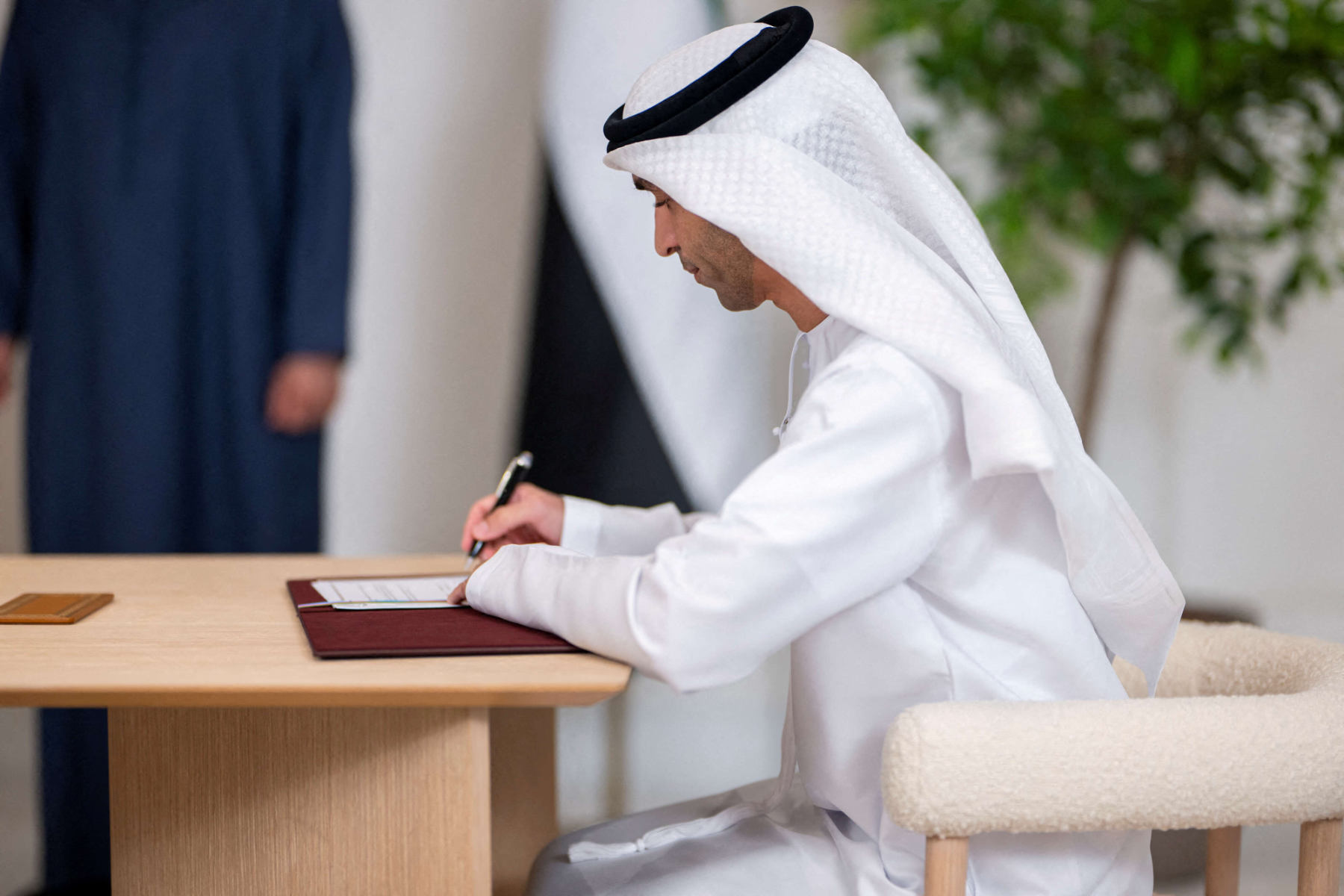
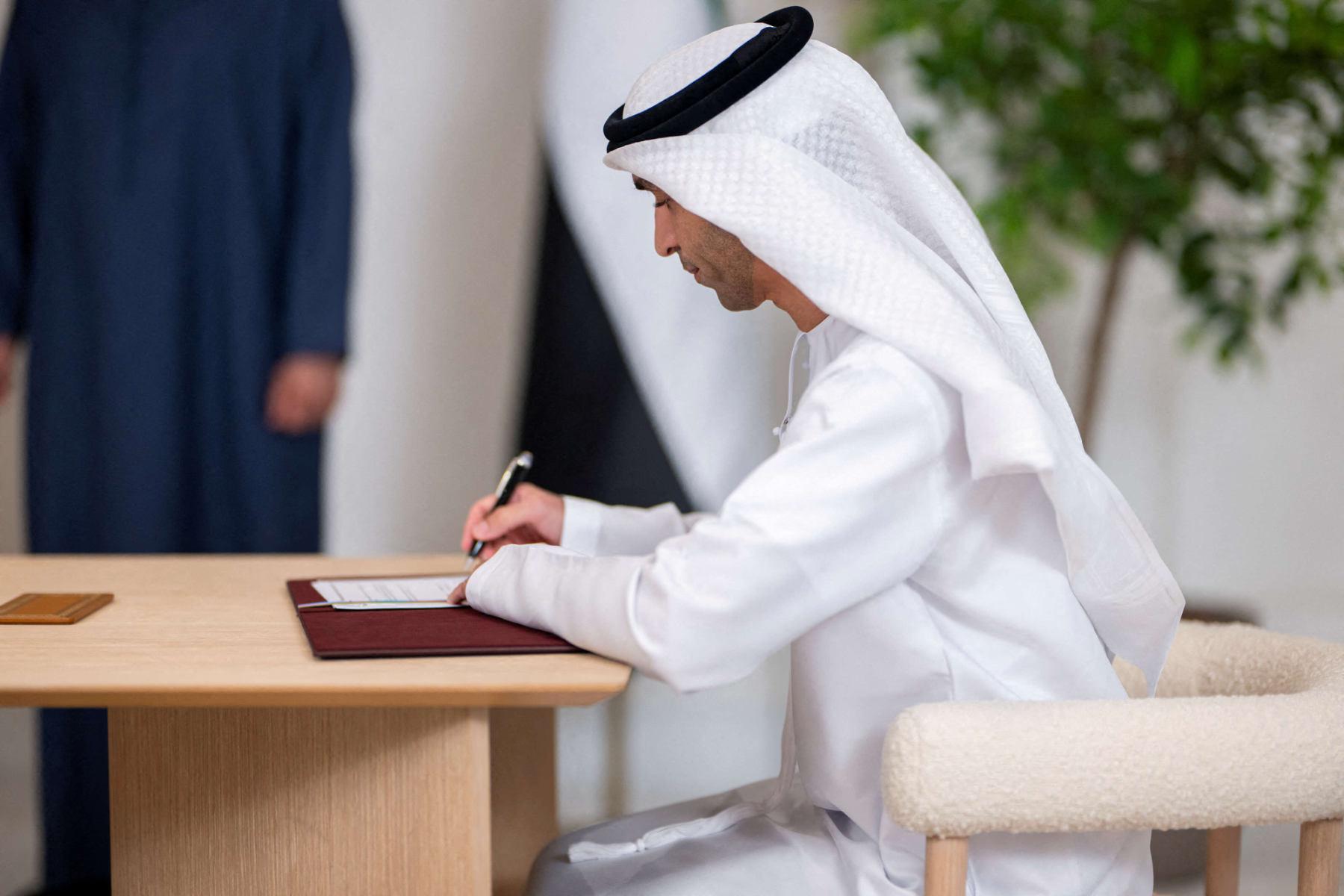
UAE Minister of Foreign Trade Thani Al Zeyoudi said the rapid transformation of the global trading system was pushing companies towards trusted and interconnected economies capable of facilitating access to new markets.
"The UAE anticipated these shifts through a long-term strategy based on openness, connectivity, diversification and investment in infrastructure," Zeyoudi said.
He highlighted the country's Comprehensive Economic Partnership Agreement programme as a key tool for expanding access to high-growth markets and strengthening international trade links.
The report also identifies artificial intelligence as one of the fastest-growing drivers of global commerce.
AI-related goods accounted for approximately 15 percent of global trade volumes but generated 43 percent of overall trade growth during the first half of 2025. Trade in 100 AI-related product categories reached $1.92 trillion during the period, representing annual growth of more than 20 percent.
However, the report argues that success in AI will depend not only on software capabilities but also on access to physical infrastructure, including semiconductors, data centres, electricity networks, cooling systems, water supplies, critical minerals, ports and logistics facilities.
In that regard, the UAE is viewed as particularly well-positioned because of its energy security, infrastructure capacity and investment resources.
Ahmed Bin Sulayem, Executive Chairman and Chief Executive Officer of DMCC, said the geography of global trade was being fundamentally redrawn.
"Growth is increasingly coming from the corridors connecting the Middle East, Asia, Africa and Latin America, while businesses are looking for places that can provide stability and help them navigate a more complex trading environment," he said.
"The UAE has spent decades building exactly that environment."
Bin Sulayem added that the country's role was expanding further as AI transforms global commerce and new financial systems, including stablecoins and tokenised settlement mechanisms, begin reshaping cross-border transactions.
The report highlights financial innovation as another area where the UAE is gaining a competitive advantage.
It identifies the country as one of a small group of jurisdictions, alongside Singapore, Hong Kong and the United Kingdom, that are actively developing regulatory frameworks for stablecoins and digital payments.
The UAE is also a leading participant in the mBridge project, one of the world's most advanced central bank digital currency initiatives.
Unlike much of the world, where the trade finance gap has widened to an estimated $2.5 trillion, the report notes that the UAE's domestic trade finance gap is effectively negligible, underlining the depth and sophistication of its financial infrastructure.
The study also argues that the energy transition is increasingly becoming a contest for industrial advantage rather than purely a climate-driven agenda.
Here too, the UAE is viewed as one of the strongest-performing middle powers, leveraging investments across critical minerals, renewable energy and nuclear power while maintaining its traditional role as a major hydrocarbon producer.
The report concludes that the country's ability to operate across both the existing and emerging energy systems could make it an increasingly important link in future clean technology supply chains.
As global trade adapts to geopolitical tensions, technological disruption and shifting economic power centres, the UAE appears to be positioning itself not merely as a regional hub but as one of the pivotal economies connecting the world's fastest-growing markets.