


A symbol of a highly-polarised period in Iraq’s post-2003 history
Sudani’s exit exposes Shia faultlines as Maliki eyes Iraq premiership
Rather than smoothing the path to consensus, Sudani’s withdrawal has exposed the framework’s unresolved dilemma over an alternative candidate.
Monday 12/01/2026

A symbol of a highly-polarised period in Iraq’s post-2003 history
BAGHDAD –
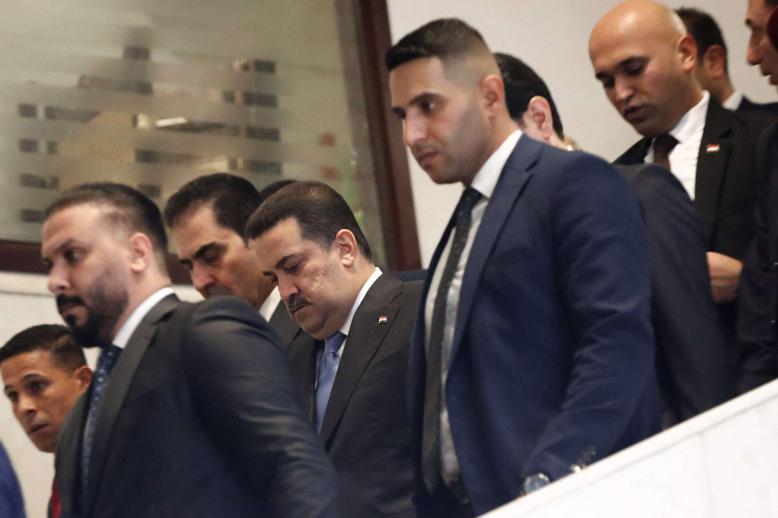
Iraq’s political landscape has entered a new phase of uncertainty after outgoing prime minister Mohammed Shiaa al-Sudani withdrew from the race for a second term, a move that has reshuffled the balance within the Shia Coordination Framework and reopened deep divisions over leadership, unity and the future direction of governance.
Sudani’s decision, according to leaked accounts from within the Coordination Framework, came after internal consultations in which he told senior figures that “Iraq’s interests must come before partisan and personal considerations.” The move was widely interpreted as an attempt to prevent a protracted intra-Shia power struggle that could paralyse the formation of the next government or place his administration at the centre of a damaging political confrontation.
Rather than smoothing the path to consensus, however, Sudani’s withdrawal has exposed the framework’s unresolved dilemma over an alternative candidate. In practice, it has cleared the way for the Dawa Party to push forward former prime minister Nouri al-Maliki, leader of the State of Law coalition, who has emerged as the dominant, and almost sole, nominee.
Sources close to the talks say Maliki’s candidacy has secured the backing of a majority of Coordination Framework factions, underlining his continued weight within Shia political calculations and his ability to mobilise support among traditional alliances. Yet the backing has fallen short of unanimity, with a notable reservation voiced by Ammar al-Hakim, leader of the Hikma Movement.
Hakim sought the opinion of Iraq’s top Shia religious authority in Najaf, a step laden with political symbolism. As on previous occasions, the religious establishment declined to intervene in the nomination of prime ministers, reiterating its long-standing position of remaining above day-to-day political manoeuvring. The disagreement, therefore, remains confined within the Coordination Framework itself.
According to figures close to Hikma, Hakim’s objection is not rooted in a personal dispute but in broader political concerns about a potential return to a governance model centred on the concentration of power and decision-making. Such a shift, he fears, would undermine the principle of political partnership and upset the delicate balance produced by the most recent election results.
The movement is wary that backing controversial figures could revive past crises and derail efforts to build a genuine consensus capable of navigating Iraq’s next phase, marked by complex economic, security and social challenges.
In an indication of the depth of the rift, Hikma has hinted at escalation options, including withdrawal from the next government. While such a move would be difficult to execute, it underscores the severity of the impasse. The exit of a key component from the governing coalition would weaken the political legitimacy of any future cabinet and reinforce perceptions of an internal Shia split, at a time when Iraq faces mounting domestic pressures and heightened regional tensions.
More broadly, Maliki’s possible return raises fundamental questions about the Coordination Framework’s ability to renew itself and adapt to shifting political realities. Critics argue that persisting with familiar figures reflects an adherence to old power-sharing formulas, rather than an effort to respond to a more diverse Shia electorate and evolving public expectations.
Despite his enduring influence, Maliki remains, for many opponents, a symbol of a highly-polarised period in Iraq’s post-2003 history, one associated with security breakdowns, mass protests and rising sectarianism. His reappointment, they argue, could reignite internal divisions, not only within the Shia camp but also in relations between the next government and Iraq’s other political components.
Supporters, by contrast, contend that Maliki’s political experience and grasp of regional power dynamics could prove decisive at a critical juncture, particularly given the fragility of Iraq’s security environment, economic vulnerabilities and the complexity of its relations with international actors. Yet this argument runs up against persistent fears that his return would deepen fractures rather than heal them.
Attention is now focused on an upcoming Coordination Framework meeting that is expected to be decisive. The gathering will not only determine the name of the next prime ministerial candidate, but also shape the contours of Iraq’s next political phase. Should the framework press ahead with Maliki’s nomination without addressing internal objections, it risks entrenching a Shia rift that may prove difficult to contain. Failure to reach agreement, meanwhile, could open the door to a compromise figure or a new consensus candidate aimed at restoring balance and averting another bout of political deadlock.
Ultimately, Sudani’s withdrawal, and the contentious debate that followed, has laid bare the structural fragility of Iraq’s political system, where consensus remains hostage to calculations within a single political component before it can evolve into a broader national partnership. The fate of the next government now hinges on whether Shia forces can transcend narrow interests and adopt a more inclusive vision of governance, or whether Iraq is headed towards yet another cycle of division and paralysis.