

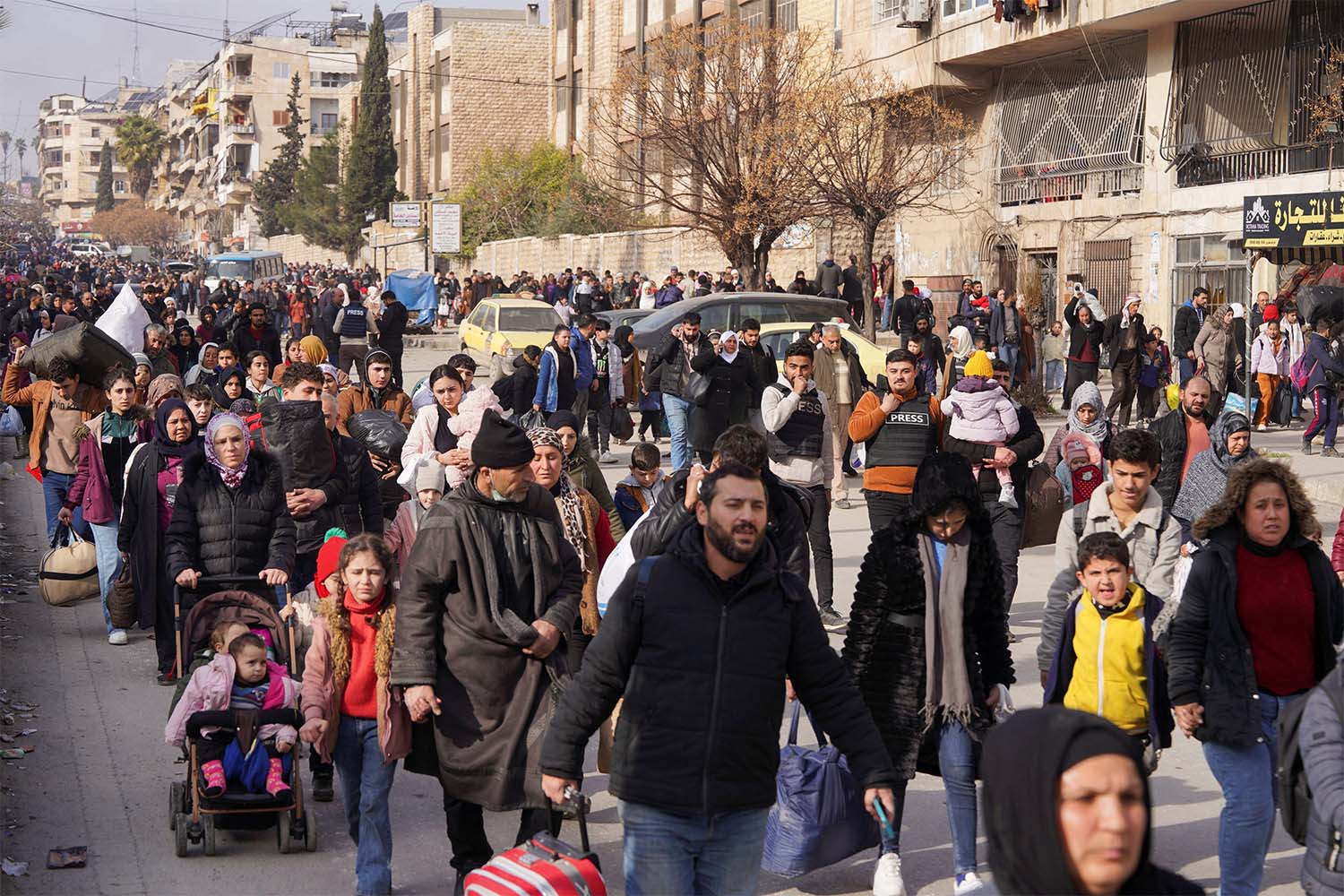
Civilians carry their bags and belongings as they flee following renewed clashes between the Syrian army and the Syrian Democratic Forces in Aleppo
Syrian govt demands withdrawal of Kurdish fighters from Aleppo
The demand targets the predominantly Kurdish districts of Sheikh Maqsud and Ashrafiyeh, which have remained under the influence of units linked to the Syrian Democratic Forces despite previous agreements.
Thursday 08/01/2026
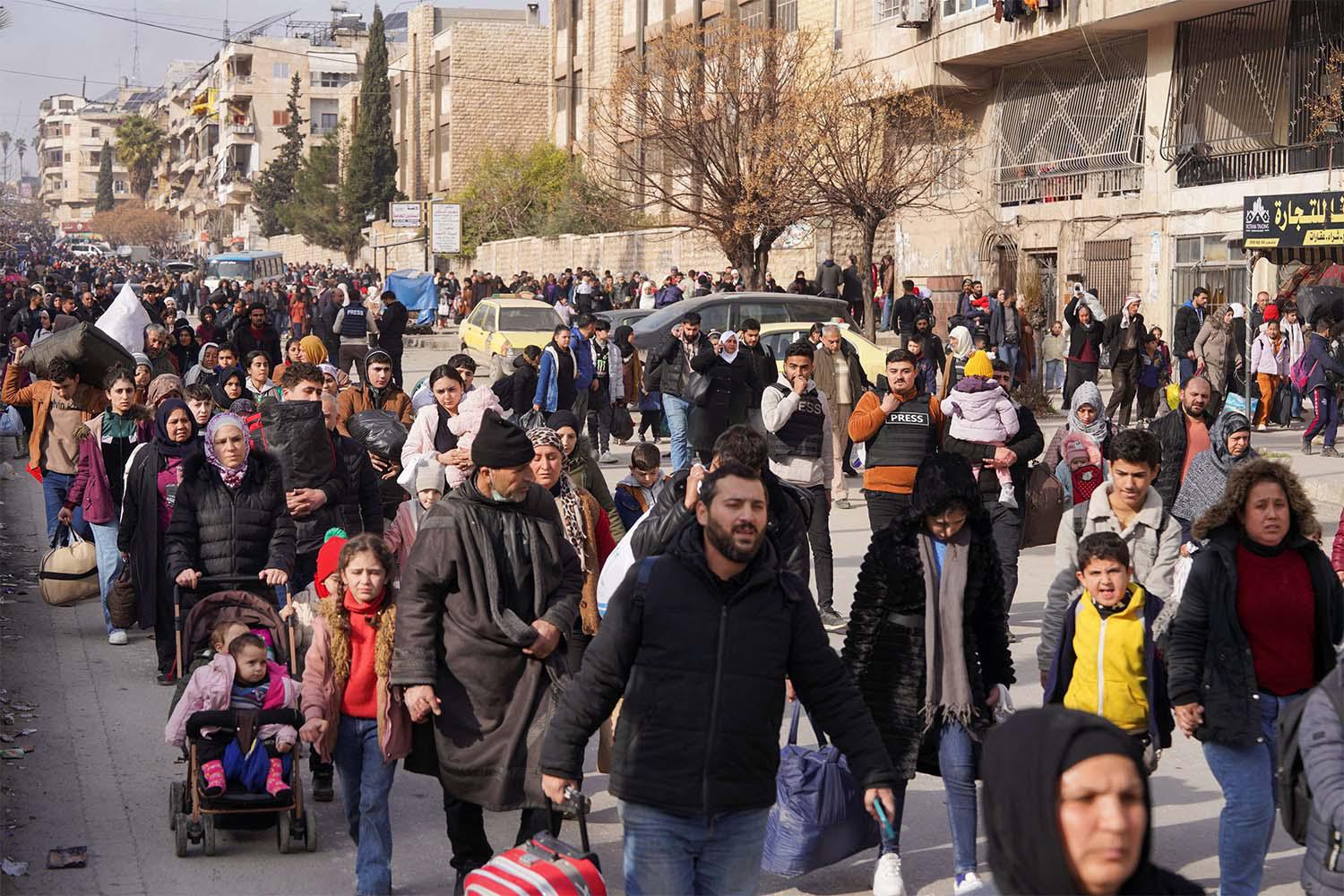
Civilians carry their bags and belongings as they flee following renewed clashes between the Syrian army and the Syrian Democratic Forces in Aleppo
ALEPPO - Syria's transitional government has formally demanded that Kurdish-led forces withdraw from the neighborhoods they control in Aleppo, following intense clashes that have displaced tens of thousands of civilians and claimed numerous lives.
The demand targets the predominantly Kurdish districts of Sheikh Maqsud and Ashrafiyeh, which have remained under the influence of units linked to the Syrian Democratic Forces (SDF) despite previous agreements.
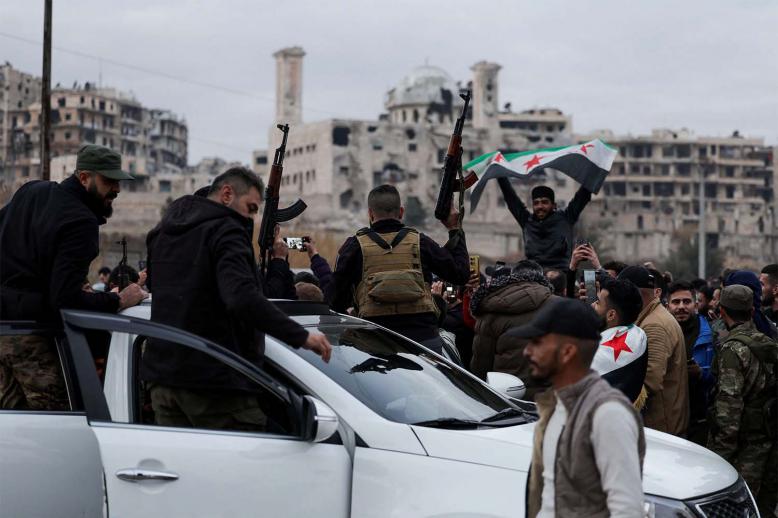
Clashes erupted on Tuesday and continued into Wednesday, marking some of the deadliest fighting between Syrian government forces and the SDF since the fall of Bashar al-Assad's regime in late 2024.
Reports indicate at least 12 civilians and several military personnel killed, with dozens wounded. Both sides traded accusations over who initiated the violence.
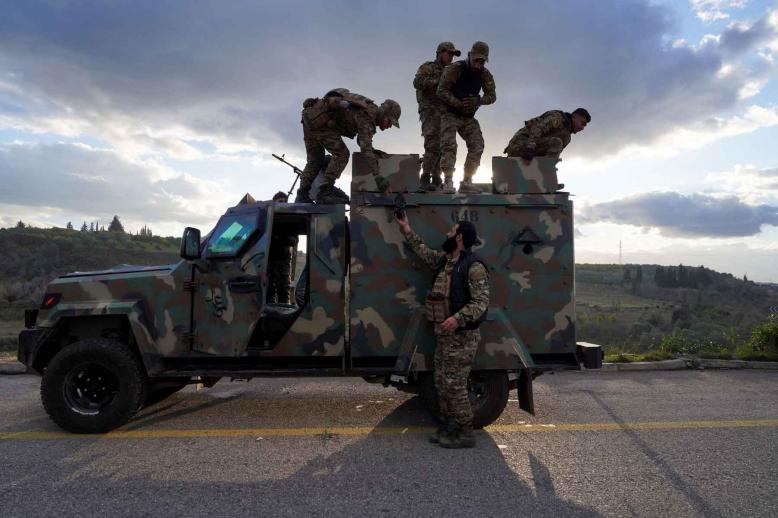
The Syrian army declared SDF positions in the two neighborhoods "legitimate military targets" and designated the areas as "closed military zones," leading to shelling and the establishment of humanitarian corridors for civilians to flee.
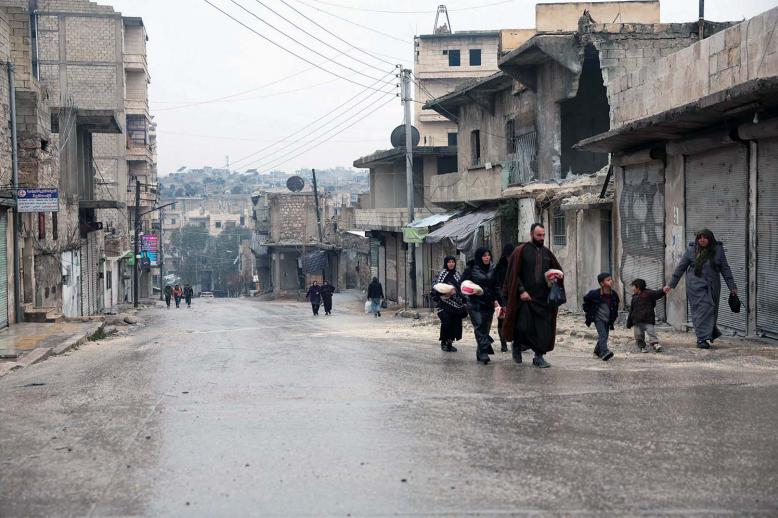
Thousands of residents, many carrying belongings on foot or in vehicles, evacuated the districts, heading toward government-controlled areas or northwest toward Afrin.
Civilians fleeing the Ashrafiyeh and Sheikh Maqsud neighborhoods in Aleppo amid shelling and clashes. Schools, universities, government offices shut down in Aleppo, and flights to the city's airport suspended until Thursday evening.
The violence stems from the failure to implement a March 2025 agreement between the SDF and Syria's new authorities, which called for the integration of Kurdish military and civilian institutions into the central state by the end of 2025.
The SDF, dominated by the People's Protection Units (YPG), controls large parts of northeastern Syria and has pushed for decentralized governance — a proposal rejected by Damascus, which insists on full central control.
The SDF maintains it has no military presence in the Aleppo neighborhoods and accuses government forces of attempting forced displacement. Senior Kurdish official Ilham Ahmed described the actions as part of a "genocidal war" against Kurds, urging dialogue.
Government sources described the operation as "limited," aimed at pressuring armed groups to leave and extending state authority over the entire city.
The standoff risks further complicating Syria's fragile post-Assad transition. Turkey, a key backer of the current Syrian government, views the YPG as an extension of the PKK terrorist group and has long opposed Kurdish autonomy.
Observers warn that prolonged fighting could draw in external actors and undermine efforts toward national reconciliation.
Bombardment reportedly decreased on Wednesday, but tensions remain high with military deployments around the neighborhoods. The situation underscores the challenges facing Syria's new Islamist-led government in unifying the country after years of civil war.