

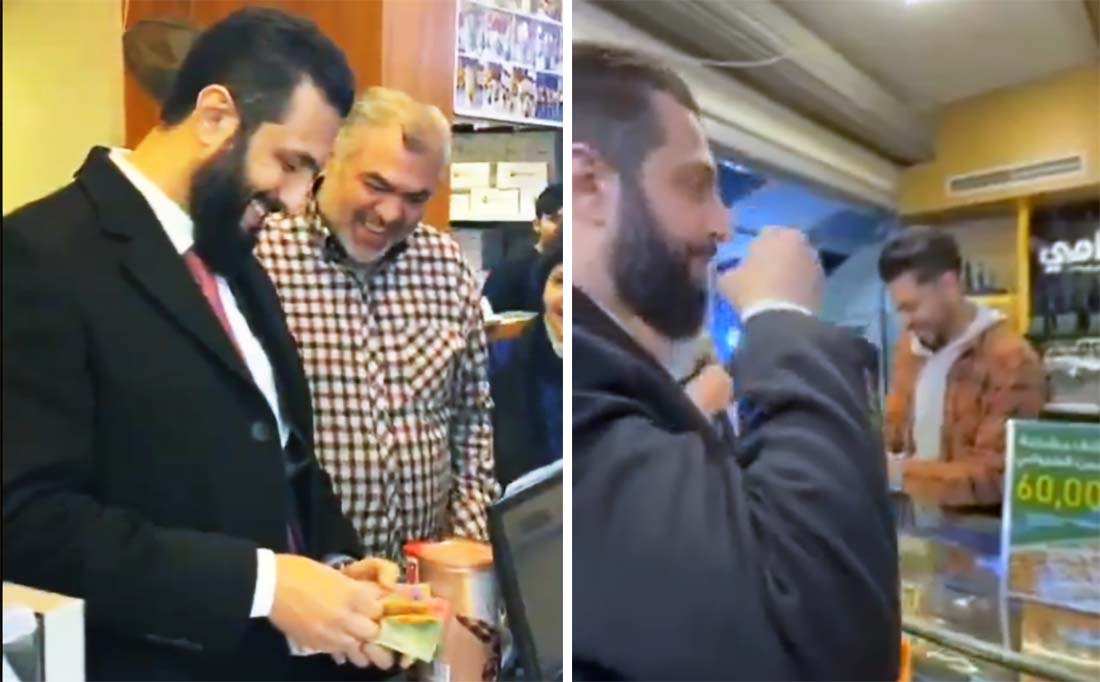
Sharaa seen using the new banknotes at a Damascus shop
Syrian President shows up in public after palace shootout reports
Sharaa appears in a video purchasing items at a shop in Damascus with the new banknotes amid rumours of palace shootout incident.
Tuesday 06/01/2026
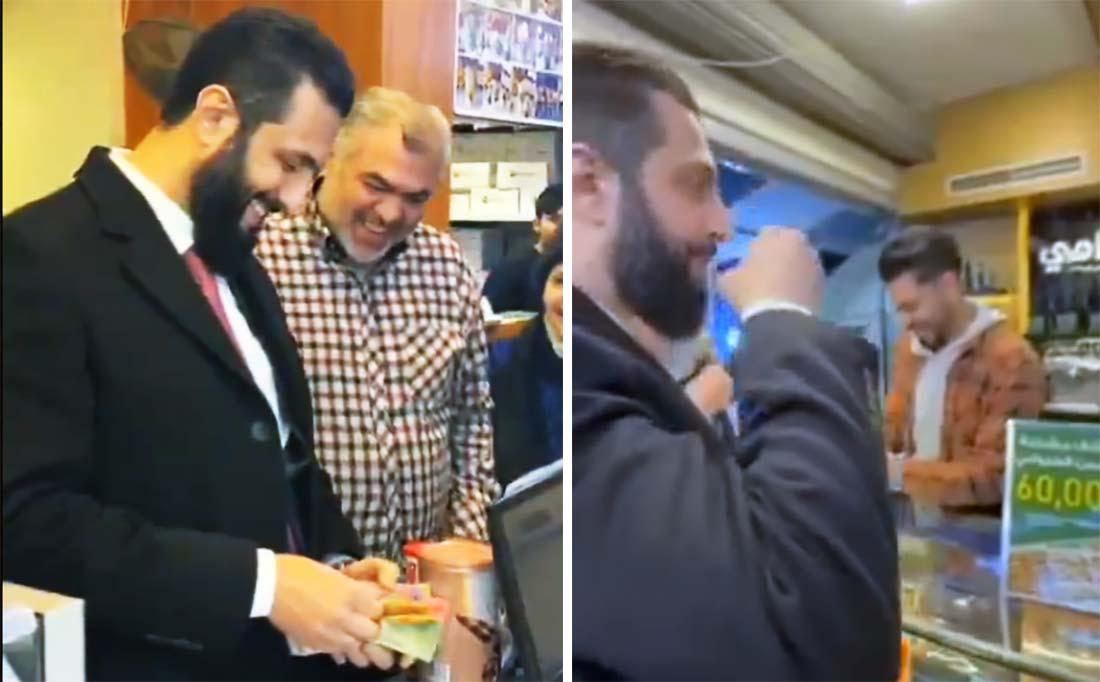
Sharaa seen using the new banknotes at a Damascus shop
DAMASCUS — Syrian President Ahmed al-Sharaa made a rare public appearance in a widely circulated video on Monday, seen purchasing items at a shop in Damascus using the country's newly introduced banknotes, just days after the Interior Ministry firmly denied reports of a shooting incident at the presidential palace, dismissing speculation about the leader's safety.
The video, shared across social media platforms, shows al-Sharaa engaging in everyday transactions with the redesigned Syrian pounds, which entered circulation on January 1, 2026. This public display appears timed to showcase the successful rollout of the currency reform - a key initiative of the transitional government aimed at stabilizing the war-ravaged economy.
For days, social media users have been circulating reports of gunfire on December 30 at the presidential palace.
Interior ministry spokesman Noureddine al-Baba said reports claiming a security incident targeted Sharaa or other senior figures were totally baseless.
"We categorically affirm that these claims are entirely false," said Baba.
Independent sources, including the Syrian Observatory for Human Rights, reported a brief shooting inside the palace lasting about 12 minutes, resulting in several wounded but attributed to an "internal dispute" unrelated to the president. A diplomat supporting the new government confirmed a shooting occurred but echoed that al-Sharaa was not targeted.
Background on the new currency
Syria's new banknotes mark a symbolic and practical break from the Assad era. Unveiled by President al-Sharaa and Central Bank Governor Abdulkader Husrieh in a ceremony on December 29, 2025, the currency features denominations ranging from 10 to 500 pounds after removing two zeros from the old notes (effectively redenominating so that 100 old pounds equal 1 new pound).
The designs replace portraits of former President Bashar al-Assad and his father Hafez with images of Syria's natural and agricultural heritage, including roses, wheat, olives, oranges, and mulberries. Sharaa described the change as representing "the end of a previous, unlamented phase and the beginning of a new phase," emphasizing a shift away from personality cults toward national symbols.
The reform aims to simplify transactions in an economy where hyperinflation had devalued the pound dramatically—dropping from around 50 to the dollar in 2011 to over 11,000 by late 2025. Officials insist the swap will be smooth, with a transition period allowing old and new notes to circulate concurrently.
Broader context
Since leading the rebel offensive that toppled Bashar al-Assad in December 2024, President Sharaa has focused on economic recovery, institutional rebuilding, and international reintegration. The currency reform is part of these efforts, though challenges persist, including lingering sanctions, sectarian tensions, and security threats from groups like the Islamic State.
The president's casual use of the new currency in the video serves as a reassuring signal of normalcy and stability, countering rumours in a nation still healing from years of conflict.
As Syria enters 2026, the transitional government continues to navigate these reforms, with al-Sharaa at the helm emphasizing unity and reconstruction.