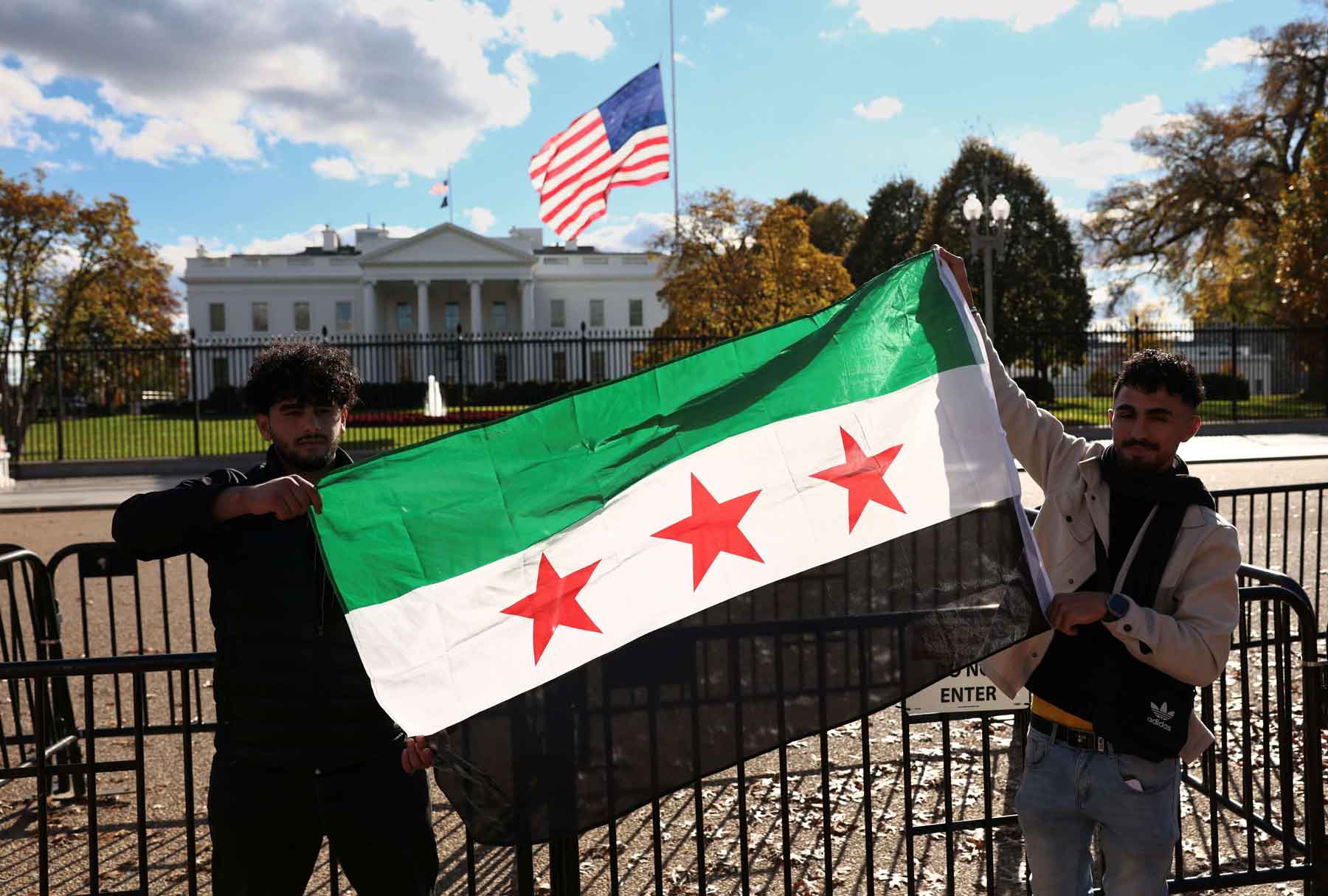
Dr. Suzan Amedi A Syrian flag is displayed outside the White House following the meeting of US President Donald Trump and Syrian President Ahmed al-Sharaa in the Oval Office of the White House in Washington, November 10, 2025.
Washington, when extremists are rewarded and allies are ignored
Neutrality at this moment is not a policy, it is a deferred decision to pay a higher price later.
Monday 15/12/2025
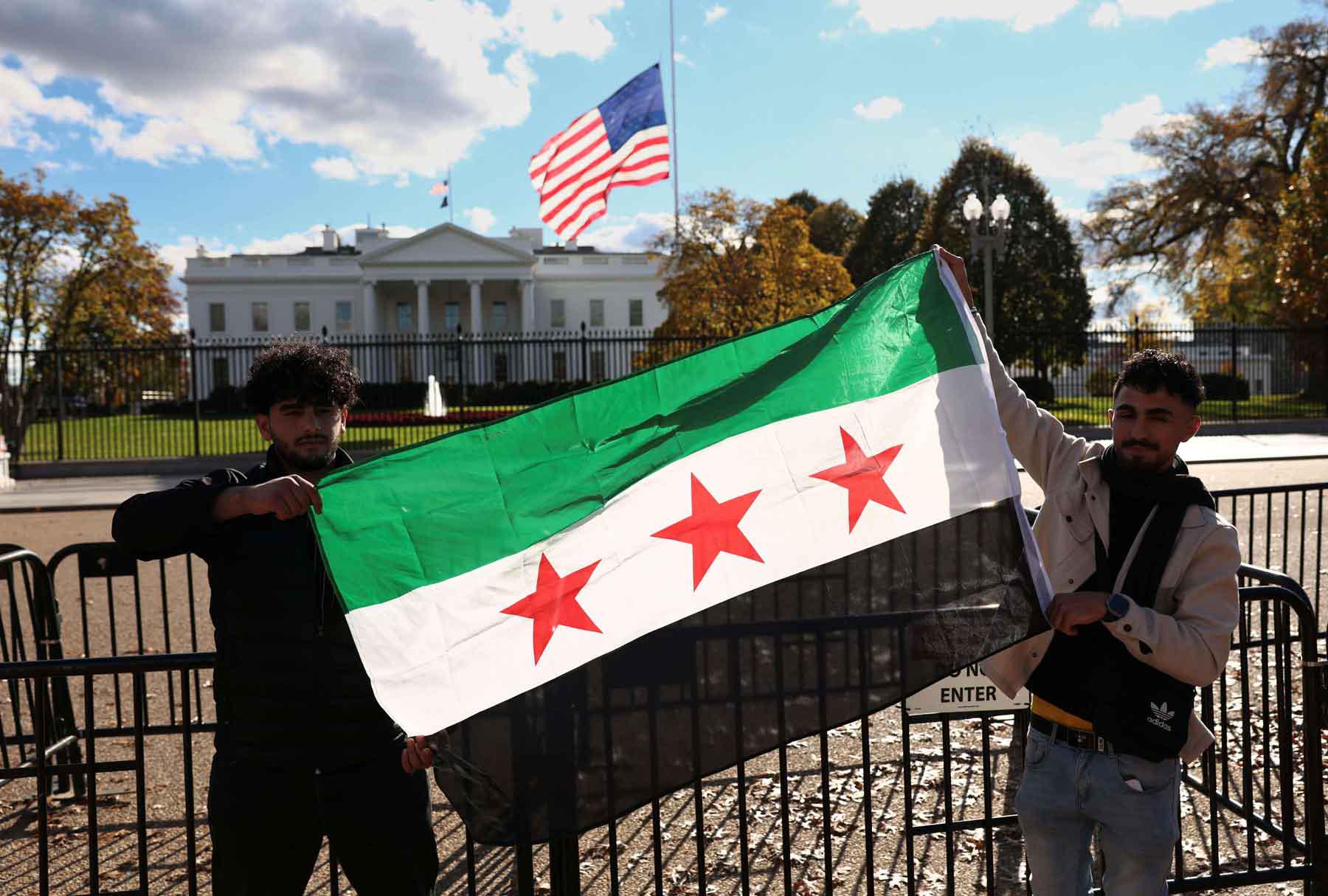
Dr. Suzan Amedi A Syrian flag is displayed outside the White House following the meeting of US President Donald Trump and Syrian President Ahmed al-Sharaa in the Oval Office of the White House in Washington, November 10, 2025.
Washington should stop pretending to be surprised. The return of ISIS attacks and the killing of US soldiers in Syria are not isolated incidents; they are the direct outcome of a selective policy that rewards “rebranded” extremists while sidelining those who fought, and bled, alongside the United States.
The US engagement with Ahmad al-Jolani as a “presidential figure” or a potential political partner, despite his jihadist past, cannot be framed as smart pragmatism. It sends a dangerous message: that an extremist past can be erased once its owner becomes politically useful. This message does not only undermine trust among allies; it recreates the very conditions that allow extremism to transform into power.
Meanwhile, the Syrian Democratic Forces (SDF), the backbone of the fight against ISIS, have been left outside the political equation. They were given no recognition, no guarantees, and no political horizon. Instead, they were treated as a temporary security tool, shelved the moment their political cost outweighed their military utility.
Washington knows well that the SDF was not merely a local militia, but a genuine stability project in a fractured environment. Yet it chose to sacrifice this project to preserve its delicate balance with Turkey, even if that meant weakening the most reliable partner on the ground.
US policy in Syria today is driven by crisis management, not conflict resolution. It prefers dealing with a “negotiable” central authority, regardless of its past, over investing in a partner that honoured every commitment and paid the highest price without conditions. This may appear less costly in the short term, but it carries serious strategic risks in the long run, beginning with the erosion of trust and ending with the resurgence of threats once declared defeated.
If Washington truly seeks sustainable stability, it must reassess its priorities. Stability is not built by polishing recycled figures, but by supporting forces that have proven capable of governance, security, and countering extremism without political blackmail.
The Kurdish experience in Iraq offers a clear lesson: when the Kurds leveraged US needs pragmatically, without maximalist demands, they transformed from a burden into a partner. A similar opportunity still exists in Syria, but it is Washington that must decide whether to learn from history or repeat its mistakes.
In the end, the United States faces a clear choice: real partnerships with those who fought alongside it or temporary arrangements with actors whose past crises may soon resurface. Neutrality at this moment is not a policy, it is a deferred decision to pay a higher price later.