

A landmark in Arab animated cinema
YouTube animated sensation depicts dystopian Arab future
Released on YouTube on March 21, the film has attracted a huge online audience, especially as streaming platforms increasingly substitute for traditional cinemas
Thursday 29/01/2026
A landmark in Arab animated cinema
BEIRUT – The Lebanese animated feature “Alephia 2053” has garnered over eight million views on YouTube in just five weeks, highlighting the film’s striking appeal. Its popularity lies largely in the way viewers from across the Arab world project the fictional story onto their own realities.
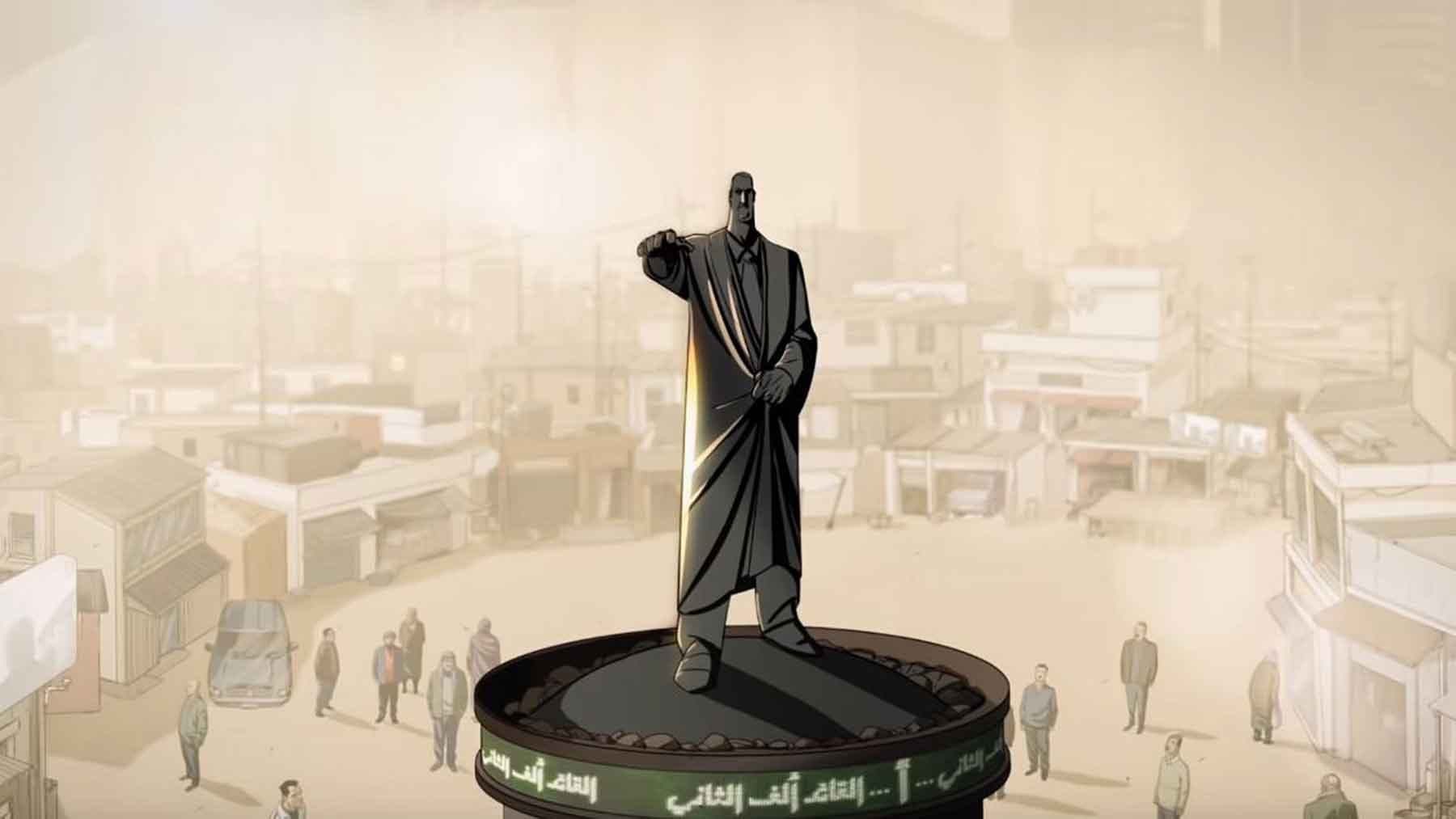
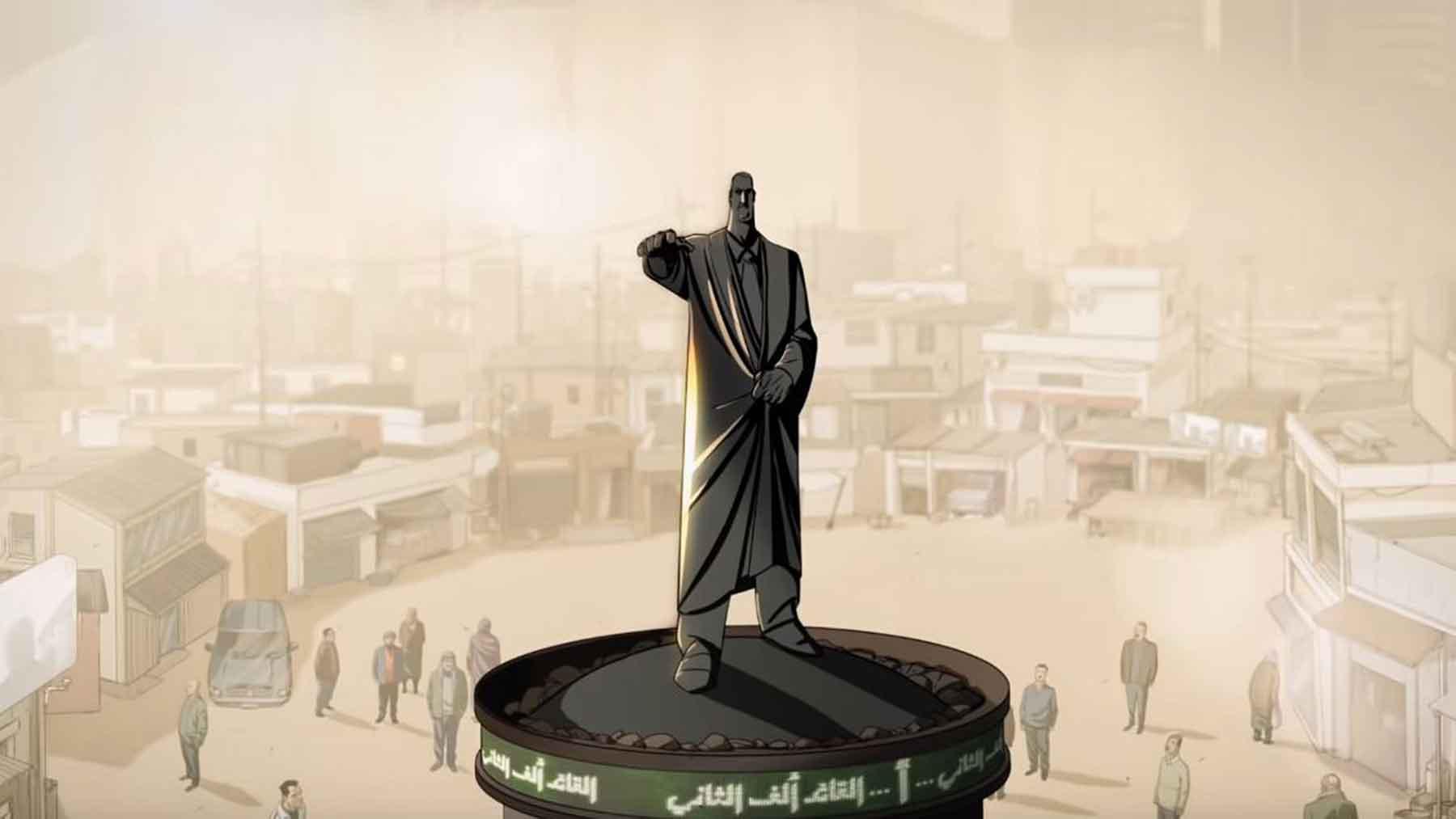
Set in a dystopian future, the 60-minute thriller follows the imagined Republic of Alephia in the year 2053, a fictional Arab state plunged into chaos under the iron rule of Alaa Ibn Ismail Al Alf, also known as Aleph II. Voiced by Lebanese actor Khaled El Sayed, Aleph II is portrayed as the “eternal leader” and guardian of the ruling Al Alf dynasty.
“The film is not real, but it is truthful,” says Lebanese creator and writer Rabi’ Sweidan. “It is fictional, but it stems from reality, offering a depiction of social realities in Arab countries.”
Audiences follow a cast of characters including the ruler’s right-hand man, the heir groomed from birth to inherit power, a religious official promoting the leader and the oppressed population simmering with rebellion. The narrative traces the powerless, the blind enforcers of the regime, and ultimately, the revolt that topples the tyrant.
Director Jorj Abou Mhaya incorporates scenes reminiscent of real events across the Arab world, including the toppling of statues and the chanting of “the people want the fall of the regime,” a slogan that originated in Tunisia and has echoed through popular uprisings in the past decade.
Sweidan emphasises that the story is not tied to one specific country. “The world has become a small village, and situations are similar in many places,” he says. “Alephia could be the twenty-third country in the Arab League.”
The film was produced by Lebanon’s Spring Entertainment, with complex animation sequences handled by French studio Malil'Art. According to Sweidan, over 70 percent of the production was completed in Lebanon by Lebanese artists.
The concept for “Alephia 2053,” conceived in early 2017, arose from a desire to imagine the Arab world’s future, an area largely unexplored in theatre or cinema. “The idea started with the question: What will the Arab world look like in 20 or 30 years?” Sweidan explains.
Released on YouTube on March 21, the film has attracted a huge online audience, especially as streaming platforms increasingly substitute for traditional cinemas in the wake of the pandemic. Sweidan believes this success reflects viewers’ connection with the story: “Everyone sees themselves and their society in it.”
Film critic Elias Dummer notes, “The online release, especially for free on YouTube, is an important factor in its popularity, but the core is the story. A tale of people rebelling against an oppressive ruler is not new globally, but its resonance with the Arab reality has widened its audience.”
Sweidan previously found success online with “Bidoon Qayd” (Without Document) in 2017, the first interactive Lebanese-Syrian web series, which won several international awards. “This time, we wanted something new and unique through animation,” he says.
Dummer adds that while the animation is two-dimensional rather than 3D, the film is visually engaging. He points out the challenge of attracting adult audiences to animated features, which are usually aimed at children, making “Alephia 2053” a landmark in Arab animated cinema.
Although the film’s tone is “dark,” according to promotional materials, its palette avoids the typical blue-grey dystopian hues, opting instead for sandy, desert-like colours. Sweidan explains that these return in the final scene, conveying hope: “Things cannot remain dark forever. The film’s message is that the future need not be worse than the past and present.”