
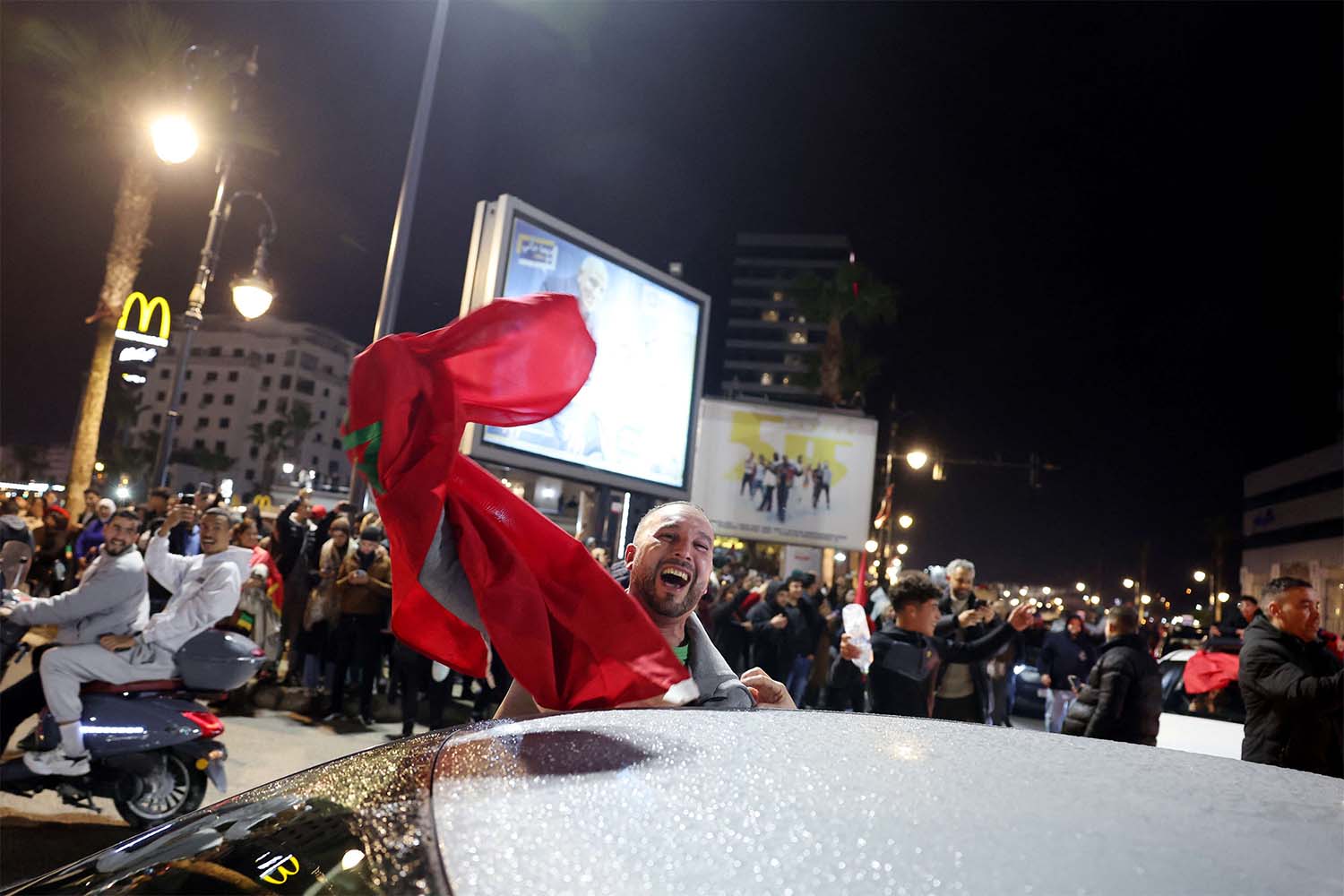
Moroccan fans celebrate in Tangier after winning their AFCON semi-final against Nigeria
Africa Cup of Nations: A festive spectacle in Morocco
The AFCON has shown a nation united in festive revelry versus a diaspora in France navigating celebration under scrutiny.
Saturday 17/01/2026
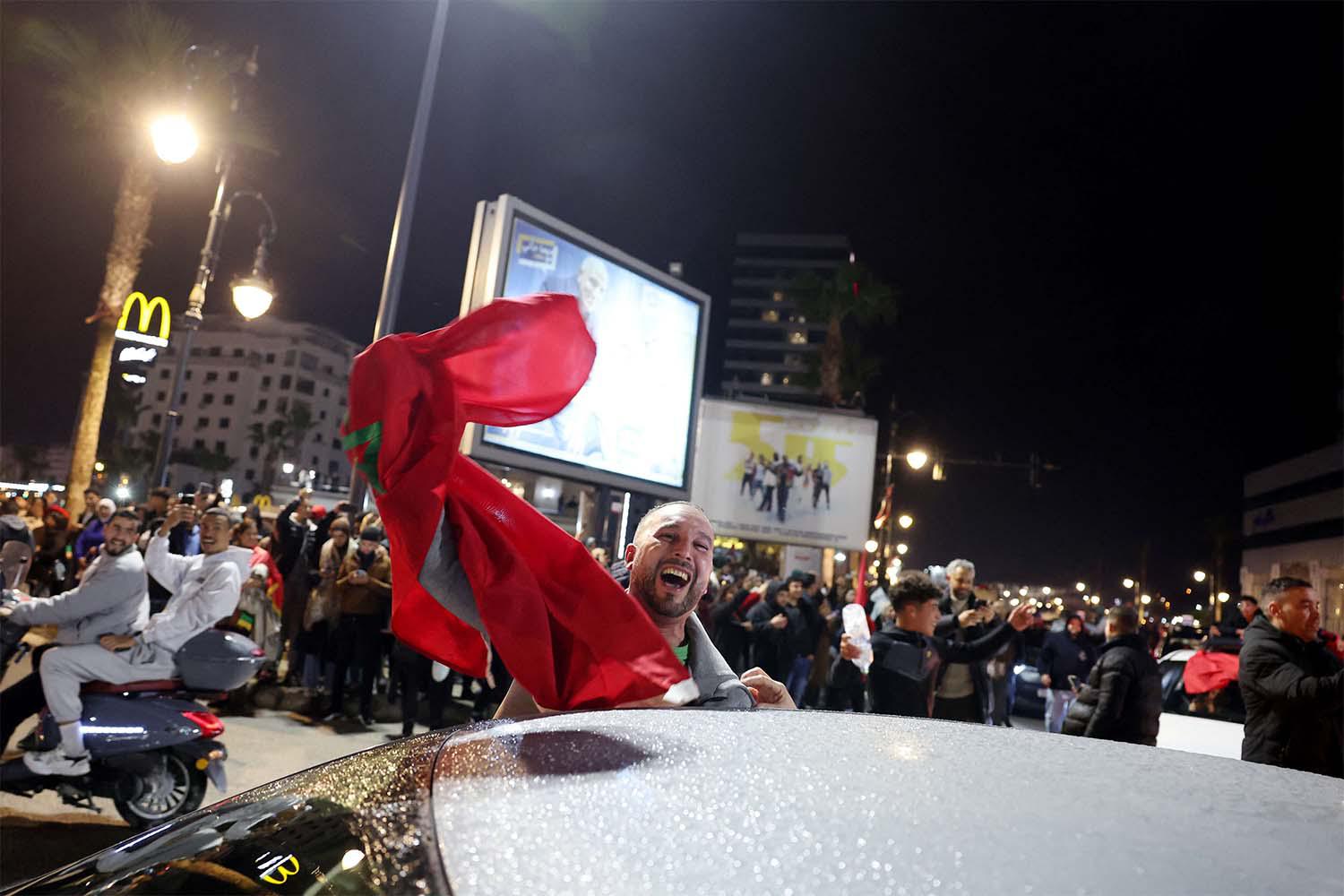
Moroccan fans celebrate in Tangier after winning their AFCON semi-final against Nigeria
CASABLANCA - The Africa Cup of Nations (AFCON) 2025-26, hosted by Morocco, has transformed the North African nation into a vibrant hub of football passion, cultural celebration, and unity.
As the tournament unfolds in early 2026, the streets of host cities like Rabat, Marrakech, Casablanca, and Tangier are alive with an electric atmosphere that captures the essence of African football at its finest.
Fans from across the continent have converged, turning public spaces into impromptu festivals where music, dance, and the rhythmic beats of Dakka Marrakchia blend seamlessly with the cheers from packed stadiums.
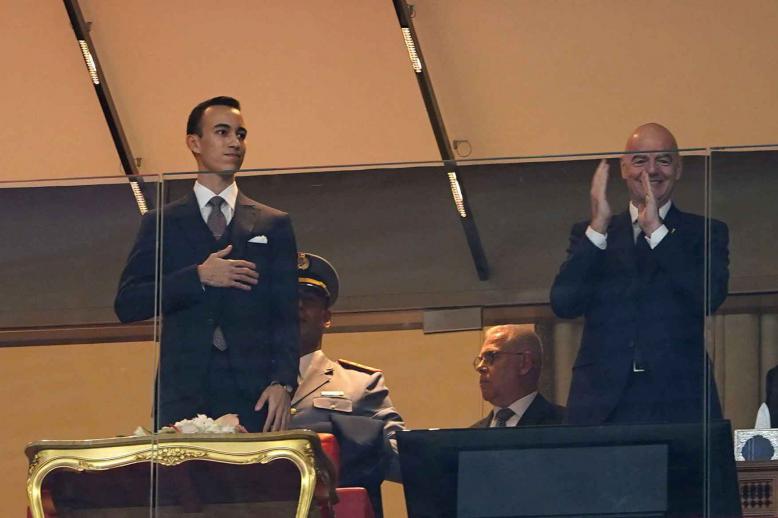
From the opening match at Prince Moulay Abdellah Stadium in Rabat, where Morocco kicked off their campaign against Comoros with a ceremonial flair led by Prince Moulay Hassan bin Mohammed, the event has been marked by unbridled joy.
Fan zones, a cornerstone of the tournament's experience, have become epicenters of entertainment. In Rabat's OLM Souissi esplanade, crowds gather for live performances by artists like Rafie and Lartiste, fusing African rhythms with Moroccan heritage to create a festive vibe that extends well beyond the 90 minutes of play.
Marrakech's lively plazas and Casablanca's pop-up activations further amplify this, with freestyle football displays, cultural dances, and communal gatherings that highlight the tournament's role in fostering continental unity.
Morocco's Atlas Lions have been at the heart of the excitement, cruising through the group stage with dominant wins, including a 3-0 victory over Zambia, and advancing to the final against Senegal after a thrilling semifinal triumph over Nigeria.
Celebrations have spilled into the streets, with viral videos capturing fans dancing at airports and erupting in joy across Rabat after key victories.
The atmosphere outside venues like Moulay Abdellah Stadium has been described as nothing short of electric, with supporters waving flags, singing anthems, and creating memories that underscore AFCON's status as more than just a sporting event - it's a cultural phenomenon.
While Morocco basks in this triumphant glow, the story takes a darker turn for the Moroccan diaspora in France. Celebrations of the Atlas Lions' successes have often been met with heavy-handed police responses, turning moments of national pride into scenes of confrontation and unrest.
Following Morocco's semifinal victory over Nigeria, what began as jubilant gatherings on Paris's iconic Champs-Élysées quickly escalated into chaos, with French police deploying tear gas, stun grenades, and making multiple arrests to disperse crowds.
Reports indicated that fireworks and minor disturbances prompted a swift and forceful intervention, leading to clashes that marred the festive spirit.
This pattern is not new. During the 2022 FIFA World Cup, when Morocco achieved historic feats, similar celebrations in France devolved into violence. In Paris, Lyon, and other cities, Moroccan fans faced not only police crackdowns but also targeted attacks from far-right groups, resulting in over 120 arrests amid reports of racist violence.
French authorities mobilized thousands of officers, using tear gas on the Champs-Élysées as fans celebrated wins against teams like Portugal and England.
Critics, including French lawmakers, have condemned these incidents as "planned attacks" and excessive force, highlighting how public expressions of Moroccan joy are often framed as threats, leading to disproportionate responses.
Adding complexity, recent AFCON-related tensions in France have also involved rival fan groups. Algerian supporters in Lyon were investigated for anti-Moroccan and anti-Jewish chants during their own celebrations, prompting prosecutorial action and disruptions to public order.
These episodes underscore broader issues of integration, policing, and inter-community relations in France, where the Moroccan community's enthusiasm for their national team's successes clashes with security concerns.
As AFCON 2025 reaches its climax with Morocco eyeing glory on home soil, the contrast is stark: a nation united in festive revelry versus a diaspora navigating celebration under scrutiny. This tournament not only showcases Africa's football talent but also illuminates the global challenges faced by migrant communities in expressing cultural pride.