Lekjaa's success is a thorn in Algeria's side
Fouzi Lekjaa and the tax of Moroccan success and achievement
Since taking the helm of the Royal Moroccan Football Federation, Lekjaa has posed a stubborn complex for the Algerian media. He has led his country's football to unprecedented glory, culminating in the Moroccan national team reaching the semi-finals of the Qatar 2022 World Cup.
Monday 22/06/2026
Lekjaa's success is a thorn in Algeria's side
It is a tragedy disguised as a comedy when a state's media clings to publishing fake news solely to satisfy long-standing "wishful thinking" that has become an addiction within muddled minds and diseased souls. It is equally disheartening to see the politicization of football—a sport meant to foster peace and open avenues of dialogue among the different peoples of the world.
The latest example of this substandard reporting, which serves no purpose other than to malign a neighboring country and vent unnecessary feelings of hatred and animosity, is the rumor recently circulated by Algerian media regarding Fouzi Lekjaa, President of the Royal Moroccan Football Federation. They claimed that US authorities refused to grant him an entry visa to attend the Moroccan national team's matches at the World Cup—conveniently ignoring that he simultaneously serves as the Minister Delegate in charge of the Budget in the government of Aziz Akhannouch, as well as a member of the FIFA Council.
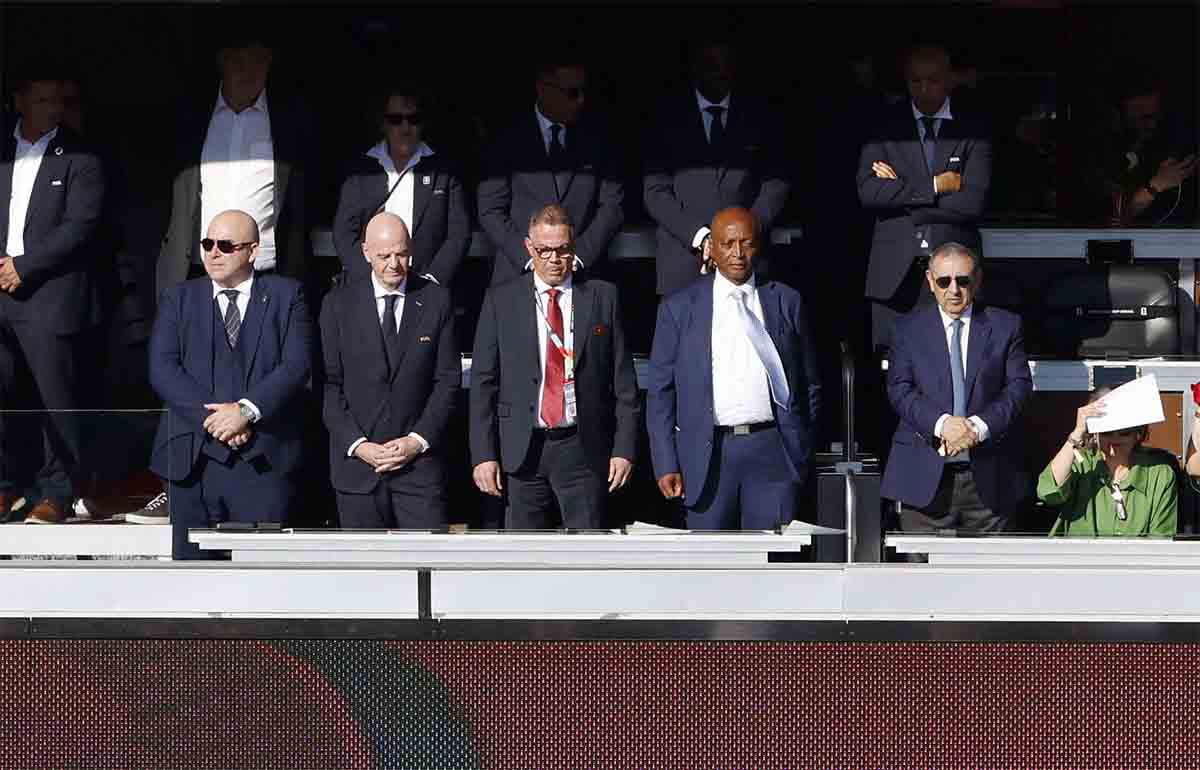
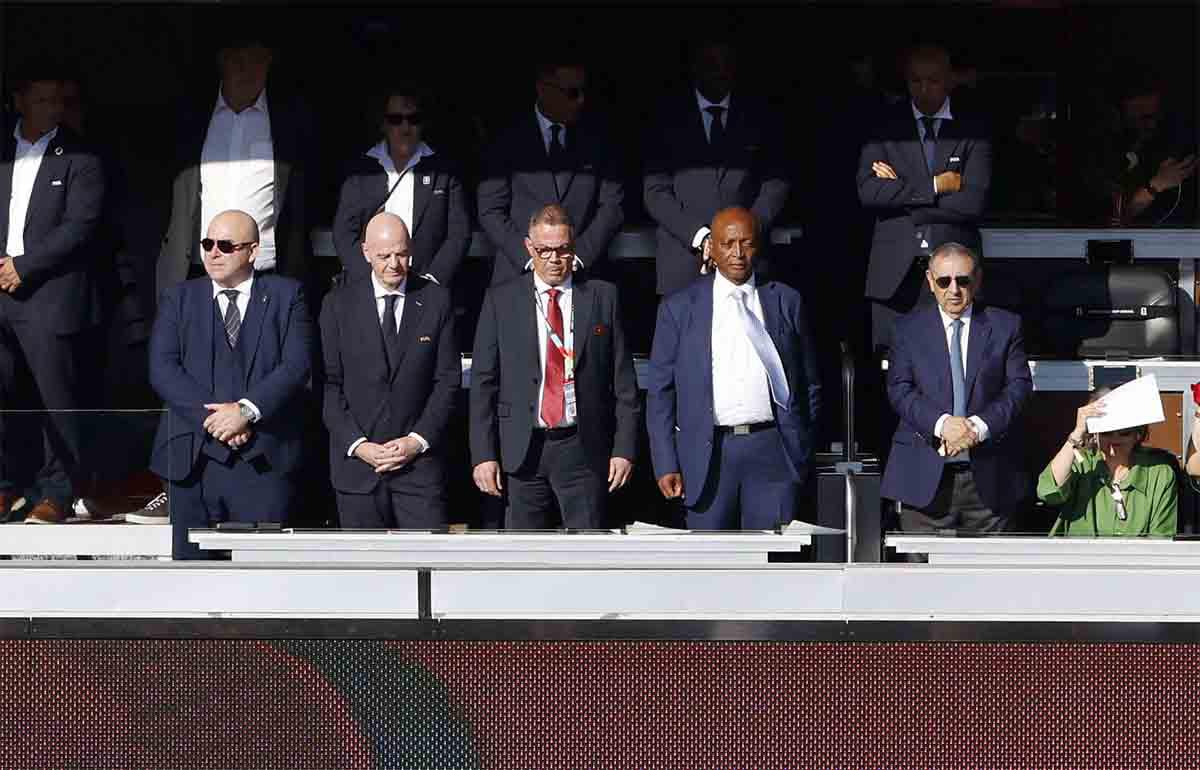
The irony here is that Lekjaa actually attended the match in which his country's national team faced Brazil, where the "Atlas Lions" shone brightly and held the Samba dancers to a draw. Lekjaa was seen in the stadium sitting alongside the Mayor of New York, Zohran Mamdani, and the President of the Confederation of African Football (CAF), Patrice Motsepe.
Since taking the helm of the Royal Moroccan Football Federation, Lekjaa has posed a stubborn complex for the Algerian media. He has led his country's football to unprecedented glory, culminating in the Moroccan national team reaching the semi-finals of the Qatar 2022 World Cup, as part of a royal vision aiming to make the Moroccan team an inspiring model in the world of football.
I do not know Mr. Lekjaa personally, nor do I share a friendship with him, even if we have mutual friends. However, tracking his distinguished career has allowed me to discern the true motive behind the Algerian media campaigns targeting him.
In recent years, Lekjaa has become one of the Moroccan sports figures most targeted by a large section of the Algerian media. This targeting has coincided with the rise of Moroccan football regionally and globally, alongside Morocco's growing influence within African and international sports institutions. Consequently, sporting considerations have become entangled with the existing political tensions between Morocco and Algeria over the Sahara dispute and Algeria's support for the separatist Polisario Front.
While the Algerian media has portrayed Lekjaa since 2021 as the godfather of Moroccan influence within the machinery of the Confederation of African Football (CAF)—accusing him, without documented evidence, of influencing federation decisions to favor Morocco at the expense of the Algerian team—they flew even higher into the realm of absurd accusations in 2024. At that time, an Algerian public channel broadcasted a report accusing Lekjaa of using the "Pegasus" spyware to spy on CAF officials and control their decisions, painting him as the "James Bond" of football.
Since assuming the presidency of the Royal Moroccan Football Federation, Lekjaa has managed to achieve a qualitative leap in the trajectory of Moroccan football. As a leader with a clear developmental vision aligned with the directives and philosophy of King Mohammed VI in this field, he successfully secured Morocco's hosting of the 2026 Africa Cup of Nations. Furthermore, he contributed to the Kingdom winning the honor of co-hosting the 2030 World Cup alongside Spain and Portugal, while firmly establishing Morocco's presence within the structures of CAF and FIFA, spearheading a massive overhaul in sports infrastructure, and establishing training academies.
With every new Moroccan success, the targeting of Lekjaa—the "architect of the Moroccan football renaissance"—intensifies. Yet, the man has always been careful not to fall into the trap of futile arguments. On several occasions, using a calm and balanced rhetoric, he has explained that the Moroccan presence within continental and international institutions is primarily due to the Kingdom's rich footballing history and its substantial investments in infrastructure and sports training.
Lekjaa knows how to forge ahead toward goals that aim to make Moroccan football an inspiring soft power for youth in Morocco and the world, embodying the "hope of Africa and the Arabs" in sports. He also knows that the incoming fire he catches, from both foes and friends alike, is merely the tax of success, brilliance, and achievement.
Opinions may vary regarding Lekjaa and his management style, but figures and achievements remain louder than any accusations or media campaigns. Today, Morocco has become a formidable force in African and global football. Therefore, it is unsurprising that immense success brings a proportional amount of criticism and targeting. Ultimately, what remains in the memory of nations is not the fleeting noise, but the tangible results and achievements that make a difference and leave their mark on history.