
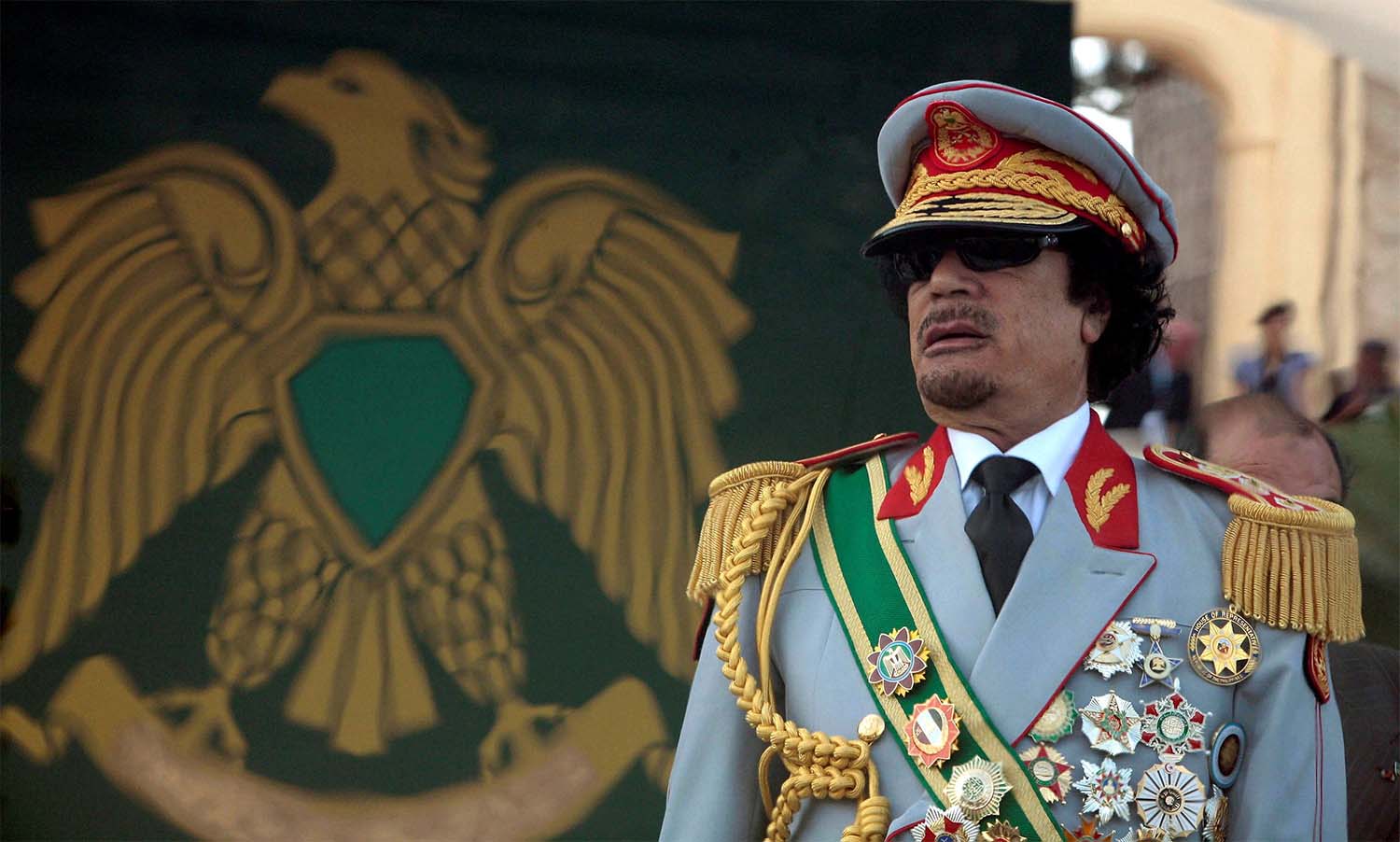
Gaddafi was killed on October 20, 2011 by rebel forces after 42 years of highly controversial rule
What remains of ‘The Green Book’?
"The Green Book" transformed into an unofficial constitution for Libya, giving rise to "Popular Congresses" and "Revolutionary Committees," which culminated in the proclamation of the "Great Socialist People's Libyan Arab Jamahiriya" in 1977.
Thursday 28/05/2026
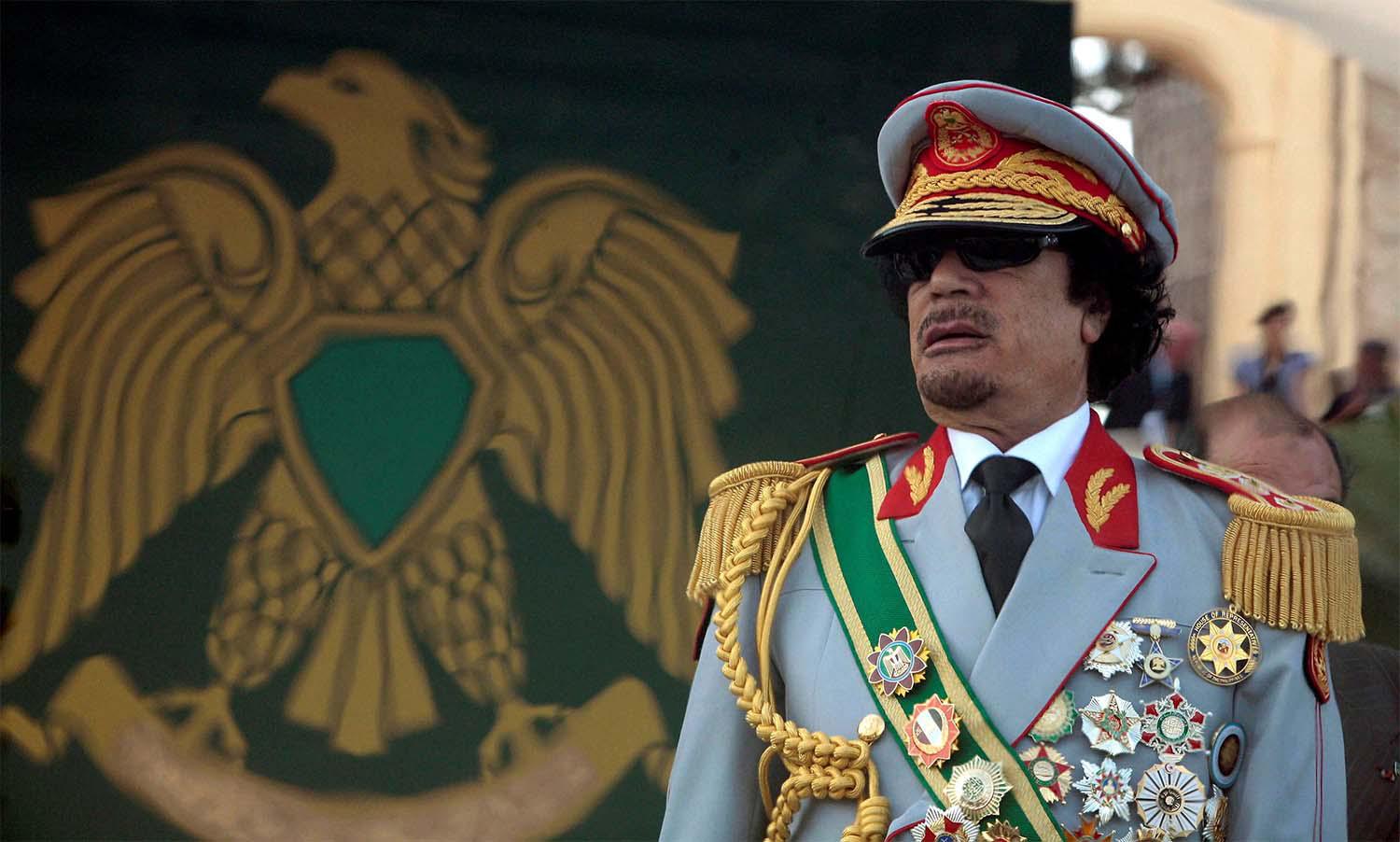
Gaddafi was killed on October 20, 2011 by rebel forces after 42 years of highly controversial rule
It is told of the famous Italian politician Giulio Andreotti, who served as Prime Minister of six Italian governments, that he tried to bridge the gap between U.S. President Ronald Reagan and the Libyan leader, Colonel Muammar Gaddafi, but his objective was never realized. Instead, the U.S. raid on Libya took place at dawn on April 15, 1986, in a military operation dubbed "Eldorado Canyon."
According to an account Andreotti shared with Abdel Rahman Shalgham, Libya’s former Foreign Minister who was serving as Ambassador to Rome at the time, Andreotti attempted to present President Reagan with the English version of Colonel Gaddafi's "The Green Book." Reagan refused to accept it. Andreotti told him, "This is a book that contains no explosives," to which Reagan replied: "Even Hitler authored a book called Mein Kampf, and he burned human beings and fought the world, while Mao Zedong authored a Little Red Book with which he destroyed China."
Since seizing power in Libya following the "First of September Revolution," Gaddafi was keen to establish an intellectual reference point for the new regime through what was termed the "Third Universal Theory." This theory was encapsulated in "The Green Book," in an attempt to grant his regime ideological legitimacy independent of prevailing traditional currents, and to present an alternative to both capitalism and Soviet communism, believing that the world needed a new political, economic, and social model.
Gaddafi began his journey influenced by Arab nationalism and the ideas of President Gamal Abdel Nasser. However, following the latter's death and the decline of the pan-Arab unity project, he pivoted toward laying the foundations of his own political philosophy.
"The Green Book" was published in three stages between 1975 and 1979. The first part was released in 1975 under the title "The Solution to the Problem of Democracy: 'The Authority of the People'." In it, Gaddafi criticized representative democracy, political parties, and parliaments, viewing them as "disguised dictatorial instruments," and championed slogans such as "He who partisanizes betrays," and "Representation is a falsification."
The second part was published in 1977, titled "The Solution to the Economic Problem: 'Socialism'." Here, he introduced slogans like: "Partners, not wage-earners," "The house belongs to its occupant," and "Land is no one's property," calling for the abolition of large-scale private ownership and state control over wealth, while emphasizing social justice.
The third part, published in 1979 under the title "The Social Basis of the Third Universal Theory," addressed issues of the family, the tribe, women, education, and culture from a perspective that blended social conservatism with certain revolutionary propositions.
An Unofficial Constitution
"The Green Book" transformed into an unofficial constitution for Libya, giving rise to "Popular Congresses" and "Revolutionary Committees," which culminated in the proclamation of the "Great Socialist People's Libyan Arab Jamahiriya" in 1977.
Colonel Gaddafi directed that the study of the book become compulsory in Libyan schools and universities. Its quotes spread everywhere across the country — from airports to hotels, and from state institutions to shops and cafes. Public spaces were saturated with them, making the slogans as ubiquitous as flowers, trees, dust, and oxygen. Furthermore, the book's subject matter became the permanent, main headline for the nation's newspapers.
However, the practical application of Gaddafi's theory remained far removed from the slogans raised by "The Green Book." The actual result was the absence of political pluralism, the eradication of political parties, the termination of elected institutions, the dominance of revolutionary committees and security apparatuses, and the concentration of absolute, effective power in the hands of Colonel Gaddafi under the banner of "the authority of the people."
Similarities Exist, But...
Can "The Green Book" be considered of the same lineage as Mao Zedong’s Little Red Book or Adolf Hitler’s Mein Kampf?
There are indeed similarities between "The Green Book" and these volumes, as it served as a founding text for a political ideology directly tied to the leader's personality. It was also utilized as a tool to engineer ideological legitimacy and mobilize the mechanisms of the state, carrying a "semi-sacred" status among loyalists. Yet, the differences between them remain profound and substantial.
Mein Kampf, for instance, is a book with a distinct nationalist and racial supremacy bias, bound to Nazi ideology, the arrogance of military might, and expansionism. Meanwhile, the Little Red Book is an anthology compiled of short sayings and quotations by Mao Zedong. In contrast, "The Green Book" is closer to a political and social manifesto attempting to present an alternative governance model.
Furthermore, while Hitler’s book left a massive and devastating impact on European and world history, and the Little Red Book played a central role in the Chinese Cultural Revolution, the impact of "The Green Book" remained largely limited to Libya and certain African and Arab circles, pale in comparison to the grand ideologies that defined the twentieth century.
In his memoir My Years, Minister Shalgham notes that when the prominent Egyptian journalist Mohamed Hassanein Heikal heard that Gaddafi was working on a comprehensive intellectual theory, he sent him a letter via Mohamed Abu Al-Qasim al-Zwai—a colleague of the Colonel and his companion in the initial civilian cell of the Al-Fateh Revolution. The letter warned that the Colonel would be the first to violate and regret what he was about to write and publish. Heikal pointed out that when Abdel Nasser issued the March 30 Declaration of 1968, he quickly discovered that he had crafted a rope that bound his own mind and movement, and he cursed the day he thought to issue it; he realized that domestic and foreign developments are what draw the lines of action and dictate the traffic signals upon them. This was despite the fact that Heikal himself had drafted the declaration after Abdel Nasser provided him with the general outline of his thoughts.
Gaddafi paid no heed to Heikal’s letter and forged ahead with his concept, dreaming of establishing a political, economic, and social system distinct from all other prevailing systems in the world. Ultimately, however, his vision collided with the February 17 Revolution, which brought an end to his 42 years of highly controversial rule.