Professor Michael Scoullos
The Mediterranean between environmental awareness and the Cousteau Legacy: From the silent world to the noise of data
At the close of the 48th session of the General Fisheries Commission for the Mediterranean (GFCM), it became clear that safeguarding the sea is not solely a matter of scientific knowledge, but also one of conscience and moral choices for the next generations.
Friday 28/11/2025
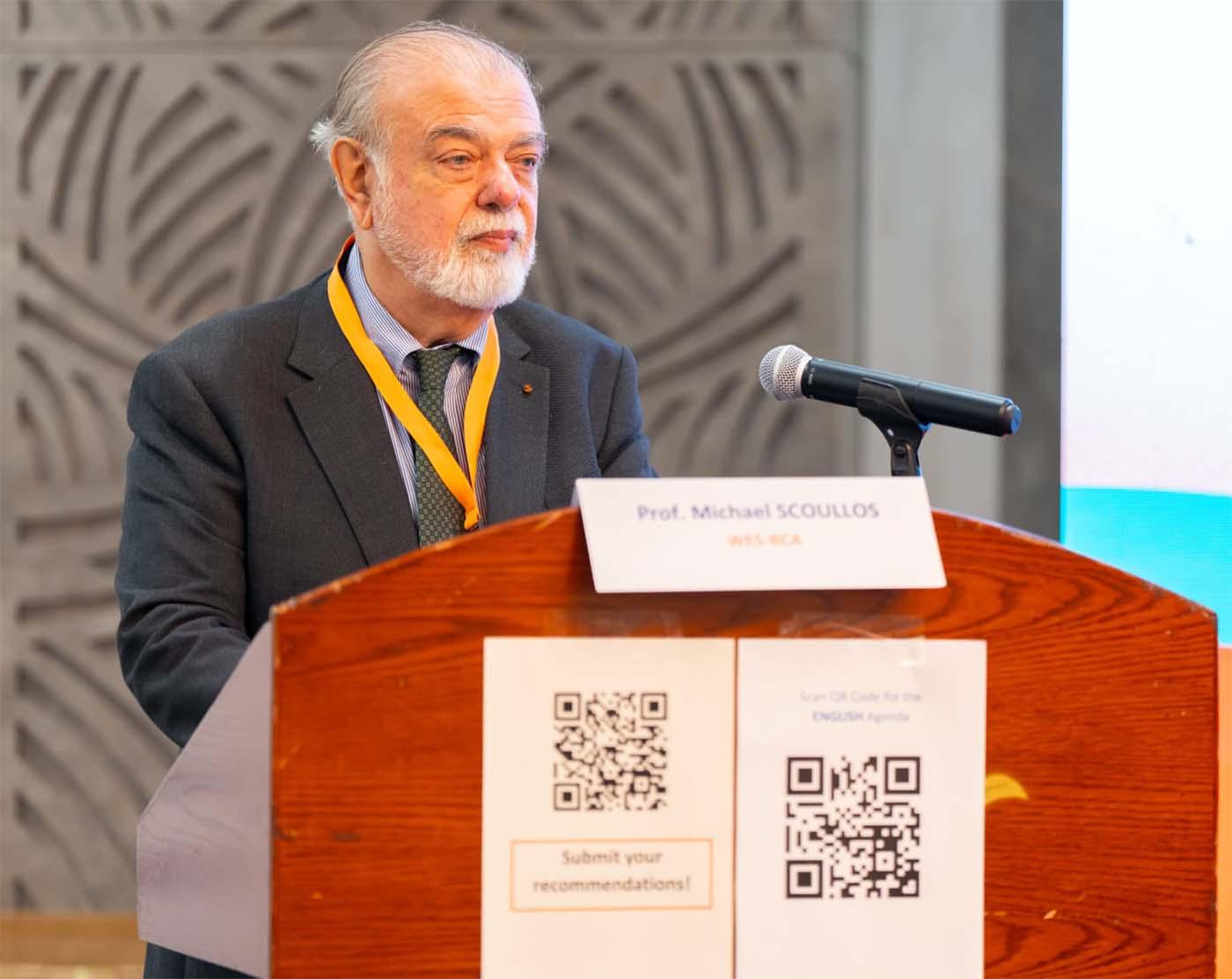
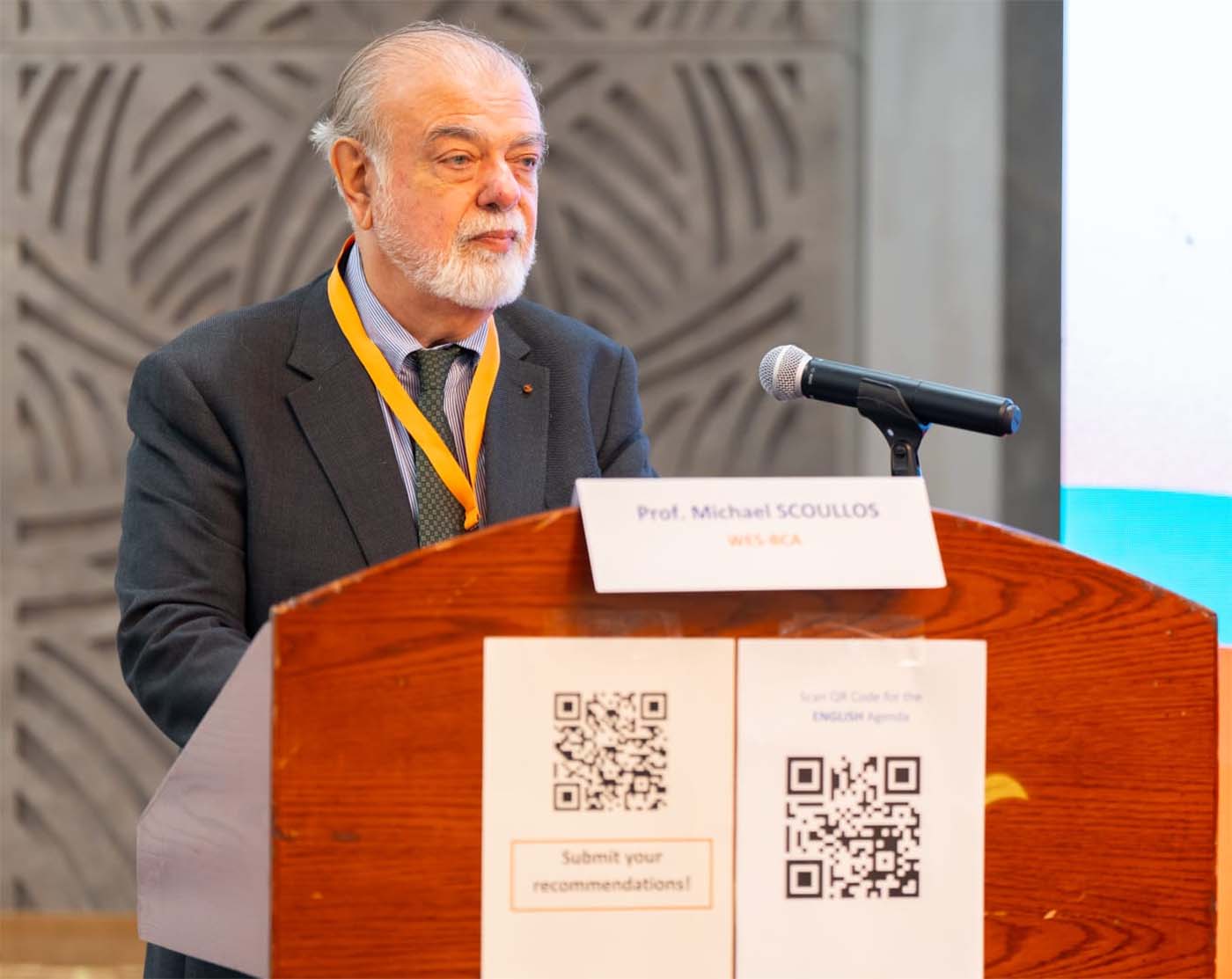
Professor Michael Scoullos
Does the Mediterranean need more conference? or more national debates on political will and digital transparency ?
Between the turmoil beneath the Mediterranean waves and the rising signs of ecological stress, the quest for a balance between exploitation and protection continues.
Yet despite growing awareness among scientists, NGOs and civil society, implementation remains slow, hindered by commercial interests, bureaucracy and lack of political will.
At the close of the 48th session of the General Fisheries Commission for the Mediterranean (GFCM), it became clear that safeguarding the sea is not solely a matter of scientific knowledge, but also one of conscience and moral choices for the next generations.
A Region in Crisis: The Liminal Space Between Science and Policy
The Mediterranean illustrates the widening gap between scientific recommendations and their concrete application.
The absence of reliable and precise data delays the development of effective policies, while administrative procedures, often shaped by lobbying interests, slows decision-making.
At sea, monitoring remains weak and compliance with the law is almost non-existent. It is worth recalling that international waters account for less than 1% of the Mediterranean, with most fishing activities occurring in Exclusive Economic Zones (EEZs), where enforcement depends almost entirely on national authorities and on the availability of reliable data.
Illegal fishing practices, the undocumented discarding of marine species, violations of seasonal limits and underage catches persist, while port controls remain insufficient despite advances in monitoring technologies.
But the gravest challenge remains the inability to translate scientific awareness into political will, especially given the difficulties faced by small-scale fishers and the limited public understanding of the risks and the need for reforms.
Environmental Justice and the Test of Governance
Mediterranean fisheries extend beyond the ecological sphere and touch upon environmental justice between North and South, East and West, and even between generations.
While some countries possess advanced monitoring technologies, others lack even the most basic regulatory tools.
The deepest injustice remains that imposed on future generations: a sea depleted of fish, biodiversity under threat, and an ecosystem weakened by overfishing, climate change and invasive species.
Modern traceability technologies offer unprecedented possibilities for observation and analysis, but without effective governance and collective will, the Mediterranean will remain trapped in administrative inefficiency and institutional inertia.
Scoullos: A Growing Gap Between Awareness and Action, and “the Gravest Injustice” Toward Future Generations
Professor Michael Scoullos, environmental chemist and Director of the Ecology Laboratory at the University of Athens, warns of the widening gap between the growing scientific understanding of the Mediterranean crisis and the extremely slow pace of implementation on the ground.
He explains: “The clear gap between the increased awareness of scientists, NGOs and a large part of the public regarding the environmental crisis in the Mediterranean, and the very slow adoption of scientific recommendations by governments and regional or international institutions, is linked to a combination of factors that differ from one country to another, depending on fisheries priorities and the level of awareness and capacity of national and regional agencies.”
According to Scoullos, the lack of reliable data is the first major obstacle to reform, as most environmental files in the Mediterranean suffer from significant information gaps.
This severely delays the development of strong scientific recommendations capable of guiding public policies. Even when such policies are drafted, they require government and parliamentary approval through long procedures heavily influenced by national or sectoral interests and powerful lobbies.
On the ground, implementation remains the weakest link, particularly at sea, where monitoring and inspection are extremely difficult even in national waters, and nearly non-existent in international waters. Illegal fishing, banned gear, violations of closed seasons, capture of prohibited species or sizes, and the absence of effective landing controls remain common despite available technological advances.
Scoullos adds that the lack of strong political will plays a decisive role in maintaining the status quo. The ongoing crisis affecting small-scale and semi-industrial fisheries makes governments reluctant to impose stricter measures, while the general public remains insufficiently informed about the severity of the situation and the need to reduce the heavy footprint of unsustainable fishing on marine stocks.
He stresses that public awareness and meaningful dialogue about fisheries sustainability are still largely insufficient, and that national and regional policies must become far more coherent and harmonized. They should be supported by realistic control mechanisms, efficient monitoring systems, and precise assessments of pressures on fish stocks, species and ecosystems, including the impacts of climate change and invasive species, and ways to mitigate them.
Scoullos also highlights the complexity of environmental justice in the fisheries sector, describing it as one of the most challenging issues in the Mediterranean, where disparities in technological capacity and political power between North and South, and even within Southern countries, intersect with ancient traditional practices. Considerable progress can be achieved through proper application of the Law of the Sea and well-trained, well-informed coast guards.
However, “the gravest injustice,” he says, is that inflicted on future generations: “We are leaving future generations a poorer, less diverse and increasingly degraded sea, a consequence of the overfishing of our generation and the rapid spread of invasive species, exacerbated by climate change driven by our greenhouse gas emissions.”
He concludes by noting that modern technologies provide unprecedented capacities to monitor, assess and understand the impacts of climate change, pollution and invasive species, as well as to evaluate fish stocks and guide the necessary transformations toward a more sustainable future.
But all of this depends on effective governance, at a time when international governance mechanisms show signs of stagnation or decline, delaying the establishment of robust operational systems for the implementation of science-based policies.
He affirms that public awareness and active citizen participation can create genuine pressure on decision-makers to act more responsibly and effectively, before it is too late.
From the Voice of Science to the Echo of Memory: Cousteau’s Granddaughter Speaks
As the 48th session concluded, a symbolic message from the heart of the sea was addressed to the governments of Tunisia, Morocco and Egypt by Alexandra Cousteau, granddaughter of ocean legend Jacques-Yves Cousteau.
Her message, deeply rooted in a family heritage devoted to ocean protection, was clear: “Adopt the International Maritime Organization (IMO) numbering system for all fishing vessels. It is free, effective, and a step toward transparency in the Mediterranean.”
This was not just a technical proposal but a moral call, an echo of Jacques Cousteau’s legacy, reminding us that protection begins with knowledge, and transparency is the first gateway to preservation.
Why these countries specifically? Because the figures speak for themselves:
In Tunisia, less than 40% of registered vessels have an IMO number, meaning much of the fleet remains untraceable, complicating the fight against illegal fishing. Egypt, Tunisia and Morocco are all IMO members and can assign IMO numbers, but implementation for fishing vessels remains limited and uneven. Egypt assigns IMO numbers mainly to large commercial vessels; those under 20 m are not yet included. Tunisia’s fleet is predominantly artisanal, composed mainly of vessels under 15 m, so few are eligible and the system remains non-mandatory.
Morocco is the most advanced in the region, with IMO numbers for most offshore industrial vessels, though many smaller Mediterranean boats still operate outside the traceability system.
During the November 2025 GFCM session, the proposal to extend mandatory IMO numbers to vessels from 15 m upward was not adopted. The measure, considered essential for strengthening transparency and combating illegal fishing, was limited to vessels 20 m and above, prompting mixed reactions among conservation organizations.
Helena Álvarez, senior marine scientist at Oceana, noted: “The (new) GFCM decision requiring IMO numbers for vessels from 20 meters is a step in the right direction, but it remains insufficient to ensure real transparency.”
The WWF welcomed the progress while stressing the need to go further and eventually include smaller vessels.
Simone Niedermüller, Acting Fisheries Policy Lead for WWF-Mediterranean, emphasized:
“It will be essential that all vessels of this size leaving their EEZ have an IMO number in the future. Further steps will be needed to extend robust unique identifiers to the smaller segments of the fleet.”
This measure however, does open up a loophole as many industrial and semi-industrial Mediterranean vessels operating in the high seas measure between 15 and 20 m, allowing them to avoid IMO registration. This makes them untraceable and undermines fair competition, especially since the EU already requires IMO numbers for vessels from 15 m upward in international waters.
Without IMO numbers, verifying vessel identity, ownership or compliance history becomes difficult, and operators can more easily change names or flags.
From The Silent World to the Noise of Data
In the 1950s, Jacques-Yves Cousteau broke the silence of the deep by revealing its beauty in his legendary film The Silent World (1956).
Today, his granddaughter seeks to break the silence of data by advocating for digital transparency in vessel tracking.
The essence of her message can be summarized as follows: “For Alexandra Cousteau, transparency in vessel tracking is the first condition for any form of protection.”
Between the two generations, the same message persists, expressed in a different language:
The grandfather carried a camera to show the world’s beauty; the granddaughter raises digital codes to reveal its truth.
From the lens of the Calypso to the IMO codes, the spirit remains unchanged: To love the sea is to know it, and to protect it.
From Awareness to Action
The 48th GFCM session did not wield a magic wand, but it did launch a call for action:
Will Mediterranean governments respond to Alexandra Cousteau’s call?
Will the commission finally adopt IMO numbers as instruments of justice and transparency for vessels over 15 meters?
As Jacques Cousteau once said: “We protect only what we love, and we love only what we understand.”
Today, it is impossible to understand, or protect, the Mediterranean without digital transparency that reveals what happens on its surface and in its depths. Adopting IMO numbers for vessels 15 m and above is not a bureaucratic act, but a conscious gesture of love toward the sea and toward future generations.
When Science and Traceability Meets Urgent Action
At the close of the session, between expert reports and activist appeals, two voices, those of Scoullos and Cousteau, merged into a single harmony: A call to move from awareness to action, from speech to decision.
The Mediterranean does not need more conferences, it needs political will and digital transparency.
As Simone Niedermüller of WWF-Mediterranean noted: “This year’s decisions show real momentum, but the hardest work begins now…”