

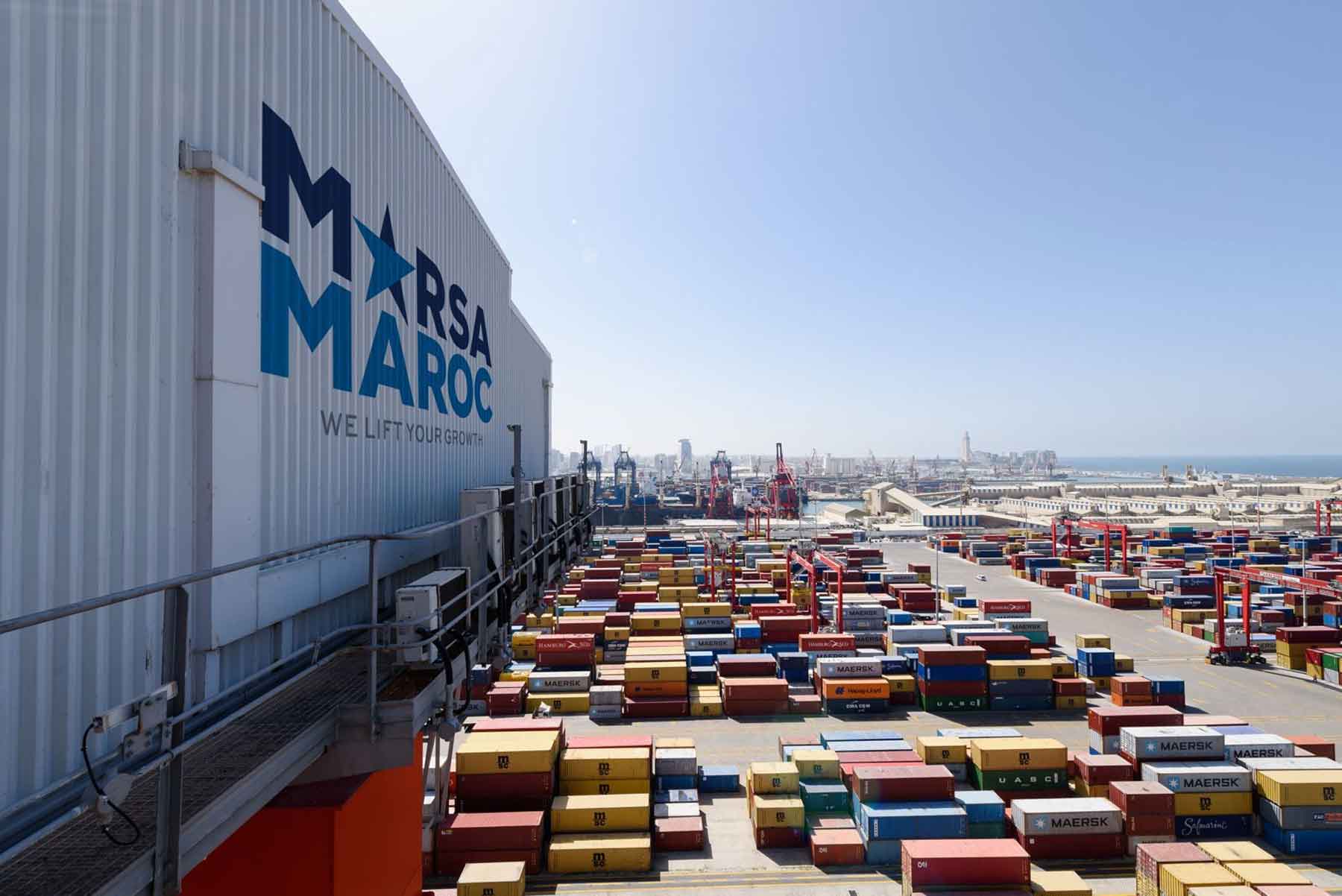
Morocco’s leading port operator.
Morocco expands its port reach across the Mediterranean
Strategically, the deal aligns with Morocco’s broader vision of turning infrastructure, particularly ports, into instruments of economic leverage and soft power.
Wednesday 17/12/2025
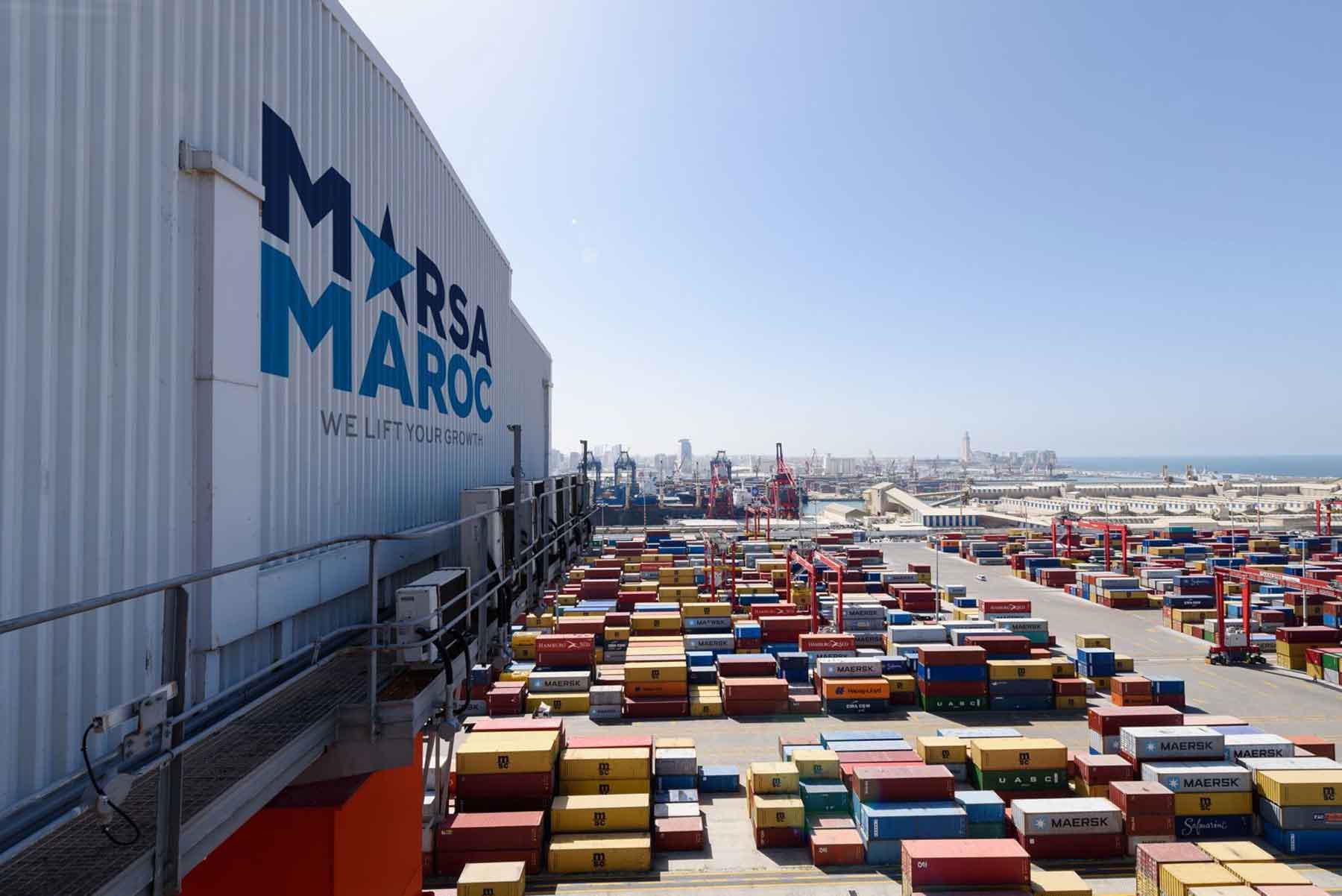
Morocco’s leading port operator.
RABAT –
Morocco’s ports and logistics sector is undergoing a strategic transformation that reflects the kingdom’s ambition to position itself as a pivotal maritime and trade hub at both regional and global levels. At the centre of this shift is Marsa Maroc, the country’s leading port operator, whose latest move into the Spanish market underscores a broader transition from domestic management to outward expansion and logistical influence beyond national borders.
The company said on Tuesday it had agreed to acquire a 45 percent stake in Spain’s Boluda Maritime Terminals, a subsidiary of Boluda Corporación Marítima, for 80 million euros ($94 million). While the deal remains subject to regulatory approval, its significance extends well beyond its financial value, placing the Moroccan operator firmly within one of the Mediterranean’s most strategic maritime corridors linking Morocco and Spain.
Boluda Maritime Terminals operates nine port terminals across mainland Spain and the Canary Islands and handled more than one million containers in 2024. For Marsa Maroc, the investment provides an immediate foothold inside an advanced European logistics network, strengthening its presence along key shipping routes in the western Mediterranean.
The acquisition forms part of the international expansion strategy of Marsa Maroc International Logistics, the company’s overseas arm, which aims to deepen integration between the southern and northern shores of the Mediterranean and build a more interconnected port ecosystem.
Strategically, the deal aligns with Morocco’s broader vision of turning infrastructure, particularly ports, into instruments of economic leverage and soft power. The country is no longer content with a role limited to transit and cargo handling. Instead, it is seeking a more active position in managing and shaping trade flows, capitalising on its unique geographic location at the crossroads of Europe, Africa and the Atlantic.
Economically, the move fits into a longer trajectory of heavy investment in Morocco’s port sector over the past two decades, led by the rise of Tangier Med, now one of the largest ports in the Mediterranean and Africa and a direct competitor to established European hubs. This transformation has helped position Morocco as an attractive industrial and logistics platform for multinational companies, particularly in automotive, aerospace and energy.
Marsa Maroc currently operates 25 terminals across 11 ports inside the kingdom, making it the backbone of the national port system. But its ambitions increasingly lie beyond Morocco’s borders. The company has already expanded into West and East Africa, operating two terminals at the port of Cotonou in Benin and an oil and gas terminal at Damerjog in Djibouti. The push reflects Rabat’s growing focus on Africa not only as a trading partner, but as a strategic arena of competition among regional and global powers.
Within this context, Marsa Maroc appears as part of a wider effort to reposition Morocco within the global economy, drawing on political stability and an investment strategy that places logistics and infrastructure at the heart of development. Ports, once viewed as purely technical facilities, have become tools of economic and geopolitical influence, capable of attracting investment, anchoring supply chains and generating added value.
The company’s entry into the Spanish market through a partnership with a long-established maritime group also carries indirect political weight. It highlights the depth of economic interdependence between Rabat and Madrid and reinforces a pragmatic logic of cooperation that can endure beyond periodic political tensions. In this sense, ports and logistics have become a shared language of mutual interest, underpinning a web of ties that are difficult to unwind.
The acquisition confirms that Marsa Maroc is no longer merely a national port operator, but an emerging regional player intent on securing a place on the global shipping map. As Morocco continues to reshape its infrastructure and logistics landscape, ports are increasingly seen not just as engines of growth, but as strategic assets that strengthen economic sovereignty and cement the kingdom’s role as a bridge between continents.