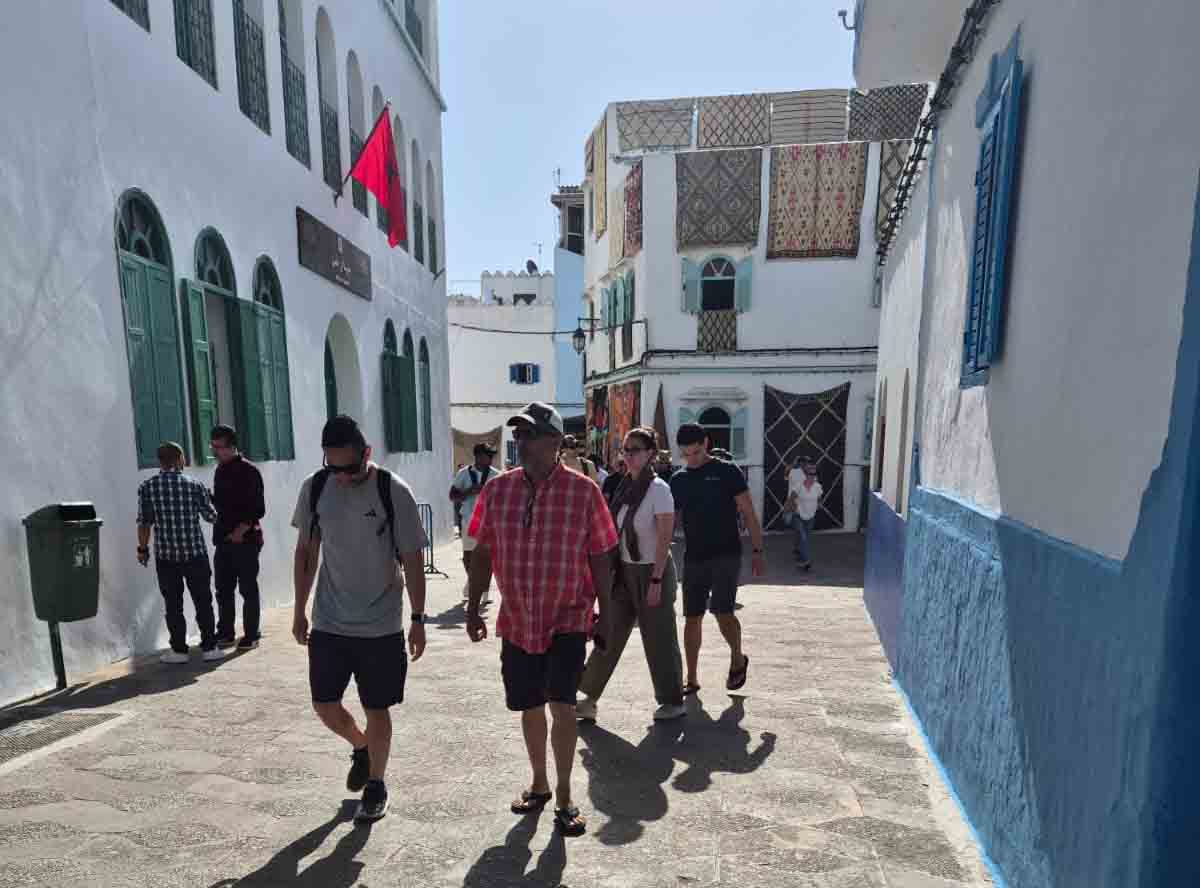
Tourists walking in the medina of the northern city of Assilah
Rise in tourist numbers to Morocco: A leap far beyond mere coincidence
The influx of tourists into the North African Kingdom reflects a growing trust in Morocco as a tourist destination—a trust built by years of investment, development, and stability.
Sunday 07/06/2026
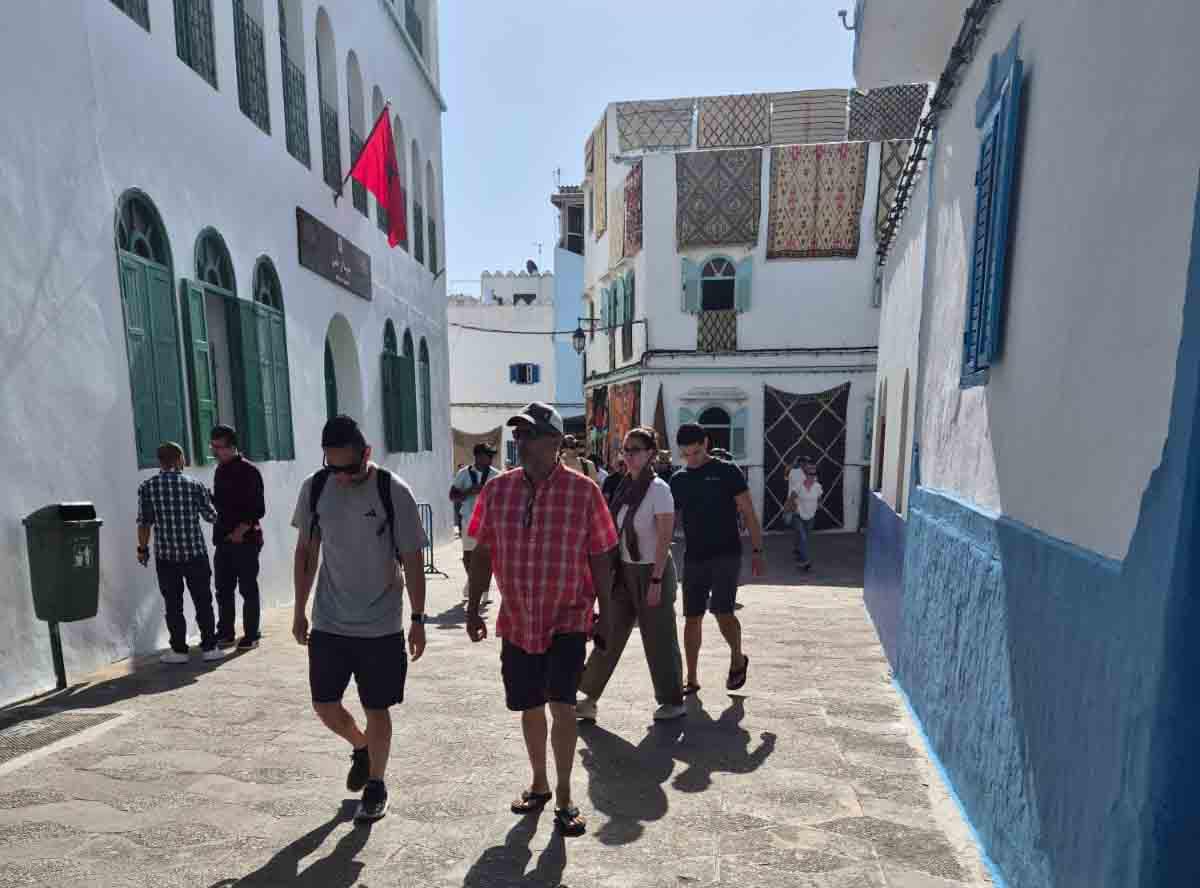
Tourists walking in the medina of the northern city of Assilah
LONDON - The Moroccan tourism sector has recorded a new leap in its continuous growth trajectory, with the Kingdom welcoming over 7.7 million tourists by the end of May 2026. This represents a 7 percent increase compared to the same period last year. The month of May alone welcomed nearly 1.7 million tourists, a 13 percent increase, according to official data released by the Ministry of Tourism, Handicrafts, and Social and Solidarity Economy.
These figures reflect the sustained momentum experienced by the Moroccan tourism sector—one of the national economy's most prominent pillars and a vital source of foreign currency—at a time of intensifying competition among tourist destinations in the Mediterranean basin and North Africa to attract more visitors.
However, these results did not come out of a vacuum, nor are they a mere temporary boom or the outcome of an exceptional season. Today's recorded figure is the fruit of a long journey of investments and reforms spanning years, which included modernizing infrastructure, expanding airports, and developing ports, transport networks, and roads, alongside increasing hotel capacity and improving services tailored to tourists.
These transformations have contributed to reshaping Morocco's image as an integrated tourist destination capable of competing regionally and internationally. The country capitalizes on an exceptional geographical location that places the Kingdom on the fringes of Europe and at the gateway to Africa simultaneously. The short distances separating European cities from Morocco have made it a preferred destination for millions of travelers seeking cultural and climatic diversity without the expense of long-haul travel.
The political and security stability factor remains one of the most important elements of attraction distinguishing Morocco from many competing destinations. While several areas in the region experienced political and security turmoil over the past decade, the Kingdom successfully consolidated the image of a safe and stable country. This image could not have been achieved without the continuous work carried out by security institutions and national security agencies in protecting stability and bolstering trust among visitors and investors alike.
Moroccan tourism has also capitalized on the shifts imposed by the digital age and the powerful influence now wielded by social media platforms. Visits by a number of influencers and content creators to Morocco during major sporting events, chief among them the Africa Cup of Nations, have helped convey a fresh perspective of the Kingdom to millions of followers around the world.
The lenses of smartphones and cameras that documented modern Moroccan cities, advanced infrastructure, and historical and natural sites have turned into an effective promotional tool. This has enhanced Morocco's presence on the global tourism map in a way that sometimes surpasses traditional advertising campaigns.
The uniqueness of the Moroccan tourism experience lies in its ability to offer a harmonious blend that is hard to find in other destinations. The Kingdom combines the depth of Amazigh, Arabic, and Islamic heritage on one hand, with an economic and logistical model open to Europe and the world on the other. In cities like Marrakech, Fez, Tangier, Rabat, and Casablanca, history meets modernity, traditional souks stand alongside modern shopping malls, and cultural authenticity blends with lifestyles and services that keep pace with international standards.
Despite the current positive indicators, maintaining this upward trajectory requires confronting several challenges. The sector needs to continue investing in service quality and vocational training for tourism workers, as well as enhancing the visitor experience at various stages of the journey—from airport arrival to transportation and accommodation.
There is also a pressing need to maintain price competitiveness and ensure it remains within acceptable levels for visitors coming from various markets. This preserves Morocco's image as a destination providing real value for money; contemporary tourists do not just compare destinations based on beauty and services, but also evaluate what they pay against what they receive. This makes price stability and curbing seasonal inflation in certain services a vital factor in reinforcing the Kingdom's long-term appeal.
Furthermore, there is a clear need for a better distribution of tourist traffic among the Kingdom's various regions to relieve pressure on the traditional, highly-frequented cities, and to highlight the potential of lesser-known areas that possess substantial natural and cultural assets. Added to this is the challenge of environmental sustainability, given the rising number of visitors and the resulting pressures on resources and infrastructure.
Statements by Tourism Minister Fatim-Zahra Ammor confirm that the official focus is centered on investing in air connectivity, developing the tourism offering, and improving the tourist experience. However, the true challenge in the coming years will not just be increasing the number of arrivals, but converting current growth into sustainable growth that raises the average tourist spend and enhances the sector's economic value-add—without Morocco losing one of its core strengths: providing a diverse tourism experience at competitive prices compared to many European and Mediterranean destinations.
Between the record numbers registered today and the stated ambitions for the future, Moroccan tourism appears to have entered a new phase that goes beyond merely recovering from the fallout of global crises, turning instead into a regional model of how to utilize stability, investment, and cultural openness to craft a competitive tourist destination capable of attracting the world.