

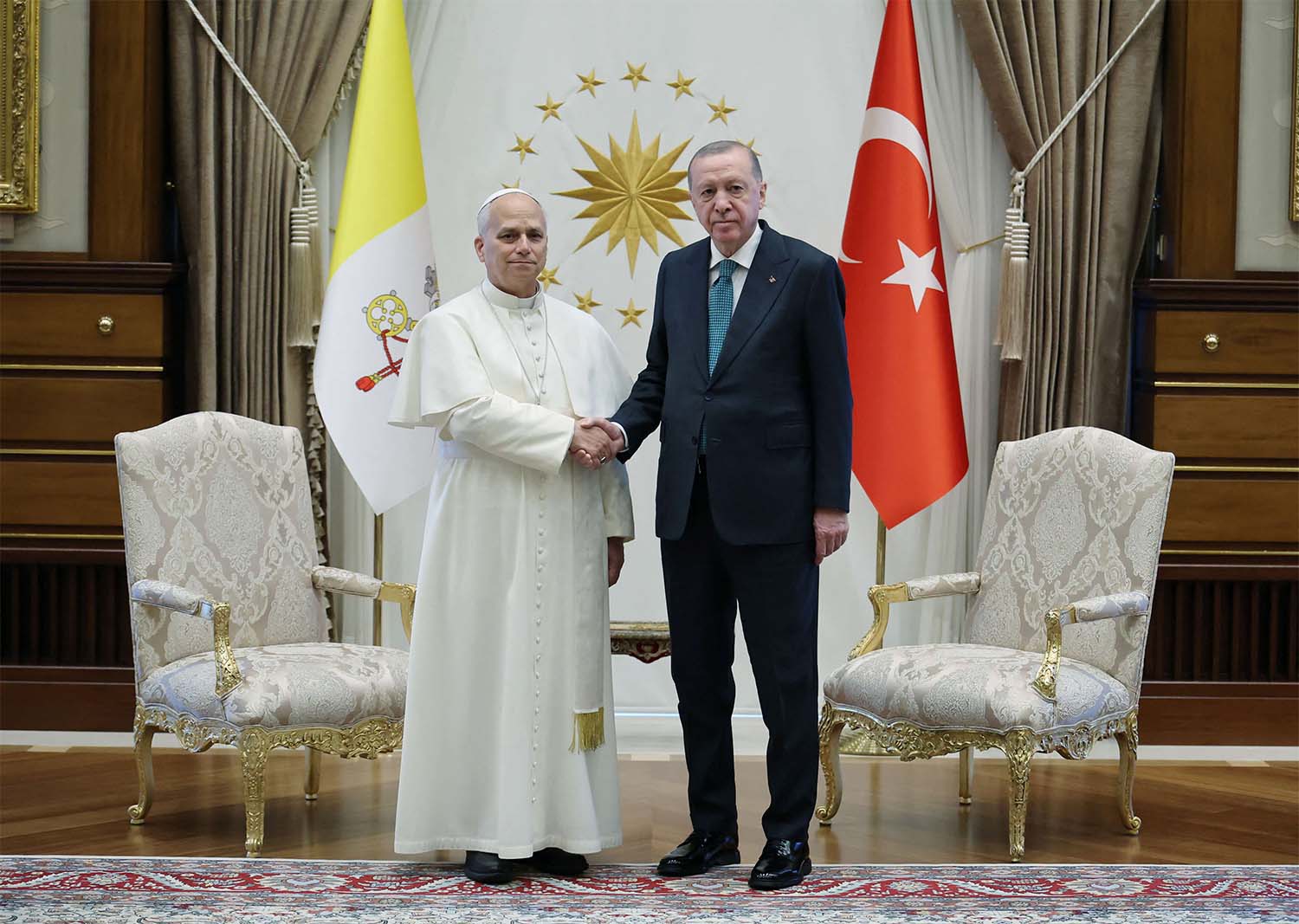
Pope Leo XIV shakes hands with Turkish President Tayyip Erdogan as they meet at the Presidential Palace in Ankara
Pope's visit to Turkey
Talks with Erdoğan “disappointing” – appeal for greater commitment to religious minorities.
Thursday 04/12/2025
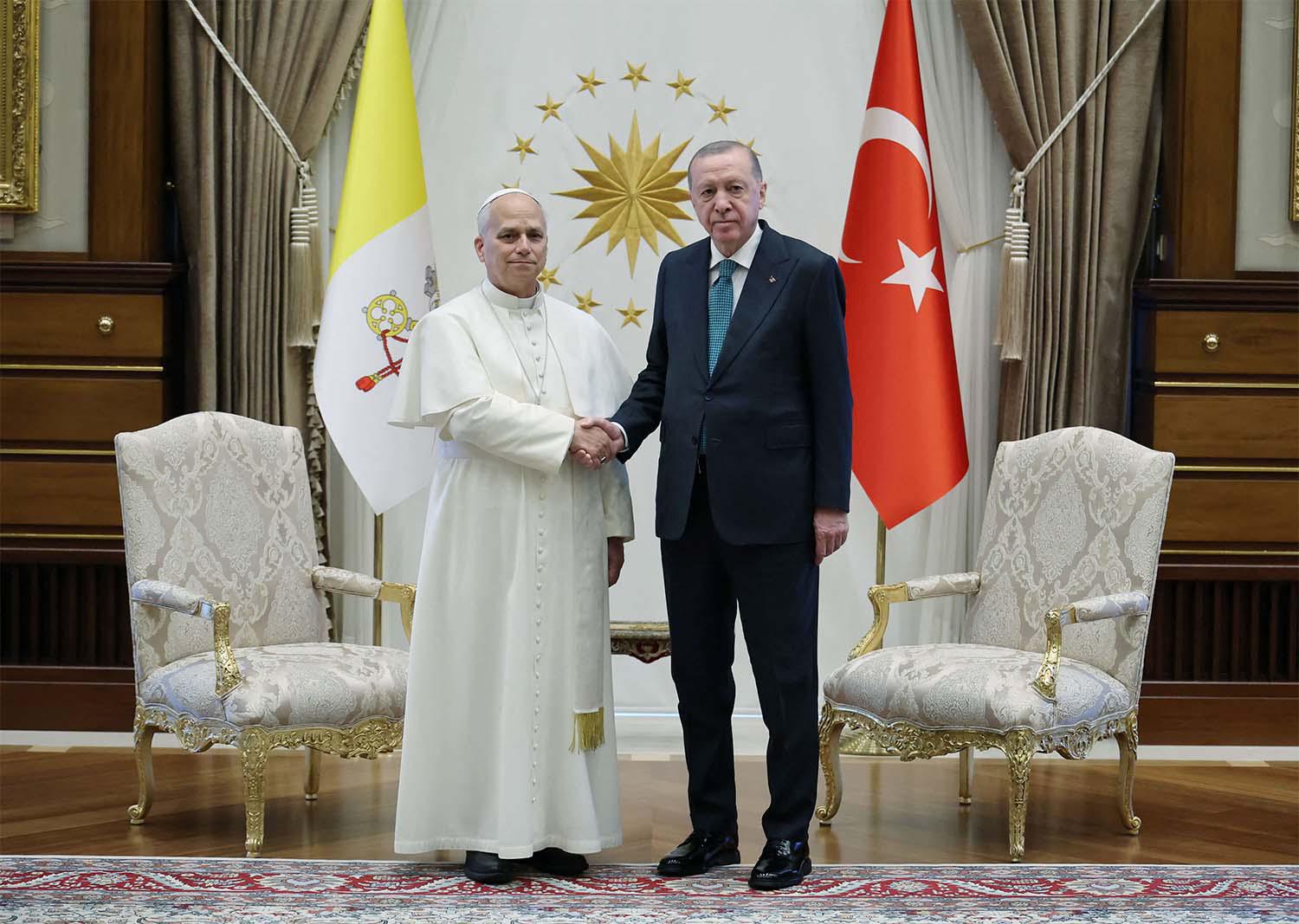
Pope Leo XIV shakes hands with Turkish President Tayyip Erdogan as they meet at the Presidential Palace in Ankara
The Society for Threatened Peoples (STP) regrets that Pope Leo XIV did not use his moral authority during his meeting with Turkish President Recep Tayyip Erdoğan to draw attention to the precarious situation of religious minorities in Turkey and the region. “It is disappointing that the Pope did not find clear words – especially for the Christian communities that have been experiencing discrimination and violence in Turkey and Syria for decades,” explains Kamal Sido, Middle East expert at the Society for Threatened Peoples. After starting his trip abroad in Ankara, the Pope traveled on to Istanbul on Thursday afternoon. From there, he will travel to Lebanon on Sunday.
In the run-up to the visit to Turkey, the STP had sent a letter to the Pope asking him to refer to the fate of the two bishops from Aleppo who were abducted on the Syrian-Turkish border in 2013, especially during his meeting with the Turkish president. There are indications that radical Syrian Islamists, who were and continue to be supported by Turkey, were involved in the abduction of the bishops. Their driver was murdered on the spot. “The Vatican, as a moral authority, should have sent a strong signal here,” Sido emphasizes. The STP also called on the Pope to visit Tur Abdin, the historic home of Syrian Orthodox Christians in southeastern Turkey.
Before the first Sunday of Advent, the STP once again calls on the Pope, the churches in Germany, and the German government to do more to support persecuted Christians and religious minorities. “Christians and religious minorities worldwide are exposed to a massive threat from radical political Islam. The concrete blocks at Christmas markets remind us every year that Islamist attacks on peaceful citizens are a real danger in Germany too. Nevertheless, we see Islamist actors being downplayed, for example in Syria, instead of consistent global action against Islamism,” says the Middle East expert.
In Syria, an Islamist who was involved in similar attacks in Iraq has been recognized as president and is being courted by Germany, the EU, and the US—despite his attacks on the Alawite and Druze minorities and systematic violence against women. At the same time, US President Donald Trump is planning to put the Muslim Brotherhood on the terrorist list, even though this organization is supported by NATO partners such as Turkey and Qatar.
“This contradictory policy of Germany, the US, and NATO as a whole jeopardizes human rights – especially the freedom of belief of religious minorities. It is high time to develop a new strategy for dealing with political Islam. A strategy that does not aim to downplay or support Islamism, but to strengthen democratic forces in the Arab-Islamic world,” demands the human rights activist.
“Churches, media, and governments must live up to their responsibility to identify abuses, name perpetrators, and stand up for the most vulnerable—regardless of geopolitical interests,” Sido concludes.
This press release was translated from German to English using AI. If you come across errors or ambiguities, please contact us at [email protected].
The views and opinions expressed in this article are those of the author and do not necessarily reflect the position of Middle East Online
