
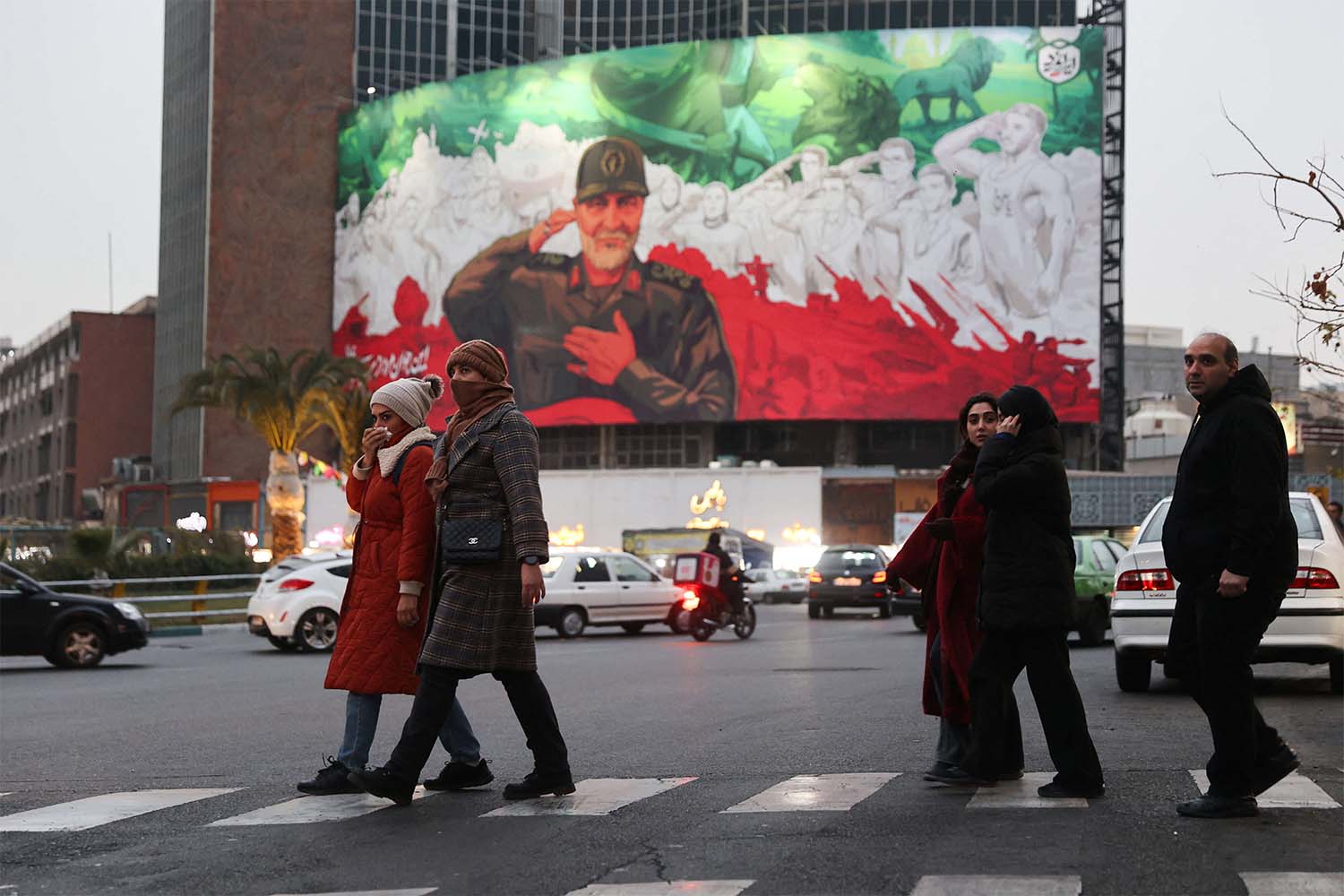
The price of the Iranian rial gives an idea of the depth of the economic crisis the "Islamic Republic" is suffering
Iran's crises raise questions about the regime's fate!
Above all, the "Islamic Republic" has no escape from paying the price for the wars it fought in the post‑"Al‑Aqsa Flood" phase, given its bet that these wars would serve its interests.
Monday 05/01/2026
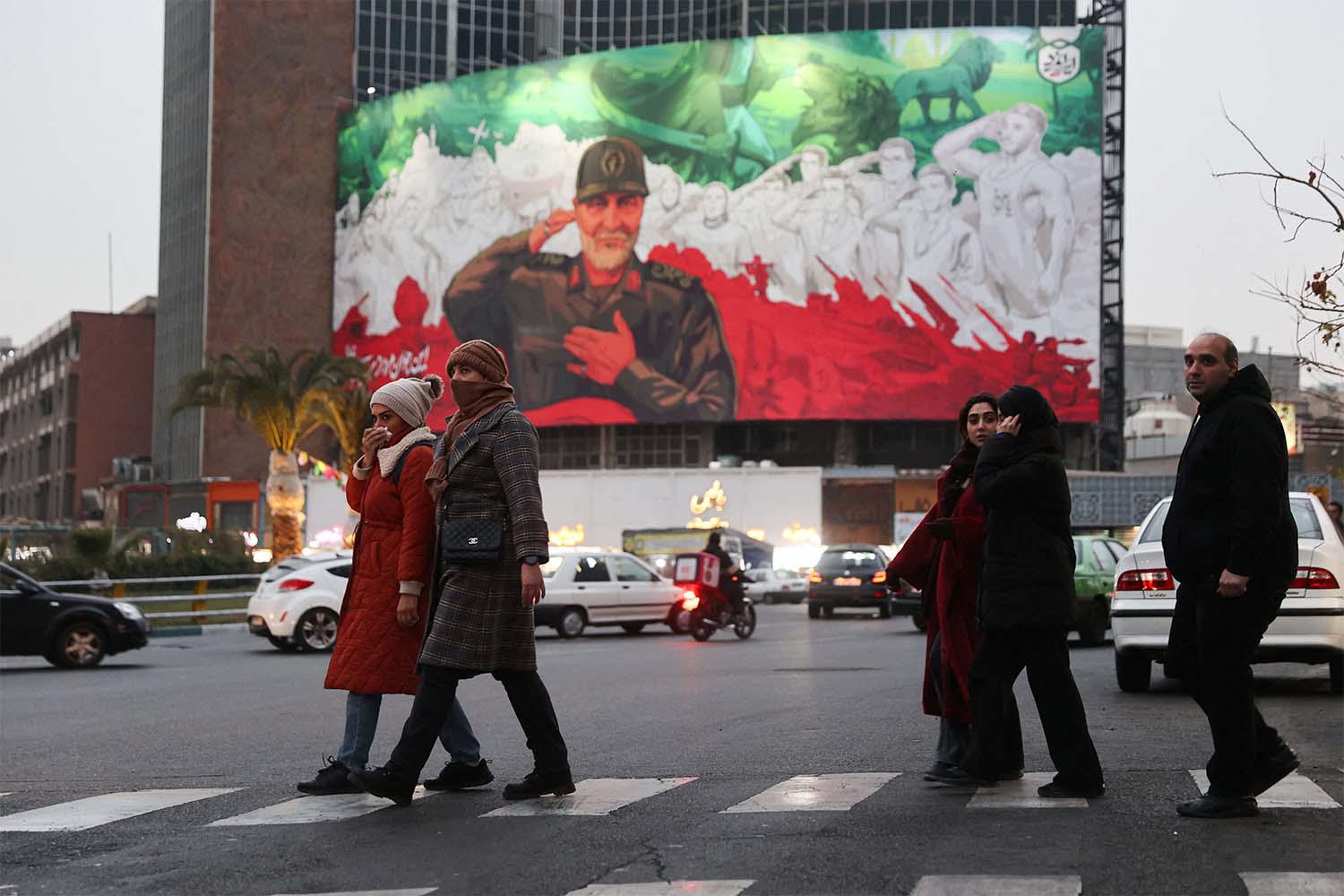
The price of the Iranian rial gives an idea of the depth of the economic crisis the "Islamic Republic" is suffering
2025 was Syria's year—the first year in half a century without Hafez al‑Assad and Bashar al‑Assad, i.e., without a minority regime protected by Israel that controlled the Syrians' fates through its repressive apparatus and then by seeking external help to triumph over its own people.
For the first time, too, the Iranian "Islamic Republic" was expelled from Syria, with all that implies for the regional balance, especially since Syria under the two Assads was closer to an Iranian colony planted in the heart of the Arab world…
Focusing on Syria and whether it will pass 2026 without major changes does not prevent noting that the successive events since the "Al‑Aqsa Flood" attack launched by Hamas on Israeli settlements around Gaza on October 7, 2023 have created conditions ripe for discussing the fate of the Iranian regime and whether it will manage to reach the end of 2026.
This question seems legitimate in light of several factors that seriously put the fate of the Iranian regime, established in 1979, in question. One can start by discussing the reality of the Iranian economy while recalling at the same time that the Soviet Union collapsed primarily for economic reasons after existing from 1917 to the end of 1991.
The price of the Iranian rial gives an idea of the depth of the economic crisis the "Islamic Republic" is suffering. In the late days of the Shah in 1979, about 70 rials were needed to buy a US dollar. Today, the US dollar is worth about 1.4 million rials. The comparison between the rial's price during the Shah's era and now is staggering and expresses the economic failure of a regime that insisted on open confrontation with the United States and the West in general since it fabricated the US hostages’ crisis in November 1979 to eliminate any trace of reformers and liberals in the new regime's makeup. "Students" affiliated with the Islamic Revolutionary Guard Corps held US embassy diplomats in Tehran for 444 days.
Several points can be highlighted in the current phase. These points may help understand the Iranian regime's current situation and the crises it faces that could lead to its end, similar to the Soviet Union's rapid demise after the fall of the Berlin Wall in November 1989. One must first stop at the killing of President Ebrahim Raisi in May 2024 in a helicopter crash. The circumstances of the incident remain mysterious. The official narrative speaks of bad weather that accompanied the takeoff of an old American‑made helicopter from a border area with Azerbaijan. However, official assurances have not dispelled doubts about someone wanting to eliminate Ebrahim Raisi due to his pivotal role in keeping the regime cohesive. This goes back to his strong ties to the forces the regime relies on and from which he drew protection. Raisi was the only one capable of coordinating between these forces, which are supposed to suppress any popular movement, even by force.
Since Raisi's absence - and before him Qasem Soleimani, commander of the IRGC's Quds Force - the regime lacks the pivotal figure with sufficient influence to organize a transitional phase in the event of the "Supreme Leader" Ali Khamenei's absence, who suffers from ageing and several diseases.
Soleimani, assassinated by the Americans early in 2020, was the supreme commander of all Iran's tools in the region, starting with Hezbollah in Lebanon, the Houthis in Yemen, and the sectarian militias affiliated with the IRGC in Iraq. Raisi partially filled the vacuum left by Soleimani. He filled this part of the vacuum to the extent that there is now no one in Tehran capable of playing an effective role in organizing the expected transitional phase upon Khamenei's absence - or even before that.
Above all, the "Islamic Republic" has no escape from paying the price for the wars it fought in the post‑"Al‑Aqsa Flood" phase, given its bet that these wars would serve its interests. Iran lost the Lebanon war fabricated by Hezbollah by merely opening the southern front with Israel. It lost Syria after Bashar al‑Assad committed several errors, including allowing Iran to send precision missiles to Hezbollah to use from Lebanon.
Iran has lost all the wars it thought it could leverage to transform the "Islamic Republic" into the regional player holding the key to expanding or controlling the Gaza war. By mid‑2025, the war moved inside Iran itself, especially in light of the US, Israel, and Europe reopening its nuclear file on one hand and fears of the ballistic missiles it possesses - or is capable of obtaining - on the other.
In short, the "Islamic Republic" can no longer adapt to the developments the region has witnessed. It failed to grasp the meaning and dimensions of these developments after relying, from the first day of the "Islamic Republic's" establishment, on a policy of exporting internal crises beyond its borders.
By the end of 2025, the "Islamic Republic" lost the ability to escape its crises, which the price of the national currency best expresses. Do Iran's allies and followers, especially in Lebanon, realize this reality that officials in Tehran - led by President Masoud Pezeshkian - still ignore there is no escape from it?
In conclusion, Iran's current crises are multifaceted and differ from previous ones. They are crises of the regime above all. This stems from the regime's inability, as 2026 begins, to reconcile with itself and the language of numbers first, then with regional and international realities amid its losses in several wars—from Gaza to Lebanon to Syria—wars whose price it refuses to pay…
Khairallah Khairallah is a London-based Lebanese writer.
The views expressed are solely those of the author and may or may not reflect those of Middle East Online.