
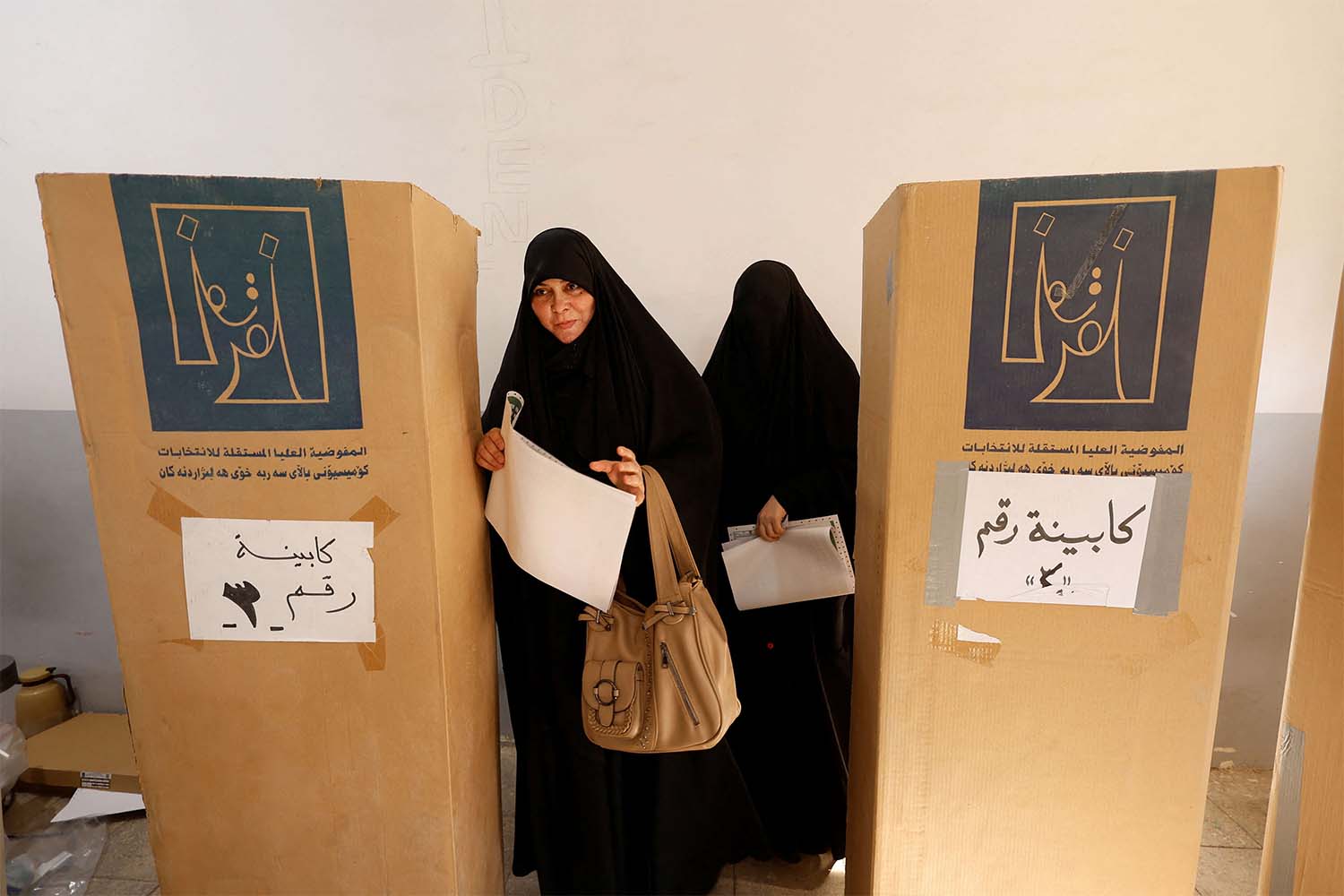
The Iraqi elections are particularly important because they will demonstrate the extent of Iran's control over their outcome
An Iraqi election amid an Iranian decline…
The Iraqi elections are particularly important because they will demonstrate the extent of Iran's control over their outcome and whether Mohammed Shia' Al Sudani will be able to return to the position of Prime Minister.
Monday 10/11/2025
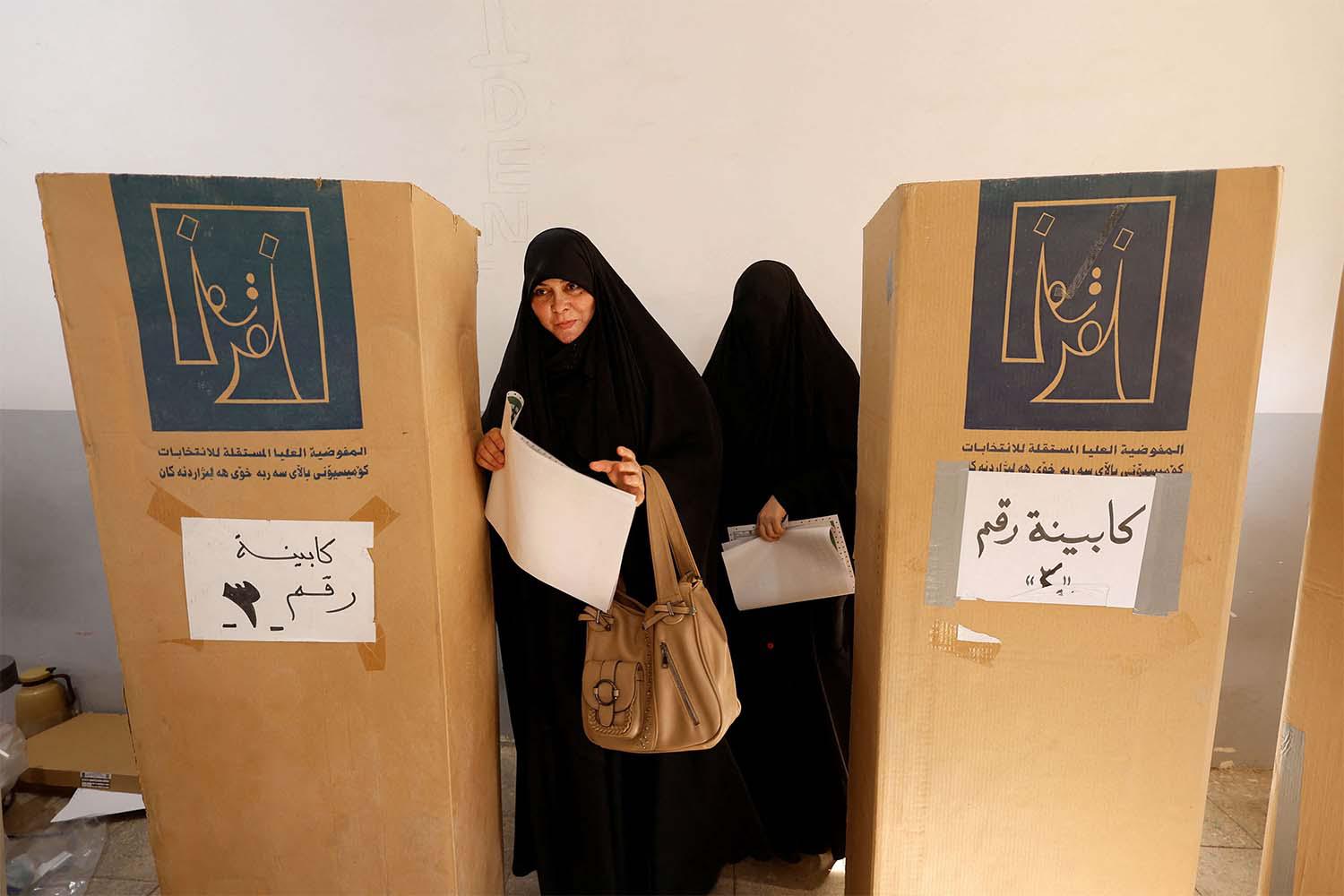
The Iraqi elections are particularly important because they will demonstrate the extent of Iran's control over their outcome
Days before the Iraqi parliamentary elections, it must be noted that these are the first elections taking place amid an Iranian decline in the region. Such a decline, the first of its kind since 2003, cannot help but leave its mark on Iraq.
This Iranian decline is due to several factors, including the loss of the "Islamic Republic's" regional cards, except for Iraq. It lost Syria, it lost Lebanon, and it is on its way to losing Yemen. It notably lost "Hamas," which had provided Iran with the opportunity of the "Al-Aqsa Flood," which Iran exploited to prove that it holds the key to expanding the Gaza war or containing it.
The outcome was an Iranian failure in Lebanon and Syria, where Israel exposed the Alawite regime, and in Yemen, where the Houthis are suffering from a deep internal crisis that is bound to come to light sooner or later.
Iran has nothing left but Iraq, following its irreversible exit from Syria. In Lebanon, the day is not far off when Hezbollah comprehends the meaning and implications of the Syrian change and the fall of the alliance of minorities that the Alawite regime, with Israeli cover, worked for since Hafez al-Assad monopolized power in November 1970.
Most importantly, the "Islamic Republic" regime is defending itself within Iran's own borders. For the first time since its establishment in 1979, Iran was subjected to a war that targeted its vital and nuclear facilities. Furthermore, a significant number of army leaders, "Revolutionary Guard" members, and nuclear scientists were killed. That was last June when Israel attacked Iran, before the United States attacked it. The United States, through the words of President Donald Trump, considered that it had eliminated the nuclear program of the "Islamic Republic."
The Iraqi elections are particularly important because they will demonstrate the extent of Iran's control over their outcome and whether Mohammed Shia' Al Sudani will be able to return to the position of Prime Minister. It cannot be said that Al Sudani is Iran's man in Iraq, despite the role the "Islamic Republic" played in bringing him to the head of the government in October 2022. At that time, getting rid of Mustafa Al-Kadhimi was necessary; he had then bet on the cleric Muqtada al-Sadr. Al-Sadr managed to gather the largest parliamentary bloc, which was supposed to support Al-Kadhimi's return to the position of Prime Minister, but Iranian pressures led Al-Sadr to ask his MPs to resign, thus opening the way for Mohammed Shia' Al Sudani to assume the presidency of the government with support from Shiite blocs loyal to Iran.
In 2025, Al Sudani no longer enjoys the Shiite support he had in 2022. On the contrary, his primary opponent has become Nouri al-Maliki, whom Iran, represented by the late Qasem Soleimani, insisted on imposing as Prime Minister in 2010 at the expense of Iyad Allawi, who had obtained the largest parliamentary bloc in the elections held in March of that year. This happened through an American-Iranian understanding at a time when President Barack Obama was seeking to avoid any provocation of Iran to ensure reaching an agreement on its nuclear file. This indeed happened in the summer of 2015, a few months before Obama left the White House.
The Iraqi scene appears different in 2025. Iran no longer fully controls Iraq. It will not be able to impose a person entirely subordinate to it in the position of Prime Minister and exclude those it believes have an interest in creating a balance between Arab and Iranian influence in the country. Moreover, Tehran is no longer able to fully control Iraq's Shiites. There is a trend among the Shiite elite to affirm that Iraq has no interest in a clash with Iran, but it also has no interest in being subordinate to the "Islamic Republic," meaning being ruled from Tehran.
The Iraqi scene appears different in 2025. Iran no longer fully controls Iraq and will not be able to impose a person entirely subordinate to it in the position of Prime Minister.
The question that will inevitably arise, in light of the Iraqi elections, is: Will Nouri al-Maliki succeed in politically eliminating Mohammed Shia' Al Sudani? This question has been raised after Al-Maliki revealed that he is willing to go far to prevent the return of the current head of government to his position. This includes supporting a figure who may not be one hundred percent loyal to Iran, but rather a figure who has strong relations with certain Arab states in the Gulf.
There is another question that seems pressing. This question relates to the extent of Iran's ability to control Iraqi political forces. It is true that most of the Popular Mobilization Forces militias are subordinate to the "Revolutionary Guard," but it is also true that the Iraqi Sunni and Shiite public opinion is no longer convinced by what the administration of George W. Bush imposed on it in 2003 – that administration which overthrew the Baathist-family regime of Saddam Hussein in order to hand Iraq over on a silver platter to the "Islamic Republic."
Since April 2003, the date when US forces entered the Iraqi capital… and the date when Iraqi sectarian militias, which had been fighting Iraq alongside Iran, returned to Baghdad on top of US tanks, the Iranian expansionist project has been continuously rising. It removed every symbol or leadership that stood in its way in Syria, Lebanon, and Iraq itself. It did not hesitate to eliminate Rafik Hariri, the symbol of Lebanon's return to finding a place for itself on the map of the region, on February 14, 2005.
Iran has nothing left in the entire region but Iraq. The Iraqi elections are supposed to give an idea of the scale of the defeat of the Iranian expansionist project through this important country. From it, this project came back to life in 2003, and from it, the extent of its decline in 2025 will be revealed!
Khairallah Khairallah is a London-based Lebanese writer.
This article was originally published in Al-Arab
The views expressed are solely those of the author and may or may not reflect those of Middle East Online.