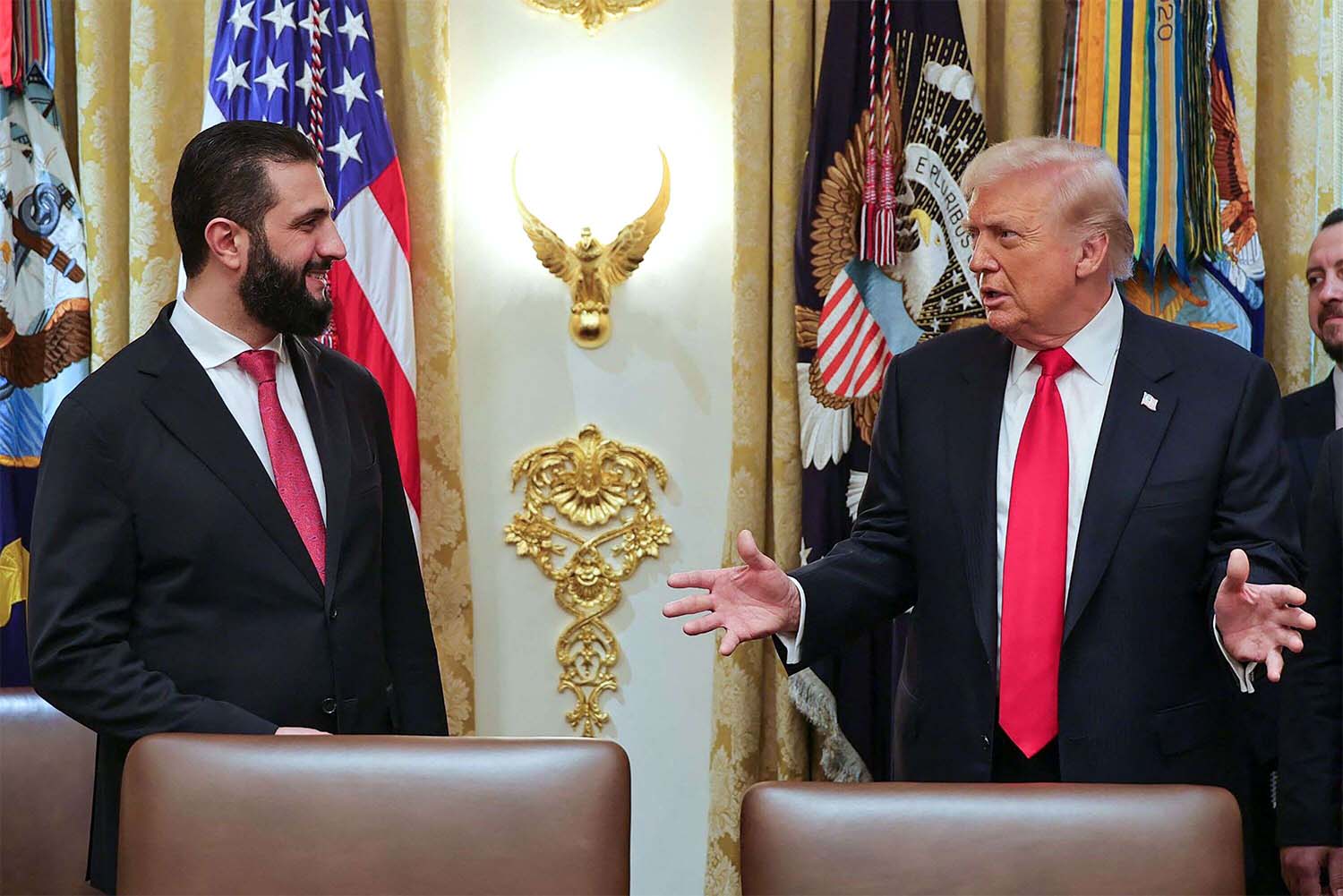
A historic visit to the White House
Ahmed Al-Sharaa's era begins in Washington
Ahmed al-Sharaa's visit to Washington, the first of its kind by a Syrian president since the country's independence, remains a historic event. But the real challenges will emerge in the post-visit phase.
Thursday 13/11/2025
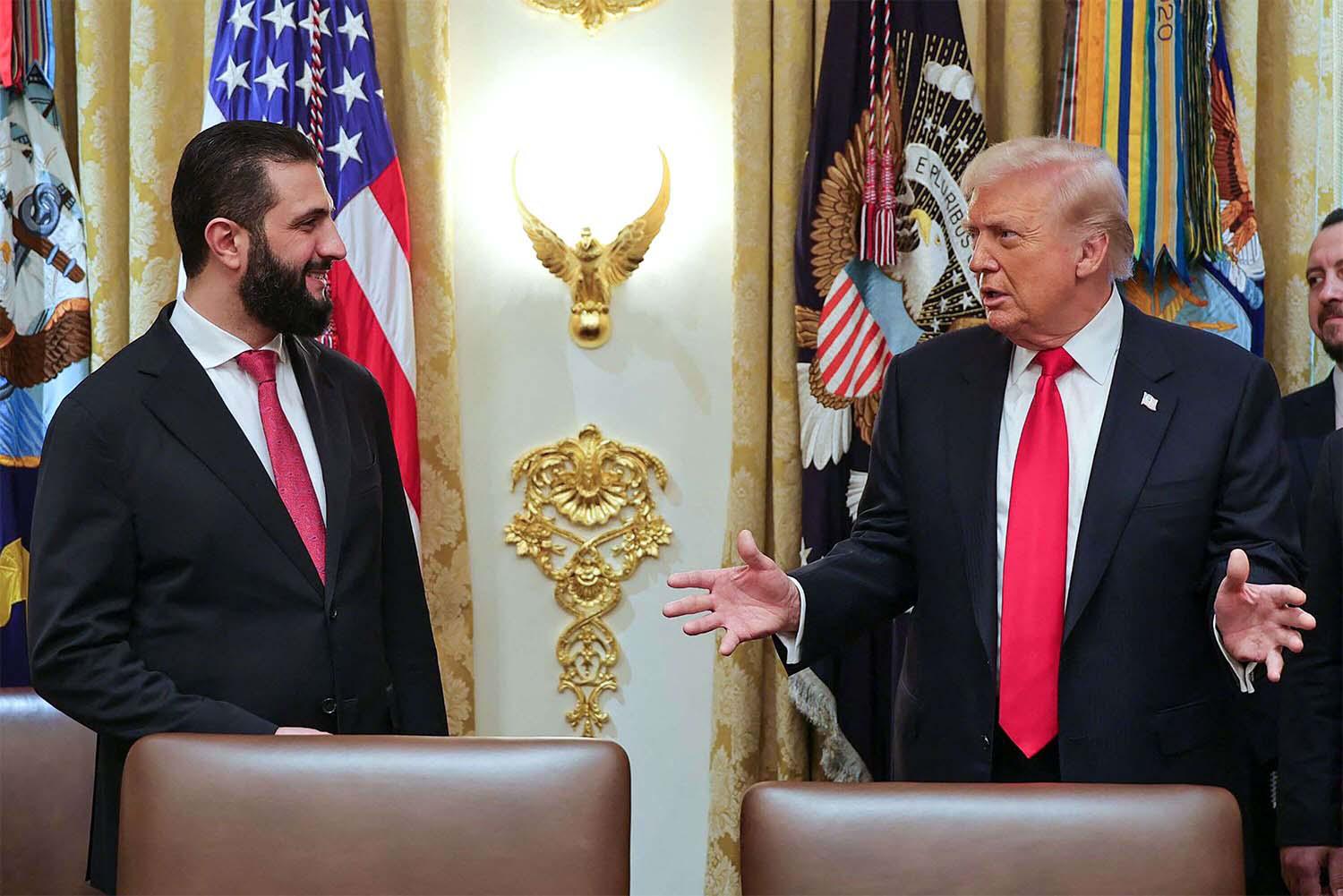
A historic visit to the White House
A new beginning in Syria is represented by Ahmed al-Sharaa's visit to Washington and President Donald Trump's reception at the White House.
The relationship with the United States has been tightened by all the regimes that have been in Syria since its independence in 1946. The only exception may be the period after the separation from Egypt, which began on September 28, 1961, and ended with the Baathist coup on March 8, 1963, a military coup used by Alawite officers to lay a minority hand over Syria.
Late Syrian President Hafez al-Assad, after he was forcibly installed as president of Syria in 1971, did not meet with a US president in Washington. He deliberately avoided going to the American capital to emphasize his hostility to America. He considered the relationship with Israel to be the most important guarantee of his minority regime. For him, America was nothing but a bridge to understandings from under the table with the Jewish state, which was behind allowing him to enter Lebanon and place him under a tutelage starting in 1976.
During the reign of Ahmed al-Sharaa, Syria got rid of America's complex, which removed the Syrian president's name from the list of terrorism, and also forced the United Nations to remove him from that list under Chapter VII. Relying on Chapter VII means putting Syria under this chapter... It imposed continuous monitoring on the behavior of the new regime in it through the accession of that country to the "international coalition" that is fighting the Islamic State and seeking to get rid of the threat of this terrorist organization.
Ultimately, al-Sharaa's visit to Washington was the culmination of a major regional shift that began with Bashar al-Assad's flight from Damascus to Moscow on December 8, 2024. It was not just the flight of a head of state who never had real legitimacy. It was much more than that, because Bashar al-Assad's exit meant, first of all, Iran's exit from Syria. Flight also means that Russia is no longer a key player in the Arab country that once called itself the "beating heart of Arabism."
The Syrian regime of Hafez al-Assad, who handed over the Golan in June 1967, when he was still the Minister of Defense, had nothing but slogans of the type of "prevention" and "resistance", to cover the role it played in the service Sharaa of Israel and nothing more... In order to remain in power for more than half a century.
The reign of Ahmed al-Sharaa begins from nothing. But it starts in Washington. Syria's new president, who also needs real national legitimacy, needs to build a no-contract relationship with the United States, which is looking for a strong presence in Syria. Most of all, the relationship with America, which Hafez al-Assad and then Bashar al-Assad had as a means to blackmail the world, including the Arab world, is not a flaw. Such a relationship has now become a necessity for Syria if it is necessary to avoid falling completely into the Israeli trap, the trap of fragmenting Syria.
The difference between Ahmed al-Sharaa and both Hafez al-Assad and his son Bashar al-Assad seems to be that the current Syrian president is using America to maintain his regime. In contrast, Assad the father and Assad the son used Israel to protect the Alawite regime. Perhaps most evident is Hafez al-Assad's insistence on the Israeli occupation of the Golan despite all the offers made to him to regain the occupied Syrian territories. The most recent of these was the one discussed between Hafez al-Assad and President Bill Clinton in Geneva a few months before Assad's death in June 2000. Hafez al-Assad rejected the US offer that was approved by Ehud Barak's government in Israel, using flimsy arguments.
Bashar al-Assad has never deviated from this trend. He remained faithful to all the commitments his father made to Israel, including ensuring its continued occupation of the Golan and ensuring its security along the ceasefire line between the two countries.
Ahmed al-Sharaa has no other options than the American option, at least in order to reach arrangements with Israel that include, among other things, a joint Syrian-Israeli presence in Jabal el-Sheikh. What is certain is that what is needed is to reach a security agreement that allows the Syrian president to arrange his internal situation first.
The relationship with Washington should not mean abandoning the idea of building a regime that is completely different from the one built by Hafez al-Assad, who through Henry Kissinger reached "points of understanding" with Israel that paved the way for the disengagement agreement in late 1974.
These "points of understanding" paved the way for all kinds of repression by Alawite officers, especially against the Sunni majority. This is evidenced by the massacre of Hama in February 1982 and continued until the day Bashar al-Assad fled Damascus.
The hope now is that al-Sharaa's visit to Washington will pave the way for a different kind of behavior inside Syria. This simply means that the real injustice inflicted on Sunnis under Hafez al-Assad and Bashar al-Assad must not justify any abuses against the Alawites, the Kurds, the Druze and the Christians. On the contrary, getting rid of the complex of the relationship with the United States is supposed to pave the way for a different kind of relationship between Syrian citizens and the ruling regime. Far from any attempt to repeat the experiences of the Alawite regime with an American cover instead of the Israeli cover.
Ahmed al-Sharaa's visit to Washington, the first of its kind by a Syrian president since the country's independence, remains a historic event. But the real challenges will emerge in the post-visit phase. It will show whether the bet on America is right in order to curb the arrogance of the Israeli right!
Khairallah Khairallah is a London-based Lebanese writer.
This article was originally published in Al-Arab
The views expressed are solely those of the author and may or may not reflect those of Middle East Online.