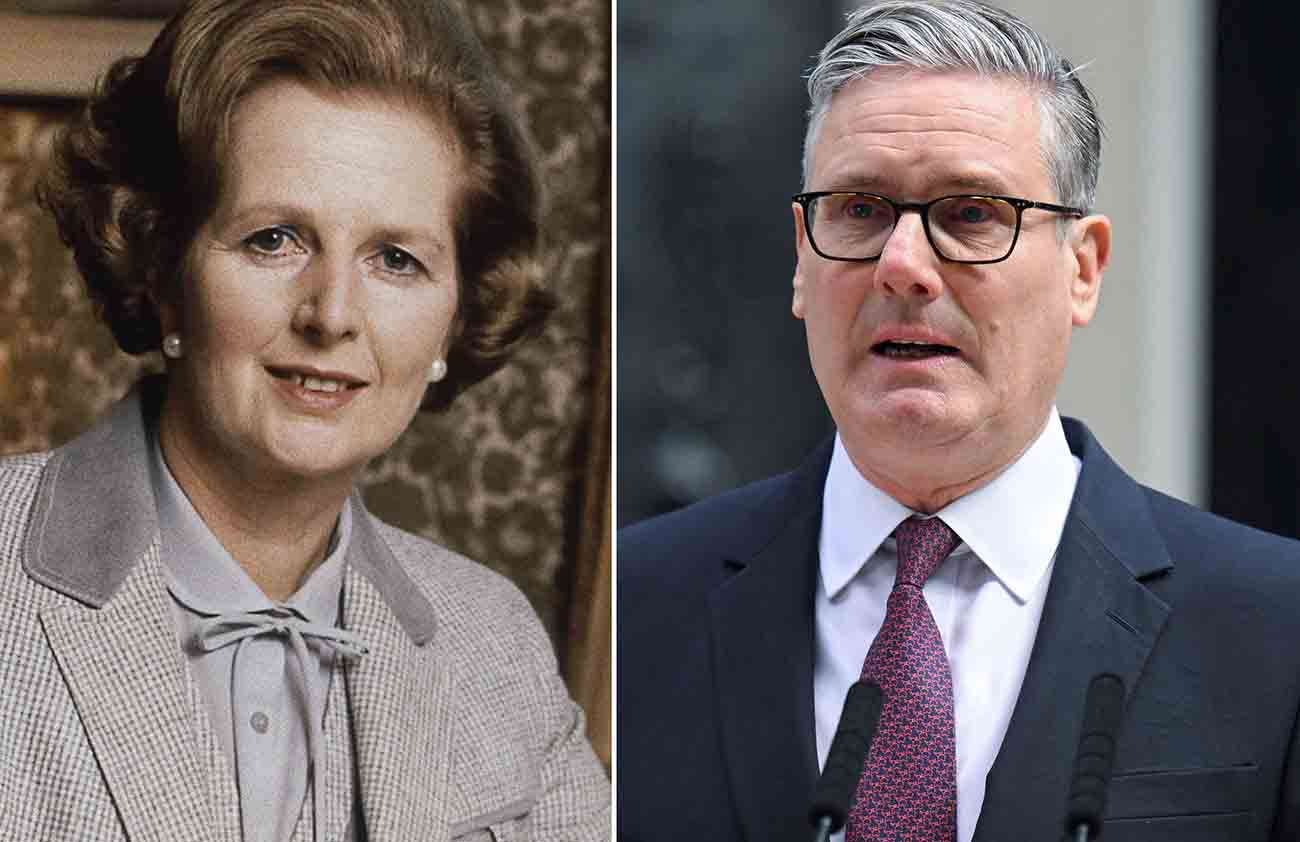
Thatcher left a legacy but Starmer left from the back door
Thatcher’s era and Starmer’s era... It is truly a strange world!
Just as Conservative ministers and MPs forced Thatcher to leave in 1990 for fear of losing the general election, many of their Labour counterparts felt that Starmer’s continuation weakened the party’s future prospects.
Friday 26/06/2026
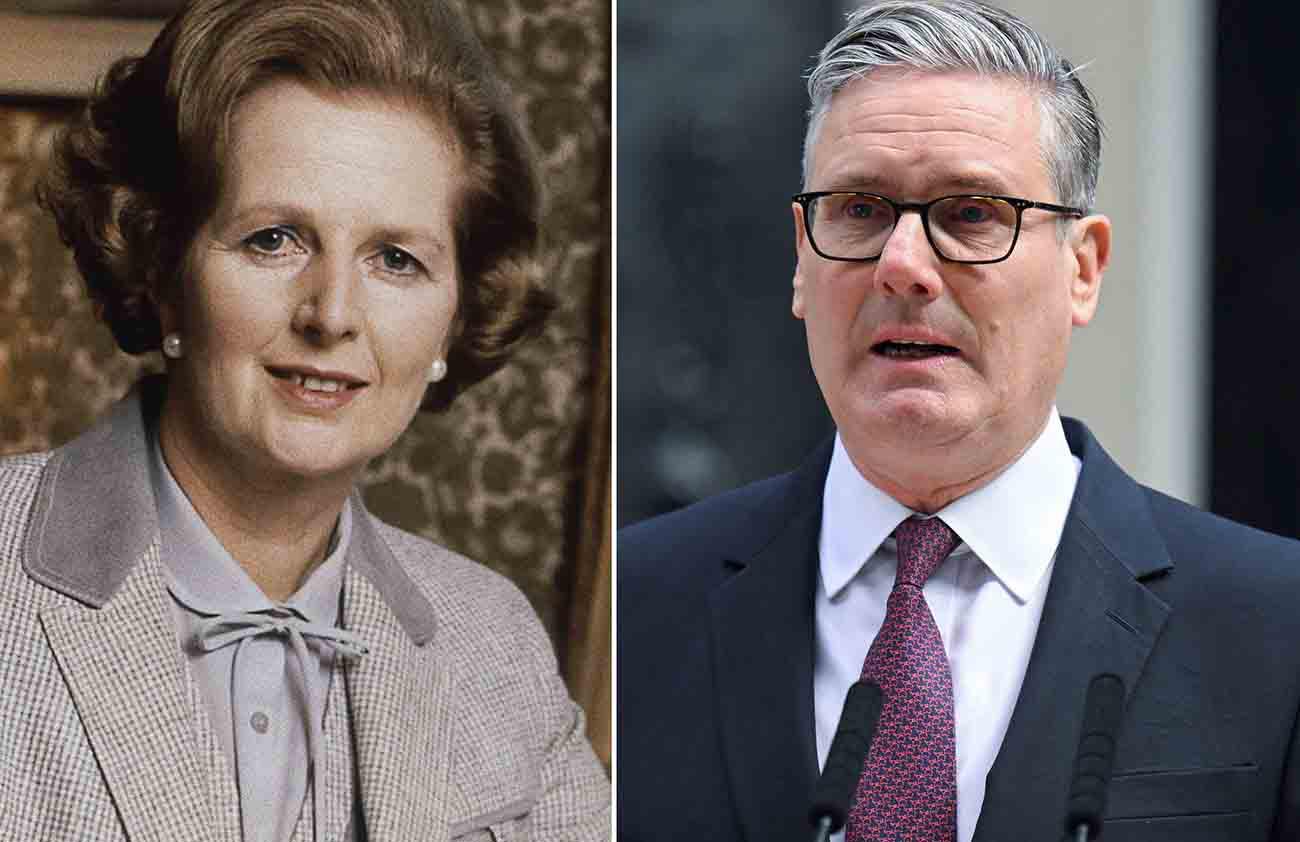
Thatcher left a legacy but Starmer left from the back door
How similar the circumstances of Margaret Thatcher’s resignation as British Prime Minister nearly 36 years ago are to those of Keir Starmer’s resignation last Monday. Both were ousted by those closest to them.
Just as Conservative ministers and MPs forced Thatcher to leave in 1990 for fear of losing the general election, many of their Labour counterparts felt that Starmer’s continuation weakened the party’s future prospects. In both cases, the problem was not merely a potential defeat in a general election, but a loss of confidence within the ruling party itself.
Thatcher spent 11 and a half years in power before leaving in a dramatic scene in 1990, after her closest allies within the Conservative Party turned against her—most notably Geoffrey Howe, the former Deputy Prime Minister and Foreign Secretary, and Michael Heseltine, the former Defence Secretary who stood to challenge her for the party leadership.
It did not save Thatcher who she was dubbed the "Iron Lady," nor did her victories in three consecutive general elections (1979, 1983, and 1987), her victory in the Falklands (Malvinas) War against Argentina, or her role in forging the international coalition that expelled Iraqi forces from Kuwait.
As for Starmer, he ended his term less than two years after his party's landslide victory in the 2024 elections. Despite his insistence that he would resist any attempt to oust him, he was ultimately forced to leave, especially after a number of his senior ministers — including Foreign Secretary Yvette Cooper and Energy Secretary Ed Miliband — told him he needed to step down. Furthermore, more than 100 out of his party's 403 MPs called on him to resign.
In the late 1980s, Thatcher’s popularity began to decline sharply due to widespread public anger over the "Poll Tax," which led to protests and riots. The Conservative Party at the time also experienced sharp divisions over Europe and the future of the UK's relationship with it.
Opinion polls showed that the drop in popularity was not limited to Thatcher alone but extended to the entire party. Consequently, fears of losing the next election grew, and a belief prevailed that the Conservative Party needed a new face to salvage its electoral future.
Thatcher left 10 Downing Street for the last time on November 28, 1990. She wept bitterly as she got into her official car, feeling betrayed and abandoned by her colleagues at the crucial moment. Yet ironically, her successor, John Major, managed less than two years later to lead the party to victory in the 1992 election. This reinforced the conviction of many party leaders at the time that Thatcher's departure was necessary to hold onto power, proving their fears were justified.
Thatcher summarized her political tragedy by saying, "It is a funny old world," in reference to the fact that the very party she brought to the pinnacle of power was the one that removed her from it.
As for Starmer, the reasons for his departure were manifold. First was the decline in the Labour Party's popularity at a time when the right-wing "Reform UK" party, led by Nigel Farage, made remarkable progress in opinion polls and the local elections held last May. The Labour Party also witnessed an escalating internal rebellion, with growing doubts over Starmer's ability to lead the party to a new victory. Pressure mounted on him following disappointing results in the local elections, and internal calls grew louder for a renewal of the party leadership due to what critics viewed as a lack of a clear political vision.
Making matters worse was Starmer’s appointment of Peter Mandelson, a prominent minister in Tony Blair’s government, as Ambassador to Washington, alongside other criticisms. The final blow came with the emergence of a strong rival to Starmer within the party: former minister Andy Burnham, whose recent victory in a parliamentary by-election paved his way to the premiership.
While "Thatcherism" may have ended with Thatcher's departure from government, it endured in Britain as a political and economic approach. One cannot deny the profound transformation Thatcher brought to the British economy through widespread privatization of public enterprises, curbing the influence of trade unions, promoting a market economy, reducing the state's role in economic activity, and encouraging home and share ownership.
These policies remained in place long after her departure, and many became part of the British political consensus. In fact, when the Labour Party came to power in 1997, it adopted many of her ideas and did not return to policies of nationalization and a command economy, to the point that Mandelson famously remarked at the time: "We are all Thatcherites now."
But what of "Starmerism," if it ever existed? It was merely a refreshing electoral breeze that blew over Britain for a brief moment, then dried up without leaving any noticeable trace.