
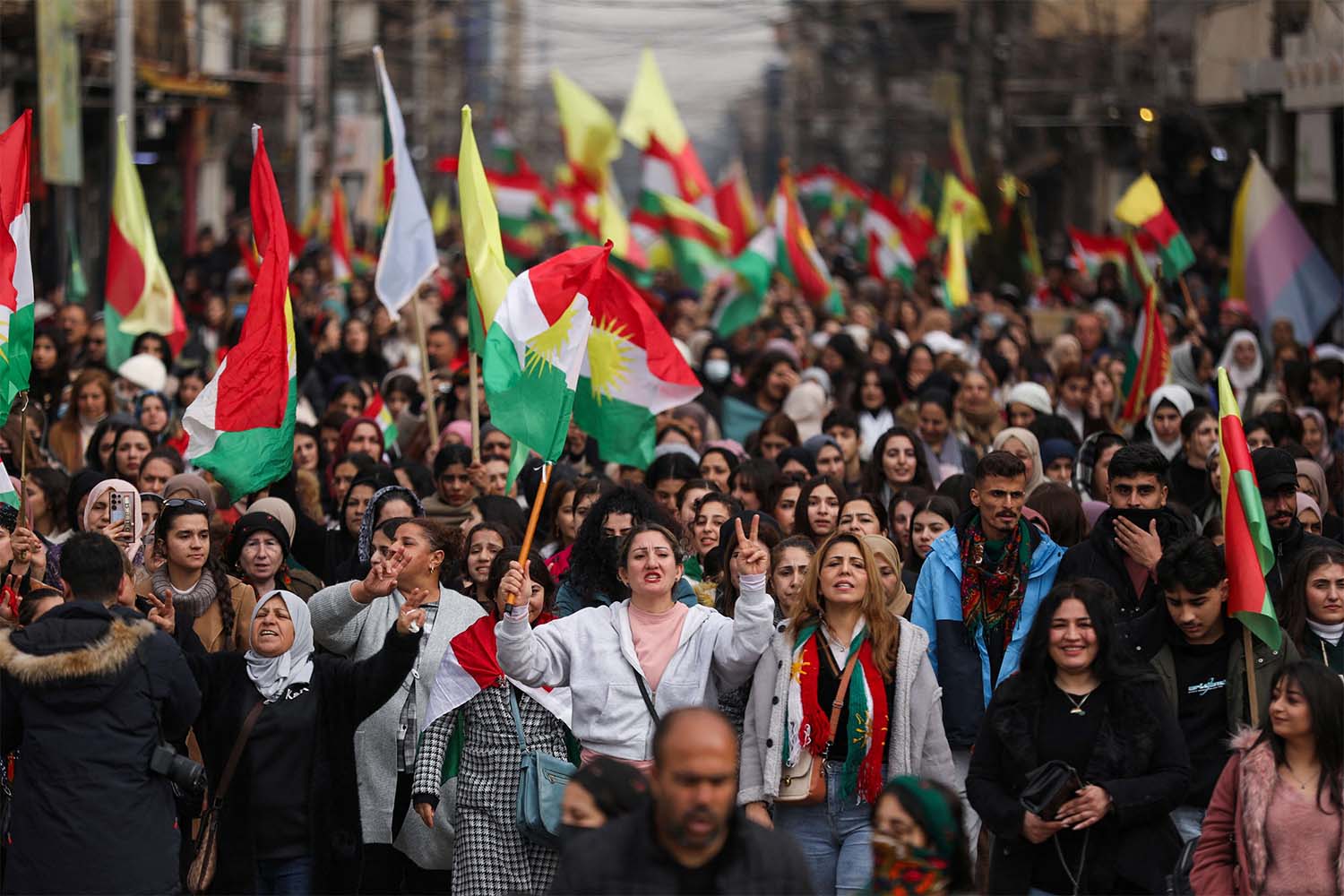
Syrian Kurds protest to demand their rights in the Syrian constitution and in support of Kurdish unity in Qamishli
When the Kurdish street imposes its political reality
Despite the Kurds’ commitment to peaceful resistance in most of their movements, and their resort to arms solely in self-defense, their rights have remained hostage to international interests.
Thursday 05/02/2026
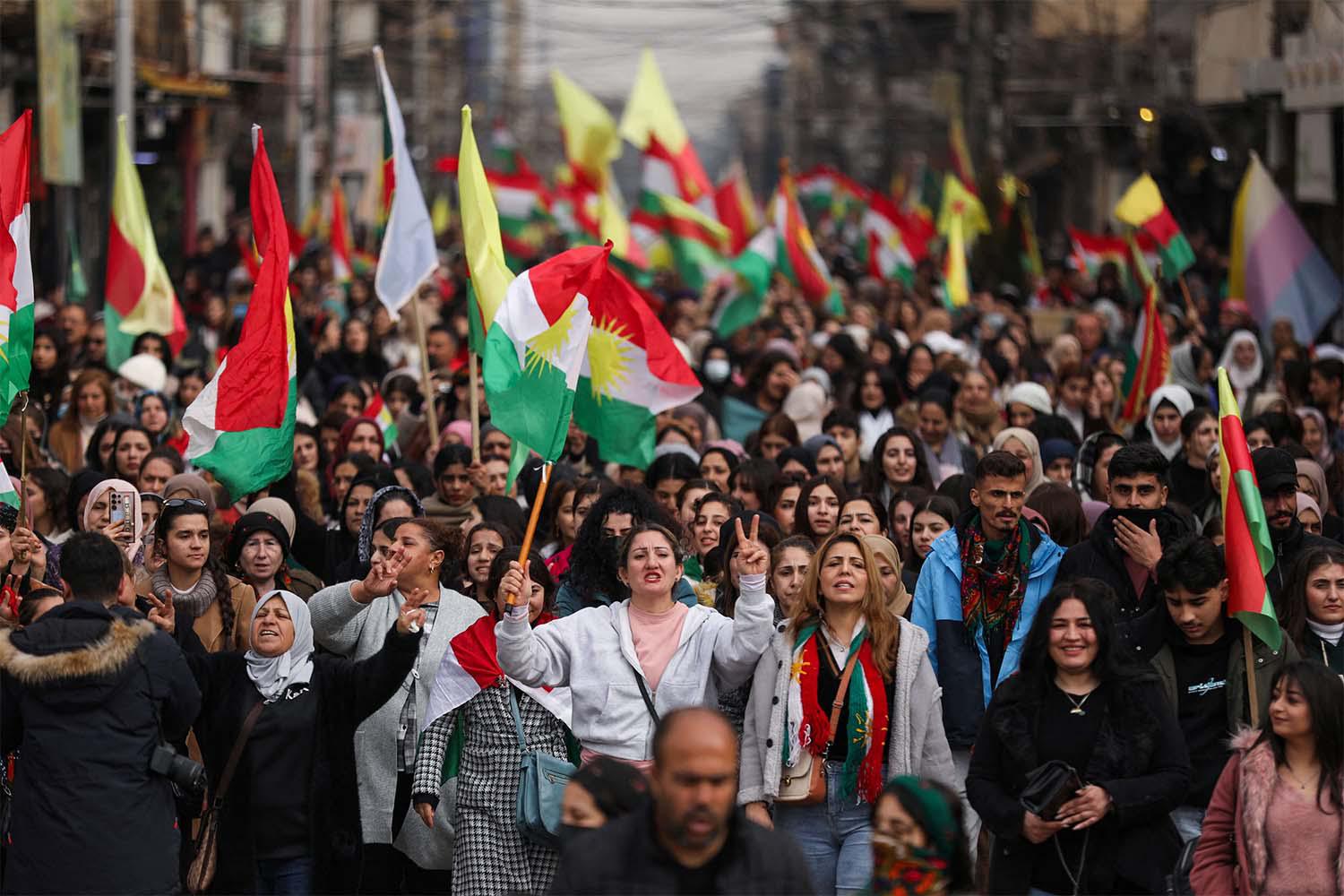
Syrian Kurds protest to demand their rights in the Syrian constitution and in support of Kurdish unity in Qamishli
An Open Letter to Leader Masoud Barzani
The Kurdish street is no longer merely a reaction to policies of exclusion and marginalization. In recent months, it has evolved into one of the few factors capable of influencing international discourse, even if only partially. At a time when international conventions have failed to protect the most basic rights of an entire people, peaceful demonstrations stretching from Kurdistan to Europe and the United States have imposed a political reality that can no longer be ignored. This shift did not emerge from a vacuum, nor should it be left without a clear political horizon.
The change in international rhetoric toward northeastern Syria was not the result of legal conviction or moral commitment, but rather the outcome of sustained pressure exerted by the Kurdish street in Kurdistan, Turkey, Europe, and the diaspora. Experience has shown that international politics responds not to rights, but to cost.
Protests altered the language, and language in turn altered reality. Only months ago, international discourse revolved exclusively around the phrase “the unity of Syrian territory.” Today, the wording has become more pragmatic: “areas under autonomous administration with a defined Syrian security presence.” This shift was not produced at negotiating tables, but by a street that refused to fall silent.
Despite the Kurds’ commitment to peaceful resistance in most of their movements, and their resort to arms solely in self-defense, their rights have remained hostage to international interests. The Kurdistan Region of Iraq has presented a relatively stable and humane model within a federal system; yet this experience has not been leveraged to protect Kurds in Turkey, Syria, or Iran, where violations and neglect continue unchecked.
At the same time, international positions reveal a clear double standard. Western states often turn a blind eye to well-known records and grant swift legitimacy to figures lacking popular mandate, while Kurds are continually urged to exercise patience, wait, and restrain themselves. This raises a painful question: why is legitimacy granted to those who possess power, while postponed for those who possess rights?
Continuing to occupy the street is no longer a symbolic choice, but a political necessity. Experience has proven that silence does not protect rights, that international discourse changes only under pressure, and that rights which are not demanded are eventually forgotten.
At this critical juncture, the Kurdish street requires clear political cover. A call by Masoud Barzani—given his legitimacy, experience, and international standing—for the continuation of organized, peaceful demonstrations wherever Kurds are present could unify the message, grant the movement broader political legitimacy, and prevent the cause from being reduced to fragmented reactions.
History does not remember those who waited for justice, but those who imposed it. Today, Kurds face a clear choice: either a sustained street that imposes its political reality, or silence that once again pushes them to the margins.