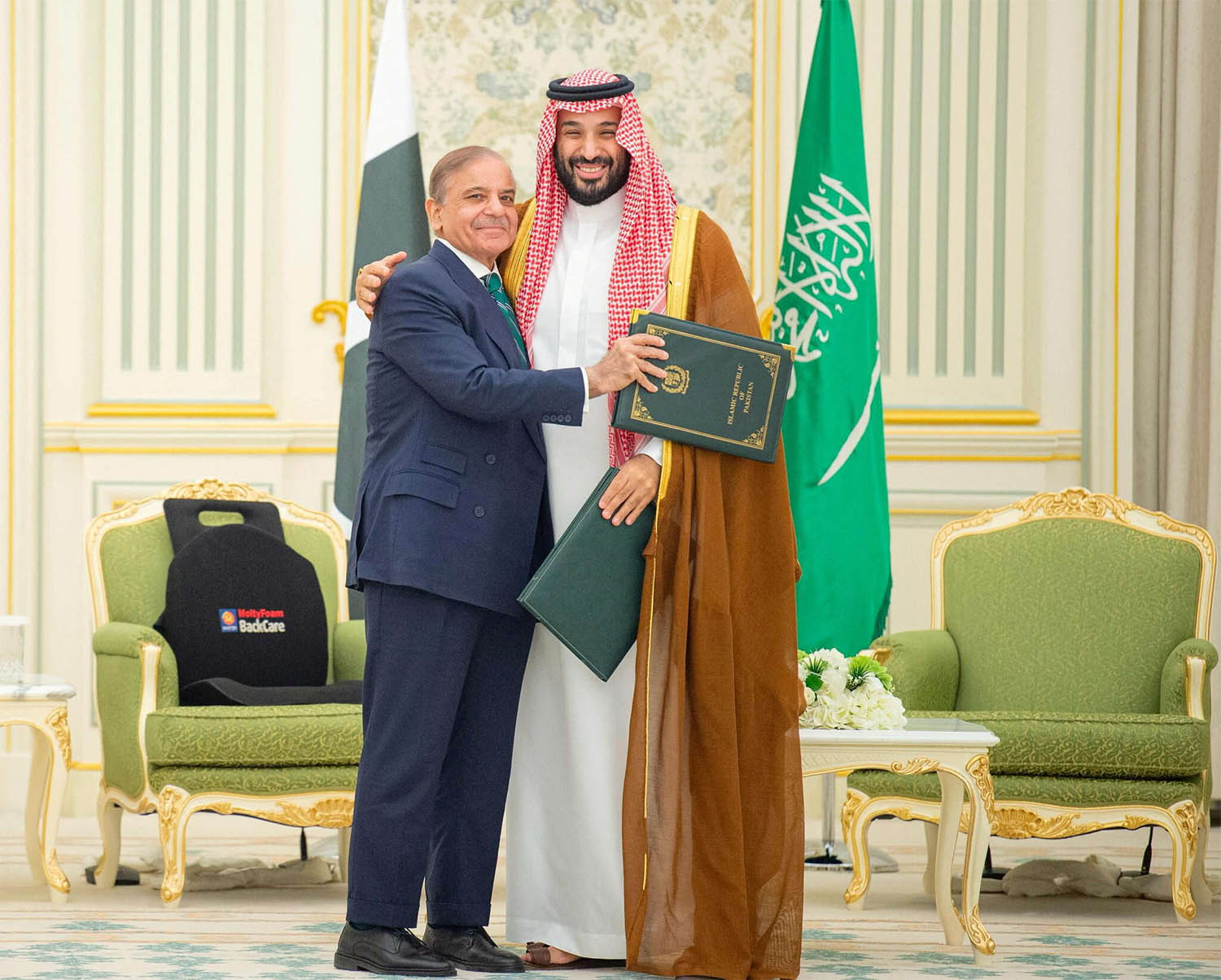
A defence pact that will change the geopolitical landscape in the region
The Gulf’s tightrope: Strategic implications of the Saudi-Pakistan pact
The Saudi-Pakistan pact is not a rupture but a recalibration. It expands negotiating space for Riyadh and offers Islamabad a potential platform for influence.
Wednesday 24/09/2025
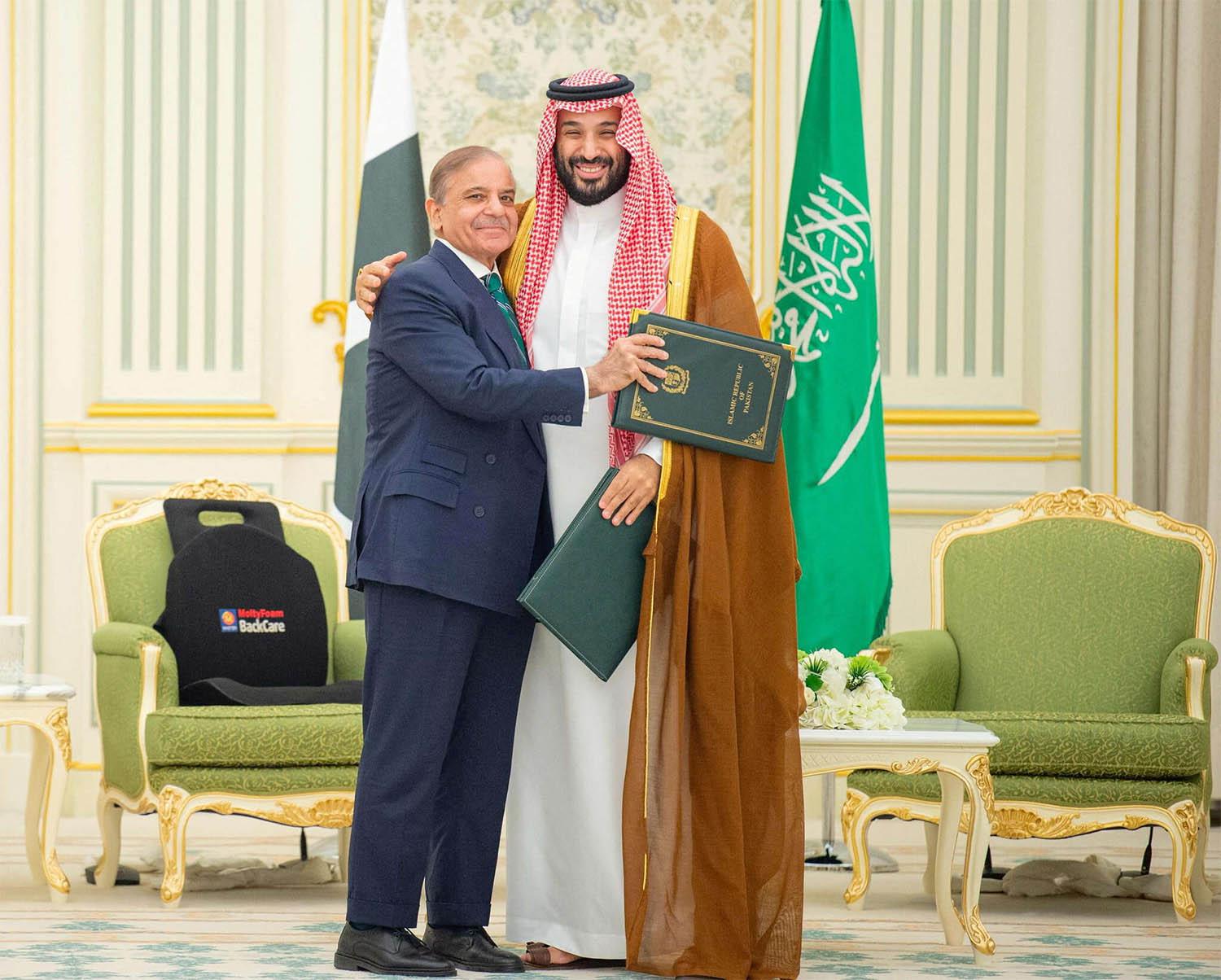
A defence pact that will change the geopolitical landscape in the region
This is not the first time that the Arab Gulf states have felt a sense of abandonment—or even betrayal—regarding Western security guarantees. History provides sharp reminders. In 1968, British Prime Minister Harold Wilson announced that Britain would withdraw all its forces “East of Suez” by 1971. For Gulf’s royal families, who had relied on Britain since the Second World War, this was a shock. They felt betrayed and feared for their survival. Even U.S. President Lyndon Johnson was angered, with many American officials calling the British retreat as an act of betrayal. Days later, Britain’s Defense Secretary Denis Healey went on BBC television and quipped: “Well I don’t very much like the idea of being a sort of white slaver for the Arab sheikhs.” He later apologized for the remark.
In 1979, the fall of the Shah of Iran delivered another painful lesson. If Washington could not protect its closest ally, how could Gulf monarchs rely on it to protect them? The collapse left them deeply wary of placing too much reliance on a single external power. Again in 2003, when Saddam Hussein was toppled and Iraq slipped into Iran’s orbit, Saudi Arabia’s King Abdullah felt deeply betrayed by the Americans.
The Arab Spring brought further shocks. In several regional conflicts, such as Yemen and Syria, Gulf leaders were repeatedly jolted by America’s indecision.
The costs are not just strategic but political
For years, Gulf leaders reassured themselves that their borders remained safe from direct aggression, even amid turmoil around them. Citizens too, though uneasy about overreliance on Washington, valued the peace compared to the chaos in other Arab states after 2011. That sense of security is now badly shaken. The drone strike on Saudi Aramco’s Abqaiq facility, and more recently the attack on Doha, exposed vulnerabilities Gulf rulers had long assumed were under control.
The costs are not just strategic but political. These attacks fuel perceptions at home that ruling elites miscalculated by trusting too much in the U.S., and are now paying the price. The GCC-U.S. relationship has never relied on broad-based public legitimacy; it has always been an elite bargain primarily revolving around security and oil.
The attacks also give hardline religious movements with ammunition for their long-standing claim that reliance on America was a strategic mistake. After the strike on Qatar, Hezbollah warned Gulf countries that they could be next if Israel succeeds against the militants it is now fighting.
Incidents like these embolden non-state actors, giving them confidence that Gulf security can, in fact, be breached. Both Sunni and Shia militant groups now view drone technology as a cheap and effective tool to destabilize governments. The Houthis’ track record in the region is no secret. In this context, Washington’s apparent indifference looms as a haunting nightmare for GCC rulers.
The Pact as a Bargaining Tool
At present, the Gulf’s push for defense autonomy is less about absolute independence than about enhancing negotiating leverage. GCC leaders understand that, despite mounting frustrations with Washington, they can neither afford to alienate the United States nor dispense with its security support altogether. But by investing in domestic defense industries, building ties with Asian powers, and conducting independent regional exercises, they create “backup options” that strengthen their position in dealings with Western partners. Nevertheless, the path toward reduced external dependence remains long and fraught with challenges.
The Saudi-Pakistan defense pact should be seen in this context. It is neither directed against Israel nor intended to replace America’s security umbrella. Rather, it is a hedge—an effort to transform asymmetric dependency into managed dependency. This is why GCC leaders remain open to negotiations and have not yet walked away from the Abraham Accords ۔The agreement with Pakistan is defensive in nature, aimed at preventing incidents like Abqaiq and Doha, which became possible because of U.S. indecisiveness.
Over the past several years, Saudi Arabia has been moving steadily in this direction. Under Vision 2030, it aims to meet half its defense needs through domestic industry. Its 2025 budget allocates $78 billion to defense—21 percent of total government spending and around 7 percent of GDP. Riyadh has also broadened its ties with China, ranging from the acquisition of armed drones to cooperation on ballistic missile development. Partnerships with Turkey on advanced drones, such as the Baykar Akinci program, go beyond procurement to include joint production and technology transfer. At the GCC level, joint ventures like the MoU between Qatar’s Barzan Holdings and the UAE’s EDGE illustrate efforts to integrate defense capabilities regionally.
Still, the Gulf’s militaries remain heavily dependent on the U.S. and Europe for major weapons systems, logistics, technology, and intelligence. And economically, the Gulf is still deeply tied to Western markets through energy, investment, and finance. Engagement with Asia will continue to grow, but without burning bridges to the West.
Thus, the Saudi-Pakistan pact represents diversification, not rupture. Washington will remain central, but alternative partnerships are being institutionalized to give Riyadh greater strategic choice.
Pakistan’s Role and its Limitations
For Pakistan, the pact is both an opportunity and a challenge. Over the decades, Riyadh and Islamabad have often stood by each other in difficult times. This legacy of partnership adds weight to the new agreement. At the same time, Pakistan has rarely operated as a fully autonomous actor in its dealings with Saudi Arabia, and Riyadh will naturally seek to keep Islamabad aligned with Gulf security priorities.
The task for Pakistan is to ensure that alignment does not translate into unquestioned compliance. Ideally, Islamabad will negotiate clearly defined and conditional roles rather than blanket obligations. Yet economic pressures, diplomatic sensitivities, and regional dynamics will inevitably shape how much room for maneuver Pakistan actually retains.
Pakistan has considerable military strength and nuclear deterrence, but its power projection capability remains limited. It can contribute meaningfully to border security, training, intelligence, and specialized deployments. But as a long-term guarantor of Gulf security, it lacks capacity.
The pact has also revived speculation about whether Pakistan’s nuclear deterrent implicitly shields the Gulf. Official statements from Islamabad have been inconsistent. The Belfer Center at Harvard has denied that any “nuclear umbrella” guarantee is involved. Still, in some circles, a perception has nonetheless taken hold that a de facto deterrence linkage may exist. This ambiguity, however, also invites diplomatic risks, global scrutiny, and potential escalation. For both Riyadh and Islamabad, the wiser course would be to categorically distance the agreement from any nuclear dimension.
Strategic Gamble and Regional Complexities
In theory, such agreements could foster regional security cooperation. In practice, without trust-building and crisis-management mechanisms, they may heighten risks.
The burden falls more heavily on Pakistan than on Saudi Arabia. Unless other regional players—such as Turkey, the UAE, and Qatar—are formally engaged, it will be highly challenging for Islamabad to sustain its traditional balancing strategy. In the event of a major crisis, Pakistan may face demands for direct intervention. Israel’s unpredictability, Iran’s fragile détente with Riyadh, and the persistence of the Houthi threat all compound these serious challenges.
Turkey’s growing role and its ambitions in the region adds further complexity. Meanwhile, Within the GCC itself, divergent interests persist, meaning Pakistan will have to navigate not just external threats but intra-Gulf tensions.
At home, Pakistan’s weak economic base leaves little room for independent decision-making. Even though its military establishment enjoys broad public support for the pact, financial constraints limit strategic freedom. If mismanaged, the agreement could expose Pakistan to greater economic, diplomatic, and strategic pressures than ever before.
Some officials have claimed that more Gulf states may join the pact; if that happens, it could provide a broader framework for balance and stability across the region. Such an expansion would also serve Saudi Arabia’s interests, as its recent diplomatic engagements already point toward the possibility of a more inclusive security arrangement. For Pakistan too, advocating this kind of inclusivity would be the wiser course.
Riyadh’s Calculations
For Saudi Arabia, the stakes are lower but not negligible. The main risk lies in managing relations with Washington and avoiding U.S. displeasure. It is plausible —and indeed consistent with Riyadh’s usual practice of managing U.S. sensitivities— that informal consultations or briefings took place; however, publicly available, verifiable evidence that Washington was formally briefed prior to the pact’s announcement has not been produced.
In South Asia, Riyadh faces the delicate task of balancing its ties between Islamabad and New Delhi. Historically, Saudi diplomacy has favored mediation over confrontation, often seeking to ease tensions between the two rivals. Yet it remains uncertain whether India will improve ties with Pakistan at a time when Islamabad’s security role is visibly expanding.
Another Saudi concern is Pakistan’s internal stability. As Pakistan’s regional role in the Gulf expands, maintaining domestic stability becomes even more critical. Groups such as the TTP and Baloch separatists present genuine risks and Riyadh will naturally expect Islamabad to address them. Addressing this challenge will require engaging Afghanistan and India—neighbors who are unlikely to welcome an expanded Pakistani security profile. Saudi Arabia may play a supportive role here, but its influence is likely to be limited.
In Sum, the Saudi-Pakistan pact is not a rupture but a recalibration. It expands negotiating space for Riyadh and offers Islamabad a potential platform for influence. Yet the risks—especially for Pakistan—are formidable. If mishandled, this tightrope could leave Islamabad overexposed, burdened with obligations it cannot fulfill, and vulnerable to international pressure.
If managed wisely, however, the pact could help Pakistan secure long-term strategic and economic dividends, while giving Riyadh the leverage it seeks in its complex relationship with the West.
The coming months will determine whether this bold gamble strengthens Gulf security—or proves too heavy a burden for Pakistan to bear.
…………………
Shafique Ur Rehman is a researcher and consultant from Pakistan specializing in Peace and Conflict Studies and Religious Extremism, with a focus on South Asia and the Gulf.
Views expressed in this article and may or may not reflect those of Middle East Online.