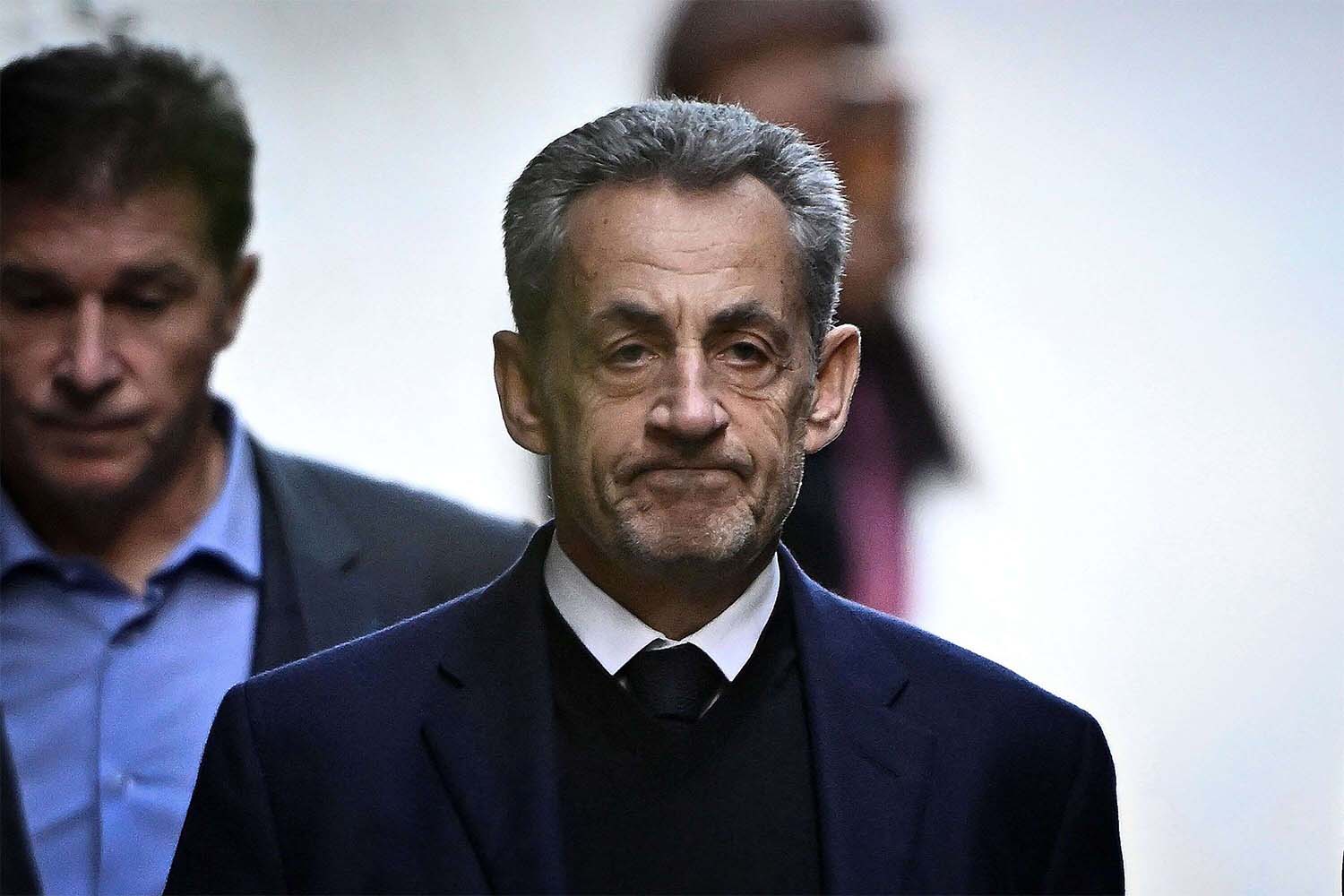
Nicolas Sarkozy spent around three weeks in prison before being released pending appea
The impossibility of perpetuity
The "Gaddafi curse" has struck former French President Nicolas Sarkozy, as he found himself behind bars in the famous Parisian "La Santé" prison.
Thursday 13/11/2025
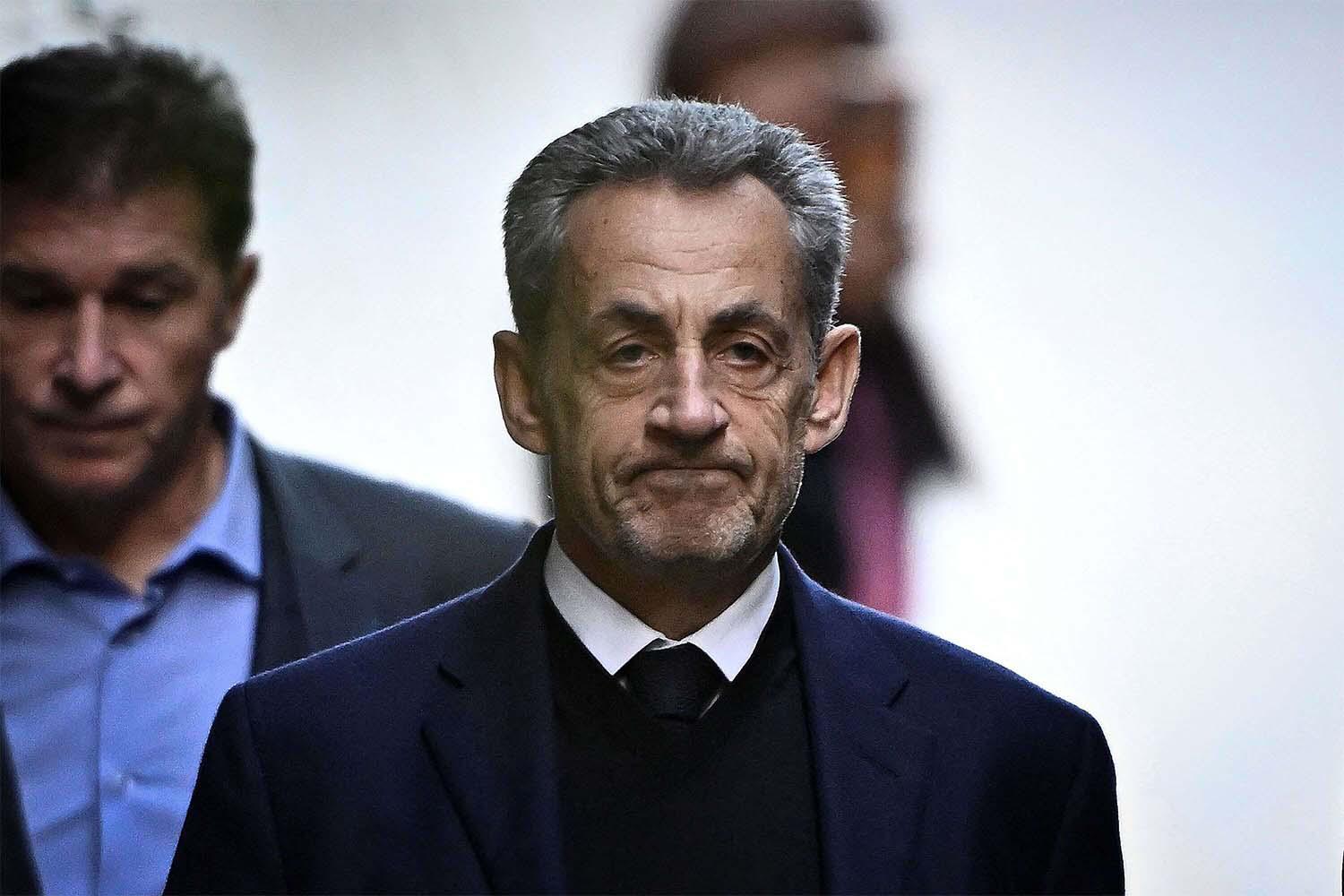
Nicolas Sarkozy spent around three weeks in prison before being released pending appea
The "Gaddafi curse" has struck former French President Nicolas Sarkozy, as he found himself behind bars in the famous Parisian "La Santé" prison. This came after a sentence was issued against him on September 25 last year, sentencing him to five years in prison on charges of criminal conspiracy in the case of Libyan funding for his 2007 election campaign.
Sarkozy did not remain in prison for long; he was released on Monday by a decision of the Court of Appeal after spending twenty days behind bars. However, he was placed under strict judicial supervision, including a ban on leaving France and prohibiting contact with anyone related to the case he is involved in, or with the Minister of Justice and employees of the Ministry of Justice.
Yet, a single night in prison is equivalent to a thousand nights of torment, anxiety, depression, and apprehension, especially when it concerns the President of the French Republic. Fortunately for Sarkozy, he was placed in a solitary confinement unit within the prison, not in the regular inmate cells, for reasons related to his personal safety. This made the burden of prison bearable and led him to state that his treatment was "exceptionally humane."
Although the detention cell is relatively small, with an area of about ten square meters containing a bed, a sink, a toilet, and a landline telephone, it remains an oasis of comfort in a severely overcrowded prison. The prison is designed to hold only 657 inmates, but the current number has reached 1,100.
The imprisonment of President Sarkozy set a precedent in France, as he is the first president to be imprisoned and then released during the appeal stage.
Sarkozy's situation, which pleases neither friend nor foe, is aptly described by the old Arabic proverb: "The impossibility of perpetuity." Look how things have turned upside down, how the resident of the Élysée Palace became an inmate of La Santé prison.
Sarkozy is not the first head of state to find himself in prison; many presidents preceded him. Among them is Brazilian President Luiz Inácio Lula da Silva, who was imprisoned in 2018 after being convicted of corruption and money laundering in the case known as "Lava Jato" (Car Wash). He was sentenced to 12 years in prison. Da Silva spent 580 days in prison until the Brazilian Supreme Court annulled the sentence in 2021, considering the trial not to have been impartial and the judge biased. Thus, Lula regained his political rights, ran for election again, and returned to the Palácio do Planalto, the official residence of the President of the Republic in the capital, Brasília.
Before that, former Peruvian President Alberto Fujimori was imprisoned for 15 years after being sentenced to 25 years for human rights violations. He was released in 2023 for health reasons.
In 2000, a major corruption scandal erupted after videos were published showing intelligence chief Vladimiro Montesinos buying the loyalty of politicians and media men. At that time, Fujimori fled to Japan and announced his resignation via fax from Tokyo. However, the Peruvian parliament rejected the resignation and decided to impeach and prosecute him.
Also in Peru, in 2017, President Ollanta Humala was arrested on charges of illicit campaign financing from Venezuela. He spent nine months in pre-trial detention before being released pending his trial.
In Panama, General Manuel Antonio Noriega was imprisoned on charges of drug trafficking and money laundering, serving his sentence in three countries: the United States, France, and his home country. In South Africa, former President Jacob Zuma was imprisoned and then released on parole (2021–2023) on charges of corruption, fraud, and bribery in arms deals. Former Sudanese President Omar al-Bashir remains imprisoned and is wanted by the International Criminal Court on charges of war crimes, crimes against humanity, and corruption.
Again in Africa, other presidents have been imprisoned, including former Ivorian President Laurent Gbagbo and Guinean President Alpha Condé.
The reasons for imprisonment and the conditions of release differed for each, but prison is prison; it remains one and the same. And the state of affairs is as the Andalusian poet Abu al-Baqa al-Rundi said:
These are the days, as I have witnessed them, a cycle of fortunes;
Whoever is pleased by one era, will be displeased by other eras.
Hatim Betioui is a London-based journalist and Secretary General of the Assilah Forum Foundation.