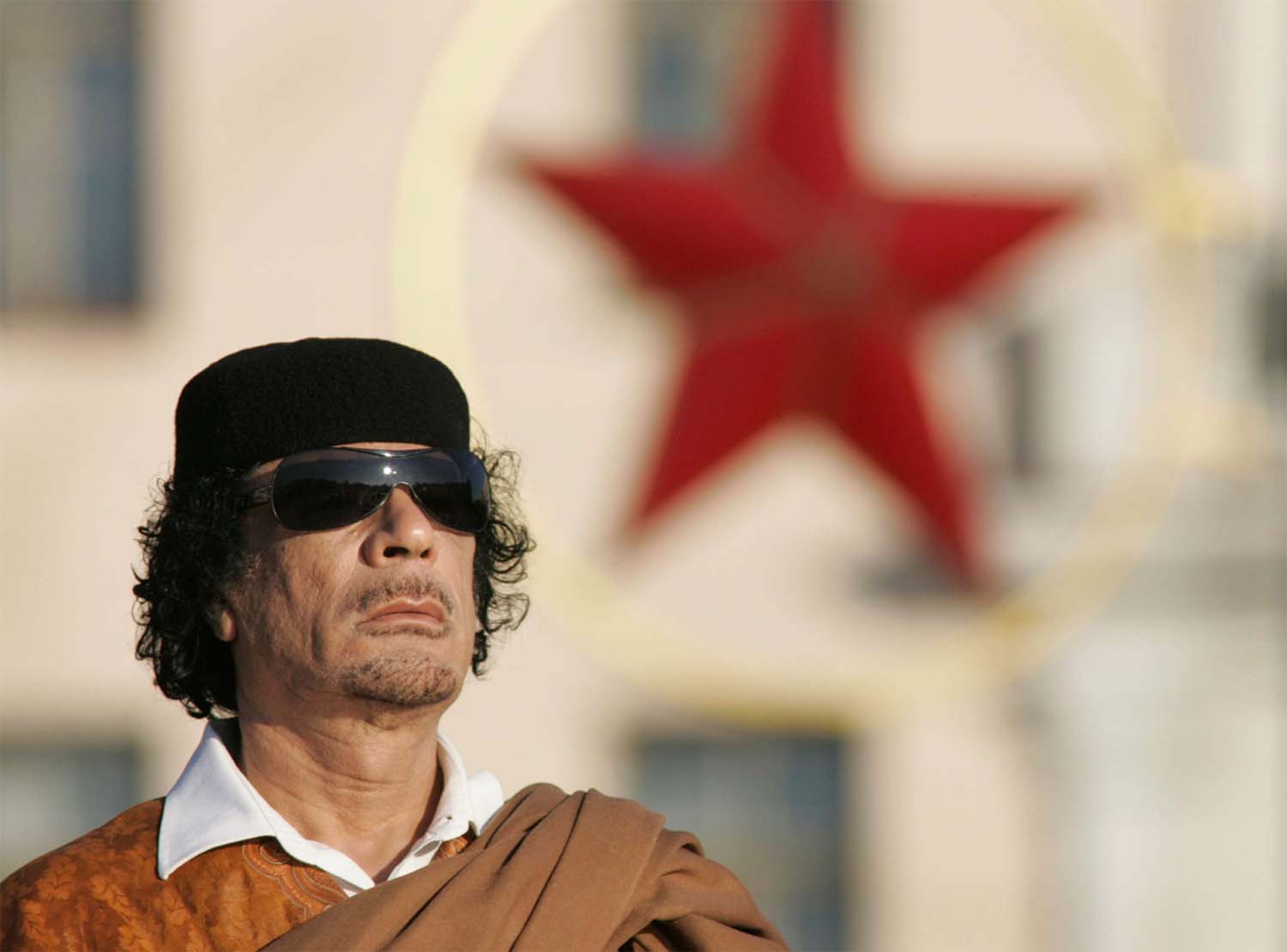
Deposed Libyan leader Moammar Gaddafi
Libyan memories (1/3)
Three days in Libya were enough for me to memorize the slogans of the "Third Universal Theory" by heart; they were present on newspaper pages, television screens, storefronts, hotel lobbies, gas stations, and car repair shops.
Friday 23/01/2026
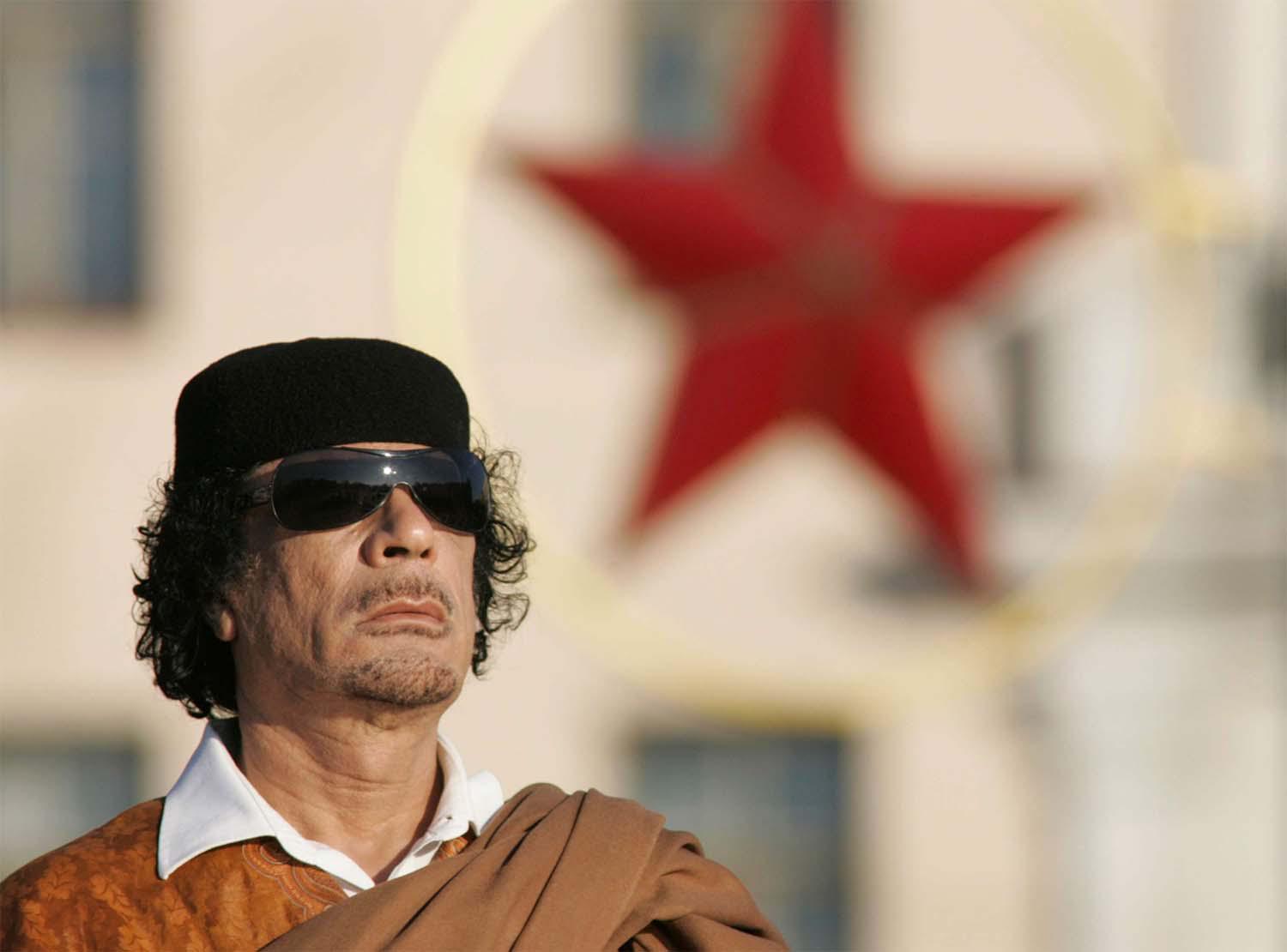
Deposed Libyan leader Moammar Gaddafi
I returned to Tripoli at the end of last year after a long absence lasting more than two decades. I found that it was no longer as I had known it in the past—obsessed with the color green and revolutionary slogans. The appearance of Green Square has changed, and the Bab al-Azizia barracks, once the residence of Colonel Muammar Gaddafi, has vanished from existence.
In the past, there was no escape from the flood of slogans found everywhere, derived from the "Green Book" which heralded the march of the masses. Starting from the road connecting the airport to the city, and extending through all the streets, paths, and alleys, almost no space was devoid of a green banner, both in form and content.
Three days in Libya were enough for me to memorize the slogans of the "Third Universal Theory" by heart; they were present on newspaper pages, television screens, storefronts, hotel lobbies, gas stations, and car repair shops. While a visiting journalist to Gaddafi’s Libya would develop a "green" wealth of information, this wealth was not matched by a state of media satisfaction.
Although my notebook contained a collection of phone numbers for several Libyan officials - provided to me by my friend, the late poet Mohammad Al-Faituri, who served for a long time as a consultant at the Libyan embassy in Rabat - they did not benefit me in the slightest.
I remember finding myself calling Mahmoud al-Buseifi, the director of foreign media in Libya. I introduced myself and expressed my desire to meet him. His answer was that he was busy these days, but he asked me to call him the next day to set up an appointment. I called him again, despite sensing the coldness of his welcome during the first call. I asked him, "When shall I meet you?" He replied with a question: "Do you want something?"
I wanted to meet officials, including Ahmed al-Tahir al-Zawi, the Libyan investigating judge regarding the accusation of Libyan citizens in the Lockerbie incident, and Colonel Youssef al-Debri, a high-ranking security official. Al-Buseifi asked me: "Where are you staying?" I told him "at the Bab al-Bahr Hotel, Room 322." He said "I will call you soon."
I waited for a long time, but he never called. I tried contacting other Libyan officials, including Mohamed al-Ghoul, director of the “Al Watan Al Arabi al Kabir” (Great Arab Nation) radio station, the voice of the Revolutionary Committees. He was not there; the person who answered my call told me he was on a mission in the city of Benghazi.
The only official I managed to meet was Salem al-Ziyadi, the director of publications. At the time, al-Ziyadi was a young man in his thirties, handsome, friendly, a lover of Pan-Arabism, and convinced of Libya's innocence regarding the blood of the Lockerbie victims and the invalidity of American and British accusations. By virtue of his position, I believed al-Ziyadi was the only Libyan official who read all publications issued outside of Libya.
Al-Ziyadi did not miss the opportunity to express his dissatisfaction with how many Arab media outlets handled the American accusations against Libya. He said they relied primarily on Western news agencies and did not rely on what was published by the Jamahiriya News Agency (JANA).
I said to him: "I don't think so; the sources are diverse, and they convey each party's point of view with complete objectivity. Generally, I am here - give me whatever Libyan viewpoints you have for publication." I pointed out to him that some Libyan officials were not enthusiastic about meeting journalists.
At that moment, I remembered the Italian Massimo Comino, a correspondent for the American NBC network in Rome, whom I met at Tripoli airport. He told me he had conducted several interviews with Colonel Gaddafi and that he loved Libya and visited it constantly.
I developed a firm belief that Libyan officials preferred to send their messages to America and the West through a Western media intermediary, not an Arab one.
Al-Ziyadi picked up a copy of Asharq Al-Awsat newspaper from Saturday, December 7, 1991, where I was working at the time. He was not pleased as he read a headline on the front page taken from statements by Ibrahim al-Bishari, the Libyan Foreign Minister: "Bush is rational and Baker is balanced," noting that al-Bishari had not only said those words. I replied that selecting a headline always depends on new and unusual information, and therefore it cannot encompass all statements included in a comprehensive report published on the inside pages.
After losing hope of meeting prominent figures, I headed to the Libyan Arab Airlines office to change my return date to Morocco and shorten my stay in Tripoli. I then found myself wandering through its streets, alleys, and squares to observe the features of daily life for people under the weight of the blockade. Therein lie endless stories.
Hatim Betioui is a London-based journalist and Secretary General of the Assilah Forum Foundation.
The views and opinions expressed in this article are those of the author and do not necessarily reflect the position of Middle East Online