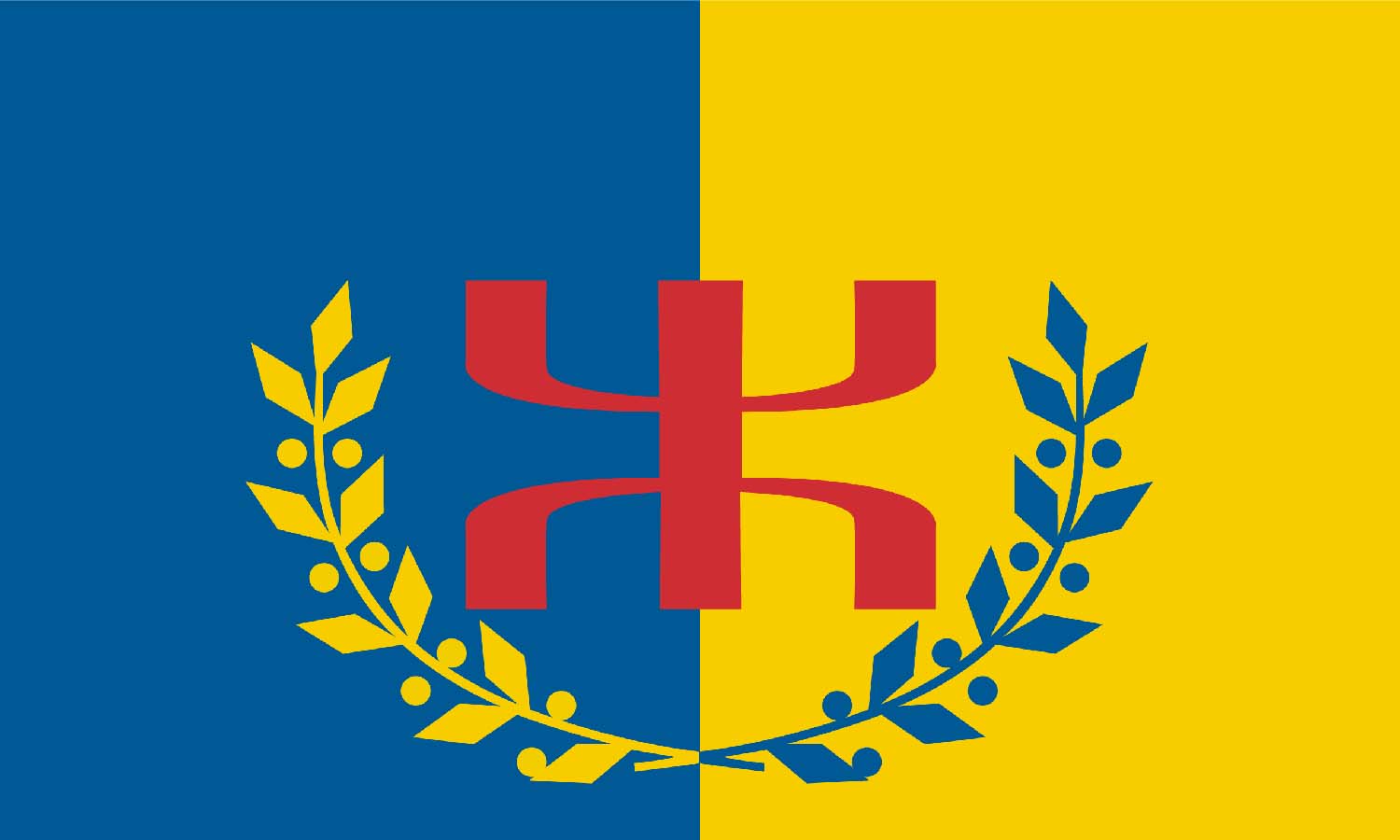
Kabylia's flag
When the spell backfires on the magician
The proclamation of what is called the “Republic of Kabylia” is nothing more than a first step in a long process, but it opens before Algeria a door it had itself opened decades ago. It will taste what it made Morocco taste over half a century.
Saturday 20/12/2025
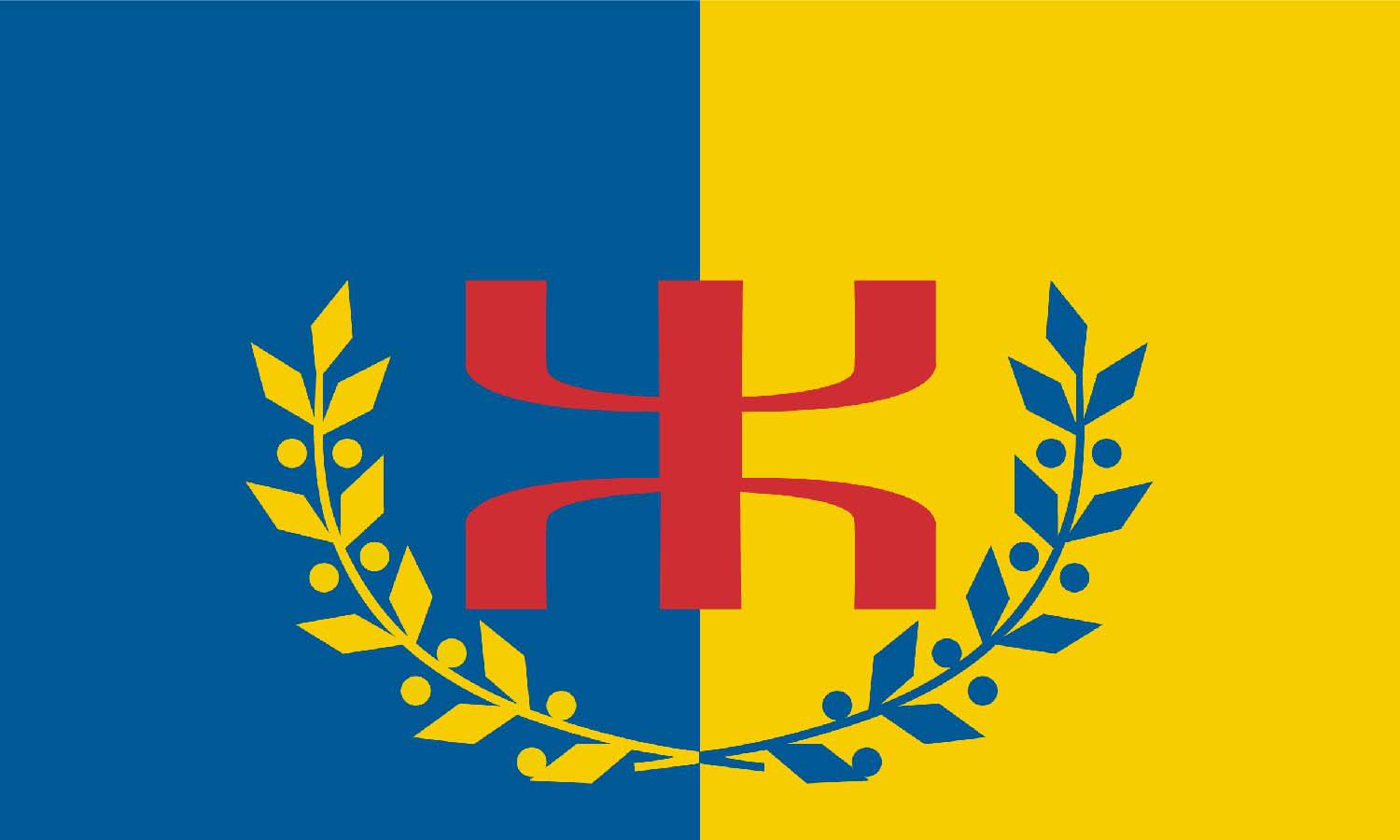
Kabylia's flag
Who would have thought that the spell could backfire on the magician himself? This question strongly imposed itself as reports emerged about the declaration by the Movement for the Self‑Determination of Kabylia, known by its acronym “MAK”, on December 14 of this year, of the “Independence of the Federal Republic of Kabylia” from Algeria.
So how did the story begin? Less than four months after the late King Hassan II organized the peaceful “Green March”, by which Morocco recovered its Sahara from Spanish colonization on 6 November 1975, the so-called separatist Polisario Front unilaterally announced, on 27 February 1976, the establishment of what is called the “Sahrawi Republic”, with direct support from Muammar Gaddafi’s Libya and Houari Boumediene’s Algeria.
The Polisario set up a fictitious entity on Algerian soil, without any of the real foundations of a state, while Algeria mobilized its political, military and diplomatic capabilities in the service of the separatist project and made promoting it a constant priority in its foreign policy, even as Libya later backed away from it.
Five decades have passed since Algeria lit the spark of separatism and harassed Morocco over its territorial integrity, forgetting that if fire breaks out in a neighbour’s house, its flames will inevitably spread to nearby homes. It also ignored the fact that North Africa, whose borders were drawn by the colonizer with an arbitrary pair of scissors, remains a fragile region, liable to flare up at any moment.
Algeria itself is exposed to multiple separatist claims, whether in its far south with the Tuareg, or in the central south in Ghardaia, where unrest periodically surfaces among the Ibadi population - like a dormant volcano that could erupt at any time.
As for Libya, which has suffered deep political division since the fall of Gaddafi’s regime following the 17 February 2011 revolution, it too is liable to splinter into three regions - Tripolitania, Fezzan, and Cyrenaica - unless all actors in its political scene reach an agreement that preserves the unity of the country. The example of Sudan, not far from our minds, is enough to show the curse that befell the country after the secession of South Sudan, followed by both states sliding into the club of failed states as other civil wars ravaged them - and still do.
Algeria wagered on undermining Morocco’s unity while neglecting its own internal development. At the same time as Morocco was defending its land and historical rights, it was also working to build the state, develop infrastructure, and combat poverty and vulnerability. Algeria, on the other hand, preferred to spend huge budgets on a political and diplomatic war of attrition against Morocco instead of investing its oil and gas wealth in genuine development that would benefit its people.
Algiers knows very well that Rabat will not retreat a single step from its Sahara, and will not accept its geography being besieged or an artificial entity being created in its south to sever it from its African depth. Nevertheless, it has remained captive to illusions of regional hegemony and the quest to play the role of a “striking force” in North Africa.
Morocco has withstood attempts to undermine its territorial integrity, weathered the ups and downs of the Cold War, and confronted the legacy of European colonialism -especially French and Spanish - which helped draw the region’s distorted borders. Today, these two powers are returning to political realism by supporting the autonomy initiative under Moroccan sovereignty.
Paris and Madrid are the most aware of what happened in the region in terms of nibbling away and random carving out of others’ lands, which enabled Algeria to expand in all directions while the geography of neighboring states shrank, for the simple reason that France never imagined it would one day leave Algeria, and therefore sought to enlarge its territory at the expense of neighboring countries.
The proclamation of what is called the “Republic of Kabylia” is nothing more than a first step in a long process, but it opens before Algeria a door it had itself opened decades ago. It will taste what it made Morocco taste over half a century. The irony is that this coincides with Morocco achieving a significant diplomatic breakthrough, embodied in UN Security Council Resolution 2797 of 31 October 2025, which entrenched the autonomy initiative as a realistic and final framework for the solution and guarantees Morocco its legitimate rights in its Sahara.
This declaration may not, in the near term, change the balance of power on the ground, given the lack of actual control by the MAK movement in the Kabylia region, but it will remain a painful and permanent thorn in Algeria’s side. A state that for decades raised the slogan of “peoples’ right to self‑determination” now finds itself rejecting that very right when it comes knocking at its own door.
In conclusion, history seems to be repeating itself - especially when the spell backfires on the magician.
Hatim Betioui is a London-based journalist and Secretary General of the Assilah Forum Foundation.
The views and opinions expressed in this article are those of the author and do not necessarily reflect the position of Middle East Online