

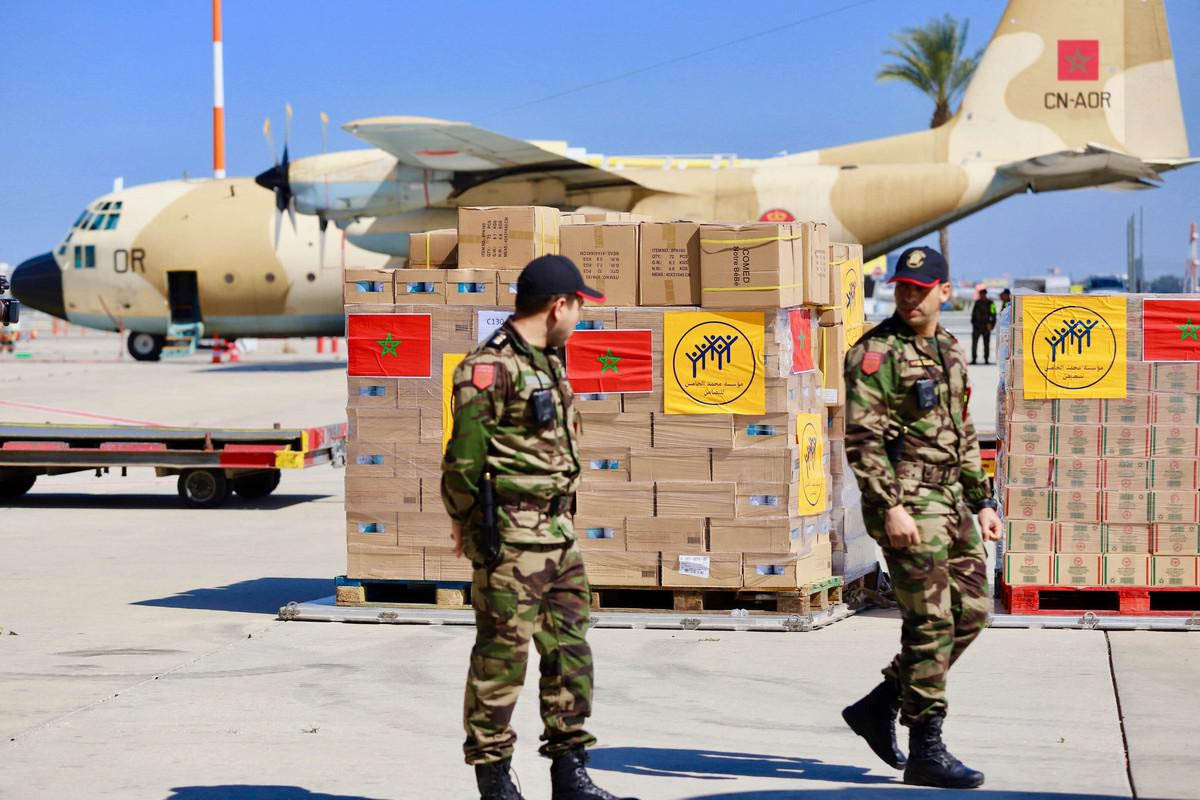
Some of Morocco's humanitarian aid sent to Gaza
Morocco’s diplomatic compass: peace as a strategic choice in a fractured Middle East
Morocco’s stance on Gaza is emblematic of this broader vision. Rabat is not content with merely condemning violence; it is actively working to alleviate suffering on the ground.
Monday 08/09/2025
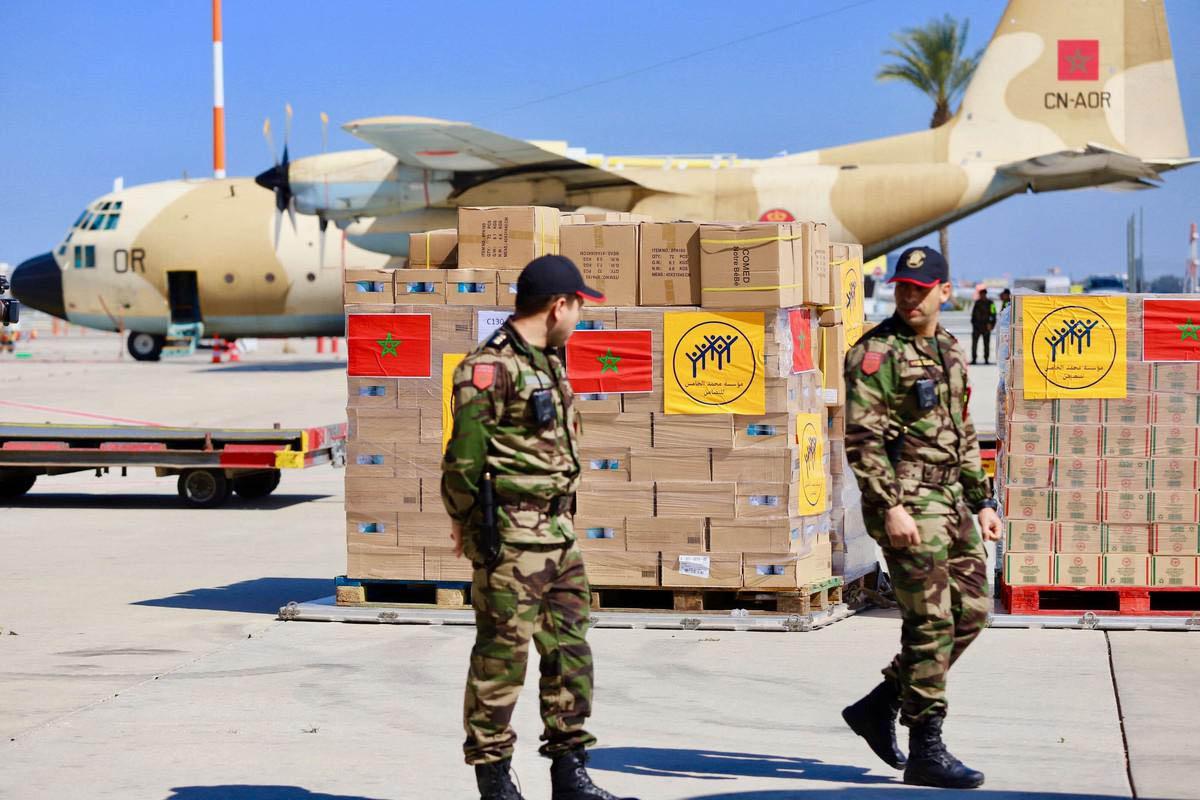
Some of Morocco's humanitarian aid sent to Gaza
In a region where the logic of war too often prevails over the logic of reason, Morocco is charting a distinct course — one that places peace, negotiation, and human dignity at the center of its foreign policy. Speaking before the 164th ordinary session of the Council of the League of Arab States in Cairo, Foreign Minister Nasser Bourita did more than simply reiterate diplomatic talking points: he delivered a roadmap for Arab diplomacy at a time of unprecedented upheaval.
At the heart of Morocco’s message lies a fundamental conviction: peace is not a tactical pause but a strategic choice. Bourita, reflecting the vision of King Mohammed VI, made it clear that crisis management is no longer enough. The international community must move beyond firefighting and work toward addressing the root causes of the conflict — first and foremost through a credible return to negotiations.
Gaza: Beyond Humanitarian Relief
Morocco’s stance on Gaza is emblematic of this broader vision. Rabat is not content with merely condemning violence; it is actively working to alleviate suffering on the ground. The air bridge ordered by King Mohammed VI — nearly 300 tons of food, medicine, and humanitarian aid delivered through unprecedented corridors — was a reminder that Morocco prefers action to rhetoric. But Bourita’s message went further: humanitarian relief must be coupled with a political horizon, otherwise the cycle of destruction and reconstruction will only deepen despair.
Morocco’s call for an immediate ceasefire, the opening of all crossings, and the safe return of displaced civilians is grounded not only in compassion but also in strategic clarity. Stability in Gaza, the West Bank, and Jerusalem is not just a Palestinian interest — it is an Arab and international imperative.
Defending Jerusalem, Protecting Identity
As Chairman of the Al-Quds Committee, King Mohammed VI has consistently framed Jerusalem not as a bargaining chip but as a shared heritage that must be preserved for humanity. Through the Bayt Mal Al-Quds Agency, Morocco has financed schools, hospitals, and social projects, anchoring the Palestinian presence in the city. Bourita’s speech underlined that defending the legal and historical status of Jerusalem is inseparable from defending peace itself.
The Two-State Solution: From Slogan to Strategy
Perhaps the most striking dimension of Morocco’s position is its commitment to transforming the “two-state solution” from a fading slogan into a viable political horizon. By co-hosting, with the Netherlands, the fifth meeting of the International Alliance for the Two-State Solution, Morocco placed itself at the heart of a renewed global momentum for Palestinian statehood — one that is gaining traction across Europe and beyond.
This is more than symbolic diplomacy. By bringing together diverse partners and feeding into the high-level conference in New York under Saudi and French leadership, Morocco is betting on a multilateral approach to peace. The message is clear: regional stability cannot be achieved without justice for the Palestinians, and justice cannot be achieved without a sovereign, viable, and contiguous Palestinian state.
Syria and the Arab Reconciliation Agenda
Bourita also reminded his Arab counterparts that Morocco’s vision for peace extends beyond Palestine. The reopening of the Moroccan embassy in Damascus is not a mere gesture of normalization but part of a broader effort to re-anchor Syria in the Arab family. For Rabat, the future of Syria must be built on internal consensus, territorial integrity, and a political solution that guarantees security and stability.
Reforming the Arab System: From Rhetoric to Results
In perhaps the most forward-looking part of his address, Bourita called for accelerating the reform of the Arab League itself. This is no small ambition. For decades, Arab summits have been marked by eloquent communiqués but limited implementation. Morocco is urging its partners to turn the League into a true instrument of collective action, capable of tackling shared challenges — from security threats to food and energy crises — and positioning the Arab world as a credible actor in the global system.
A Call to Move Beyond Crisis Diplomacy
Morocco’s message in Cairo was therefore both urgent and optimistic. Urgent, because the region risks sliding into a prolonged era of instability if war and displacement continue unchecked. Optimistic, because Morocco believes that with courage, vision, and multilateral commitment, peace remains possible.
The Moroccan approach is not about neutrality; it is about responsibility. By combining humanitarian action, political engagement, and institutional reform, Rabat is offering a model for what 21st-century Arab diplomacy could look like: principled, proactive, and relentlessly focused on results.
At a time when the Middle East is again on the brink, Morocco is reminding the region — and the world — that the road to stability begins not with escalation, but with dialogue.
Said Temsamani is a Moroccan writer
Views expressed in this article and may or may not reflect those of Middle East Online.
