

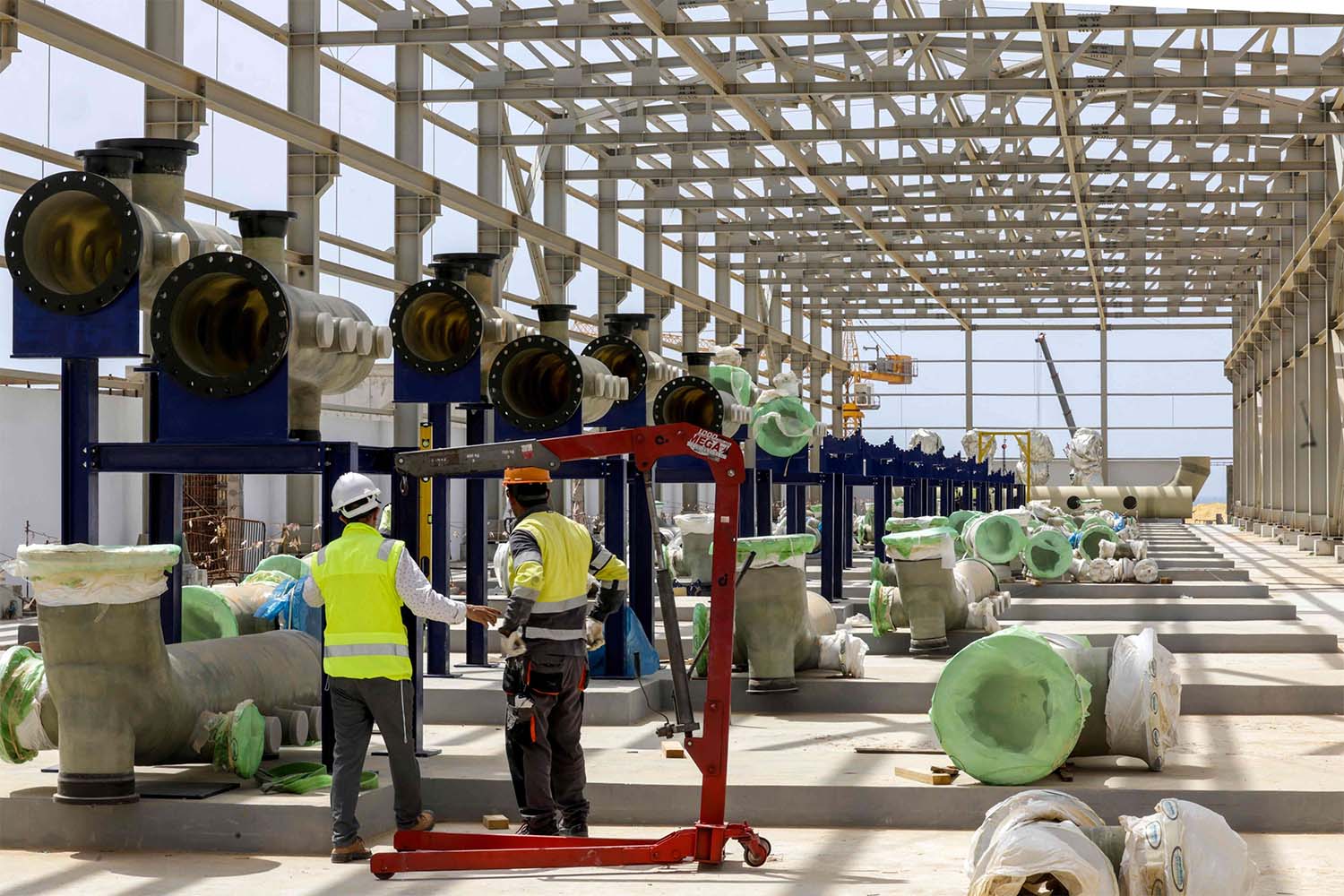
Dakhla desalination plant under construction
Morocco’s water vision: Desalination at the heart of climate resilience and growth
Morocco is undertaking an ambitious, forward-looking program of seawater desalination, demonstrating how strategic infrastructure can safeguard development and human well-being.
Friday 03/10/2025
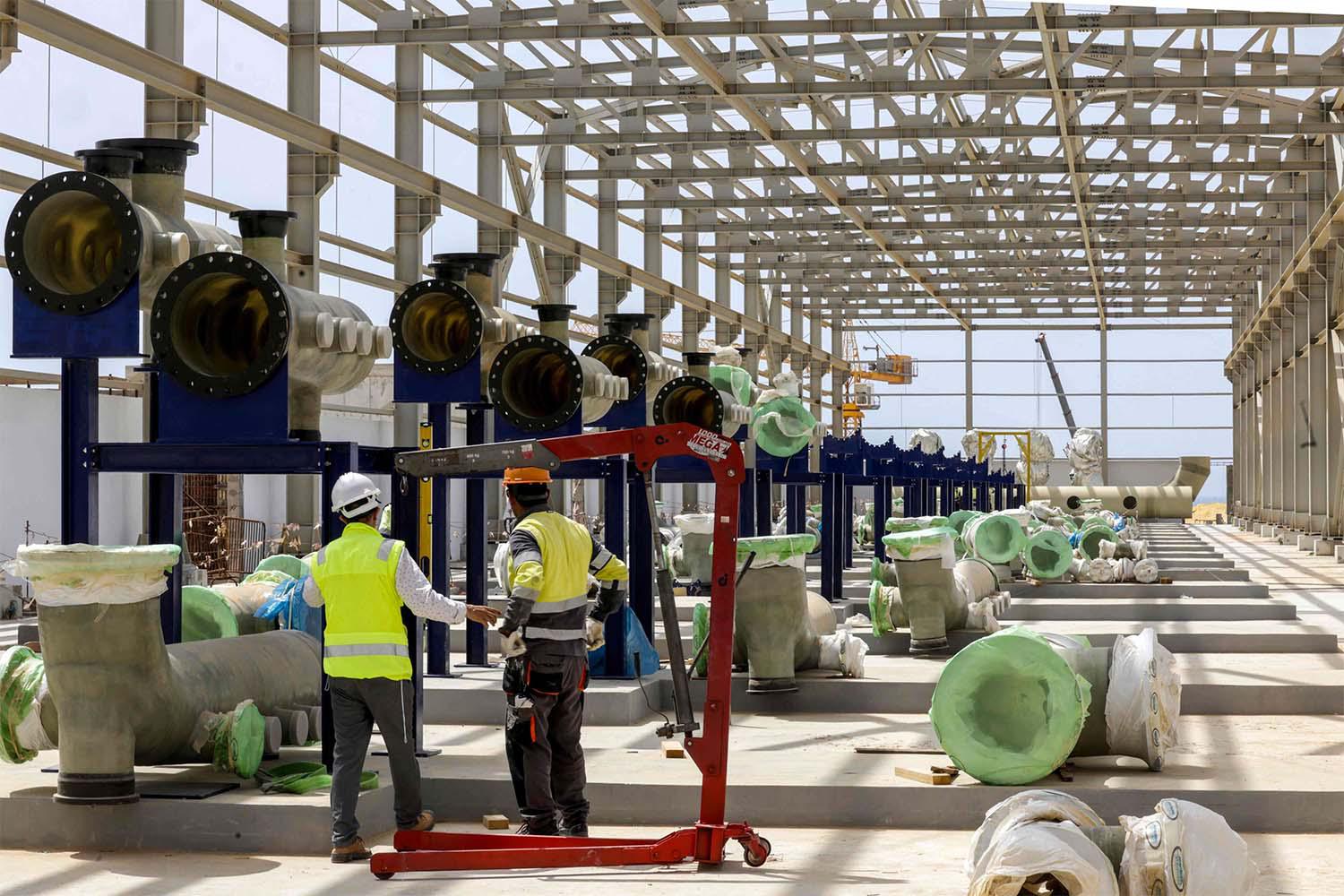
Dakhla desalination plant under construction
As the world grapples with climate change, water scarcity has emerged as one of the most pressing global challenges. For Morocco, a country at the crossroads of Africa and Europe, this challenge is not theoretical—it is immediate. Droughts, variable rainfall, and increasing urban and industrial demand have made water security a national priority. In response, Morocco is undertaking an ambitious, forward-looking program of seawater desalination, demonstrating how strategic infrastructure can safeguard development and human well-being.
Today, Morocco operates 17 desalination plants, producing 320 million cubic meters of water annually. But the Kingdom’s ambitions are much larger: four major projects under construction will collectively add 212 million cubic meters per year, bringing total capacity to 532 million cubic meters. At the forefront is the Casablanca plant, Africa’s largest desalination facility, expected to deliver 300 million cubic meters annually. With over 40% of construction completed, the plant is scheduled to become fully operational by the end of 2026, a transformative milestone for Morocco’s water landscape.
Equally significant are the Jadida and Safi plants, which began partial operations in 2023. They currently supply 80% of the drinking water needs for southern Casablanca, Settat, and Berrechid. These facilities are set to reach full operational capacity by the end of 2026, reflecting a careful strategy of phased implementation and efficiency.
In southern Morocco, the Dakhla plant represents a new paradigm. Combining seawater desalination with renewable wind energy, this integrated project is already 78% complete and will start operations by mid-2026. Both the Casablanca and Dakhla plants are realized through public-private partnerships, a model that allows Morocco to leverage private sector expertise while delivering large-scale public benefits.
Morocco’s vision extends far beyond these flagship projects. Thirteen additional desalination plants have been planned along the coast, targeting regions from the Eastern provinces to Rabat, Tangier, Guelmim, and Essaouira. These projects are designed not only to secure drinking water but also to provide irrigation for agriculture and support industrial water demand, ensuring that Morocco’s economic growth is sustainable and resilient. Strategic partnerships with the OCP Group are also underway to expand the Jdeida and Safi plants, further reinforcing industrial and municipal water supply.
Importantly, Morocco is ensuring that rural populations are not left behind. Mobile desalination units for brackish groundwater and seawater are being deployed across the country, with 89 of 244 units already delivered. These units will bring safe drinking water to remote communities, bridging urban-rural disparities and reinforcing social equity.
Morocco’s aggressive desalination agenda illustrates a sophisticated understanding of water as a strategic resource. By integrating renewable energy, technological innovation, and public-private collaboration, the Kingdom is building a resilient infrastructure capable of withstanding climate pressures while supporting socio-economic growth. But beyond the technical achievements, Morocco’s approach sends a broader message: proactive planning, innovation, and partnerships are essential for nations confronting the twin pressures of scarcity and development.
In a region often defined by water stress, Morocco is demonstrating that scarcity can be met with vision, investment, and determination. Its desalination program is not just a response to immediate needs—it is a blueprint for long-term sustainability, climate resilience, and economic stability, offering lessons for Africa and beyond.
